Electric kettles are among the most energy-efficient appliances for boiling water, using less power than stovetops or microwaves. While they do consume electricity, their speed and efficiency mean lower overall energy use—especially when used correctly.
Key Takeaways
- Electric kettles are energy-efficient: They heat water faster and use less energy than stovetops or microwaves, making them a smart choice for daily use.
- Power rating matters: Most kettles range from 1500W to 3000W, but higher wattage doesn’t always mean higher costs—usage time is key.
- Boiling only what you need saves energy: Overfilling leads to wasted electricity; boil only the amount of water required.
- Regular maintenance improves efficiency: Limescale buildup insulates the heating element, forcing the kettle to work harder and use more power.
- Modern kettles often have energy-saving features: Auto shut-off, variable temperature settings, and insulated bodies help reduce electricity consumption.
- Cost per use is low: Boiling a full kettle typically costs just a few cents, even with frequent use.
- Smart habits make a difference: Turning off at the wall, descaling regularly, and using the right kettle size can cut energy use significantly.
📑 Table of Contents
- Does Water Kettle Consumes a Lot of Electricity?
- How Much Electricity Does an Electric Kettle Use?
- Factors That Affect Electricity Consumption
- Electric Kettle vs. Other Water-Heating Methods
- Tips to Reduce Electricity Use with Your Kettle
- Environmental and Cost Impact
- Conclusion: Is Your Kettle a Power Hog?
Does Water Kettle Consumes a Lot of Electricity?
If you’ve ever stood in your kitchen, kettle in hand, wondering whether that quick boil is quietly racking up your electricity bill, you’re not alone. Many people assume that because electric kettles plug into the wall and heat water rapidly, they must be energy hogs. But the truth? Electric kettles are actually some of the most efficient ways to boil water—especially when compared to alternatives like stovetops or microwaves.
Let’s break it down: an electric kettle heats water directly through an internal heating element, transferring energy almost instantly to the water. There’s minimal heat loss to the surrounding air, unlike a stovetop kettle that loses heat to the burner and the kitchen. Plus, most modern kettles shut off automatically once the water reaches boiling point, preventing unnecessary energy use. So while yes, a water kettle does consume electricity, it does so quickly and efficiently—often using less total energy than other methods.
In this article, we’ll explore exactly how much electricity a water kettle uses, what factors influence consumption, and how you can minimize your energy footprint without sacrificing convenience. Whether you’re a tea lover, coffee enthusiast, or just someone trying to be more eco-conscious at home, understanding your kettle’s energy use is a smart move.
How Much Electricity Does an Electric Kettle Use?
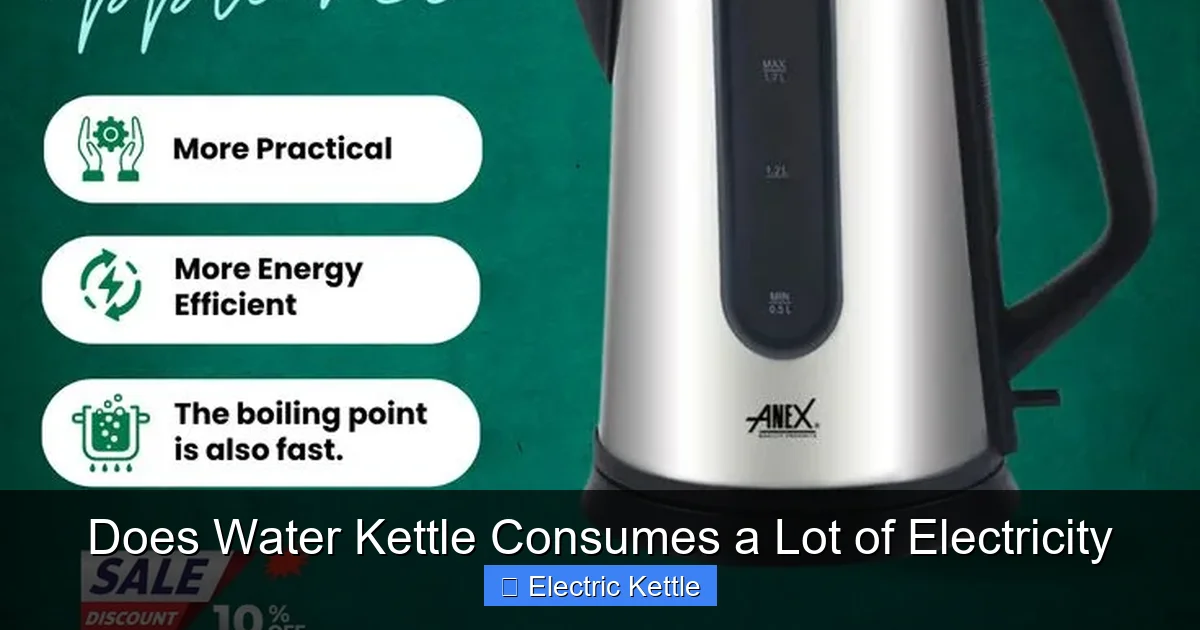
Visual guide about Does Water Kettle Consumes a Lot of Electricity
Image source: i.pinimg.com
To understand whether a water kettle consumes a lot of electricity, we need to look at the numbers. Most household electric kettles have a power rating between 1500 watts (W) and 3000 watts. This means they draw that amount of power when operating at full capacity. But power alone doesn’t tell the whole story—usage time matters just as much.
Let’s do a quick calculation. Suppose you have a 2000W kettle and you boil it for 3 minutes (0.05 hours). The energy used is calculated as:
Energy (kWh) = Power (kW) × Time (hours)
= 2 kW × 0.05 hours
= 0.1 kWh
Now, if your electricity costs $0.15 per kWh, that single boil costs just $0.015—less than two cents. Even if you boil water five times a day, that’s only about $0.075 per day, or roughly $22.50 per year. Compared to other kitchen appliances, that’s incredibly low.
Comparing Kettle Usage to Other Appliances
To put this into perspective, let’s compare the electric kettle to other common kitchen devices:
– Microwave (1000W): Heating a cup of water takes about 2 minutes (0.033 hours), using 0.033 kWh. Slightly less than a kettle, but microwaves are less efficient at heating liquids evenly and often require stirring.
– Stovetop kettle (gas or electric): Takes 5–8 minutes to boil, with significant heat loss. A gas stove might use more energy overall due to inefficiency, and electric stovetops often take longer than kettles.
– Electric stove burner (1500W): Boiling water can take 6–10 minutes, using 0.15–0.25 kWh—double or triple the energy of a kettle.
So while the kettle has a higher wattage, its speed makes it more energy-efficient overall. It’s not about how much power it uses, but how quickly and effectively it uses it.
Real-World Example: Daily Kettle Use
Imagine a household where someone boils water twice a day—once for morning coffee and once for evening tea. Using a 2000W kettle for 3 minutes each time:
Daily energy use = 0.1 kWh × 2 = 0.2 kWh
Monthly use = 0.2 × 30 = 6 kWh
Annual use = 6 × 12 = 72 kWh
At $0.15/kWh, that’s just $10.80 per year. Even in a busy household with 4–5 boils a day, the cost remains under $30 annually. That’s less than the cost of a single takeout coffee each month.
Factors That Affect Electricity Consumption
Not all kettle uses are created equal. Several factors influence how much electricity your water kettle consumes. Understanding these can help you reduce energy use without changing your habits too much.
1. Kettle Wattage and Efficiency
Higher wattage kettles heat water faster, which can actually save energy. A 3000W kettle might boil water in 2 minutes, while a 1500W model takes 4. Even though the 3000W uses more power, it runs for half the time, potentially using less total energy.
But efficiency also depends on design. Kettles with insulated walls, flat heating elements, and good seals retain heat better and heat water more evenly. Look for models with energy-efficient certifications like ENERGY STAR (though less common for kettles) or those labeled as “eco-friendly.”
2. Amount of Water Boiled
This is a big one. Boiling a full kettle when you only need one cup is a waste of energy. Water has a high specific heat capacity—it takes a lot of energy to raise its temperature. Heating twice as much water takes roughly twice as much electricity.
For example, boiling 1 liter (about 4 cups) uses significantly more energy than boiling 0.25 liters (1 cup). If you frequently boil more than you need, you’re paying for unused hot water.
Tip: Use a kettle with clear water level markings and only fill it to the amount you’ll use. Some smart kettles even let you set precise volumes.
3. Frequency of Use
The more you use your kettle, the more electricity it consumes. But because each use is short, the total impact remains low unless you’re boiling water constantly.
If you’re making multiple hot drinks in a row, consider boiling a slightly larger amount once instead of reheating small amounts repeatedly. Reboiling water uses extra energy, especially if the water has cooled significantly.
4. Limescale Buildup
If you live in a hard water area, limescale (calcium carbonate) can build up on the heating element over time. This layer acts as an insulator, reducing heat transfer efficiency. The kettle has to work harder and longer to boil the same amount of water, increasing electricity use.
Regular descaling—using vinegar or a commercial descaler—can restore efficiency. Most manufacturers recommend descaling every 1–3 months, depending on water hardness.
5. Kettle Age and Condition
Older kettles may have worn-out components, loose connections, or degraded insulation, all of which can reduce efficiency. If your kettle takes noticeably longer to boil or doesn’t shut off properly, it might be time for an upgrade.
Newer models often include features like:
– Auto shut-off at boiling point
– Keep-warm functions (use sparingly)
– Variable temperature settings (ideal for green tea, coffee, etc.)
– Insulated bodies to retain heat
These features help prevent over-boiling and unnecessary reheating.
Electric Kettle vs. Other Water-Heating Methods
To truly answer whether a water kettle consumes a lot of electricity, we need to compare it to alternatives. Let’s look at the most common ways people heat water at home.
Stovetop Kettle (Gas or Electric)
Stovetop kettles are classic, but they’re not the most efficient. On a gas stove, only about 40–55% of the heat reaches the water—the rest is lost to the air. Electric stovetops are slightly better (70–80% efficiency), but still slower than electric kettles.
A typical stovetop boil takes 5–8 minutes. Even with lower wattage, the longer heating time means higher total energy use. Plus, you might forget to turn it off, leading to wasted energy.
Microwave
Microwaves heat water quickly, but not always evenly. They’re best for small amounts—like one cup. However, microwaves are less efficient at transferring energy to water compared to direct heating elements.
Also, microwaving water can lead to “superheating,” where water heats beyond boiling without bubbling. This can cause sudden, dangerous eruptions when disturbed. Electric kettles are safer and more consistent.
Electric Stove or Hot Plate
Using a hot plate or electric burner to heat a pot of water is one of the least efficient methods. These appliances are designed for cooking, not rapid boiling. They take longer, use more energy, and often require supervision.
Electric Kettle: The Winner?
When it comes to speed, safety, and energy efficiency, the electric kettle wins. It heats water faster, uses less total energy, and reduces the risk of accidents. For most households, it’s the best tool for the job.
Tips to Reduce Electricity Use with Your Kettle
Even though electric kettles are efficient, small changes in habits can make a difference. Here are practical tips to minimize electricity consumption without sacrificing convenience.
1. Boil Only What You Need
This is the #1 rule. If you’re making one cup of tea, don’t fill the kettle to the max. Use the minimum water level or measure with a cup. Some kettles have “cup” markings to help.
Over time, this simple habit can save significant energy. Imagine boiling 0.5 liters instead of 1 liter twice a day—that’s 1 liter less water heated daily, or 365 liters saved per year.
2. Descale Regularly
Limescale buildup is a silent energy thief. It forces your kettle to use more power to achieve the same result. Descale every 1–3 months using white vinegar or a commercial solution.
Simply fill the kettle halfway with equal parts water and vinegar, boil, let it sit for 30 minutes, then rinse thoroughly. Your kettle will heat faster and use less electricity.
3. Use the Right Temperature Setting
Not all drinks need boiling water. Green tea, for example, brews best at 70–80°C (158–176°F). Boiling water can scorch the leaves, making them bitter.
Many modern kettles have variable temperature controls. Use lower settings when appropriate—this saves energy and improves taste.
4. Turn Off at the Wall
Even when not in use, some kettles draw a small amount of standby power, especially models with digital displays or keep-warm functions. Unplugging the kettle when not in use eliminates this “phantom load.”
If unplugging is inconvenient, use a power strip with an on/off switch.
5. Choose an Energy-Efficient Model
When it’s time to replace your kettle, look for features that enhance efficiency:
– Rapid boil technology
– Insulated walls (keep water hot longer)
– Auto shut-off and boil-dry protection
– Flat, concealed heating elements (easier to clean, more efficient)
Brands like Breville, Russell Hobbs, and Bosch often offer eco-friendly models.
6. Avoid Reboiling Water
Once water has boiled, it’s already at 100°C. Reboiling it wastes energy unless you’re making multiple drinks in quick succession. If you need hot water again, consider using a thermos to keep it hot for hours.
Environmental and Cost Impact
So, does a water kettle consume a lot of electricity? In absolute terms, yes—it uses electricity every time you turn it on. But in relative terms, especially compared to alternatives, it’s one of the most efficient appliances you can use.
Let’s look at the bigger picture.
Carbon Footprint
Electricity generation produces carbon emissions, depending on your region’s energy mix. If your electricity comes from coal, each kWh emits about 1 kg of CO₂. If it’s renewable (solar, wind, hydro), emissions are near zero.
Using an efficient kettle reduces your overall energy demand, which lowers your carbon footprint. Combined with green energy sources, the impact is minimal.
Long-Term Savings
While the cost per boil is low, small savings add up. Over a year, efficient kettle use could save you $5–$15 compared to less efficient methods. Over a decade, that’s $50–$150—enough to buy a new kettle.
Plus, energy-efficient habits contribute to lower household bills across the board.
Scalability
In a world where millions of people boil water daily, small efficiency gains have a huge collective impact. If every household boiled only the water they needed, global energy savings would be substantial.
Conclusion: Is Your Kettle a Power Hog?
The short answer? No—your electric kettle is not a power hog. In fact, it’s one of the most energy-efficient ways to boil water. While it does consume electricity, its speed, precision, and modern features make it a smart choice for daily use.
The key to minimizing electricity use lies in smart habits: boiling only what you need, maintaining your kettle, and choosing efficient models. When used wisely, a water kettle consumes very little electricity—both in terms of cost and environmental impact.
So go ahead, brew that cup of tea. Your wallet—and the planet—will thank you.
Frequently Asked Questions
How much electricity does a 1500W kettle use per boil?
A 1500W kettle boiling for 4 minutes uses about 0.1 kWh of electricity. At $0.15 per kWh, that’s just 1.5 cents per boil.
Is it cheaper to boil water in a kettle or on the stove?
Yes, an electric kettle is usually cheaper and faster than a stovetop. It uses less total energy due to higher efficiency and shorter heating time.
Does leaving the kettle plugged in use electricity?
Most kettles use negligible standby power, but models with digital displays or keep-warm functions may draw a small amount. Unplugging saves energy over time.
Can limescale really increase electricity use?
Yes. Limescale insulates the heating element, reducing efficiency. Descaling regularly helps maintain performance and lowers energy consumption.
Should I buy a higher wattage kettle to save energy?
Not necessarily. Higher wattage means faster boiling, which can save energy if it reduces total heating time. But efficiency also depends on design and usage habits.
How often should I descale my electric kettle?
Descale every 1–3 months, depending on water hardness. If you notice slower boiling or a chalky residue, it’s time to clean it.