[FEATURED_IMAGE_PLACEOLDER]
When you’re out in the wilderness—whether you’re backpacking through remote mountain trails, setting up base camp for a week-long hunting trip, or simply enjoying a weekend car-camping adventure—the tools you carry can make or break your experience. Among the most essential of these tools is your kitchen knife. It’s not just for slicing bread or dicing vegetables; it’s a multi-purpose workhorse used for preparing meals, processing game, cutting rope, opening cans, and even performing emergency tasks. In this high-stakes environment, choosing between a fixed blade and a folding kitchen knife isn’t just a matter of preference—it’s a decision that impacts safety, efficiency, and overall preparedness.
That’s why this comprehensive buying guide exists. Whether you’re a seasoned outdoorsman or a casual camper looking to upgrade your gear, understanding the nuanced differences between fixed blade and folding kitchen knives will help you make an informed, confident choice. We’ll dive deep into performance, durability, portability, maintenance, legal considerations, and real-world usability—all through the lens of camping and outdoor cooking. By the end of this guide, you’ll know exactly what to look for, what to avoid, and how to match your knife to your specific needs and budget. The market today offers an overwhelming array of options, from ultra-lightweight folding knives with ceramic blades to rugged full-tang fixed blades forged from high-carbon steel. Our goal is to cut through the noise and deliver clarity, so you can invest in a knife that won’t fail you when it matters most.

What to Look for When Buying Buying Guide
1. Blade Material & Steel Type
The blade material is arguably the most critical factor in determining a knife’s performance, longevity, and ease of maintenance. For camping, you need a steel that balances edge retention, corrosion resistance, and ease of sharpening—especially since you won’t have access to professional sharpening tools in the field. High-carbon stainless steels like VG-10, S30V, and 154CM are excellent choices because they resist rust while holding a sharp edge. Avoid pure carbon steel unless you’re prepared to oil and maintain it meticulously, as it can rust quickly in humid or wet conditions. On the other hand, softer stainless steels like 420HC are easier to sharpen in the wild but dull faster. Look for blades with a Rockwell hardness (HRC) between 56 and 60—this range offers a sweet spot between toughness and edge retention. For example, a knife made from AUS-8 steel (HRC 57–59) is a reliable, budget-friendly option, while premium steels like CPM-S35VN offer superior performance for those willing to invest more.
2. Blade Length & Shape
Blade length directly affects functionality. For camping kitchen tasks, a blade between 3.5 and 5 inches is ideal. Anything shorter than 3.5 inches limits your ability to chop or slice larger ingredients, while blades over 6 inches become unwieldy for precision work and may be overkill for food prep. A drop point or clip point blade shape is preferred for camping knives due to their strong tip and versatile cutting geometry. Drop points offer excellent control for slicing and chopping, while clip points provide a sharper tip for detailed tasks like scoring meat or opening packages. Avoid tanto or dagger-style blades—they’re designed for tactical use, not food preparation. A slightly curved belly on the blade enhances rocking motion when chopping herbs or vegetables, making meal prep faster and more efficient.
3. Handle Design & Ergonomics
A knife is only as good as your grip on it. In wet, muddy, or cold conditions, a secure, comfortable handle can prevent accidents and fatigue. Look for handles made from durable, non-slip materials like G-10, Micarta, or textured rubber. These materials resist moisture, provide excellent traction, and don’t become brittle in cold weather. Avoid smooth plastic or polished wood handles—they can become dangerously slippery. The handle should fit naturally in your hand, with finger grooves or contours that prevent slipping during heavy use. A full tang construction—where the blade extends through the entire handle—adds strength and balance, especially important for fixed blades used in demanding tasks. For folding knives, ensure the handle has a secure locking mechanism (like a liner lock or frame lock) to prevent accidental closure during use.
4. Weight & Portability
When every ounce counts in your pack, weight becomes a crucial consideration. Folding knives are inherently more portable, often weighing between 2 and 5 ounces, and can be easily stowed in a pocket or small pouch. Fixed blades, especially those with full tangs and sheaths, typically weigh 6 to 12 ounces or more. While heavier, they offer unmatched strength and reliability. Consider your camping style: ultralight backpackers may prioritize a compact folding knife, while car campers or bushcrafters might prefer the robustness of a fixed blade. Also, think about how you’ll carry it—fixed blades require a sheath, which adds bulk but ensures safe transport. Some modern sheaths are MOLLE-compatible or have belt loops, making them easy to attach to packs or gear.
5. Durability & Build Quality
Camping knives face harsh conditions—exposure to dirt, moisture, temperature extremes, and heavy use. A well-built knife should withstand these challenges without failing. Fixed blades generally excel in durability because they lack moving parts and often feature full tang construction, meaning the blade runs through the entire handle. This makes them ideal for batoning (splitting wood by striking the spine with a stick) or prying open cans. Folding knives, while convenient, have hinges and locking mechanisms that can wear out or fail under stress. Look for models with reinforced locks and corrosion-resistant hardware. Inspect the fit and finish: there should be no blade play, loose screws, or rough edges. A quality knife feels solid and balanced in hand, with no weak points.
6. Maintenance & Ease of Cleaning
In the backcountry, you can’t afford a knife that’s difficult to clean or maintain. Fixed blades are easier to clean because they have no crevices or moving parts where food particles or moisture can accumulate. A quick rinse and wipe are usually sufficient. Folding knives, especially those with exposed pivots or complex mechanisms, can trap debris and require disassembly for thorough cleaning—something not always practical in the field. If you choose a folding knife, opt for one with a simple, accessible design and corrosion-resistant components. Additionally, consider how easy it is to sharpen the blade. A knife that holds an edge longer reduces the need for frequent sharpening, but when it does need attention, you’ll want one that can be sharpened with a portable rod or stone. Some campers carry a small sharpening kit, so compatibility with common tools is a plus.
7. Legal & Safety Considerations
Knife laws vary widely by country, state, and even local jurisdictions. In many places, fixed blade knives are subject to stricter regulations than folding knives, especially if carried openly or in urban areas. Some regions prohibit carrying fixed blades longer than a certain length or require them to be transported in a sheath within a vehicle. Folding knives with locking blades may also be restricted if they exceed legal blade lengths or are classified as “switchblades.” Always research local laws before your trip. Safety is equally important: a fixed blade with a sheath is generally safer to carry than an open folding knife, which could accidentally deploy. For group camping, consider the visibility and accessibility of your knife—ensure it’s secure and won’t pose a hazard to others.
8. Intended Use & Versatility
Ask yourself: what will you primarily use the knife for? If your focus is food preparation—chopping vegetables, slicing meat, opening packages—a folding kitchen knife with a sharp, precise blade may suffice. However, if you anticipate needing the knife for heavier tasks like cutting firewood, processing game, or emergency survival situations, a fixed blade is the better choice. Many campers opt for a hybrid approach: carrying a small folding knife for daily kitchen tasks and a larger fixed blade for camp chores. Consider multi-functional designs, such as folding knives with built-in bottle openers or fixed blades with integrated fire starters. The most versatile camping knife is one that adapts to your needs without compromising on core functionality.
Different Types of Buying Guide

Common Buying Mistakes to Avoid
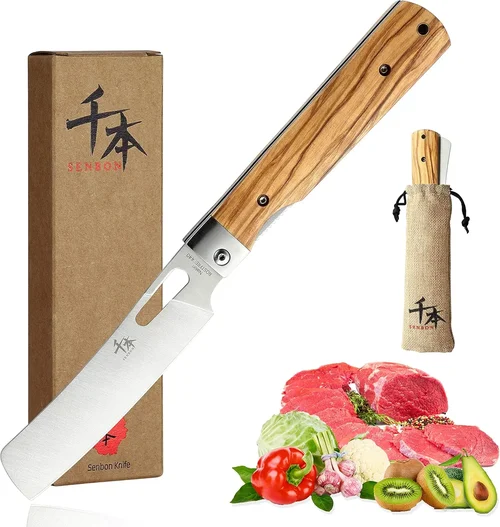
❌ Mistake: Choosing Style Over Function
Why it’s bad: A visually striking knife with a serrated edge or decorative handle may look great on a shelf, but it could be impractical for real camping use. Serrated edges are difficult to sharpen in the field and are better suited for bread than vegetables or meat. Similarly, ornate handles often sacrifice ergonomics and grip security.
What to do instead: Prioritize function. Choose a knife with a plain, sharp edge and a handle designed for comfort and control. Test it in your hand—does it feel balanced? Can you grip it firmly when wet?
❌ Mistake: Ignoring Blade Length for Your Needs
Why it’s bad: A 7-inch blade might seem impressive, but it’s overkill for slicing apples or dicing onions. Conversely, a 2.5-inch blade won’t handle larger tasks like chopping carrots or cutting through packaging. The wrong size leads to frustration and inefficiency.
What to do instead: Match blade length to your typical tasks. For most campers, 4 inches is the sweet spot—long enough for chopping, short enough for precision.
❌ Mistake: Overlooking Maintenance Requirements
Why it’s bad: Some high-performance steels require regular oiling and careful storage to prevent rust. If you’re not prepared to maintain your knife, it could corrode or degrade quickly, especially in humid environments.
What to do instead: Choose a steel that matches your maintenance willingness. If you prefer low-maintenance, go with a high-quality stainless steel like VG-10 or 154CM.
❌ Mistake: Buying the Cheapest Option Available
Why it’s bad: Budget knives often use poor-quality steel, weak locks, or flimsy handles. They may break, dull quickly, or fail when you need them most—potentially leading to injury or food spoilage.
What to do instead: Invest in quality. A $60 knife that lasts five years is better value than a $20 knife that fails after one trip.
❌ Mistake: Not Considering Carry Method
Why it’s bad: A fixed blade without a proper sheath is dangerous to carry. A folding knife that doesn’t lock securely can close on your fingers during use.
What to do instead: Ensure your knife has a reliable carry system—whether a secure sheath for fixed blades or a robust lock for folders. Test the carry method before your trip.
❌ Mistake: Assuming All Folding Knives Are Equal
Why it’s bad: Not all folding knives are designed for heavy use. Many are made for everyday carry (EDC) and lack the strength for batoning or prying.
What to do instead: Look for folding knives specifically marketed for outdoor or camping use, with reinforced locks and durable materials.
❌ Mistake: Neglecting to Test Before Buying
Why it’s bad: A knife that looks good online might feel awkward in hand or perform poorly in real tasks.
What to do instead: Whenever possible, handle the knife in person. If buying online, read detailed reviews and check return policies.
Budget Guidelines: How Much Should You Spend?
Entry-Level ($25 – $50): This range is ideal for casual campers or those on a tight budget. Knives here often use 420HC or AUS-6 steel, which are easy to sharpen but dull faster. Handles may be plastic or basic rubber. Folding knives in this range are lightweight and portable, while fixed blades may have partial tangs. Expect decent performance for light tasks but limited durability under heavy use. Brands like Morakniv and Ontario Knife Company offer reliable options in this tier.
Mid-Range ($50 – $120): This is the sweet spot for most campers. Knives in this range typically feature high-carbon stainless steels like VG-10 or 154CM, full tang construction (for fixed blades), and ergonomic handles made from G-10 or Micarta. They offer excellent balance, durability, and edge retention. Many models include thoughtful features like lanyard holes, MOLLE-compatible sheaths, or corrosion-resistant coatings. This tier includes standout models from brands like Esee, Benchmade, and Spyderco.
Premium ($120 – $250): Designed for serious outdoorsmen and frequent campers, these knives use advanced steels like S30V, CPM-20CV, or M390. They offer superior edge retention, corrosion resistance, and build quality. Handles are often custom-molded or made from premium materials like carbon fiber or stabilized wood. Fixed blades may include full tangs with contoured grips, while folding knives feature precision-engineered locks and ceramic bearings. These knives are built to last decades with proper care.
Luxury ($250+): At this level, you’re paying for craftsmanship, exclusivity, and top-tier materials. Hand-forged blades, custom handles, and limited-edition designs are common. While performance is exceptional, the marginal gains over premium knives may not justify the cost for most users. These are best suited for collectors or professionals who demand the absolute best.
Expert Tips for Getting the Best Deal
– Buy During Off-Season Sales: Many outdoor retailers offer discounts on camping gear in late winter or early spring, after the peak camping season. Look for sales from REI, Backcountry, or Cabela’s during these periods.
– Check Manufacturer Websites: Brands like Esee, Morakniv, and Benchmade often run direct-to-consumer promotions, including bundle deals or free sharpening kits with purchase.
– Consider Refurbished or Overstock Models: Some manufacturers sell refurbished knives at a discount. These are typically inspected, sharpened, and come with full warranties.
– Read Long-Term Reviews: A knife may perform well in initial tests but degrade over time. Look for reviews that cover months or years of use.
– Test Before You Buy: Visit outdoor stores to handle knives in person. Pay attention to balance, grip, and how the blade feels when slicing.
– Understand Return Policies: Ensure the retailer offers a generous return window in case the knife doesn’t meet your expectations.
– Invest in a Sharpening System: A good portable sharpener extends your knife’s life and maintains performance. Consider a combination stone or ceramic rod.
– Join Outdoor Forums: Communities like Reddit’s r/knives or BladeForums often share deals, reviews, and personal experiences.
Frequently Asked Questions
Q: Can I use a fixed blade knife for everyday kitchen tasks while camping?
A: Absolutely. A fixed blade kitchen knife is excellent for chopping, slicing, and dicing. Just ensure it’s the right size (3.5–5 inches) and that you have a clean, stable surface to work on. Many campers prefer fixed blades for food prep due to their strength and ease of cleaning.
Q: Are folding knives strong enough for camping?
A: It depends on the model. High-quality folding knives with robust locks and full-length tangs (like the Spyderco Endura or Benchmade Griptilian) can handle most camping tasks. However, they’re not ideal for heavy-duty work like batoning or prying.
Q: Do I need a sheath for a fixed blade knife?
A: Yes. A sheath is essential for safe transport and storage. It protects the blade, prevents accidents, and allows you to carry the knife on your belt or pack. Look for sheaths made from Kydex or leather with secure retention.
Q: How often should I sharpen my camping knife?
A: It depends on use. For light tasks, sharpening every few trips may suffice. For heavy use, you might need to touch up the edge weekly. Carry a portable sharpener and learn basic field sharpening techniques.
Q: Can I bring a camping knife on a plane?
A: Folding knives with blades under 2.36 inches (6 cm) may be allowed in carry-on in some countries, but most fixed blades are prohibited. Always check TSA and local regulations before traveling.
Q: What’s the best way to clean a camping knife?
A: Rinse with clean water and dry immediately. For folding knives, use a toothbrush to clean around the pivot. Apply a light coat of oil to the blade and moving parts after cleaning to prevent rust.
Q: Is a serrated edge useful for camping?
A: Generally, no. Serrated edges are hard to sharpen in the field and are less effective for chopping or slicing food. A plain edge is more versatile and easier to maintain.
Q: Can I use my camping knife for self-defense?
A: While a knife can be used in emergencies, it’s not a primary defense tool. Focus on prevention and awareness. In many areas, carrying a knife for self-defense may have legal implications.
Q: What’s the difference between full tang and partial tang?
A: Full tang means the blade extends through the entire handle, providing maximum strength. Partial tang is shorter and less durable, often found in cheaper knives.
Q: Should I buy a knife with a gut hook?
A: Gut hooks are useful for field dressing game but unnecessary for general camping. If you hunt, consider a dedicated hunting knife instead.
Our Final Recommendations
Best for Budget-Conscious Buyers: Morakniv Companion – A full-tang fixed blade with a 4.1-inch high-carbon steel blade, ergonomic handle, and durable sheath. Priced under $25, it’s a reliable workhorse for light to medium tasks.
Best Overall Value: Esee 4 – A 4.5-inch fixed blade with 1095 carbon steel, micarta handle, and excellent balance. Priced around $100, it’s tough, versatile, and built to last.
Best Premium Option: Benchmade Bushcrafter 162 – A 4.4-inch fixed blade with S30V steel, G-10 handle, and premium sheath. Ideal for serious campers who demand top performance.
Best for Beginners: Spyderco Tenacious – A folding knife with 8Cr13MoV steel, G-10 handle, and reliable liner lock. Affordable, easy to use, and great for learning knife skills.
Best for Advanced Users: Chris Reeve Sebenza 31 – A high-end folding knife with CPM-S45VN steel, titanium handle, and seamless build. For those who appreciate precision engineering and are willing to invest.
Conclusion: Making the Right Choice
Choosing between a fixed blade and a folding kitchen knife for camping isn’t about which is universally better—it’s about matching the tool to your needs, environment, and style of outdoor living. Fixed blades offer unmatched strength, durability, and reliability, making them ideal for heavy-duty tasks and survival scenarios. Folding knives, on the other hand, excel in portability and convenience, perfect for lightweight travel and everyday carry. The best approach may be a combination: a compact folding knife for daily food prep and a sturdy fixed blade for camp chores.
As you evaluate your options, prioritize blade material, ergonomics, maintenance, and intended use. Don’t be swayed by aesthetics or brand hype—focus on real-world performance. Invest in quality, understand your budget, and always test before you commit. A great camping knife isn’t just a tool; it’s a trusted companion that enhances your experience, keeps you safe, and helps you thrive in the wild. With the insights from this guide, you’re now equipped to make a confident, informed decision. So pack smart, stay prepared, and enjoy every moment under the open sky.