Kitchen scales have evolved from simple measuring tools into essential culinary companions. Whether you’re a home baker perfecting sourdough or a meal prep enthusiast tracking macros, the right scale can make all the difference in your kitchen workflow. With the market flooded with options ranging from basic $15 models to professional-grade $150+ units, choosing the perfect kitchen scale has become increasingly complex. This comprehensive guide cuts through the noise to help you make an informed decision that matches your cooking style, budget, and kitchen needs.
In this detailed buying guide, you’ll learn everything you need to know about selecting the ideal kitchen scale for your specific requirements. We’ll dive deep into the critical differences between glass and stainless steel surface scales—two of the most popular materials on the market—and explore how these choices impact durability, cleaning, accuracy, and overall user experience. You’ll discover key performance specifications that matter most, understand how to evaluate build quality, and learn which features are worth paying extra for. We’ll also share expert tips on avoiding common purchasing mistakes, timing your purchase for the best deals, and maximizing your investment through proper care and maintenance.
The kitchen scale market has seen remarkable innovation in recent years, with manufacturers introducing smart connectivity, precision sensors, and sleek designs that complement modern kitchens. Digital scales now offer features like tare functionality, unit conversion, and even nutritional tracking. However, with this advancement comes increased complexity in choosing the right model. Factors like surface material, capacity, accuracy, and build quality can significantly impact your daily cooking experience. Whether you’re looking for a simple, reliable scale for occasional use or a high-precision instrument for professional-level baking, this guide will provide you with the knowledge and confidence to select the perfect kitchen scale for your needs.
What to Look for When Buying Buying Guide
1. Surface Material: Glass vs Stainless Steel
The surface material of your kitchen scale is arguably the most important consideration, as it directly affects durability, cleaning ease, and overall longevity. Glass and stainless steel represent the two dominant materials in today’s market, each offering distinct advantages and trade-offs that cater to different user preferences and kitchen environments.
Glass surfaces have gained popularity for their sleek, modern appearance and non-porous nature. High-quality tempered glass, typically 4-6mm thick, provides a smooth, easy-to-clean surface that resists staining and odor absorption. Brands like OXO and Escali often use reinforced glass that can withstand significant weight without cracking. The transparency of glass also allows for better visibility of the weighing platform, making it easier to position containers accurately. However, glass does have its limitations—it’s more susceptible to scratches from abrasive cleaning tools and can chip or crack if dropped or subjected to sudden temperature changes. For example, placing a hot pan directly on a glass scale surface could cause thermal shock and damage the material.
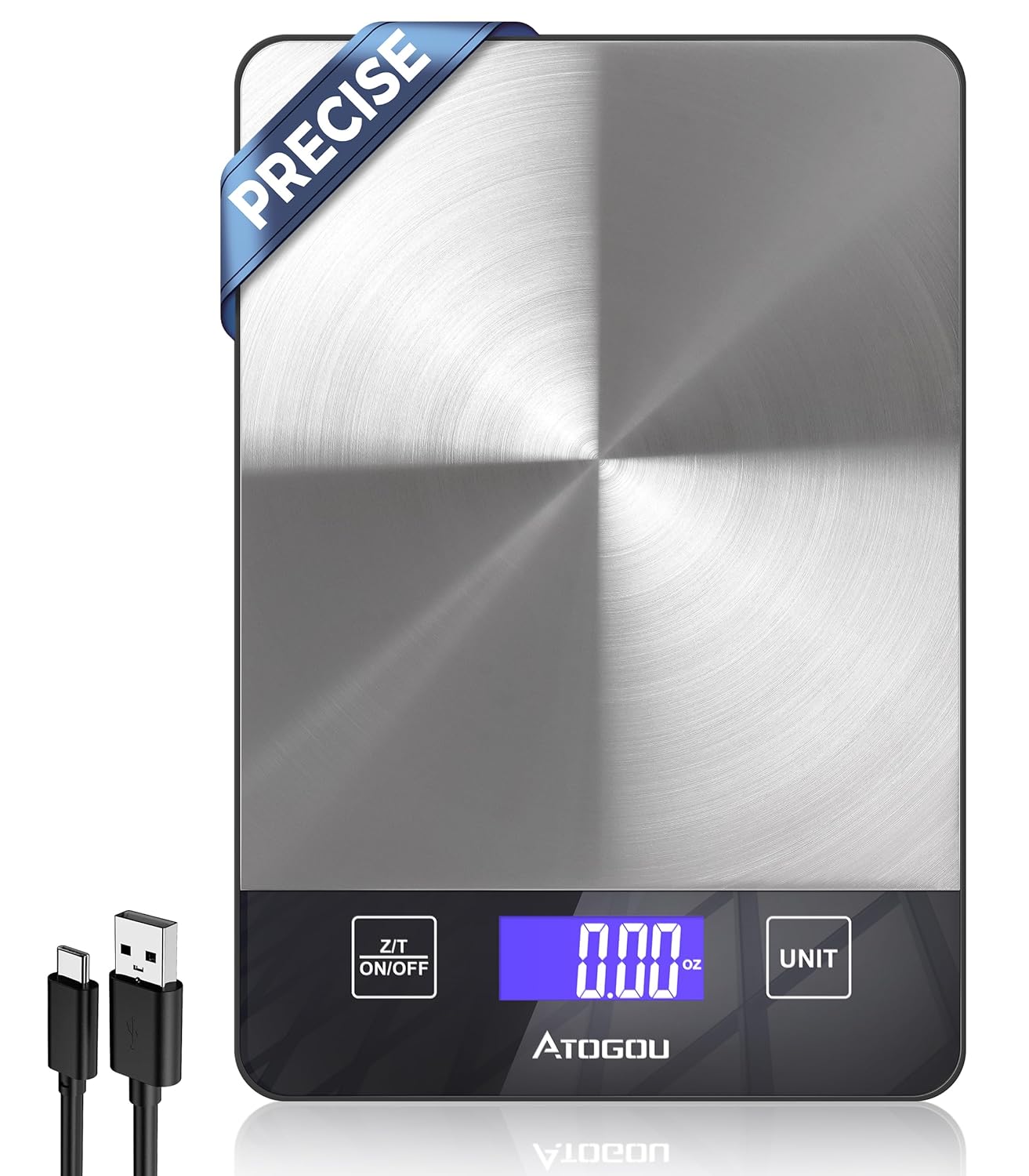
Stainless steel surfaces, on the other hand, offer exceptional durability and resistance to impact. Made from food-grade 304 stainless steel, these surfaces can handle rough handling, accidental drops, and exposure to moisture without compromising their integrity. The non-porous nature of stainless steel makes it naturally resistant to bacteria growth and easy to sanitize—a significant advantage in commercial kitchens or households with food safety concerns. Stainless steel scales typically feature a brushed or polished finish that resists fingerprints and maintains its appearance over time. However, stainless steel can show water spots and may require more frequent wiping to maintain its shine. Some users also report that stainless steel surfaces can feel colder to the touch, which might be uncomfortable when handling ingredients directly on the scale.
When evaluating surface materials, consider your typical usage patterns. If you frequently weigh dry ingredients like flour or sugar, a glass surface might be preferable for its easy cleaning. However, if you regularly weigh liquids, marinades, or messy ingredients, stainless steel’s superior resistance to spills and stains becomes a significant advantage. The choice ultimately depends on your cooking style, cleaning preferences, and how much wear and tear your scale will endure.
2. Accuracy and Precision Specifications
Accuracy and precision are the heart and soul of any kitchen scale, determining how reliable your measurements will be across different ingredients and quantities. Understanding these specifications is crucial for achieving consistent results in both cooking and baking applications.
Accuracy refers to how close the scale’s measurement is to the true weight of an object. High-quality kitchen scales typically offer accuracy within ±0.1 to ±0.5 grams, which is sufficient for most culinary applications. For professional bakers working with delicate recipes like macarons or bread dough, scales with ±0.1g accuracy are essential, as small variations can significantly impact the final product. Precision, on the other hand, relates to the scale’s ability to provide consistent readings when weighing the same item multiple times. A precise scale will show the same weight reading regardless of when or how you place the item on the platform.
When evaluating accuracy specifications, pay attention to the scale’s readability—the smallest increment it can measure. Most kitchen scales offer readability of 0.1g or 0.01oz, which is adequate for general cooking. However, for specialized applications like soap making or coffee brewing, you might need scales with 0.01g readability. The scale’s capacity also affects accuracy—using a scale at or near its maximum capacity can reduce precision. For example, a 5kg scale might offer ±0.1g accuracy up to 1kg, but this could decrease to ±1g near its maximum capacity.
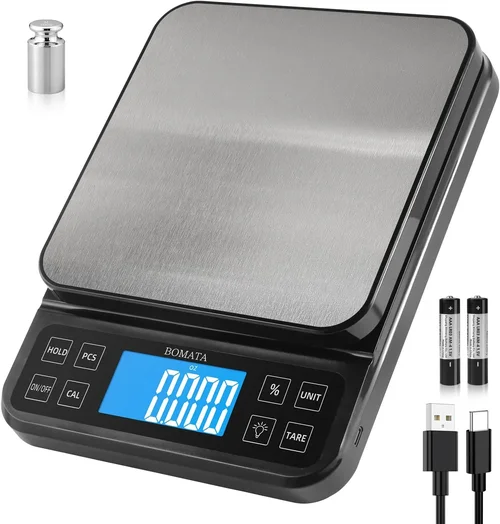
Calibration is another critical factor affecting accuracy. High-end scales often feature automatic calibration or easy manual calibration procedures using standard weights. Some models include built-in calibration weights, while others require you to purchase calibration weights separately. Regular calibration ensures your scale maintains its accuracy over time, especially after being moved or subjected to temperature changes.
3. Capacity and Platform Size
The capacity and platform size of your kitchen scale directly impact its versatility and usability across different cooking scenarios. These specifications determine what you can weigh and how comfortably you can work with various containers and ingredients.
Capacity refers to the maximum weight the scale can handle, typically ranging from 2kg (4.4lbs) to 10kg (22lbs) for home kitchen scales. For most home cooks, a 5kg capacity is sufficient for everyday cooking and baking needs. However, if you frequently prepare large batches of food, bake bread, or work with large cuts of meat, consider scales with 7-10kg capacity. Professional chefs and serious bakers might even opt for scales with 15kg+ capacity. It’s important to note that capacity doesn’t necessarily correlate with accuracy—a scale with higher capacity might have reduced precision at lower weights.
Platform size affects how you can use the scale practically. Larger platforms (typically 6-8 inches in diameter or length) accommodate bigger bowls and containers, making it easier to weigh ingredients without spillage. However, larger platforms can make the scale bulkier and less portable. Smaller platforms (4-5 inches) are more compact but might require you to use smaller bowls or weigh ingredients in batches. Some scales feature rectangular platforms that provide more usable space for rectangular containers, while circular platforms work better with round bowls.
Consider your typical weighing scenarios when evaluating capacity and platform size. If you frequently weigh flour for baking, you’ll need both adequate capacity and a platform large enough to hold your mixing bowls. For coffee enthusiasts who weigh beans and water, a smaller platform with high precision might be more appropriate. Meal preppers who portion large quantities of food will benefit from scales with higher capacity and generous platform space.
4. Build Quality and Durability
Build quality and durability determine how well your kitchen scale will withstand daily use and maintain its performance over time. These factors are especially important given that kitchen scales are often subjected to spills, moisture, and frequent handling.
The overall construction should feel solid and well-assembled, with no loose parts or rattling components. High-quality scales typically feature reinforced bases and sturdy load cells—the internal components that actually measure weight. Look for scales with metal load cells rather than plastic ones, as metal provides better long-term stability and resistance to wear. The buttons and controls should have a satisfying tactile response and be well-protected against moisture ingress.
Water resistance is a crucial durability factor, especially for kitchen environments where spills are common. While few scales are fully waterproof, many offer varying degrees of water resistance rated by IP (Ingress Protection) standards. IPX4 rating indicates protection against splashing water from any direction, which is sufficient for most kitchen applications. Higher ratings like IPX7 offer protection against temporary immersion, but these are rare in kitchen scales due to the complexity of sealing digital components.
The quality of materials used in construction significantly impacts longevity. Stainless steel scales generally offer superior durability compared to plastic-bodied models, though high-quality ABS plastic can also provide excellent durability when properly engineered. The display should be protected by a durable lens that resists scratches and provides clear visibility in various lighting conditions.
Consider the warranty period as an indicator of build quality—reputable manufacturers typically offer 1-3 year warranties on their scales, reflecting confidence in their durability. Reading user reviews can also provide insights into real-world durability, especially regarding issues like button failure, display problems, or accuracy degradation over time.
5. Features and Functionality
Modern kitchen scales offer a range of features that can enhance convenience, accuracy, and functionality. Understanding which features are essential versus which are nice-to-have will help you make the right choice for your specific needs.
Tare functionality is arguably the most important feature, allowing you to zero out the weight of containers and add ingredients incrementally. High-quality scales offer responsive tare buttons that work quickly and accurately, even with multiple containers. Some advanced models feature automatic tare that detects when you place a container on the scale and automatically zeros it out.
Unit conversion is another essential feature, enabling you to switch between grams, ounces, pounds, kilograms, and sometimes milliliters for liquid measurements. Look for scales that offer quick conversion with a dedicated button rather than requiring menu navigation. Some scales also provide specialized units like “flour cups” or “sugar tablespoons” for baking convenience.
Timer functionality has become increasingly common, allowing you to time cooking processes without needing a separate timer. While not essential for weighing, this feature can be convenient for tasks like steeping tea or timing kneading sessions. Some scales even offer dual timers or count-up/count-down functionality.
Smart connectivity features have emerged in premium models, enabling connection to smartphone apps via Bluetooth or Wi-Fi. These features can provide nutritional information, recipe scaling, and measurement tracking. While innovative, smart features often come with higher price tags and may require app subscriptions for full functionality.
Additional features to consider include:
– Backlit displays for better visibility in low-light conditions
– Auto-off functionality to conserve battery life
– Low battery indicators
– Overload protection to prevent damage from excessive weight
– Multiple weighing modes (piece counting, percentage weighing)
6. Brand Reputation and Reliability
Brand reputation and reliability play crucial roles in ensuring you invest in a kitchen scale that will deliver consistent performance and customer support. Established brands typically have proven track records, better quality control, and more reliable customer service compared to unknown manufacturers.
Reputable brands like OXO, Escali, MyWeigh, and Greater Goods have built their reputations through consistent product quality, innovation, and customer satisfaction. These companies often invest in research and development, resulting in scales with better accuracy, more intuitive designs, and improved durability. They also typically offer better warranty coverage and customer support, making it easier to resolve issues or obtain replacement parts.
When evaluating brand reputation, consider factors like:
– Length of time the company has been manufacturing scales
– Customer review ratings and patterns
– Warranty terms and customer service responsiveness
– Availability of replacement parts and accessories
– Transparency about specifications and limitations
Reliability extends beyond the initial purchase to long-term performance. Reliable brands tend to use higher-quality components, provide accurate specifications, and maintain consistency across production batches. They’re also more likely to address design flaws through product updates or recalls rather than ignoring customer complaints.
7. Warranty and Customer Support
Warranty terms and customer support quality can significantly impact your long-term satisfaction with a kitchen scale. These factors become especially important when dealing with electronic devices that may develop issues over time.
Warranty periods for kitchen scales typically range from 1 to 3 years, with premium models sometimes offering longer coverage. Pay attention not just to the duration but also to what the warranty covers—some warranties only cover manufacturing defects, while others include accidental damage or normal wear and tear. Look for warranties that cover both parts and labor, and check if the company offers in-warranty repairs or replacements.
Customer support quality varies significantly between manufacturers. Reliable brands typically offer multiple support channels including phone, email, and live chat, with reasonable response times. They should also provide clear troubleshooting guides and be willing to help with calibration issues or feature questions. Some companies even offer video tutorials or online resources to help users get the most from their scales.
Consider the availability of replacement parts and accessories. Can you easily obtain new batteries, calibration weights, or protective covers? Are there compatible accessories like bowls or covers available? These factors affect the long-term usability of your scale.
8. User Reviews and Real-World Performance
User reviews provide invaluable insights into real-world performance that specifications alone cannot reveal. While manufacturer specifications tell you what a scale should do, user reviews reveal how it actually performs in daily kitchen environments.
When analyzing reviews, look for patterns rather than individual opinions. If multiple users report similar issues with accuracy, durability, or features, these are likely genuine concerns rather than isolated incidents. Pay particular attention to reviews from users with similar cooking habits and needs as your own—a baker’s experience with precision will differ significantly from a casual cook’s needs.
Consider the following aspects when evaluating reviews:
– Consistency of accuracy over time
– Ease of cleaning and maintenance
– Battery life and power consumption
– Responsiveness of buttons and controls
– Quality of the display in various lighting conditions
– Customer service experiences
– Long-term durability reports
Be cautious of reviews that seem overly promotional or lack specific details—these may not be genuine user experiences. Look for reviews that mention specific use cases, problems encountered, and how the manufacturer addressed issues.
Different Types of Buying Guide
Common Buying Mistakes to Avoid
❌ Mistake: Prioritizing Price Over Quality
Why it’s bad: Choosing the cheapest scale available often leads to frustration with inaccurate measurements, poor build quality, and premature failure. Budget scales may save money initially but typically cost more in the long run due to replacement needs and compromised cooking results.
What to do instead: Invest in a mid-range scale from a reputable brand. Look for models that offer the best balance of features, build quality, and price within your budget. Consider it a long-term investment in your cooking success rather than just another kitchen gadget.
❌ Mistake: Ignoring Capacity Needs
Why it’s bad: Selecting a scale with insufficient capacity limits your cooking options and may require multiple weighing sessions for larger recipes. Conversely, choosing excessive capacity can reduce accuracy for small measurements and waste money on unnecessary features.
What to do instead: Assess your typical cooking needs honestly. If you regularly bake bread or prepare large meals, opt for 5-7kg capacity. For everyday cooking and smaller baking projects, 3-5kg is usually sufficient. Consider your largest typical container size when evaluating platform dimensions.
❌ Mistake: Overlooking Surface Material Compatibility
Why it’s bad: Choosing the wrong surface material for your cooking style can lead to frustration with cleaning, durability issues, or compromised food safety. Glass scales might chip with heavy use, while stainless steel might show water spots in humid environments.
What to do instead: Match the surface material to your specific needs. If you prioritize easy cleaning and modern aesthetics, glass might be ideal. If you need maximum durability and don’t mind occasional polishing, stainless steel could be better. Consider your kitchen’s humidity levels and your cleaning preferences.
❌ Mistake: Neglecting Calibration Requirements
Why it’s bad: Assuming your scale will maintain accuracy indefinitely without calibration can lead to progressively inaccurate measurements. This is especially problematic for baking, where precision is crucial for successful results.
What to do instead: Choose scales that offer easy calibration options and perform regular calibration checks. Keep calibration weights handy and calibrate your scale monthly or after moving it to a new location. Some scales feature automatic calibration—consider this if you’re not diligent about maintenance.
❌ Mistake: Disregarding Power Source and Battery Life
Why it’s bad: Scales with poor battery life or inconvenient power requirements can interrupt your cooking workflow. Frequent battery changes are frustrating, and scales that require specific battery types can be problematic when replacements aren’t readily available.
What to do instead: Look for scales with long battery life (typically 6-12 months with normal use) and common battery types (AA or AAA). Consider models with low battery indicators and auto-off features to extend battery life. Some premium scales offer rechargeable batteries or USB charging for added convenience.
❌ Mistake: Focusing Only on Smart Features
Why it’s bad: Paying premium prices for smart connectivity and app features that you’ll rarely use represents poor value. These features often come with subscription costs, app compatibility issues, and can complicate simple weighing tasks.
What to do instead: Evaluate whether smart features genuinely enhance your cooking experience. For most users, excellent accuracy, reliable tare function, and durable construction are more valuable than Bluetooth connectivity. Save smart features for when you actually need nutritional tracking or recipe scaling assistance.
❌ Mistake: Not Considering Long-Term Maintenance
Why it’s bad: Failing to think about cleaning, storage, and maintenance requirements can lead to a scale that becomes difficult to use or maintain over time. Some materials require specific cleaning products or techniques to maintain their appearance and functionality.
What to do instead: Consider the maintenance requirements of different materials and designs. Glass surfaces might need special cleaners to avoid streaks, while stainless steel requires regular polishing. Choose scales with accessible designs that allow thorough cleaning around buttons and displays.
Budget Guidelines: How Much Should You Spend?
Entry-Level ($15 – $30): What to expect in this price range are basic digital scales that offer decent accuracy for casual cooking needs. These scales typically feature plastic construction with either glass or stainless steel surfaces, limited capacity (2-5kg), and minimal features beyond basic weighing and tare function. While they can handle everyday tasks like measuring ingredients for simple recipes, they may lack the precision needed for serious baking and could show accuracy drift over time. Battery life is usually adequate but not exceptional, and build quality may not withstand heavy daily use. These scales are best suited for occasional cooks, students, or those on tight budgets who need basic functionality without advanced features.
Mid-Range ($30 – $60): This price range represents the sweet spot for most home cooks, offering an excellent balance of quality, features, and value. Scales in this category typically feature better build quality with reinforced components, improved accuracy (±0.1g), and more reliable performance. You’ll find both glass and stainless steel surface options from reputable brands, with capacities ranging from 5-7kg and enhanced features like multiple unit conversion, responsive tare buttons, and better display visibility. Battery life is generally longer, and many models include useful extras like timers or overload protection. This range offers the best value for serious home cooks, regular bakers, and meal preppers who need reliable performance without premium pricing.
Premium ($60 – $100): For enthusiasts and semi-professional users, premium scales offer superior accuracy, enhanced durability, and advanced features. These scales typically feature high-quality materials, precision sensors with ±0.1g accuracy across the entire capacity range, and robust construction that can handle daily heavy use. You’ll find excellent examples of both glass and stainless steel surfaces, often with enhanced protective features like spill-resistant designs or reinforced edges. Additional features might include smart connectivity, nutritional tracking, multiple weighing modes, and superior display quality with backlighting. These scales are ideal for serious bakers, coffee enthusiasts, and home cooks who demand professional-level precision and are willing to invest in long-term reliability.
Luxury ($100+): Top-tier scales in this price range offer the ultimate in precision, build quality, and advanced functionality. These are typically commercial-grade instruments designed for professional kitchens or serious culinary enthusiasts who demand perfection. Features include maximum accuracy (±0.01g for some models), extensive capacity (up to 15kg), industrial-grade durability, and comprehensive smart features with app integration. Materials are of the highest quality, with reinforced glass or premium stainless steel surfaces, and construction is designed for years of heavy daily use. These scales often include advanced calibration systems, multiple connectivity options, and extensive customization capabilities. While overkill for most home users, they’re essential for professional bakers, commercial kitchens, and culinary perfectionists who cannot compromise on precision or reliability.
Expert Tips for Getting the Best Deal
Time Your Purchase Strategically: Kitchen scales often see price reductions during major shopping events like Black Friday, Cyber Monday, and Amazon Prime Day. Many retailers also offer discounts during back-to-school seasons and around holidays like Mother’s Day. Sign up for newsletters from your preferred retailers to receive early access to sales and exclusive discount codes. Some manufacturers offer student discounts or military pricing—don’t hesitate to ask if these are available.
Compare Prices Across Multiple Retailers: Don’t limit yourself to a single retailer when shopping for kitchen scales. Compare prices on Amazon, Walmart, Target, specialty kitchen stores, and manufacturer websites. Sometimes the same model can vary significantly in price between retailers, and you might find exclusive bundle deals or free shipping offers that make one retailer more attractive than others. Use price comparison websites or browser extensions to track price history and receive alerts when prices drop.
Consider Refurbished or Open-Box Options: Many manufacturers and retailers offer certified refurbished scales at significant discounts—often 20-40% off retail prices. These scales have been inspected, tested, and restored to like-new condition, often with full warranties. Open-box items returned by customers who changed their minds can also offer excellent value, typically in perfect working condition with minimal signs of use. Just ensure the warranty remains valid and the return policy is favorable.
Evaluate Total Cost of Ownership: Look beyond the initial purchase price to consider long-term costs. Scales that require proprietary batteries or expensive replacement parts can cost more over time. Consider the availability and cost of calibration weights, protective covers, or replacement components. Some premium scales offer better value when you factor in their longer lifespan and lower maintenance requirements compared to cheaper alternatives that need frequent replacement.
Take Advantage of Price Matching: Many major retailers offer price matching policies that allow you to purchase at their store while paying the lowest available price. Bring evidence of lower prices from competitors—this could be a printed ad, website screenshot, or even a photo of the competitor’s price tag. Some stores also offer to beat competitor prices by a small percentage, giving you additional savings.
Look for Bundle Deals and Accessories: Sometimes purchasing a scale as part of a kitchen gadget bundle can offer better value than buying items separately. Look for packages that include useful accessories like calibration weights, protective covers, or measuring bowls. While you should avoid paying for items you don’t need, bundles with genuinely useful accessories can represent significant savings compared to purchasing everything individually.
Check Return Policies Before Purchasing: Ensure you understand the return policy before making your purchase, especially when buying online. Look for retailers that offer extended return periods (30 days or more) and free return shipping. This gives you adequate time to test the scale thoroughly and ensure it meets your expectations. Some manufacturers also offer satisfaction guarantees that allow returns even after extended use if you’re not completely satisfied.
Consider the Warranty Value: A longer warranty period often indicates better build quality and can save money on potential repairs or replacements. Compare warranty terms between models and consider whether extended warranty options are worth the additional cost. Some credit cards also offer extended warranty protection when you use them for purchases—check your card benefits before buying.

Frequently Asked Questions
Q: What’s the difference between accuracy and precision in kitchen scales?
A: Accuracy refers to how close the scale’s measurement is to the true weight of an object, while precision relates to how consistent the scale is when weighing the same item multiple times. A scale can be precise (giving the same reading every time) but not accurate (if that reading is consistently wrong). For cooking, you want both accuracy and precision—the scale should give the correct weight consistently every time you use it.
Q: Can I use my kitchen scale for weighing postage or small packages?
A: While technically possible, kitchen scales aren’t ideal for postage weighing due to their limited capacity and the need for extreme precision in small weight increments. Kitchen scales typically measure in 0.1g increments, while postage often requires 0.01oz precision. For accurate postage weighing, consider a dedicated postal scale designed for this specific purpose.
Q: How often should I calibrate my kitchen scale?
A: Most manufacturers recommend calibrating your scale monthly under normal use conditions. However, you should calibrate more frequently if you move the scale to a different location, notice accuracy issues, or use it heavily. Some scales feature automatic calibration, while others require manual calibration using standard weights. Always refer to your specific scale’s manual for calibration instructions.
Q: Are glass surface scales safe for hot items?
A: Generally, no—you should never place hot items directly on glass surface scales. The sudden temperature change can cause thermal shock and crack the glass. Always use a heat-resistant container or trivet between hot items and the scale surface. Stainless steel scales are more tolerant of temperature variations but can still be damaged by extremely hot items.
Q: What’s the best way to clean my kitchen scale?
A: For glass surfaces, use a soft cloth with mild soap and water, avoiding abrasive cleaners that can scratch the surface. For stainless steel, use a stainless steel cleaner or a mixture of vinegar and water to remove water spots and maintain shine. Never submerge any scale in water—wipe clean instead. Always remove batteries before deep cleaning and ensure the scale is completely dry before use.
Q: How long do kitchen scale batteries typically last?
A: Battery life varies significantly based on usage frequency and scale features, but most scales provide 6-12 months of normal use with standard AA or AAA batteries. Scales with backlit displays, smart features, or frequent use will drain batteries faster. Look for models with low battery indicators and auto-off features to extend battery life.
Q: Can I weigh liquids directly on the scale platform?
A: While you can place liquid containers on the scale, never pour liquids directly onto the platform surface. Even water-resistant scales can be damaged by liquid ingress around buttons or displays. Always use appropriate containers and be careful to avoid spills. If spills occur, clean immediately to prevent damage to internal components.
Q: What should I do if my scale shows inconsistent readings?
A: First, ensure the scale is on a level, stable surface and not near electronic devices that might cause interference. Check that the surface is clean and free of debris. Try recalibrating the scale according to the manufacturer’s instructions. If problems persist, check for low batteries or contact customer support—there may be an issue with the load cells or internal components.
Q: Are smart kitchen scales worth the extra cost?
A: Smart scales can be valuable if you regularly track nutritional information, follow complex recipes that require scaling, or enjoy the convenience of app integration. However, for most users, the core features of accuracy, durability, and ease of use are more important than smart connectivity. Consider whether you’ll actually use the smart features before paying the premium.
Q: How do I know if my scale needs to be replaced?
A: Signs that it’s time for a new scale include consistent accuracy issues that can’t be resolved through calibration, physical damage to the platform or display, unresponsive buttons, or frequent error messages. If your current scale no longer meets your cooking needs in terms of capacity or features, it might also be time for an upgrade.
Our Final Recommendations
Best for Budget-Conscious Buyers: The OXO Good Grips Stainless Steel Food Scale offers exceptional value at around $40, providing reliable accuracy, durable stainless steel construction, and intuitive features like pull-out display and responsive tare function. It strikes an excellent balance between price and performance, making it ideal for casual cooks who need dependable functionality without premium pricing.
Best Overall Value: The Escali Primo Digital Scale represents the sweet spot for most home cooks, offering excellent accuracy (±0.05oz/1g), durable construction, and user-friendly features at a reasonable price point around $35. Available in both glass and stainless steel versions, it provides the reliability and performance needed for serious cooking and baking without unnecessary complexity.
Best Premium Option: The MyWeigh KD8000 Digital Scale delivers professional-grade accuracy and features for serious cooks and bakers. With 0.1g precision, 8kg capacity, and durable stainless steel construction, it handles demanding kitchen tasks with ease. The large, easy-to-read display and responsive controls make it a pleasure to use, while the included protective cover and calibration weights add excellent value.
Best for Beginners: The Greater Goods Digital Food Scale offers straightforward functionality with reliable performance at an accessible price point around $25. Its simple design, clear display, and essential features like tare and unit conversion make it perfect for those new to kitchen scales. The tempered glass surface is easy to clean, and the compact size fits well in any kitchen.
Best for Advanced Users: The AWS Series Digital Scale by American Weigh Scales provides exceptional precision (±0.1g) and professional features for serious bakers and culinary enthusiasts. With multiple weighing modes, piece counting capability, and durable stainless steel construction, it handles complex weighing tasks with ease. The large platform and high capacity make it suitable for both small precision work and larger batch cooking.
Conclusion: Making the Right Choice
Choosing the perfect kitchen scale requires careful consideration of your specific needs, cooking habits, and budget constraints. Throughout this comprehensive guide, we’ve explored the critical factors that differentiate quality scales from mediocre ones, with particular emphasis on the glass versus stainless steel surface debate that often confuses buyers. The reality is that both materials have their place in modern kitchens—glass offers sleek aesthetics and easy cleaning for home bakers, while stainless steel provides unmatched durability for heavy-duty use and professional environments.
Remember that the best scale for you isn’t necessarily the most expensive or feature-rich option, but rather the one that aligns perfectly with your cooking style and requirements. Consider your typical weighing scenarios, the types of ingredients you work with most often, and how much wear and tear your scale will endure. Don’t overlook the importance of accuracy specifications, build quality, and long-term reliability—these factors will determine your satisfaction with the scale over time.
As you make your final decision, prioritize the features that matter most to your cooking routine. Whether you’re a weekend baker needing precise measurements for delicate pastries, a meal prep enthusiast portioning large quantities of food, or a coffee connoisseur weighing beans to the gram, there’s a scale perfectly suited to your needs. Take advantage of the expert tips we’ve shared about timing your purchase, comparing prices, and evaluating total cost of ownership to ensure you get the best possible value.
Investing in a quality kitchen scale is investing in your culinary success. The right scale will not only improve your cooking accuracy and consistency but also enhance your overall kitchen experience. With the knowledge and insights provided in this guide, you’re now equipped to make an informed decision that will serve you well for years to come. Happy weighing, and may your culinary creations be perfectly measured every time!