An electric kettle works by using a concealed heating element to rapidly heat water, often reaching boiling point in under five minutes. It’s powered by electricity, features automatic shut-off for safety, and is more energy-efficient than stovetop kettles—making it a smart, convenient kitchen essential.
Have you ever stood in your kitchen, waiting impatiently for water to boil on the stove, only to forget it’s even on? Or worse—walked away and returned to a whistling kettle that’s been screaming for the last five minutes? If so, you’ve probably considered making the switch to an electric kettle. And honestly, you’re not alone. Millions of households around the world have embraced this sleek, silent, and speedy appliance as their go-to for hot water.
But how does an electric kettle actually work? What makes it so much faster than a stovetop kettle? And why do some models seem to “know” when the water is ready? The answers lie in a combination of clever engineering, smart design, and physics principles that have been refined over decades. From the moment you press the button to the instant steam begins to rise, an electric kettle performs a series of precise actions—all designed to get you hot water, fast and safely.
In this guide, we’ll take a deep dive into the inner workings of an electric kettle. We’ll explore the science behind its heating mechanism, unpack the safety features that make it reliable, and explain how modern innovations are transforming this humble kitchen tool into a high-tech companion for tea lovers, coffee enthusiasts, and busy families alike. Whether you’re a curious beginner or a seasoned kettle user, you’ll walk away with a new appreciation for this everyday marvel.
Key Takeaways
- Electric kettles use a heating element submerged or enclosed beneath the water chamber to convert electrical energy into heat, boiling water quickly and efficiently.
- Automatic shut-off technology turns the kettle off once water reaches boiling point, preventing overheating and improving safety.
- Thermostatic controls allow precise temperature settings for different beverages like green tea or coffee, preserving flavor and aroma.
- Energy efficiency makes electric kettles faster and cheaper to operate than stovetop methods, using only the energy needed to heat the exact amount of water.
- Materials matter—kettles come in stainless steel, glass, or plastic, each affecting durability, taste, and heat retention.
- Regular maintenance like descaling and cleaning ensures optimal performance and extends the kettle’s lifespan.
- Modern features such as keep-warm functions, LED indicators, and cordless designs enhance convenience and user experience.
📑 Table of Contents
- How an Electric Kettle Heats Water
- Safety Features That Protect You
- Temperature Control and Precision Heating
- Energy Efficiency and Environmental Impact
- Maintenance and Care for Long-Lasting Performance
- Modern Innovations and Smart Features
- Choosing the Right Electric Kettle for Your Needs
- Conclusion
How an Electric Kettle Heats Water
At the heart of every electric kettle is a simple yet powerful principle: electrical resistance. When electricity flows through a conductor—like the metal coil inside your kettle—it encounters resistance. This resistance causes the conductor to heat up, a phenomenon known as Joule heating. In an electric kettle, this heat is transferred directly to the water, raising its temperature until it boils.
Most electric kettles use a concealed heating element, typically made of stainless steel or another durable, corrosion-resistant alloy. This element is located at the base of the kettle, either fully submerged in the water or housed beneath a protective plate. When you plug in the kettle and press the power button, electricity flows through this element, causing it to glow red-hot within seconds. The heat is then conducted into the water, which begins to warm up almost immediately.
One of the key advantages of this design is speed. Unlike stovetop kettles, which rely on indirect heat transfer from a burner to the pot and then to the water, electric kettles apply heat directly to the water. This direct transfer minimizes energy loss and maximizes efficiency. As a result, many electric kettles can bring a full liter of water to a boil in under four minutes—sometimes even faster.
But speed isn’t the only benefit. Because the heating element is enclosed, there’s less risk of accidental burns or damage to the appliance. The water never comes into direct contact with the electrical components, which are safely sealed beneath the base. This design also makes cleaning easier, as there are no exposed coils to scrub or corrode over time.
The Role of the Heating Element
The heating element is the workhorse of the electric kettle. It’s typically shaped like a spiral or a flat disc and is designed to maximize surface area in contact with the water. The more surface area, the faster heat can be transferred. High-quality elements are made from materials that resist scaling and corrosion, especially in areas with hard water.
Some advanced kettles use dual heating elements—one for rapid boiling and another for maintaining temperature. This allows for faster initial heating and more precise temperature control, especially in models designed for specialty teas or pour-over coffee.
Power and Wattage: What Matters?
Electric kettles typically range from 1,200 to 3,000 watts. Higher wattage means faster boiling. For example, a 3,000-watt kettle can boil water nearly 50% faster than a 1,500-watt model. However, higher wattage also means higher energy consumption, so it’s important to balance speed with efficiency based on your needs.
If you live in a household with multiple people making tea or coffee throughout the day, a higher-wattage kettle may be worth the extra cost. But for occasional use, a mid-range model (around 1,800 watts) offers a great balance of speed and energy use.
Safety Features That Protect You
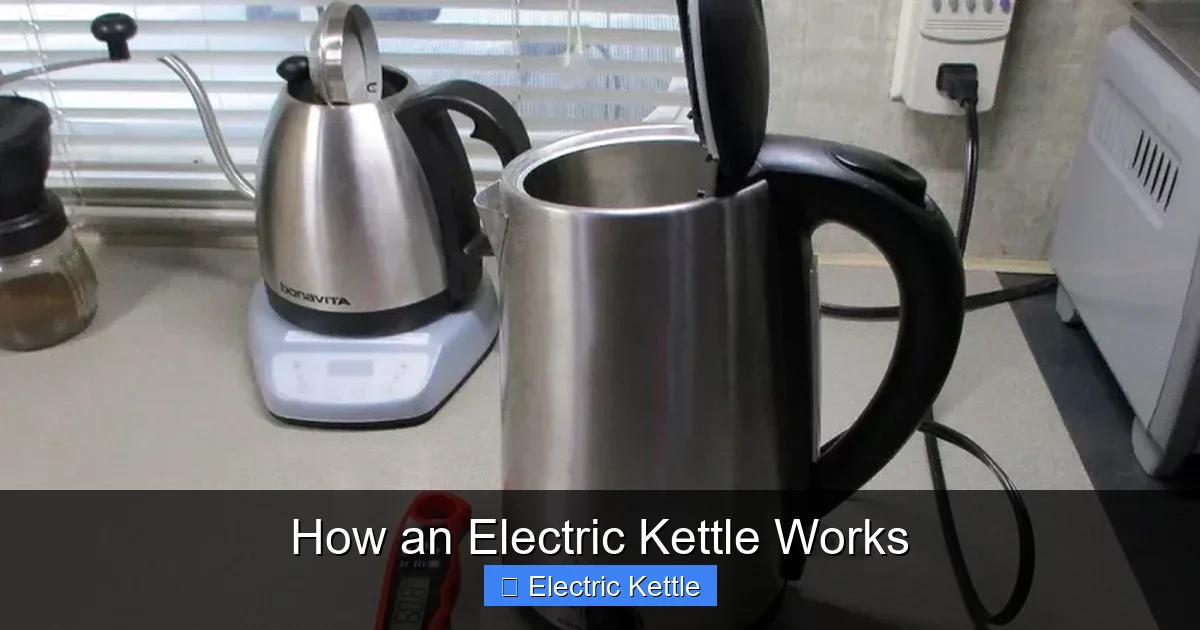
Visual guide about How an Electric Kettle Works
Image source: irrorwxhiqijjr5q.ldycdn.com
One of the biggest concerns with any heating appliance is safety—especially when water and electricity are involved. Fortunately, modern electric kettles are packed with safety features designed to prevent accidents and give users peace of mind.
The most important of these is the automatic shut-off mechanism. Once the water reaches its boiling point (usually around 212°F or 100°C at sea level), a thermostat inside the kettle detects the temperature and cuts off the power to the heating element. This not only prevents the water from boiling dry but also reduces the risk of overheating, fire, or damage to the appliance.
But how does the kettle “know” when the water is boiling? It uses a bimetallic strip or a thermistor—a temperature-sensitive resistor—to monitor the heat. When the water boils, steam rises and hits this sensor, triggering the shut-off. Some models also use pressure sensors or electronic controls for even greater precision.
Boil-Dry Protection
Another critical safety feature is boil-dry protection. If you accidentally turn on the kettle without water, the heating element can overheat and potentially cause a fire. To prevent this, most kettles are equipped with sensors that detect the absence of water and shut off the power before damage occurs.
This feature is especially important for forgetful users or households with children. It ensures that even if the kettle is turned on empty, it won’t pose a hazard.
Cool-Touch Exteriors and Secure Lids
Many electric kettles are designed with cool-touch exteriors, meaning the outer body stays relatively cool even when the water inside is boiling. This reduces the risk of burns if you accidentally touch the kettle while it’s in use.
Additionally, secure, tight-fitting lids prevent steam from escaping uncontrollably and reduce the chance of spills. Some models even have locking lids that only open after the kettle has cooled slightly, adding another layer of safety.
Temperature Control and Precision Heating
Not all hot water needs to be boiling. Green tea, for example, tastes best when brewed at around 175°F (80°C), while French press coffee prefers water just below boiling. This is where temperature control comes in—a feature that sets premium electric kettles apart from basic models.
Variable temperature kettles allow you to select specific heat settings, often with a digital display or preset buttons labeled for different beverages. Behind the scenes, a microprocessor monitors the water temperature using sensors and adjusts the power to the heating element accordingly. Once the desired temperature is reached, the kettle either shuts off or switches to a “keep-warm” mode.
How Thermostats Work
The thermostat is the brain of the temperature control system. It continuously reads the water temperature and compares it to the target setting. If the water is too cool, it keeps the heating element active. If it’s too hot, it turns off the power. Some advanced models even use PID (proportional-integral-derivative) controllers for ultra-precise temperature regulation, minimizing fluctuations and ensuring consistency.
Benefits of Precision Heating
Using the right temperature for your beverage can dramatically improve flavor. Overheating green tea, for instance, can make it bitter, while underheating coffee won’t extract enough flavor. With a temperature-controlled kettle, you can brew like a pro—whether you’re making delicate white tea or a robust espresso.
Many kettles also offer a “hold temperature” feature, which keeps the water at the selected heat for up to an hour. This is perfect for slow brewers or people who like to sip their tea over time.
Energy Efficiency and Environmental Impact
Electric kettles are among the most energy-efficient ways to heat water. Unlike stovetop kettles, which lose heat to the surrounding air, electric kettles transfer nearly all their energy directly into the water. Studies show that electric kettles can be up to 80% more efficient than gas stoves and 50% more efficient than electric stovetops.
This efficiency translates to real savings. Boiling a full kettle uses about the same amount of energy as running a 60-watt light bulb for one hour. And because electric kettles heat water so quickly, they use less energy overall—especially if you only boil the amount you need.
Boil Only What You Need
One of the easiest ways to save energy is to avoid overfilling your kettle. Many people fill it to the max “just in case,” but this wastes energy and increases boiling time. Instead, measure the water you actually need—whether it’s one cup for tea or two for coffee. Most kettles have clear markings to help you pour the right amount.
Eco-Friendly Materials and Longevity
Choosing a kettle made from sustainable materials—like stainless steel or BPA-free plastic—can reduce environmental impact. Stainless steel kettles, in particular, are durable, recyclable, and resistant to staining and odor retention.
Additionally, a well-maintained electric kettle can last 5–10 years or more. This longevity reduces waste and the need for frequent replacements, making it a greener choice in the long run.
Maintenance and Care for Long-Lasting Performance
Like any appliance, an electric kettle performs best when it’s properly maintained. Over time, minerals from hard water can build up inside the kettle, forming limescale. This not only affects taste but can also reduce heating efficiency and shorten the kettle’s lifespan.
Descaling: The Key to Clean Water
Descaling removes mineral deposits using a mild acid, such as white vinegar or a commercial descaling solution. To descale your kettle, fill it halfway with equal parts water and vinegar, bring it to a boil, then let it sit for 30–60 minutes. Afterward, rinse thoroughly and run a few cycles with clean water to remove any lingering taste.
For areas with very hard water, descaling once a month is recommended. In softer water regions, every 2–3 months may be sufficient.
Cleaning the Exterior and Filter
Wipe the outside of your kettle with a damp cloth and mild detergent. Avoid submerging the base or electrical components in water. Many kettles also have a removable mesh filter near the spout to catch sediment. This filter should be rinsed regularly to prevent clogs.
Storing Your Kettle
When not in use, store your kettle unplugged and with the lid open to allow moisture to escape. This prevents mold and odors from developing inside.
Modern Innovations and Smart Features
The electric kettle has come a long way from its simple beginnings. Today’s models are packed with smart features that make them more convenient, efficient, and user-friendly.
Smart Kettles and App Connectivity
Some high-end kettles can connect to your smartphone via Wi-Fi or Bluetooth. Using a dedicated app, you can set brewing schedules, adjust temperatures remotely, and even receive notifications when your water is ready. These “smart kettles” are perfect for tech-savvy users who want maximum control.
Cordless Design and 360° Bases
Most modern kettles are cordless, meaning the pot lifts off a separate base for easy pouring. The base connects via a 360° swivel, allowing you to place the kettle in any direction without tangling the cord. This design improves safety and convenience, especially in crowded kitchens.
LED Indicators and Keep-Warm Functions
LED lights illuminate when the kettle is heating or has reached the desired temperature. Some models even change color based on the heat setting—blue for cool, red for boiling. Keep-warm functions maintain the water temperature for up to an hour, so you don’t have to reheat it.
Quiet Operation and Insulation
Newer kettles are designed to operate more quietly, with insulated walls that reduce noise and retain heat. This is especially useful in open-plan homes or offices where silence is valued.
Choosing the Right Electric Kettle for Your Needs
With so many options on the market, selecting the right electric kettle can feel overwhelming. Here are a few factors to consider:
– **Capacity:** Choose based on your household size. A 1-liter kettle is ideal for individuals or couples, while families may prefer 1.5–1.7 liters.
– **Material:** Stainless steel is durable and retains heat well. Glass offers visibility but can be fragile. Plastic is lightweight but may retain odors.
– **Temperature Control:** Essential for tea and coffee lovers. Look for models with multiple presets.
– **Speed:** Higher wattage means faster boiling—ideal for busy mornings.
– **Safety Features:** Ensure it has automatic shut-off, boil-dry protection, and a secure lid.
– **Ease of Cleaning:** Removable filters and smooth interiors make maintenance simpler.
Conclusion
An electric kettle is more than just a tool for boiling water—it’s a blend of science, safety, and smart design that makes daily life easier and more enjoyable. From the moment electricity flows through the heating element to the instant steam signals that your water is ready, every part of the process is engineered for efficiency and reliability.
Whether you’re brewing a morning cup of coffee, preparing a soothing cup of herbal tea, or simply needing hot water for instant noodles, an electric kettle delivers speed, precision, and peace of mind. With features like automatic shut-off, temperature control, and energy efficiency, it’s no wonder this appliance has become a kitchen staple in homes around the world.
By understanding how an electric kettle works, you can make better choices about which model to buy, how to use it safely, and how to maintain it for years of reliable service. So the next time you press that button and hear the gentle hum of heating water, remember—you’re not just boiling water. You’re experiencing the quiet brilliance of modern engineering at its finest.
Frequently Asked Questions
How does an electric kettle know when to turn off?
An electric kettle uses a thermostat or temperature sensor to detect when water reaches boiling point. Once the steam hits the sensor, it triggers the automatic shut-off mechanism, cutting power to the heating element.
Is it safe to leave an electric kettle plugged in?
Yes, it’s generally safe to leave an electric kettle plugged in when not in use, as long as it’s turned off. Modern kettles have safety features like automatic shut-off and boil-dry protection to prevent accidents.
Can I use an electric kettle with hard water?
Yes, but hard water causes limescale buildup. Regular descaling with vinegar or a commercial solution will keep your kettle running efficiently and prevent mineral deposits.
Why is my electric kettle making a clicking noise?
A clicking sound is normal and usually comes from the thermostat or heating element adjusting as it heats. If the noise is loud or constant, it may indicate a loose component or scaling—check the manual or contact the manufacturer.
How often should I clean my electric kettle?
Clean the exterior weekly and descale the interior every 1–3 months, depending on water hardness. Rinse the filter after each use to prevent clogs.
Can I boil milk or other liquids in an electric kettle?
No, electric kettles are designed for water only. Boiling milk, soup, or sugary liquids can damage the heating element, cause burning, and void the warranty.