A cordless electric kettle heats water quickly and safely using a concealed heating element and a detachable base. It’s designed for convenience, portability, and energy efficiency, making it a kitchen essential for tea, coffee, and more.
Key Takeaways
- Detachable Design: The kettle lifts off its base for easy pouring and refilling, eliminating tangled cords.
- Concealed Heating Element: Water heats faster and more evenly with a hidden element that reduces limescale buildup.
- Automatic Shut-Off: Built-in sensors turn off the kettle when water reaches boiling point, preventing overheating.
- Thermal Safety Features: Overheat protection and dry-boil prevention enhance user safety.
- Energy Efficient: Heats only the water you need, using less electricity than stovetop kettles.
- Versatile Use: Ideal for boiling water for tea, coffee, instant meals, and baby formula.
- Easy Maintenance: Smooth interiors and removable filters make cleaning simple and effective.
📑 Table of Contents
Introduction to the Cordless Electric Kettle
Imagine waking up on a chilly morning, craving a warm cup of tea or coffee. Instead of waiting for a stovetop kettle to whistle or dealing with a cord that gets tangled every time you move it, you simply press a button. Within minutes, your water is boiling, and you’re pouring it into your favorite mug—no cords, no hassle. That’s the magic of a cordless electric kettle.
A cordless electric kettle is a modern kitchen appliance designed to heat water quickly and efficiently. Unlike traditional kettles that sit on a stove or have a fixed power cord, cordless models feature a detachable design. The kettle itself lifts off a charging base, allowing you to carry it anywhere—whether to the dining table, your desk, or even to a friend’s house. This freedom from cords makes it incredibly convenient, especially in small kitchens or offices where space and mobility matter.
But how does it actually work? At first glance, it seems simple: plug it in, press a button, and wait. But beneath its sleek exterior lies a clever combination of engineering, safety features, and energy-efficient technology. From the moment you press the power button to the instant the kettle automatically shuts off, a series of precise actions take place. Understanding these processes not only helps you appreciate the appliance more but also ensures you use it safely and effectively.
Core Components of a Cordless Electric Kettle
Visual guide about How Cordless Electric Kettle Works
Image source: m.media-amazon.com
To truly grasp how a cordless electric kettle works, it’s essential to know its key parts. Each component plays a vital role in heating water quickly, safely, and efficiently. Let’s break them down one by one.
The Kettle Body
The main body of the kettle is typically made from high-quality materials like stainless steel, plastic, or glass. Stainless steel is popular because it’s durable, resists rust, and retains heat well. Plastic models are lightweight and often more affordable, while glass kettles offer a modern look and let you see the water level and boiling process. Regardless of material, the interior is usually smooth and non-reactive, ensuring no metallic taste transfers to your water.
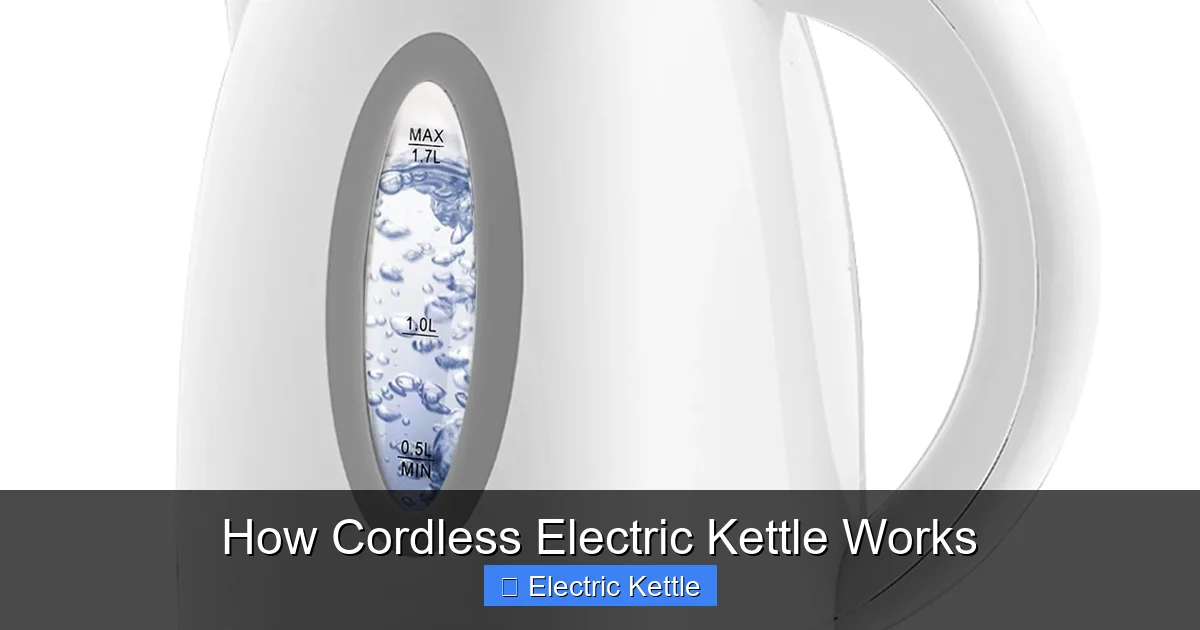
Inside the body, you’ll find a water level indicator—usually marked with minimum and maximum lines. This helps you add the right amount of water, preventing underfilling (which can damage the kettle) or overfilling (which may cause spills). Some models also include a built-in filter at the spout to catch limescale and impurities, especially useful in hard water areas.
The Detachable Base
One of the defining features of a cordless electric kettle is its detachable base. This circular platform contains the electrical contacts and connects to the power outlet via a short, sturdy cord. When the kettle is placed on the base, metal contacts on the bottom of the kettle align with those on the base, completing the electrical circuit.
The base is designed to be stable and slip-resistant, often with rubber feet to prevent sliding. It’s also compact, taking up minimal counter space. Because the kettle lifts off easily, you can pour water without worrying about a cord getting in the way—perfect for serving guests or making tea at the table.
The Heating Element
At the heart of every electric kettle is the heating element. In cordless models, this element is usually concealed beneath a stainless steel plate at the bottom of the kettle. This design has several advantages. First, it prevents direct contact between the element and water, reducing the risk of limescale buildup and making cleaning easier. Second, it allows for more even heat distribution, so water heats faster and more uniformly.
The heating element is typically made from a high-resistance alloy like nichrome, which heats up quickly when electricity passes through it. When you press the power button, electricity flows from the base through the contacts into the element, causing it to glow red-hot. This heat transfers to the water above, raising its temperature rapidly.
The Control Panel and Switch
Most cordless electric kettles feature a simple control panel, often just a single button or switch. Some advanced models include variable temperature settings for different types of tea or coffee, LED indicators, or keep-warm functions. The main switch activates the heating process and is usually located on the handle for easy access.
When you press the switch, it sends a signal to the internal circuitry to begin heating. Many kettles also have a lid that must be closed for the switch to work—this is a safety feature to prevent accidental activation.
The Thermostat and Safety Sensors
Inside the kettle, a thermostat monitors the water temperature. Once the water reaches boiling point (typically 100°C or 212°F at sea level), the thermostat triggers an automatic shut-off mechanism. This not only saves energy but also prevents the kettle from boiling dry, which could damage the heating element or pose a fire risk.
Additional safety sensors may include overheat protection, which cuts power if the kettle gets too hot, and dry-boil protection, which stops heating if there’s no water inside. These features make cordless electric kettles among the safest kitchen appliances available.
How the Heating Process Works
Now that we’ve covered the components, let’s walk through the step-by-step process of how a cordless electric kettle heats water. It’s a fascinating blend of physics and engineering that happens in just a few minutes.
Step 1: Placing the Kettle on the Base
Everything starts when you place the kettle onto its charging base. The metal contacts on the bottom of the kettle align perfectly with those on the base, creating a secure electrical connection. This connection is crucial—without it, no power can flow to the heating element.
Most kettles have a design that ensures the contacts only connect when the kettle is properly seated. This prevents accidental activation and reduces wear on the contacts over time.
Step 2: Adding Water and Closing the Lid
Next, you fill the kettle with water. It’s important to stay within the marked minimum and maximum levels. Too little water can expose the heating element, triggering dry-boil protection or causing damage. Too much water can overflow when it boils, creating a mess or even a safety hazard.
Once filled, you close the lid. Many kettles won’t activate unless the lid is securely closed—this is a built-in safety feature. The lid also helps retain heat, speeding up the boiling process.
Step 3: Pressing the Power Button
With the kettle on the base and the lid closed, you press the power button. This sends an electrical signal to the internal circuitry, which activates the heating element. Electricity flows from the base, through the contacts, and into the element, causing it to heat up rapidly.
You’ll often hear a faint hum or see the LED light turn on, indicating that heating has begun. Some kettles also have a switch that clicks into place, giving a tactile confirmation that it’s on.
Step 4: Water Heating Up
As the heating element warms up, it transfers heat to the water through conduction. Because the element is in direct contact with the base of the kettle, heat spreads quickly and evenly. This is why electric kettles are so much faster than stovetop models—there’s no need to wait for a burner to heat up first.
Within 3 to 5 minutes (depending on the kettle’s wattage and water volume), the water reaches boiling point. You’ll see bubbles forming at the bottom, rising to the surface, and steam escaping from the spout. The sound of boiling water is unmistakable—a gentle rumble that signals your tea or coffee is almost ready.
Step 5: Automatic Shut-Off
Here’s where the thermostat takes over. Once the water hits 100°C, the thermostat detects the temperature change and sends a signal to cut off the power. The heating element stops, and the kettle turns off automatically. This usually happens with a soft click or beep, letting you know it’s done.
This automatic shut-off is one of the most important safety features. It prevents the kettle from continuing to heat after the water has boiled, which could lead to overheating, steam buildup, or even damage to the appliance. It also saves energy—no need to monitor the kettle or worry about forgetting to turn it off.
Step 6: Lifting and Pouring
With the heating cycle complete, you can now lift the kettle off the base. The cordless design makes this effortless—just grasp the handle and lift. The kettle is now free to move anywhere, whether you’re pouring into a mug, a French press, or a bowl for instant noodles.
The spout is designed for a smooth, drip-free pour, and the handle stays cool to the touch thanks to insulated materials. Some models even have a gooseneck spout for precise pouring, ideal for pour-over coffee.
Safety Features and Mechanisms
Safety is a top priority in cordless electric kettles. Manufacturers include multiple layers of protection to prevent accidents, extend the appliance’s lifespan, and give users peace of mind. Let’s explore the most common safety features and how they work.
Automatic Shut-Off
As mentioned earlier, automatic shut-off is a standard feature in modern kettles. It uses a bimetallic thermostat or electronic sensor to detect when water reaches boiling point. Once triggered, it cuts power to the heating element within seconds.
This feature not only prevents overheating but also reduces energy waste. Without it, the kettle could continue boiling, turning water into steam and potentially damaging internal components.
Dry-Boil Protection
Dry-boil protection is another critical safety mechanism. It prevents the kettle from heating when there’s no water inside. This can happen if you accidentally turn it on without filling it or if all the water evaporates before the shut-off activates.
Sensors detect the absence of water—either through temperature spikes or lack of steam—and immediately cut power. Some kettles will even flash a warning light or emit a beep to alert you.
Overheat Protection
In rare cases, internal components may malfunction, causing the kettle to overheat. Overheat protection kicks in when temperatures exceed safe limits. It works by disconnecting the power supply until the kettle cools down.
This feature protects both the user and the appliance, reducing the risk of fire or electrical damage.
Lid Lock and Child Safety
Many kettles have a lid that locks during operation, preventing it from opening while the water is boiling. This reduces the risk of scalding from steam or hot water. Some models also include child-safe switches that require a specific action (like pressing and holding) to activate, minimizing accidental use.
Cool-Touch Exterior
Even though the water inside is boiling, the exterior of the kettle remains cool to the touch. This is achieved through insulated materials and double-wall construction. It’s especially important in households with children or pets, where accidental contact could lead to burns.
Energy Efficiency and Environmental Benefits
Cordless electric kettles aren’t just convenient—they’re also energy-efficient and environmentally friendly. Compared to stovetop kettles or microwaves, they use less energy to heat water, making them a smart choice for eco-conscious consumers.
Faster Heating, Less Energy
Electric kettles heat water directly through the element, with minimal heat loss. Stovetop kettles, on the other hand, lose heat to the surrounding air and require more time to boil. Studies show that electric kettles can be up to 50% more energy-efficient than gas stoves.
Because cordless models heat water quickly—often in under 5 minutes—they use less electricity overall. This translates to lower energy bills and a smaller carbon footprint.
Precise Water Measurement
Most kettles allow you to boil only the amount of water you need. Instead of heating a full kettle for one cup of tea, you can measure exactly 250ml. This “boil only what you need” approach saves energy and reduces waste.
Some smart kettles even have programmable settings that let you choose the exact temperature and volume, further optimizing energy use.
No Standby Power
Unlike some appliances that consume power even when idle, cordless electric kettles only use electricity when actively heating. Once the water boils and the kettle shuts off, it draws no power—unless it has a keep-warm function, which uses minimal energy.
Long Lifespan and Durability
High-quality cordless kettles are built to last. With proper care, they can function for 5 to 10 years or more. This longevity reduces electronic waste and the need for frequent replacements, contributing to sustainability.
Maintenance and Cleaning Tips
To keep your cordless electric kettle working efficiently and safely, regular maintenance is essential. Fortunately, cleaning and upkeep are simple and straightforward.
Descaling for Hard Water Areas
If you live in an area with hard water, limescale buildup is inevitable. Over time, this white, chalky deposit can reduce heating efficiency and affect the taste of your water.
To descale, mix equal parts water and white vinegar, fill the kettle halfway, and let it sit for an hour. Then boil the solution, let it cool, and rinse thoroughly. For tougher buildup, repeat the process or use a commercial descaling product.
Cleaning the Exterior and Filter
Wipe the exterior with a damp cloth and mild detergent. Avoid submerging the base or electrical components in water. The spout filter can usually be removed and rinsed under running water to remove debris.
Regular Inspection
Check the power cord, base, and contacts for signs of wear or damage. Ensure the kettle sits securely on the base and that the lid opens and closes smoothly. If you notice any issues, stop using the kettle and consult the manufacturer.
Storing Properly
When not in use, store the kettle in a dry, cool place. Keep it on the base to protect the contacts, and avoid stacking heavy items on top.
Conclusion
A cordless electric kettle is more than just a convenient kitchen gadget—it’s a marvel of modern engineering designed for speed, safety, and efficiency. From its detachable base and concealed heating element to its automatic shut-off and energy-saving features, every aspect is crafted to enhance your daily routine.
Whether you’re brewing a morning cup of coffee, preparing instant oatmeal, or sterilizing baby bottles, a cordless electric kettle delivers hot water quickly and reliably. Its safety mechanisms protect you from accidents, while its eco-friendly design helps reduce energy consumption.
By understanding how it works and maintaining it properly, you can enjoy years of trouble-free use. So the next time you press that button and hear the gentle hum of boiling water, you’ll appreciate the smart technology working behind the scenes—making your life a little easier, one cup at a time.
Frequently Asked Questions
How does a cordless electric kettle stay powered when lifted off the base?
The kettle only draws power when it’s seated on the base. The heating happens while it’s connected, and once the water boils, it shuts off automatically. You can then lift it off to pour—no power is needed during pouring.
Can I use a cordless electric kettle without the base?
No, the base is essential. It provides the electrical connection needed to power the heating element. Without it, the kettle cannot heat water.
Is it safe to leave a cordless electric kettle plugged in?
Yes, it’s generally safe. Most kettles have automatic shut-off and overheat protection. However, unplugging when not in use can save a small amount of standby energy and reduce wear on the components.
Why does my kettle turn off before the water boils?
This could be due to a faulty thermostat, low water level, or mineral buildup. Check the water level, descale if needed, and ensure the kettle is properly seated on the base. If the problem persists, consult the manufacturer.
Can I boil liquids other than water in a cordless electric kettle?
It’s not recommended. Most kettles are designed for water only. Other liquids like milk or soup can leave residues, clog the filter, or damage the heating element.
How often should I descale my electric kettle?
In hard water areas, descale every 1 to 2 months. In soft water areas, every 3 to 6 months is usually sufficient. Regular descaling maintains performance and extends the kettle’s lifespan.