Electric kettles heat water quickly using an internal heating element powered by electricity. They are designed for efficiency, safety, and convenience, making them a staple in modern kitchens.
Key Takeaways
- Electric kettles use a heating element to boil water: Most models have a concealed or exposed coil that heats up when electricity flows through it.
- Thermostats control temperature and prevent overheating: Built-in sensors detect when water reaches boiling point and automatically shut off the kettle.
- They are faster and more energy-efficient than stovetop kettles: Electric kettles convert nearly all energy into heat, reducing waste and boiling time.
- Safety features include auto shut-off and boil-dry protection: These prevent damage and fire hazards if the kettle runs empty or overheats.
- Materials like stainless steel and glass affect performance and durability: Choose based on heat retention, ease of cleaning, and aesthetic preference.
- Modern kettles offer variable temperature settings: Ideal for brewing different types of tea or coffee that require specific water temperatures.
- Regular maintenance extends lifespan: Descaling and cleaning prevent mineral buildup and ensure consistent performance.
📑 Table of Contents
How Do Electric Kettles Work
Imagine it’s a chilly morning, and you’re craving a warm cup of tea or a quick bowl of instant oatmeal. You flick a switch, and within minutes, your electric kettle is whistling—or silently shutting off—with perfectly boiled water. But have you ever stopped to wonder how this sleek, modern appliance does its magic so quickly and reliably?
Electric kettles are one of the most efficient and convenient kitchen tools we use daily. Unlike stovetop kettles that rely on gas or electric burners to transfer heat, electric kettles generate heat internally using electricity. This direct heating method makes them faster, safer, and more energy-efficient. Whether you’re making coffee, preparing baby formula, or simply need hot water for cooking, understanding how electric kettles work can help you use them better and choose the right model for your needs.
In this guide, we’ll break down the inner workings of electric kettles, explore their components, explain the science behind their speed, and share tips for maintaining them. By the end, you’ll not only know how they work but also appreciate why they’ve become a must-have in homes around the world.
Core Components of an Electric Kettle
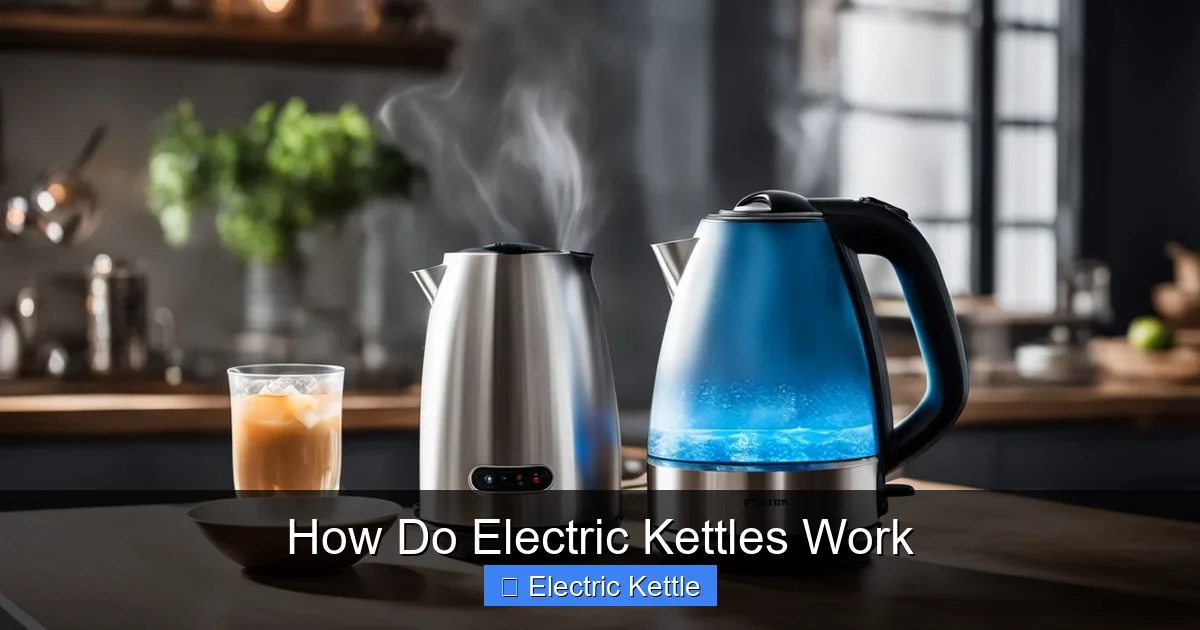
Visual guide about How Do Electric Kettles Work
Image source: app.agilitywriter.ai
To understand how electric kettles work, it helps to know what’s inside. While designs vary by brand and model, most electric kettles share the same essential parts. These components work together seamlessly to heat water quickly and safely.
The Heating Element
At the heart of every electric kettle is the heating element. This is the part responsible for converting electrical energy into heat. In most modern kettles, the heating element is a coiled wire made of a high-resistance metal, such as nichrome (an alloy of nickel and chromium). When electricity passes through this wire, it resists the flow of current, generating heat as a byproduct—a process known as Joule heating.
There are two main types of heating elements: exposed and concealed.
Exposed elements are visible at the bottom of the kettle and are typically found in older or budget models. While they’re simple and effective, they can be harder to clean and more prone to mineral buildup.
Concealed elements, on the other hand, are housed beneath a smooth, flat plate at the base of the kettle. This design makes cleaning easier and reduces the risk of limescale accumulation. Most premium electric kettles today use concealed elements for better performance and longevity.
The Power Base and Cord
Electric kettles are designed for portability and convenience. Instead of being hardwired, they sit on a separate power base that plugs into a wall outlet. The kettle itself has a matching connector at the bottom, allowing it to draw power when placed on the base. This 360-degree swivel base lets you lift and pour the kettle from any angle without tangling the cord.
The power cord is usually short and detachable in some models, making storage easier. The base contains the electrical contacts and sometimes additional circuitry for safety and temperature control.
The Water Reservoir
This is the main body of the kettle where water is poured in. It’s typically made from materials like stainless steel, plastic, or glass. Each material has its pros and cons:
Stainless steel is durable, rust-resistant, and retains heat well. It’s also less likely to retain odors or flavors from previous uses.
Plastic kettles are lightweight and affordable, but they may absorb smells over time and can degrade with repeated heating.
Glass kettles offer a sleek, modern look and allow you to see the water boiling—fun to watch, but they’re more fragile and can be harder to clean if minerals leave spots.
The reservoir usually has a minimum and maximum fill line marked inside to prevent underfilling (which can damage the element) or overfilling (which can cause spills when boiling).
The Lid and Pouring Spout
The lid seals the top of the kettle and often includes a button or flip-top mechanism for easy opening. Some lids are removable for thorough cleaning, while others are hinged.
The pouring spout is designed to control the flow of water and prevent splashing. Many kettles have a built-in filter or mesh screen at the spout to catch limescale or loose tea leaves if you’re using the kettle to brew tea directly.
The Control Panel and Display
In basic models, there may be no control panel at all—just a simple on/off switch. But in advanced electric kettles, you’ll find digital displays, buttons, and even touchscreens.
These controls allow you to select specific temperatures, set timers, or activate keep-warm functions. For example, a tea enthusiast might choose 175°F for green tea or 200°F for black tea, instead of boiling at 212°F.
The Science Behind the Boil
Now that we’ve covered the parts, let’s dive into the science of how electric kettles turn cold water into steam in just a few minutes.
Electrical Energy to Heat Conversion
When you plug in the kettle and press the switch, electricity flows from the outlet, through the base, and into the heating element. The element’s high resistance causes it to heat up rapidly—often reaching temperatures over 500°F in seconds.
This heat is transferred directly to the water in contact with the element. Because the element is submerged or in direct contact with the base, nearly all the energy is used to heat the water, with minimal loss to the surrounding air. This is why electric kettles are so efficient—up to 80–90% of the electrical energy is converted into heat, compared to only 40–50% for gas stoves.
Conduction and Convection
Heat transfer in an electric kettle happens through two main processes: conduction and convection.
Conduction occurs when the hot element touches the water, transferring thermal energy directly to the molecules closest to it.
Convection then takes over. As the water near the element heats up, it becomes less dense and rises. Cooler water from above sinks down to take its place, creating a circulating current. This natural movement ensures even heating throughout the kettle, so the entire volume reaches boiling point at roughly the same time.
Boiling Point and Steam Formation
Water boils at 212°F (100°C) at sea level. As the temperature rises, water molecules gain energy and move faster. At boiling point, they have enough energy to break free from the liquid and form steam bubbles.
These bubbles rise to the surface and burst, releasing steam into the air. The vigorous bubbling you see is the result of rapid vaporization. Some kettles have a whistle or sound alert to notify you when boiling is complete, though many modern models rely on silent auto shut-off.
Temperature Control and Safety Features
One of the biggest advantages of electric kettles over stovetop versions is their built-in intelligence. They don’t just heat water—they manage the process with precision and safety.
Thermostats and Sensors
Most electric kettles include a bimetallic thermostat or electronic temperature sensor. This device monitors the temperature of the water or the heating element itself.
When the water reaches the set temperature—usually 212°F for a full boil—the thermostat triggers a switch that cuts off the power to the heating element. This is known as auto shut-off, and it prevents the kettle from continuing to heat once the water has boiled.
In variable-temperature kettles, the thermostat can be programmed to stop at lower temperatures. For example, white tea brews best at 160–185°F, while French press coffee needs water just off the boil (around 200°F). The sensor detects when the target temperature is reached and stops heating accordingly.
Boil-Dry Protection
What happens if you accidentally turn on the kettle without water? This is where boil-dry protection comes in.
If the heating element gets too hot—because there’s no water to absorb the heat—a secondary thermal fuse or sensor will cut the power. This prevents the element from burning out or causing a fire. Some kettles also have a reset button that must be pressed after a boil-dry event before they can be used again.
Auto Shut-Off and Keep-Warm Functions
Auto shut-off is a standard feature in nearly all modern electric kettles. It not only saves energy but also reduces the risk of accidents. No more forgotten kettles boiling dry or left on for hours.
Some high-end models go a step further with a keep-warm function. After boiling, the kettle maintains the water at a set temperature (usually around 160–180°F) for up to 30 minutes. This is perfect if you’re making multiple cups of tea or need hot water for cooking later.
Overheat and Tip-Over Protection
Additional safety mechanisms include overheat protection, which shuts off the kettle if internal temperatures exceed safe limits, and tip-over protection, which cuts power if the kettle is knocked off the base. These features are especially important in households with children or pets.
Types of Electric Kettles and Their Features
Not all electric kettles are created equal. Depending on your needs, you might prefer a basic model or one packed with smart features.
Standard Electric Kettles
These are the most common type—simple, affordable, and reliable. They have a single heating setting (boil), an auto shut-off, and sometimes a keep-warm function. Ideal for everyday use, they’re great for boiling water for coffee, instant noodles, or baby formula.
Variable Temperature Kettles
Designed for tea and coffee lovers, these kettles let you choose specific temperatures. They often come with preset options like “Green Tea,” “White Tea,” “Oolong,” and “French Press.” Some even allow custom temperature settings via a digital interface.
This precision ensures you don’t scorch delicate teas or under-extract coffee, resulting in better flavor and aroma.
Gooseneck Kettles
Popular among pour-over coffee enthusiasts, gooseneck kettles have a long, narrow spout that allows for slow, controlled pouring. This precision is key for evenly saturating coffee grounds and achieving a balanced brew.
Many gooseneck models are electric and include temperature control, making them a favorite in specialty coffee shops and home kitchens alike.
Smart Kettles
The latest innovation in kettle technology, smart kettles connect to your smartphone via Wi-Fi or Bluetooth. You can control them remotely, set schedules, or receive notifications when your water is ready.
Some models even integrate with voice assistants like Alexa or Google Assistant, so you can say, “Hey Google, boil the kettle,” and it will start heating.
Travel and Cordless Kettles
Compact and lightweight, travel kettles are perfect for dorm rooms, offices, or RVs. They often have lower wattage (500–1000W) and smaller capacities (0.5–1 liter), but still boil water quickly.
Cordless kettles, as the name suggests, operate without a cord. They use rechargeable batteries and are ideal for camping or outdoor use, though they take longer to heat water.
Energy Efficiency and Environmental Impact
Electric kettles are not just convenient—they’re also eco-friendly when used wisely.
Faster Boiling = Less Energy
Because electric kettles heat water directly, they use less energy than stovetops. A typical electric kettle uses between 1200 and 1500 watts and can boil 1 liter of water in 3–5 minutes. In contrast, a gas stove might take 6–8 minutes and waste more heat to the surrounding air.
Studies show that electric kettles can be up to 50% more energy-efficient than gas burners for the same task.
Only Boil What You Need
One simple way to save energy is to boil only the amount of water you’ll use. Overfilling the kettle wastes electricity and increases boiling time. Most kettles have clear markings to help you measure the right amount.
For example, if you’re making one cup of tea (about 8 oz), there’s no need to boil 4 cups of water. This small habit can reduce your energy consumption significantly over time.
Impact of Descaling on Efficiency
Mineral buildup from hard water can coat the heating element, acting as an insulator. This forces the kettle to work harder and use more energy to heat the same amount of water.
Regular descaling—using vinegar or a commercial descaler—removes limescale and restores efficiency. A clean kettle not only performs better but also lasts longer.
Maintenance and Care Tips
To keep your electric kettle working like new, a little maintenance goes a long way.
Cleaning the Interior
After each use, rinse the inside with water. For stubborn stains or odors, mix equal parts water and white vinegar, fill the kettle, and let it sit for 30 minutes. Then boil the solution, let it cool, and rinse thoroughly.
Avoid using abrasive cleaners or steel wool, which can scratch the interior and damage the heating element.
Descaling Regularly
If you live in an area with hard water, descale your kettle every 1–2 months. Use a descaling solution or a homemade mix of vinegar and water. Boil, soak, and rinse to remove mineral deposits.
Some kettles have a “descale” indicator light that reminds you when it’s time.
Wiping the Exterior
Use a damp cloth to wipe down the outside. For stainless steel models, a bit of baking soda paste can remove fingerprints and smudges. Avoid submerging the base or cord in water.
Storing Properly
When not in use, store the kettle with the lid open to allow moisture to escape and prevent mold or mildew. Keep it in a dry, cool place away from direct sunlight.
Choosing the Right Electric Kettle
With so many options on the market, how do you pick the best one for your needs?
Consider Capacity
Kettles range from 0.5 liters (for one person) to 1.7 liters (for families). Think about how much water you typically boil at once.
Look at Wattage
Higher wattage (1500W+) means faster boiling. If speed is important, choose a high-wattage model.
Check Material and Build Quality
Stainless steel and glass are more durable and easier to clean than plastic. Look for BPA-free materials if health is a concern.
Evaluate Features
Do you need variable temperatures? A gooseneck spout? A keep-warm function? Match features to your lifestyle.
Read Reviews and Warranty
Check customer reviews for reliability and performance. A good warranty (2+ years) is a sign of quality.
Conclusion
Electric kettles are marvels of modern engineering—simple in concept, yet packed with smart technology. They work by converting electrical energy into heat through a heating element, using thermostats and sensors to control temperature and ensure safety. From basic models to smart, variable-temperature kettles, there’s an option for every kitchen and every need.
Their speed, efficiency, and convenience make them a better choice than stovetop kettles for most people. And with proper care—like regular cleaning and descaling—they can last for years.
Whether you’re brewing the perfect cup of tea, making coffee, or just need hot water fast, understanding how electric kettles work helps you get the most out of this everyday essential. So next time you press that button, you’ll know exactly what’s happening inside—and why it’s such a smart, simple, and satisfying way to boil water.
Frequently Asked Questions
How fast do electric kettles boil water?
Most electric kettles boil 1 liter of water in 3 to 5 minutes, depending on wattage and starting water temperature. Higher-wattage models (1500W+) are faster than lower-wattage ones.
Are electric kettles safe to use?
Yes, modern electric kettles are very safe. They include features like auto shut-off, boil-dry protection, and overheat sensors to prevent accidents and damage.
Can I use an electric kettle for tea or coffee?
Absolutely. Many electric kettles, especially variable-temperature models, are designed specifically for brewing tea and coffee at the ideal temperature for each type.
Do electric kettles use a lot of electricity?
No, they are energy-efficient. They convert most of the electricity into heat, using less energy than stovetops. Boiling only the water you need further reduces consumption.
How often should I descale my electric kettle?
Descale every 1–2 months if you have hard water, or every 3–4 months with soft water. Look for reduced performance or visible limescale as signs it’s time.
Can I leave water in my electric kettle overnight?
It’s not recommended. Stagnant water can promote bacterial growth and absorb odors. Empty and rinse the kettle after each use for best hygiene.