Electric kettles heat water rapidly thanks to high-wattage heating elements, direct immersion technology, and optimized thermal design. Unlike stovetop kettles, they convert nearly all electrical energy into heat with minimal loss, making them one of the fastest ways to boil water at home.
Have you ever stood in your kitchen, waiting for a pot of water to boil on the stove, only to grow impatient after what feels like an eternity? Now imagine flipping a switch, hearing a gentle hum, and within minutes—boom—your water is bubbling and ready. That’s the magic of the electric kettle. Whether you’re brewing morning tea, preparing instant oatmeal, or making a quick cup of coffee, electric kettles deliver hot water faster than almost any other household appliance. But how do they manage to work so fast?
The secret lies in a combination of smart engineering, powerful heating technology, and energy-efficient design. Unlike traditional stovetop kettles that rely on transferring heat from a flame or electric coil through the bottom of the pot—a process that loses energy to the air—electric kettles bring the heat directly to the water. This direct-contact method eliminates wasted energy and dramatically reduces boiling time. In fact, most modern electric kettles can bring a full liter of water to a boil in under five minutes, sometimes even faster.
But speed isn’t the only advantage. Electric kettles are also incredibly convenient, safe, and energy-efficient. They come with features like automatic shut-off, temperature presets, and keep-warm functions that make them ideal for daily use. Whether you’re a busy professional, a student in a dorm, or someone who just loves a perfectly steeped cup of tea, understanding how your electric kettle works can help you make better choices when buying and using one.
Key Takeaways
- High-wattage heating elements: Most electric kettles use 1500–3000 watts, generating intense heat quickly to boil water in 3–5 minutes.
- Direct immersion heating: The heating coil or plate is submerged in water, transferring heat directly and efficiently without relying on stovetop conduction.
- Thermal efficiency: Electric kettles lose very little heat to the environment, unlike gas or electric stoves, resulting in faster boiling times.
- Automatic shut-off and temperature control: Advanced models detect boiling points and shut off instantly, preventing overheating and saving energy.
- Compact design and insulation: Modern kettles are engineered to retain heat and minimize surface area, speeding up the heating process.
- Material matters: Stainless steel, glass, and BPA-free plastic interiors affect heat transfer and speed—stainless steel often performs best.
- Energy efficiency: Electric kettles use up to 50% less energy than stovetop methods for the same amount of water.
📑 Table of Contents
How Electric Kettles Generate Heat So Quickly
At the heart of every electric kettle is a powerful heating element—usually a coiled metal wire or a flat disc located at the base of the appliance. When you plug in the kettle and press the power button, electricity flows through this element, causing it to heat up rapidly. This process is known as Joule heating or resistive heating. The electrical resistance in the metal coil converts electrical energy directly into thermal energy, which then transfers to the water surrounding it.
Most electric kettles operate at wattages between 1500 and 3000 watts. For comparison, a standard stovetop burner might run at around 1000–1500 watts, but much of that energy is lost to the surrounding air or absorbed by the pot itself. In contrast, the heating element in an electric kettle is submerged or tightly integrated into the water chamber, ensuring that nearly all the heat goes directly into the water. This direct transfer is what makes electric kettles so fast.
Let’s break it down with a real-world example. Suppose you’re boiling one liter of water starting at room temperature (about 20°C or 68°F). To reach boiling point (100°C or 212°F), the water needs to absorb approximately 334,000 joules of energy. A 2000-watt electric kettle can deliver that energy in just under three minutes, assuming 100% efficiency. In practice, due to minor heat losses and the time it takes for the element to warm up, it usually takes about 3.5 to 4 minutes. That’s still incredibly fast compared to a stovetop kettle, which might take 6–8 minutes under ideal conditions.
The Role of Wattage in Speed
Wattage is one of the most important factors determining how fast your kettle boils water. The higher the wattage, the more electrical power the kettle can draw, and the faster it can generate heat. A 1500-watt kettle will take longer than a 3000-watt model, all else being equal. This is why commercial or high-end kettles often boast higher wattages—they’re designed for speed and performance.
For example, a popular 1800-watt electric kettle might boil a full liter in about 4 minutes, while a 3000-watt model can do it in under 3. If you’re someone who values speed—say, you’re making multiple cups of tea throughout the day or need hot water quickly for cooking—opting for a higher-wattage kettle is a smart move. Just keep in mind that higher wattage may require a dedicated circuit in older homes to avoid tripping breakers.
Direct Immersion vs. Stovetop Heating
One of the key reasons electric kettles are faster than stovetop kettles is the method of heat transfer. Stovetop kettles rely on conduction: heat from the burner travels through the metal base of the pot and then into the water. This process is inherently inefficient because heat is lost to the air, the stovetop surface, and even the handle of the pot. Additionally, the bottom of the kettle may heat up faster than the top, leading to uneven heating and longer boiling times.
Electric kettles, on the other hand, use direct immersion heating. The heating element is either submerged in the water (in older models) or integrated into a sealed base that makes direct contact with the water (in modern designs). This means heat is transferred almost instantly and uniformly throughout the liquid. There’s no waiting for the pot to warm up first—the water starts heating the moment the element does.
This direct contact also reduces thermal lag, which is the delay between when heat is applied and when the water temperature rises. In stovetop kettles, this lag can be significant, especially with thin-bottomed pots. Electric kettles eliminate this issue, resulting in faster, more responsive heating.
Thermal Efficiency: Why Electric Kettles Waste Less Energy
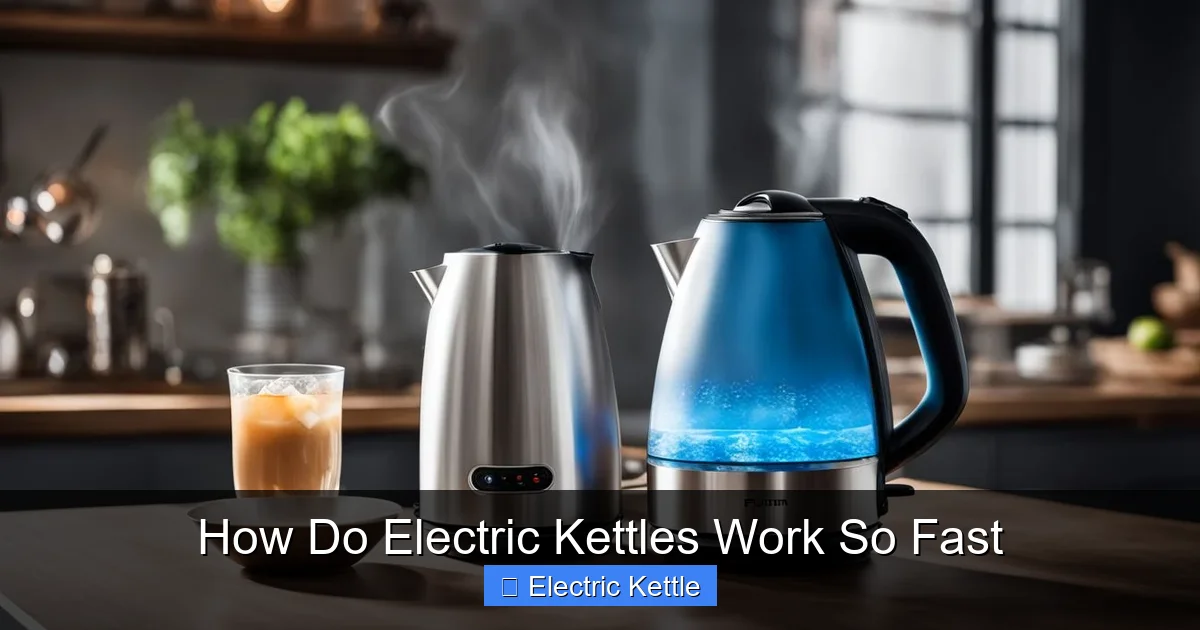
Visual guide about How Do Electric Kettles Work So Fast
Image source: app.agilitywriter.ai
Energy efficiency is another major factor behind the speed of electric kettles. According to studies by energy agencies and consumer testing groups, electric kettles are up to 80% more efficient than stovetop kettles when it comes to converting energy into heat. This means less electricity is wasted, and more of it goes directly into boiling your water.
The reason for this high efficiency lies in the design. Electric kettles are typically well-insulated and have a compact shape that minimizes surface area exposed to the air. This reduces heat loss through convection and radiation. Additionally, because the heating element is inside the water chamber, there’s minimal contact with cooler surfaces, further reducing energy waste.
In contrast, stovetop kettles lose a significant amount of heat to the surrounding environment. The flame or electric coil heats the air around the pot, and the pot itself radiates heat outward. Even induction stovetops, while more efficient than gas or coil burners, still lose some energy to the cooktop surface and ambient air.
Let’s look at a practical comparison. Suppose you boil one liter of water using a 1500-watt electric kettle and a 1500-watt stovetop burner. The electric kettle might use about 0.1 kWh of electricity and take 4 minutes. The stovetop might take 7 minutes and use closer to 0.175 kWh due to inefficiencies. Over time, this difference adds up—both in time and energy costs.
Insulation and Heat Retention
Modern electric kettles often feature double-walled construction or thermal insulation to keep water hot longer and reduce reheating time. While this doesn’t directly affect the initial boiling speed, it does contribute to overall efficiency. For example, if you boil water in the morning and want to use it again an hour later, an insulated kettle will retain much of its heat, meaning it takes less time and energy to reheat.
Some premium models even include vacuum insulation, similar to what you’d find in a thermos. This technology significantly reduces heat loss, keeping water hot for hours. While this feature is more about convenience than speed, it does mean you spend less time reboiling water throughout the day.
Automatic Shut-Off and Temperature Control
Another efficiency booster is the automatic shut-off feature. Once the water reaches boiling point, most electric kettles use a bimetallic strip or electronic sensor to detect the temperature and cut off power. This prevents the kettle from continuing to heat dry, which could damage the element or pose a fire risk.
Advanced models go a step further with variable temperature control. Instead of just boiling water, they allow you to select specific temperatures—like 80°C for green tea or 90°C for French press coffee. This not only improves the quality of your brew but also saves energy by not overheating the water. For instance, heating water to 80°C instead of 100°C uses about 20% less energy, and the kettle reaches that temperature faster.
The Science Behind the Speed: Heat Transfer and Design
The speed of an electric kettle isn’t just about power—it’s also about smart engineering. Every component, from the shape of the kettle to the material of the interior, is designed to maximize heat transfer and minimize resistance.
One key design feature is the placement of the heating element. In most modern kettles, the element is flat and integrated into the base, creating a large surface area in contact with the water. This allows for even heat distribution and faster temperature rise. Older models with coiled elements submerged in the water also work well but can be harder to clean and may accumulate limescale over time.
The shape of the kettle also plays a role. A wide, shallow base allows more water to come into contact with the heating surface, speeding up the process. Conversely, a tall, narrow kettle might take longer because less water is in direct contact with the heat source. This is why many fast-boiling kettles have a broad, low-profile design.
Material Matters: Stainless Steel, Glass, and Plastic
The interior material of your kettle affects both speed and taste. Stainless steel is the most common choice because it’s durable, conducts heat well, and doesn’t impart flavors to the water. It’s also easy to clean and resistant to corrosion. High-quality stainless steel kettles often have a layered base (like tri-ply construction) that improves heat distribution.
Glass kettles are popular for their aesthetic appeal and the ability to see the water boiling. However, glass is a poor conductor of heat, so these kettles often rely on a metal heating plate at the base. While they can still boil water quickly, they may not be as efficient as all-metal designs.
Plastic kettles are lightweight and affordable, but they can retain odors and may leach chemicals if not made with food-grade, BPA-free materials. They also tend to have lower heat resistance, which can limit performance over time. For fastest and safest results, stainless steel is generally the best choice.
Limescale and Maintenance: Keeping Your Kettle Fast
Over time, mineral deposits from hard water can build up on the heating element, forming limescale. This crusty layer acts as an insulator, reducing heat transfer and slowing down boiling times. In severe cases, it can even damage the element or cause the kettle to overheat.
To maintain peak performance, it’s important to descale your kettle regularly. Most manufacturers recommend doing this every 1–3 months, depending on water hardness. You can use a commercial descaling solution or a simple mixture of white vinegar and water. Simply fill the kettle, let it sit for an hour, then boil and rinse thoroughly.
Regular cleaning not only keeps your kettle fast but also extends its lifespan and ensures your water tastes fresh. A well-maintained kettle will continue to boil water quickly and efficiently for years.
Comparing Electric Kettles to Other Water-Heating Methods
To truly appreciate how fast electric kettles are, it helps to compare them to other common methods of heating water.
Stovetop kettles, as mentioned, are slower due to indirect heating and energy loss. Gas stoves are particularly inefficient, with only about 40% of the heat reaching the water. Electric coil stoves are better, at around 70%, but still lag behind electric kettles.
Microwave ovens can heat water quickly, but they do so unevenly and can cause superheating—a dangerous condition where water heats beyond boiling point without bubbling. When disturbed, it can erupt violently. Microwaves also use more energy per boil than electric kettles and don’t offer temperature control.
Electric hot water dispensers or instant hot water taps are fast, but they require installation and constant energy use to keep water hot. They’re convenient but less energy-efficient for occasional use.
In contrast, electric kettles offer the best balance of speed, efficiency, safety, and convenience. They’re portable, easy to use, and perfect for everyday tasks.
Real-World Performance: A Side-by-Side Test
Imagine boiling one liter of water using three methods:
– A 1500-watt electric kettle: ~4 minutes
– A gas stovetop kettle: ~7 minutes
– A microwave: ~5 minutes (with risk of superheating)
Not only is the electric kettle faster, but it also uses less energy and is safer. Plus, it shuts off automatically, so you don’t have to watch it.
Choosing the Right Electric Kettle for Speed
If you’re in the market for a fast electric kettle, here are some tips to help you choose the best one:
– Look for high wattage: 2000 watts or more for fastest boiling.
– Choose stainless steel: Better heat conduction and durability.
– Check for flat, integrated heating elements: More efficient than coiled types.
– Consider variable temperature settings: Saves time and energy for different uses.
– Read reviews: Look for real-world boiling times and reliability.
Popular fast-boiling models include the Breville BKE820XL, which boils a liter in under 3 minutes, and the Mueller Ultra Kettle, known for its 1500-watt power and quick heat-up.
Conclusion
Electric kettles work so fast because they combine high-wattage heating elements, direct immersion technology, and energy-efficient design into a compact, user-friendly appliance. By transferring heat directly to the water with minimal loss, they outperform stovetop kettles, microwaves, and other methods in both speed and efficiency. Features like automatic shut-off, temperature control, and insulation further enhance their performance and safety.
Whether you’re making tea, coffee, or instant meals, an electric kettle is one of the most reliable and fast ways to get hot water. Understanding how it works helps you appreciate its design and make informed choices when buying or maintaining one. With regular care and the right model, your electric kettle will keep delivering boiling water in minutes—year after year.
Frequently Asked Questions
Why do electric kettles boil water faster than stovetop kettles?
Electric kettles use high-wattage heating elements that transfer heat directly to the water, minimizing energy loss. Stovetop kettles lose heat to the air and rely on slower conduction through the pot.
How long does it take for an electric kettle to boil water?
Most electric kettles boil one liter of water in 3 to 5 minutes, depending on wattage, starting temperature, and kettle design.
Can a higher-wattage kettle damage my electrical system?
Not if your home’s wiring is up to code. However, very high-wattage kettles (3000W+) may trip breakers in older homes if used on the same circuit as other high-power appliances.
Do electric kettles use a lot of electricity?
No, they’re actually very efficient. A typical boil uses about 0.1 kWh, costing just a few cents. They use less energy than stovetops or microwaves for the same task.
How often should I descale my electric kettle?
Every 1–3 months, depending on water hardness. Regular descaling maintains speed and prevents damage to the heating element.
Can I boil water in an electric kettle multiple times a day?
Yes, electric kettles are designed for frequent use. Just ensure proper maintenance and avoid overfilling to prevent spills or damage.