Electric tea kettles heat water quickly using an internal heating element powered by electricity. They automatically shut off when water reaches boiling point, making them safe, efficient, and convenient for daily use.
Key Takeaways
- Electric kettles use a concealed heating element to rapidly heat water through electrical resistance, converting energy into heat.
- Thermostats and sensors monitor temperature, triggering automatic shut-off when water boils to prevent overheating or dry boiling.
- Most models feature insulated walls and cool-touch handles for safety, reducing the risk of burns during use.
- Energy efficiency is a major advantage—electric kettles use less power than stovetop kettles and heat water faster.
- Modern kettles often include variable temperature settings, ideal for different teas like green, black, or oolong.
- Regular cleaning and descaling maintain performance and extend the kettle’s lifespan.
- Electric kettles are versatile—great for tea, coffee, instant meals, and even baby formula.
📑 Table of Contents
How Do Electric Tea Kettles Work
If you’ve ever stood in your kitchen, waiting for water to boil on the stove, only to forget it and hear the frantic whistle moments later, you’ll appreciate the magic of the electric tea kettle. These sleek, modern appliances have become a staple in homes around the world—not just for tea lovers, but for anyone who values speed, safety, and simplicity in the kitchen. But have you ever stopped to wonder how they actually work?
At first glance, an electric kettle seems straightforward: you fill it with water, plug it in, press a button, and within minutes, you have piping hot water ready for your favorite beverage. But beneath that simple exterior lies a clever combination of physics, engineering, and smart design. From the moment you press the “on” switch, a series of precise actions take place inside the kettle to heat your water quickly and safely. Unlike traditional stovetop kettles that rely on external heat sources like gas or electric burners, electric kettles generate heat internally, making them faster, more energy-efficient, and often safer to use.
In this article, we’ll take a deep dive into the inner workings of electric tea kettles. We’ll explore the science behind their rapid heating, the components that make them tick, and the safety features that protect you from accidents. Whether you’re a tea enthusiast, a busy parent, or just someone who loves a good cup of coffee, understanding how your electric kettle works can help you use it more effectively—and appreciate the technology that makes your daily routine a little easier.
The Science Behind Electric Kettles: How Heat Is Generated
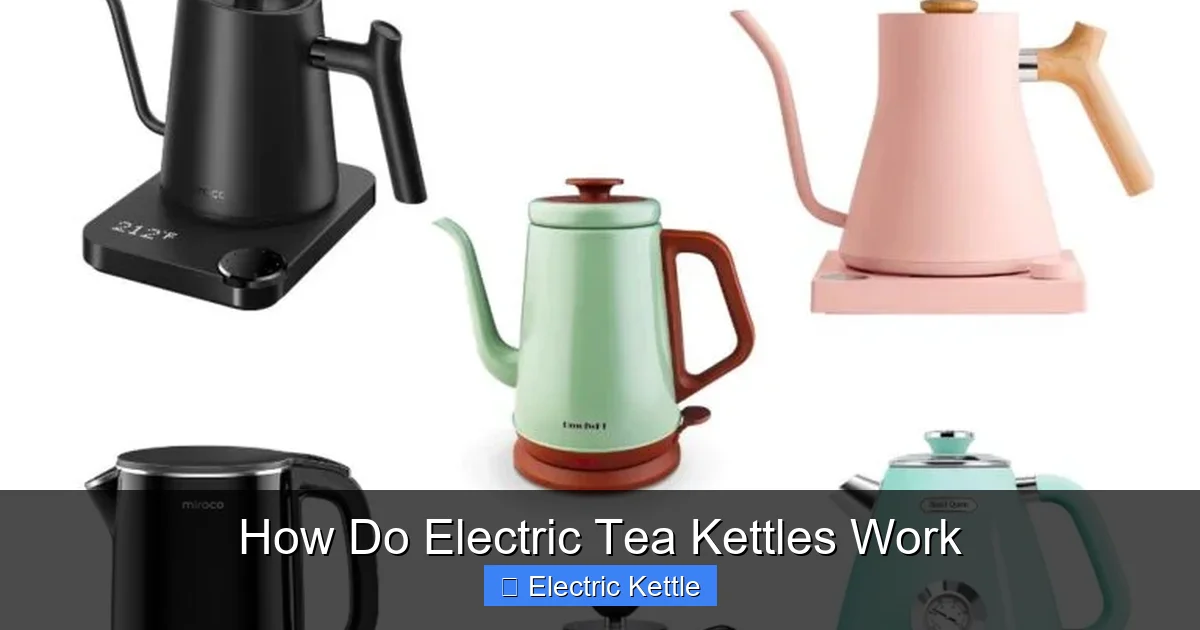
Visual guide about How Do Electric Tea Kettles Work
Image source: jenuinehome.com
At the heart of every electric tea kettle is a simple but powerful principle: electrical resistance. When electricity flows through a conductor—like the metal coil inside your kettle—it encounters resistance. This resistance causes the electrons to collide with atoms in the material, generating heat as a byproduct. This process is known as Joule heating, named after the 19th-century physicist James Prescott Joule, who first described the relationship between electrical current and heat production.
In an electric kettle, this heating occurs in a component called the heating element. Most modern kettles use a concealed heating element, which is embedded beneath the base of the water chamber. This design keeps the element protected from direct contact with water, reducing the risk of corrosion and making cleaning easier. When you plug in the kettle and press the power button, electricity flows from the outlet through the cord and into the heating element. As the current passes through the element, it heats up rapidly—often reaching temperatures well over 200°F (93°C) in just seconds.
The heat generated by the element is then transferred directly to the water through conduction. Because the element is in direct contact with the base of the kettle, heat spreads quickly and evenly across the water. This method is far more efficient than stovetop heating, where much of the heat is lost to the surrounding air. In fact, studies show that electric kettles can be up to 80% more energy-efficient than traditional stovetop models, especially when heating small to moderate amounts of water.
One of the key advantages of this internal heating method is speed. While a stovetop kettle might take 5 to 10 minutes to boil a liter of water, an electric kettle can do the same job in just 3 to 5 minutes, depending on the model and power rating. This is particularly useful in busy households or offices where time is of the essence. Plus, because the heating is contained within the kettle itself, there’s no need to monitor the stove or worry about flames or hot surfaces.
Power Ratings and Heating Speed
Not all electric kettles are created equal when it comes to power. Most household models range from 1,200 to 1,800 watts, with higher wattage generally meaning faster boiling times. For example, a 1,500-watt kettle will heat water more quickly than a 1,200-watt model, assuming all other factors are equal. Some high-end kettles even go up to 2,000 watts or more, delivering near-instant boiling for those who can’t wait.
But power isn’t the only factor that affects speed. The material of the kettle, the volume of water, and even the starting temperature of the water play a role. For instance, heating cold tap water will take longer than warming up water that’s already at room temperature. Similarly, filling the kettle to its maximum capacity will naturally take longer than heating just a cup or two.
To get the fastest results, it’s best to only heat the amount of water you actually need. This not only saves time but also reduces energy consumption. Many modern kettles come with clearly marked water level indicators, making it easy to measure the right amount. Some even have “cup” measurements, so you can heat just enough for one or two mugs.
The Role of Thermal Conductivity
Another important factor in how quickly an electric kettle heats water is the material it’s made from. Most kettles are constructed from stainless steel, glass, or plastic, each with different thermal properties. Stainless steel is a popular choice because it’s durable, resistant to rust, and conducts heat well. Glass kettles offer a modern, aesthetic appeal and allow you to see the water boiling—a satisfying visual cue—but they can be more fragile and may not retain heat as effectively.
Plastic kettles are lightweight and often more affordable, but they can retain odors and may not be suitable for high-temperature use over time. Regardless of the material, the key is how efficiently it transfers heat from the element to the water. A well-designed kettle will have a flat, wide base that maximizes contact with the heating element, ensuring even and rapid heating.
Some premium models also feature double-wall insulation, which helps retain heat after boiling and keeps the exterior cool to the touch. This not only improves safety but also helps keep your water hot longer—perfect if you’re making multiple cups of tea in a row.
Key Components of an Electric Tea Kettle
To understand how electric tea kettles work, it’s helpful to break them down into their core components. Each part plays a specific role in the heating process, safety, and user experience. While designs vary between brands and models, most electric kettles share a similar internal structure.
The Heating Element
As mentioned earlier, the heating element is the powerhouse of the electric kettle. It’s typically a coiled wire made from a high-resistance alloy like nichrome, which is designed to withstand high temperatures without melting. In most modern kettles, this element is concealed beneath the base of the water chamber, sealed behind a stainless steel plate. This “hidden” design prevents mineral buildup and makes cleaning easier, as there’s no exposed coil to scrub.
When electricity flows through the element, it heats up quickly—often reaching over 300°F (149°C) in just a few seconds. The heat is then transferred directly to the water through the metal base. Because the element is submerged in the thermal pathway (even if not directly in the water), it can transfer energy efficiently, minimizing heat loss.
The Thermostat and Temperature Sensor
One of the most important safety and efficiency features in an electric kettle is the thermostat. This small but crucial component monitors the temperature of the water and controls when the heating element turns on and off. Most kettles use a bimetallic thermostat, which consists of two different metals bonded together. As the temperature rises, one metal expands faster than the other, causing the strip to bend. When the water reaches boiling point (around 212°F or 100°C at sea level), the strip bends enough to break the electrical circuit, cutting power to the heating element.
This automatic shut-off feature is what makes electric kettles so safe. Without it, the kettle could continue heating even after the water has boiled away, potentially damaging the element or causing a fire. The thermostat ensures that the kettle turns off as soon as the water reaches the desired temperature, preventing dry boiling and overheating.
Some advanced models go a step further with digital temperature sensors and microprocessors. These allow for precise temperature control, enabling users to select specific heat settings for different types of tea. For example, green tea is best brewed at around 175°F (80°C), while black tea requires a full boil. With variable temperature settings, you can avoid scalding delicate teas and extract the best flavor from each variety.
The Power Base and Cord
Unlike stovetop kettles, electric kettles require a power source to function. Most models come with a detachable power base that connects to the kettle via a 360-degree swivel connector. This allows you to lift and pour the kettle without twisting the cord, making it easier to use and reducing wear and tear on the wiring.
The power base contains the electrical contacts that transfer current from the outlet to the kettle. When the kettle is placed on the base, metal prongs or rings make contact, completing the circuit. This design keeps the cord separate from the hot parts of the kettle, improving safety and durability.
The Lid and Water Inlet
The lid of an electric kettle is more than just a cover—it’s designed for easy filling, pouring, and cleaning. Most lids open with a simple push-button or flip-top mechanism, allowing you to add water without removing the entire lid. Some models feature a mesh filter built into the spout to catch loose tea leaves or limescale particles, ensuring a clean pour every time.
The water inlet is usually located under the lid and is designed to prevent splashing during filling. It’s important to only fill the kettle within the marked minimum and maximum levels. Overfilling can cause water to spill into the electrical components, while underfilling may expose the heating element, leading to dry boiling and potential damage.
The Handle and Cool-Touch Design
Safety is a top priority in electric kettle design, and the handle plays a big role. Most kettles feature ergonomic, heat-resistant handles made from materials like silicone or reinforced plastic. These “cool-touch” handles stay relatively cool even when the water inside is boiling, reducing the risk of burns.
Some models also include additional safety features like automatic lid locks that prevent the lid from opening while the water is hot, or non-slip bases that keep the kettle stable on countertops.
Safety Features That Protect You
Electric kettles are designed with multiple layers of safety to protect users from burns, electrical hazards, and appliance damage. These features are especially important in homes with children or elderly individuals.
Automatic Shut-Off
As discussed earlier, automatic shut-off is one of the most critical safety features. It prevents the kettle from continuing to heat after the water has boiled, which could lead to dry boiling—a situation where the heating element runs without water, causing overheating and potential fire hazards. Most kettles shut off within seconds of reaching boiling point, giving you peace of mind.
Boil-Dry Protection
Many modern kettles include boil-dry protection, which detects when there’s insufficient water in the chamber. If the sensor detects that the water level is too low, it will cut power to the heating element before any damage occurs. This feature is especially useful if you accidentally turn on the kettle without water.
Overheat Protection
In addition to monitoring water temperature, some kettles have overheat protection circuits that monitor the temperature of the heating element itself. If the element gets too hot—due to a malfunction or blockage—the circuit will trip and shut off power. This adds an extra layer of safety, especially in older or heavily used appliances.
Cool-Touch Exterior
As mentioned, many kettles are designed with insulated walls and cool-touch exteriors. This means that even when the water inside is boiling, the outside of the kettle remains safe to touch. This is particularly important when handling the kettle to pour or when placing it on a countertop near children.
Stability and Non-Slip Base
A stable base with non-slip feet helps prevent the kettle from tipping over during use. This is especially important when pouring hot water, as a sudden shift could cause spills or burns. Some models also include a weighted base for added stability.
Energy Efficiency and Environmental Benefits
One of the biggest advantages of electric tea kettles is their energy efficiency. Compared to stovetop kettles, microwaves, or electric stoves, electric kettles use significantly less energy to heat the same amount of water. This is because they transfer heat directly to the water with minimal loss to the surrounding environment.
How Much Energy Do Electric Kettles Use?
On average, an electric kettle uses between 1,200 and 1,800 watts of power. To put this in perspective, boiling one liter of water typically takes about 3 to 4 minutes and consumes roughly 0.1 to 0.15 kilowatt-hours (kWh) of electricity. Depending on your local electricity rates, this costs just a few cents per use.
In contrast, heating the same amount of water on a gas stove can take longer and use more energy, especially if the flame is larger than the kettle base. Electric stovetops are also less efficient, as much of the heat is lost to the air around the pot.
Tips for Maximizing Efficiency
To get the most out of your electric kettle while minimizing energy use, follow these simple tips:
– Only heat the water you need. Heating a full kettle for one cup of tea wastes energy. Use the water level markings to measure the right amount.
– Descale regularly. Mineral buildup from hard water can insulate the heating element, reducing efficiency and increasing boiling time. Clean your kettle every few weeks with vinegar or a commercial descaler.
– Use a lid. Always keep the lid closed while heating. An open lid allows heat to escape, slowing down the process and wasting energy.
– Unplug when not in use. Even when off, some kettles draw a small amount of standby power. Unplugging the base saves energy and reduces wear on the components.
Environmental Impact
Because electric kettles are more efficient, they have a lower carbon footprint per use compared to other heating methods—especially if your electricity comes from renewable sources like solar or wind. Over time, this can add up to significant energy savings and reduced greenhouse gas emissions.
Additionally, many electric kettles are made from recyclable materials like stainless steel and glass, making them more sustainable than single-use alternatives like disposable cups or plastic water bottles.
Maintenance and Care for Long-Lasting Performance
To keep your electric tea kettle working efficiently and safely, regular maintenance is essential. With proper care, a good-quality kettle can last for many years.
Cleaning the Interior
Over time, minerals from hard water can build up inside the kettle, forming a white, chalky residue known as limescale. This not only affects the taste of your water but can also reduce heating efficiency and damage the element.
To clean the interior, fill the kettle halfway with equal parts water and white vinegar. Let it sit for 30 minutes to an hour, then boil the solution. After boiling, let it cool, then rinse thoroughly with clean water. For stubborn buildup, repeat the process or use a commercial descaling product.
Wiping the Exterior
Use a damp cloth to wipe down the outside of the kettle, including the handle and base. Avoid submerging the base or electrical components in water. For stainless steel models, a mild cleaner or polish can help maintain shine.
Checking the Power Cord and Base
Inspect the power cord regularly for fraying or damage. If you notice any issues, stop using the kettle and have it repaired or replaced. Also, make sure the power base is clean and free of water or debris, as moisture can cause electrical faults.
Storing Your Kettle
When not in use, store your kettle in a dry, cool place. Avoid stacking heavy items on top of it, especially if it’s made of glass. If you’re storing it for a long time, make sure it’s completely dry to prevent mold or mineral buildup.
Conclusion
Electric tea kettles are marvels of modern kitchen technology—simple to use, incredibly efficient, and packed with safety features. By converting electrical energy into heat through a concealed heating element, they boil water faster and more efficiently than most traditional methods. With built-in thermostats, automatic shut-off, and cool-touch designs, they offer a safe and convenient way to enjoy your favorite hot beverages.
Whether you’re brewing a delicate green tea at 175°F or making instant coffee with a full boil, understanding how your electric kettle works can help you get the best performance and longest life from your appliance. Regular cleaning, proper use, and attention to safety will ensure that your kettle remains a reliable part of your daily routine for years to come.
So the next time you press that button and hear the gentle hum of the heating element, you’ll know exactly what’s happening inside—and appreciate the smart engineering that makes your perfect cup of tea just a minute away.
Frequently Asked Questions
How does an electric kettle know when to turn off?
Electric kettles use a thermostat or temperature sensor to monitor the water temperature. When the water reaches boiling point (around 212°F or 100°C), the sensor triggers a switch that cuts power to the heating element, automatically shutting off the kettle.
Can you leave water in an electric kettle overnight?
It’s not recommended to leave water sitting in an electric kettle for long periods. Stagnant water can promote bacterial growth and allow mineral buildup. Always empty and rinse the kettle after use, especially if you won’t be using it for a while.
Is it safe to boil water in an electric kettle multiple times?
Yes, it’s safe to reboil water in an electric kettle. However, repeated boiling can concentrate minerals and reduce oxygen levels, which might affect taste. For the best flavor, use fresh water each time.
Do electric kettles use a lot of electricity?
No, electric kettles are highly energy-efficient. They use about 0.1 to 0.15 kWh to boil a liter of water, which costs just a few cents per use—less than most stovetop or microwave methods.
Can you heat milk or other liquids in an electric kettle?
It’s not recommended to heat milk, soup, or other liquids in an electric kettle. These can scorch, foam, or leave residue that’s hard to clean. Most kettles are designed specifically for water.
How often should you descale an electric kettle?
Descaling frequency depends on water hardness. In areas with hard water, descale every 2–4 weeks. In softer water areas, every 1–2 months is usually sufficient. Regular descaling maintains performance and extends the kettle’s life.