A cordless electric tea kettle heats water quickly using an internal heating element, then automatically shuts off when boiling. Its detachable base allows easy pouring and refilling, making it safer and more convenient than stovetop kettles.
If you’ve ever stood over a stovetop kettle, waiting impatiently for the whistle or watching steam fog up your kitchen window, you’ll appreciate the magic of a cordless electric tea kettle. These sleek, modern appliances have become a staple in kitchens around the world—not just for tea lovers, but for anyone who values speed, convenience, and safety when heating water. Whether you’re brewing a morning cup of Earl Grey, preparing instant oatmeal, or making a quick batch of hot chocolate, a cordless electric kettle can make the process effortless.
But how exactly does this handy device work? At first glance, it seems simple: you fill it with water, plug it in, press a button, and within minutes, you have piping-hot water ready to go. Yet beneath that smooth exterior lies a clever combination of engineering, safety mechanisms, and smart design. Unlike traditional kettles that sit directly on a stove, cordless electric kettles operate independently, using electricity to generate heat internally. And because they’re cordless, you can lift the kettle off its base and pour without any cords getting in the way—making them safer, tidier, and more user-friendly.
In this guide, we’ll break down the inner workings of a cordless electric tea kettle, from the heating mechanism to the safety features that make it reliable. You’ll learn how these devices heat water so quickly, why they automatically turn off, and what makes them more efficient than other methods. Whether you’re considering buying your first electric kettle or just curious about how it all works, this article will give you a clear, easy-to-understand explanation—no engineering degree required.
Key Takeaways
- Heating Element: Most cordless electric kettles use a concealed or exposed heating coil to rapidly heat water, often reaching boiling point in under 5 minutes.
- Detachable Base: The kettle lifts off its power base for easy pouring, refilling, and storage—no tangled cords or awkward handling.
- Automatic Shut-Off: Built-in thermostats detect when water boils and cut power instantly, preventing overheating and saving energy.
- Temperature Control: Advanced models offer variable temperature settings for different teas, like green, black, or herbal.
- Safety Features: Overheat protection, boil-dry prevention, and cool-touch exteriors keep users safe during use.
- Energy Efficiency: Electric kettles use less energy than stovetops, heating only the water you need with minimal waste.
- Easy Maintenance: Removable filters and smooth interiors make cleaning simple and help prevent limescale buildup.
📑 Table of Contents
How the Heating System Works
At the heart of every cordless electric tea kettle is its heating system—the component responsible for turning cold water into boiling hot liquid in just a few minutes. Unlike stovetop kettles that rely on external heat from a gas flame or electric burner, electric kettles generate heat internally using an electric heating element. This element is typically located at the bottom of the kettle, either exposed directly to the water or concealed beneath a stainless steel plate.
Most modern cordless kettles use a concealed heating element, which means the coil or plate that heats the water is hidden under a smooth, flat surface. This design has several advantages. First, it prevents mineral buildup (like limescale) from accumulating directly on the heating coil, which can reduce efficiency over time. Second, it makes cleaning easier—since there’s no exposed coil, you can wipe the interior with a sponge without worrying about damaging delicate parts. Third, concealed elements distribute heat more evenly, reducing the risk of hot spots that could cause the kettle to overheat or damage the interior.
When you plug the kettle into an outlet and press the power button, electricity flows from the base through a special connector into the kettle itself. This connector, often called a 360-degree rotational base, allows the kettle to be lifted off and replaced without twisting or tangling the cord. Once power reaches the heating element, it begins to resist the electrical current, converting that energy into heat—a process known as Joule heating. This heat is then transferred directly to the water, raising its temperature rapidly.
One of the reasons electric kettles are so fast is their high wattage. Most household models range from 1200 to 1800 watts, with some commercial-grade versions going even higher. For comparison, a standard stovetop burner might deliver around 1000 watts. This higher power output means the kettle can bring water to a boil in as little as 3 to 5 minutes, depending on the volume and starting temperature. For example, heating 1 liter of water from room temperature (about 20°C or 68°F) to boiling (100°C or 212°F) typically takes around 4 minutes in a 1500-watt kettle.
It’s also worth noting that the shape of the kettle plays a role in heating efficiency. Many cordless electric kettles are designed with a wide base and narrow top, which increases the surface area in contact with the heating element. This allows heat to spread more quickly throughout the water, reducing heating time and improving energy use. Some high-end models even feature dual heating zones or spiral elements that wrap around the base, further enhancing heat distribution.
The Role of the Detachable Base
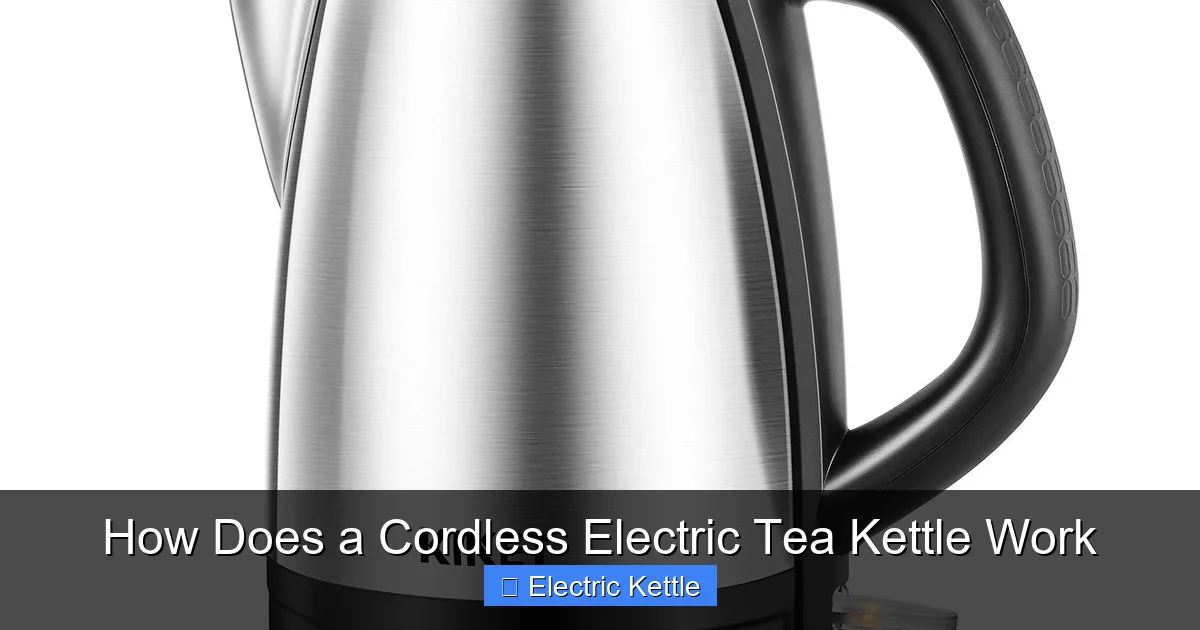
Visual guide about How Does a Cordless Electric Tea Kettle Work
Image source: images-na.ssl-images-amazon.com
One of the most convenient features of a cordless electric tea kettle is its detachable base. This isn’t just a design choice—it’s a functional innovation that improves safety, usability, and overall kitchen efficiency. The base serves as the power source and control center, while the kettle itself is completely separate and portable.
The base contains the electrical components needed to deliver power to the kettle. When you place the kettle onto the base, a set of metal contacts (usually spring-loaded) connect with corresponding points on the bottom of the kettle. These contacts allow electricity to flow from the wall outlet, through the base, and into the heating element inside the kettle. Because the connection is magnetic or spring-based, it’s designed to disengage cleanly when the kettle is lifted—no tugging, twisting, or risk of pulling the cord out of the wall.
This 360-degree rotational design means you can place the kettle back on the base in any orientation. There’s no “right way” to set it down, which is especially helpful in busy kitchens or when your hands are full. It also reduces wear and tear on the connector, extending the lifespan of the appliance. Over time, traditional corded kettles can suffer from frayed wires or loose connections due to constant bending and twisting—issues that are virtually eliminated with a cordless design.
Another benefit of the detachable base is ease of use. Imagine trying to pour water from a kettle that’s still plugged in and sitting on the counter. You’d have to either unplug it first (a hassle) or awkwardly maneuver around the cord. With a cordless kettle, you simply lift it off the base and pour directly into your cup, teapot, or French press. This is especially helpful when making multiple cups or when the kettle is placed on a high shelf or in a corner.
The base also often includes additional features like LED indicators, temperature displays, or preset buttons. For example, some models have a small light that turns on when the kettle is heating and off when it’s done. Others include a keep-warm function that maintains the water at a set temperature after boiling—perfect for tea drinkers who like to steep their leaves slowly.
From a safety standpoint, the detachable base reduces the risk of electrical hazards. Since the kettle itself doesn’t have a cord, there’s less chance of water splashing onto live wires. And because the connection is low-voltage and sealed, the risk of short circuits is minimized. Many manufacturers also include a ground fault circuit interrupter (GFCI) in the base, which cuts power instantly if it detects a fault—adding an extra layer of protection.
Automatic Shut-Off and Safety Mechanisms
One of the most important—and often overlooked—features of a cordless electric tea kettle is its automatic shut-off system. This isn’t just a convenience; it’s a critical safety feature that prevents accidents, saves energy, and protects the appliance from damage.
The shut-off mechanism is typically controlled by a bimetallic thermostat or a thermal sensor located near the heating element. As the water heats up, steam rises and comes into contact with this sensor. When the water reaches boiling point (around 100°C or 212°F at sea level), the sensor detects the temperature and triggers a switch that cuts off the power to the heating element. This happens in a fraction of a second, usually within 1–2 seconds of boiling.
This automatic shut-off serves several purposes. First, it prevents the kettle from continuing to heat once the water has boiled, which could lead to overheating, damage to the interior, or even a fire hazard. Second, it saves energy by stopping the heating process as soon as it’s no longer needed. Unlike a stovetop kettle, which can keep heating if left unattended, an electric kettle knows exactly when to stop.
But what if there’s no water in the kettle? Or if the water level is too low? That’s where boil-dry protection comes in. Most modern cordless kettles are equipped with a secondary safety system that detects when the kettle is empty or nearly empty. If the heating element gets too hot without sufficient water to absorb the heat, the sensor triggers an immediate shut-off. This prevents the element from burning out and reduces the risk of fire.
Some advanced models go even further with overheat protection. If the thermostat fails or the kettle is used in extreme conditions (like high altitude or low voltage), the overheat sensor will cut power to prevent damage. This is especially important in households with children or elderly users who might accidentally leave the kettle on.
Another safety feature found in many cordless kettles is a cool-touch exterior. While the interior gets extremely hot, the outer shell remains relatively cool to the touch. This is achieved through insulation and materials like double-walled stainless steel or heat-resistant plastic. It means you can safely lift the kettle even while it’s heating, reducing the risk of burns.
Additionally, many kettles include a lid lock or steam vent to prevent hot water from splashing out during boiling. The lid stays securely closed until you press a release button, and the steam is directed through a controlled vent rather than escaping unpredictably. This is especially useful when boiling large volumes of water or using the kettle in a small space.
Temperature Control and Precision Brewing
Not all hot water is created equal—especially when it comes to tea. Different types of tea require different brewing temperatures to bring out their best flavor. Green tea, for example, should be brewed at around 70–80°C (158–176°F) to avoid bitterness, while black tea needs a full boil at 100°C (212°F). This is where temperature control in cordless electric kettles becomes a game-changer.
Basic models typically heat water to a full boil and stop—simple and effective for most needs. But many modern kettles now offer variable temperature settings, allowing you to select the ideal heat level for your beverage. These settings are usually controlled via buttons or a digital display on the handle or base.
For example, a high-end kettle might offer presets like:
– 70°C for delicate white or green teas
– 80°C for oolong or jasmine teas
– 90°C for herbal infusions
– 100°C for black tea, coffee, or instant noodles
Some models even allow you to set a custom temperature using a dial or touchscreen. This level of precision is especially appreciated by tea connoisseurs who want to extract the full aroma and flavor without scalding the leaves.
The technology behind temperature control varies. Some kettles use a PID controller (proportional-integral-derivative), which continuously monitors the water temperature and adjusts the heating element accordingly. This ensures a stable, accurate temperature without overshooting. Others use simpler thermostats that cycle the heating on and off to maintain the desired level.
Another advanced feature is the keep-warm function. After the water reaches the set temperature, the kettle can maintain it for a period of time—usually 15 to 60 minutes—by gently reheating as needed. This is perfect if you’re making multiple cups or need hot water for cooking later.
For coffee lovers, some kettles are designed specifically for pour-over brewing. These models have a gooseneck spout that allows for precise, slow pouring—essential for techniques like the V60 or Chemex. Combined with temperature control, this makes the kettle a versatile tool for both tea and coffee enthusiasts.
It’s worth noting that altitude can affect boiling point. At higher elevations, water boils at a lower temperature due to reduced atmospheric pressure. Some smart kettles can detect altitude and adjust their temperature settings automatically, ensuring consistent results no matter where you are.
Energy Efficiency and Environmental Impact
One of the biggest advantages of cordless electric tea kettles is their energy efficiency. Compared to stovetop kettles or microwaves, electric kettles use significantly less energy to heat the same amount of water—making them both cost-effective and environmentally friendly.
Studies have shown that electric kettles are up to 80% more efficient than stovetop methods. This is because they transfer heat directly to the water with minimal loss. On a gas stove, much of the heat escapes into the air around the kettle. On an electric stove, the burner takes time to heat up and cool down, wasting energy. In contrast, an electric kettle heats only the water inside, with almost no wasted heat.
For example, heating 1 liter of water on a gas stove might use about 0.1 kWh of energy, while an electric kettle uses around 0.05 kWh—roughly half as much. Over time, this adds up. If you boil water twice a day, an electric kettle could save you several dollars a year on your energy bill.
Electric kettles are also more efficient than microwaves for heating water. Microwaves heat water unevenly and often require longer heating times, especially for larger volumes. They also use more energy per use and can leave “hot spots” that lead to dangerous steam eruptions.
Another environmental benefit is reduced water waste. With an electric kettle, you can heat exactly the amount of water you need—no more, no less. This is especially useful for single servings. On a stovetop, people often boil more water than necessary “just in case,” leading to wasted energy and water.
Many modern kettles are also designed with sustainability in mind. Materials like stainless steel and BPA-free plastic are durable and recyclable. Some brands offer repair services or modular designs that allow you to replace parts instead of buying a whole new kettle. Energy Star-certified models meet strict efficiency guidelines, further reducing their environmental footprint.
Maintenance and Longevity
To keep your cordless electric tea kettle working efficiently and safely, regular maintenance is essential. The good news is that most of the upkeep is simple and takes just a few minutes.
The most common issue is limescale buildup, especially in areas with hard water. Minerals like calcium and magnesium accumulate on the heating element and interior surfaces, reducing heating efficiency and affecting the taste of your water. To prevent this, descale your kettle every 1–2 months using a mixture of white vinegar and water (1:1 ratio). Let it sit for an hour, then boil and rinse thoroughly.
Cleaning the exterior is easy with a damp cloth. Avoid submerging the base in water—only wipe it down. The filter, usually located near the spout, should be removed and rinsed regularly to prevent clogs.
With proper care, a high-quality cordless electric kettle can last 5–10 years. Look for models with removable filters, concealed elements, and sturdy construction to maximize lifespan.
Conclusion
A cordless electric tea kettle is more than just a convenient appliance—it’s a smart, safe, and efficient way to heat water for tea, coffee, and more. From its internal heating element to its detachable base and advanced safety features, every part is designed with the user in mind. Whether you’re a tea enthusiast or just someone who values speed and simplicity, understanding how your kettle works can help you get the most out of it. With proper care and the right features, it’s a kitchen essential that will serve you well for years to come.
Frequently Asked Questions
How fast does a cordless electric kettle boil water?
Most cordless electric kettles boil 1 liter of water in 3 to 5 minutes, depending on the wattage and starting temperature. Higher-wattage models (1500W+) heat water faster than lower-powered ones.
Is it safe to leave a cordless electric kettle unattended?
Yes, as long as it has automatic shut-off and boil-dry protection. These safety features prevent overheating and shut off the kettle when water reaches boiling point or if it’s empty.
Can I use a cordless kettle for coffee?
Absolutely. Many kettles with temperature control and gooseneck spouts are ideal for pour-over coffee methods like the V60 or Chemex.
Do cordless kettles use more electricity than stovetops?
No, they’re actually more energy-efficient. Electric kettles use about half the energy of gas or electric stovetops because they heat water directly with minimal waste.
How do I clean the inside of my cordless kettle?
Use a mixture of equal parts white vinegar and water. Let it sit for an hour, then boil, rinse, and wipe clean. Do this monthly to prevent limescale buildup.
Why won’t my cordless kettle turn on?
Check if it’s properly seated on the base, the outlet is working, and the lid is closed. If it still doesn’t work, the thermostat or heating element may need repair or replacement.