Ever wondered how your electric kettle stops boiling automatically? It’s not magic—it’s clever engineering. Most kettles use a bimetallic thermostat or temperature sensor near the heating element to detect steam or heat changes, triggering a switch that cuts power once water reaches boiling point.
Have you ever stood in the kitchen, waiting for your electric kettle to finish boiling, only to realize it turned off all by itself—just as the water started to roar and steam began to rise? It’s a small miracle of modern life, one we often take for granted. But how does an electric kettle know when to turn off? Is it reading your mind? Does it have a tiny internal clock? The truth is far more fascinating—and rooted in clever physics and engineering.
At first glance, an electric kettle seems simple: you fill it with water, plug it in, press a button, and wait. But beneath that sleek exterior lies a sophisticated system designed to heat water quickly, safely, and efficiently. The magic happens when the water reaches 100°C (212°F) at sea level—the boiling point. At that moment, the kettle must stop heating to prevent dry boiling, save energy, and avoid potential hazards. But how does it detect that exact moment? The answer lies in a combination of thermal sensors, mechanical switches, and smart design.
Understanding this process not only satisfies curiosity but also helps you make better choices when buying or maintaining your kettle. Whether you’re a coffee lover who needs precise temperatures for pour-over brewing or someone who just wants a quick cup of tea, knowing how your kettle works can improve your experience. In this article, we’ll explore the inner workings of electric kettles, the science behind their automatic shut-off, and why this feature is so important for safety and efficiency.
Key Takeaways
- Automatic shut-off relies on heat or steam detection: Electric kettles use sensors to monitor temperature or steam buildup to know when water has boiled.
- Bimetallic strips are common in older models: These metal strips bend with heat, breaking the circuit and turning off the kettle.
- Modern kettles use thermistors or electronic sensors: These provide more precise temperature control and faster response times.
- Steam-activated switches enhance safety: Some kettles detect steam rising from the spout to confirm boiling, reducing false triggers.
- Thermal fuses act as a backup safety feature: If the main system fails, a thermal fuse melts to prevent overheating and fire hazards.
- Energy efficiency is improved with auto shut-off: Prevents wasted electricity by stopping heating once boiling is complete.
- Regular maintenance ensures reliable performance: Descaling and cleaning help sensors work accurately over time.
📑 Table of Contents
How Electric Kettles Work: The Basics
Before diving into the shut-off mechanism, it’s helpful to understand how an electric kettle heats water in the first place. Unlike stovetop kettles that rely on external heat sources, electric kettles have built-in heating elements—usually a coiled metal wire or a flat disk at the base. When you plug in the kettle and press the switch, electricity flows through this element, which resists the current and generates heat. This heat is transferred directly to the water, raising its temperature rapidly.
Most modern electric kettles are designed for speed and convenience. They can boil a liter of water in just a few minutes, thanks to high-wattage heating elements (typically between 1500W and 3000W). The heating element is submerged or enclosed in a sealed chamber at the bottom of the kettle, ensuring maximum heat transfer and minimizing energy loss. Once the water reaches boiling point, the kettle must stop heating—otherwise, it could boil dry, overheat, or even pose a fire risk.
This is where the automatic shut-off feature comes into play. Without it, you’d have to stand by the kettle, listening for the whistle or watching for steam. But electric kettles don’t whistle—they rely on internal sensors to detect when boiling is complete. These sensors are the unsung heroes of your morning routine, working silently to keep your kitchen safe and your tea hot.
The Science Behind Automatic Shut-Off
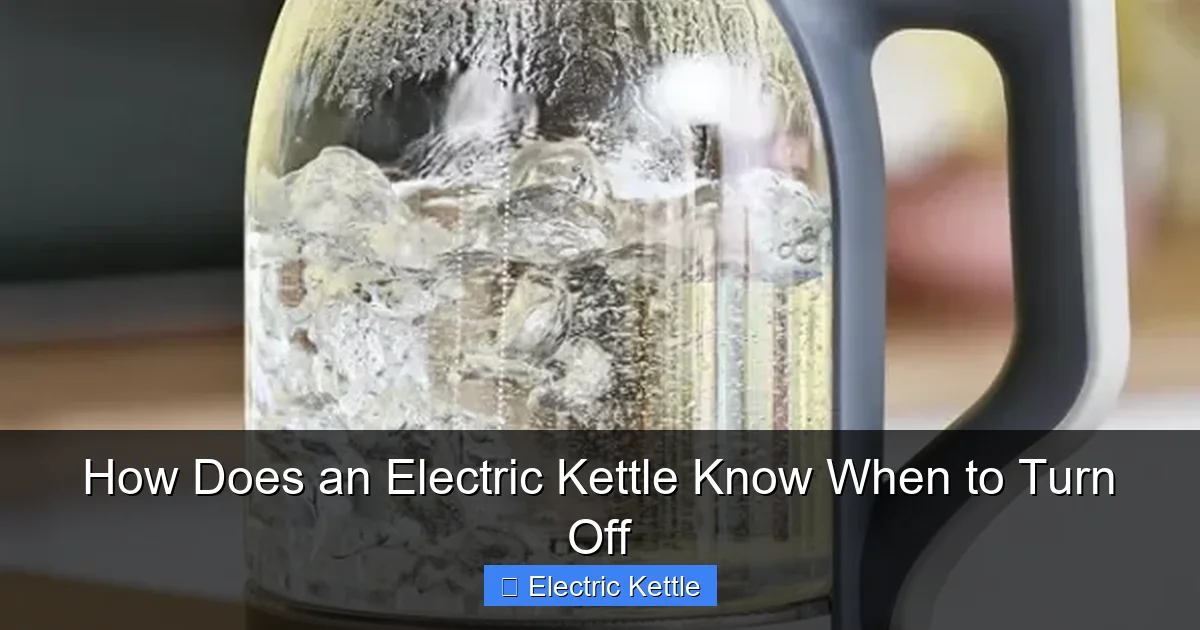
Visual guide about How Does an Electric Kettle Know When to Turn Off
Image source: irrorwxhiqijjr5q.ldycdn.com
So, how exactly does an electric kettle know when to turn off? The core principle is detecting a change in temperature or the presence of steam. When water boils, it undergoes a phase change from liquid to gas, producing steam. This transition happens at a consistent temperature (100°C at sea level), making it a reliable indicator that the water has reached boiling point. Electric kettles use this physical change to trigger their shut-off mechanism.
There are two primary methods used in electric kettles: thermal sensors and steam detection. Thermal sensors monitor the temperature of the heating element or the water itself, while steam detection systems sense the vapor rising from the spout. Some kettles use a combination of both for added accuracy and safety.
The shut-off process begins when the sensor detects that the water has reached the target temperature. At that moment, it sends a signal to a switch or relay that cuts off the electrical current to the heating element. This happens almost instantly—often within seconds of boiling—ensuring the kettle doesn’t overheat or waste energy.
This system is not only efficient but also essential for safety. Without automatic shut-off, a kettle could continue heating even after the water has boiled away, potentially damaging the heating element or causing a fire. Modern kettles are designed with multiple layers of protection, including thermal fuses and overheat sensors, to prevent such risks.
Types of Sensors Used in Electric Kettles
Not all electric kettles use the same technology to detect boiling. Over the years, manufacturers have developed several types of sensors, each with its own advantages and limitations. Understanding these differences can help you choose a kettle that meets your needs—whether you prioritize speed, precision, or durability.
Bimetallic Thermostats
One of the oldest and most common methods is the bimetallic thermostat. This device consists of two different metals—usually steel and copper—bonded together in a thin strip. These metals expand at different rates when heated. As the temperature rises, the strip bends due to the unequal expansion. When the water reaches boiling point, the strip bends enough to trigger a mechanical switch that breaks the electrical circuit, turning off the kettle.
Bimetallic thermostats are reliable, inexpensive, and require no external power source. They’ve been used in appliances for decades, from toasters to hair dryers. However, they have some drawbacks. They can be slower to respond than electronic sensors, and their accuracy may degrade over time due to wear and repeated bending. Additionally, they typically only detect when the heating element gets hot—not the water itself—which can lead to slight delays in shut-off.
Despite these limitations, bimetallic thermostats are still found in many budget and mid-range electric kettles. They’re simple, robust, and effective for basic boiling tasks. If you’re using a kettle primarily for tea or instant coffee, this type of sensor is usually sufficient.
Thermistors and Electronic Sensors
More advanced electric kettles use thermistors—temperature-sensitive resistors—or other electronic sensors to monitor water temperature. A thermistor changes its electrical resistance based on temperature. When the water heats up, the thermistor detects the change and sends a signal to a microprocessor, which then shuts off the heating element.
These sensors are much more precise than bimetallic strips. They can detect temperature changes within fractions of a degree, allowing for features like variable temperature control. This is especially useful for tea enthusiasts who need specific temperatures for green, white, or oolong teas. Some high-end kettles even allow you to set exact temperatures using a digital display.
Electronic sensors also respond faster, reducing the risk of over-boiling or dry heating. They’re commonly found in premium kettles from brands like Breville, Fellow, and Cuisinart. While they’re more expensive to produce, the added precision and functionality make them a worthwhile investment for serious users.
Steam-Activated Switches
Another innovative approach is the steam-activated switch. Instead of measuring the temperature of the heating element or water, this system detects the steam rising from the kettle’s spout. A small chamber near the lid contains a sensor that responds to moisture or pressure changes caused by steam.
When boiling begins, steam flows into the chamber and triggers the switch, cutting power to the heating element. This method is highly reliable because it directly detects the physical evidence of boiling. It’s less prone to false readings caused by hot air or residual heat in the element.
Steam-activated switches are often used in combination with thermal sensors for added safety. For example, a kettle might use a bimetallic strip as the primary shut-off and a steam sensor as a backup. This dual-system approach ensures the kettle turns off even if one mechanism fails.
Safety Mechanisms and Backup Systems
Automatic shut-off is not just a convenience—it’s a critical safety feature. Without it, an electric kettle could pose serious risks, including fire, burns, or damage to the appliance. That’s why manufacturers include multiple layers of protection to ensure the kettle turns off reliably, even in unexpected situations.
Thermal Fuses
One of the most important backup systems is the thermal fuse. This is a small, one-time-use device that melts when exposed to excessive heat—typically around 120°C to 150°C. If the main shut-off mechanism fails and the kettle continues heating, the thermal fuse will “blow,” permanently breaking the circuit and rendering the kettle unusable.
While this means the kettle must be replaced, it prevents potentially dangerous overheating. Thermal fuses are a last line of defense, designed to activate only in extreme cases. They’re found in virtually all modern electric kettles and are a key reason these appliances are considered safe for home use.
Overheat Protection
Many kettles also include overheat protection circuits that monitor the temperature of the heating element. If the element gets too hot—due to low water levels or a malfunction—the circuit will shut off power before damage occurs. This feature helps prevent dry boiling, a common cause of kettle failure.
Some advanced models use infrared sensors or thermal imaging to detect hot spots on the heating element. These systems can respond in milliseconds, offering even greater protection.
Tilt and Lift-Off Safety
Another safety feature is the tilt or lift-off switch. If you remove the kettle from its base while it’s heating, the switch will immediately cut power to the element. This prevents accidental burns or electrical hazards if the kettle is knocked over or mishandled.
Similarly, some kettles have a lid-lock mechanism that prevents the lid from opening while the water is boiling. This reduces the risk of steam burns and ensures the shut-off sensor isn’t disrupted by sudden pressure changes.
Energy Efficiency and Environmental Impact
Automatic shut-off doesn’t just improve safety—it also enhances energy efficiency. Heating water accounts for a significant portion of household electricity use, especially in homes that boil water multiple times a day. By turning off precisely when boiling is complete, electric kettles prevent unnecessary energy consumption.
For example, if a kettle continued heating after the water boiled, it would waste electricity and potentially overheat the element. Automatic shut-off ensures that energy is used only when needed, reducing your carbon footprint and lowering your utility bills.
Modern kettles with precise temperature control take this a step further. Instead of boiling water to 100°C every time, you can set lower temperatures for specific beverages. Green tea, for instance, brews best at around 80°C. By heating only to the required temperature, you save energy and preserve the flavor of your drink.
Additionally, many energy-efficient kettles are designed with insulated walls or double-walled construction to retain heat longer. This means the water stays hot even after the kettle turns off, reducing the need to reboil.
Maintenance Tips for Reliable Performance
Even the best sensors can fail if the kettle isn’t properly maintained. Over time, mineral deposits from hard water can build up on the heating element and sensors, interfering with their ability to detect temperature or steam. This can lead to delayed shut-off, inaccurate readings, or even complete failure.
To keep your kettle working reliably, follow these simple maintenance tips:
- Descale regularly: Use a mixture of vinegar and water or a commercial descaling solution to remove limescale buildup. Boil the solution, let it sit for 30 minutes, then rinse thoroughly.
- Clean the exterior and lid: Wipe down the outside with a damp cloth to prevent dust and grease from affecting the sensors.
- Check the spout and steam vent: Make sure the steam path is clear of debris, as blockages can interfere with steam-activated switches.
- Avoid overfilling: Excess water can splash onto electrical components, potentially damaging sensors or switches.
- Store properly: Keep the kettle in a dry place and avoid stacking heavy items on top, which could damage internal parts.
Regular maintenance not only extends the life of your kettle but also ensures the shut-off mechanism works correctly every time.
Choosing the Right Electric Kettle
When shopping for an electric kettle, the shut-off mechanism is an important factor to consider. Here are some tips to help you choose a model with reliable and safe automatic shut-off:
- Look for multiple safety features: Choose kettles with thermal fuses, overheat protection, and steam detection for added peace of mind.
- Consider temperature control: If you drink different types of tea or coffee, opt for a kettle with variable temperature settings and precise sensors.
- Check the warranty: A longer warranty often indicates confidence in the product’s durability and safety systems.
- Read reviews: Look for user feedback about shut-off reliability, especially after prolonged use.
- Prefer sealed heating elements: Kettles with concealed or flat heating elements are easier to clean and less prone to scale buildup.
Investing in a high-quality kettle with advanced sensors may cost more upfront, but it pays off in safety, efficiency, and longevity.
Conclusion
So, how does an electric kettle know when to turn off? It’s a blend of physics, engineering, and smart design. Whether it’s a bimetallic strip bending with heat, a thermistor sensing temperature changes, or a steam detector responding to vapor, these systems work silently to ensure your water boils safely and efficiently. Automatic shut-off is more than a convenience—it’s a vital safety feature that protects your home, saves energy, and extends the life of your appliance.
By understanding how your kettle works, you can appreciate the technology behind your morning cup of tea and make informed decisions when buying or maintaining your appliance. With proper care and the right features, your electric kettle will continue to deliver hot water—on demand and on time—for years to come.
Frequently Asked Questions
How does an electric kettle know when to turn off?
An electric kettle knows when to turn off by using sensors that detect when water reaches boiling point. These sensors monitor temperature or steam and trigger a switch to cut power to the heating element.
What type of sensor is most common in electric kettles?
Bimetallic thermostats are common in older or budget models, while modern kettles often use thermistors or electronic sensors for greater precision and faster response times.
Can an electric kettle turn off without water?
Most kettles have safety features like thermal fuses and overheat protection that will shut off the heating element if it gets too hot, even without water. However, dry boiling should be avoided to prevent damage.
Why does my kettle sometimes turn off before boiling?
This could be due to mineral buildup on the sensor, a faulty thermostat, or low water levels. Descaling the kettle and ensuring it’s filled properly can often resolve the issue.
Is automatic shut-off safe?
Yes, automatic shut-off is a critical safety feature that prevents overheating, dry boiling, and fire hazards. Most kettles include backup systems like thermal fuses for added protection.
Do all electric kettles have the same shut-off mechanism?
No, different models use different technologies—some rely on bimetallic strips, others on electronic sensors or steam detection. Higher-end models often combine multiple systems for reliability.