A cordless electric kettle works by using an internal heating element powered through a base connector, allowing the kettle to be lifted and poured without a cord. This design combines convenience, safety, and speed, making it ideal for quick hot water needs in homes, offices, and travel.
Have you ever stood in your kitchen, waiting for water to boil on the stove, only to forget it’s even on? Or worse—walked away and returned to a scorched pot and a smoky kitchen? We’ve all been there. But what if you could have piping hot water in under three minutes, without the hassle of cords or constant monitoring? That’s where the cordless electric kettle comes in—a sleek, modern appliance that’s become a staple in homes, offices, and even dorm rooms.
At first glance, a cordless electric kettle looks simple: a jug with a handle, a lid, and a base. But beneath its minimalist design lies a clever engineering solution that blends convenience, safety, and efficiency. Unlike traditional kettles that rely on stovetops or cords that limit mobility, cordless electric kettles offer freedom of movement. You can lift the kettle, pour your tea, and place it back on the base—all without ever touching a wire. It’s this seamless experience that has made cordless kettles a favorite among busy professionals, tea lovers, and anyone who values speed and simplicity in the kitchen.
But how exactly does it work? What makes it “cordless”? And why is it safer and faster than other methods? In this guide, we’ll dive deep into the mechanics, components, and benefits of cordless electric kettles. Whether you’re considering buying one or just curious about the technology behind your morning cup of coffee, this article will give you a complete understanding of how these handy devices operate—and why they’re worth every penny.
Key Takeaways
- Understanding how does cordless electric kettle work: Provides essential knowledge
📑 Table of Contents
What Is a Cordless Electric Kettle?
A cordless electric kettle is a modern kitchen appliance designed to heat water quickly using electricity, without the need for a direct power cord attached to the kettle itself. Instead, the kettle sits on a separate power base that connects to an electrical outlet. When the kettle is placed on the base, electrical current flows through a concealed connector, powering an internal heating element. Once the water reaches the desired temperature, the kettle automatically shuts off, and you can lift it freely to pour—no cords, no hassle.
This design is a significant upgrade from older electric kettles, which often had fixed cords that made pouring awkward and storage difficult. The cordless feature allows for greater flexibility, especially in small kitchens or when serving guests. You can carry the kettle to the table, refill it at the sink, or store it in a cabinet without dealing with tangled wires.
Cordless kettles come in various sizes, typically ranging from 1 to 1.7 liters, making them suitable for individuals, families, or office use. They’re made from materials like stainless steel, glass, or heat-resistant plastic, each offering different benefits in terms of durability, aesthetics, and heat retention. Many models also include advanced features such as variable temperature settings, keep-warm functions, and LED indicators, catering to specific needs like brewing delicate green tea or preparing baby formula.
One of the biggest advantages of a cordless electric kettle is its speed. While a stovetop kettle might take 5–7 minutes to boil water, a cordless electric model can do it in 3–4 minutes—sometimes even faster. This efficiency is due to the direct transfer of heat from the heating element to the water, minimizing energy loss. Plus, because the kettle is sealed, less heat escapes into the air, making the process more energy-efficient overall.
Core Components of a Cordless Electric Kettle
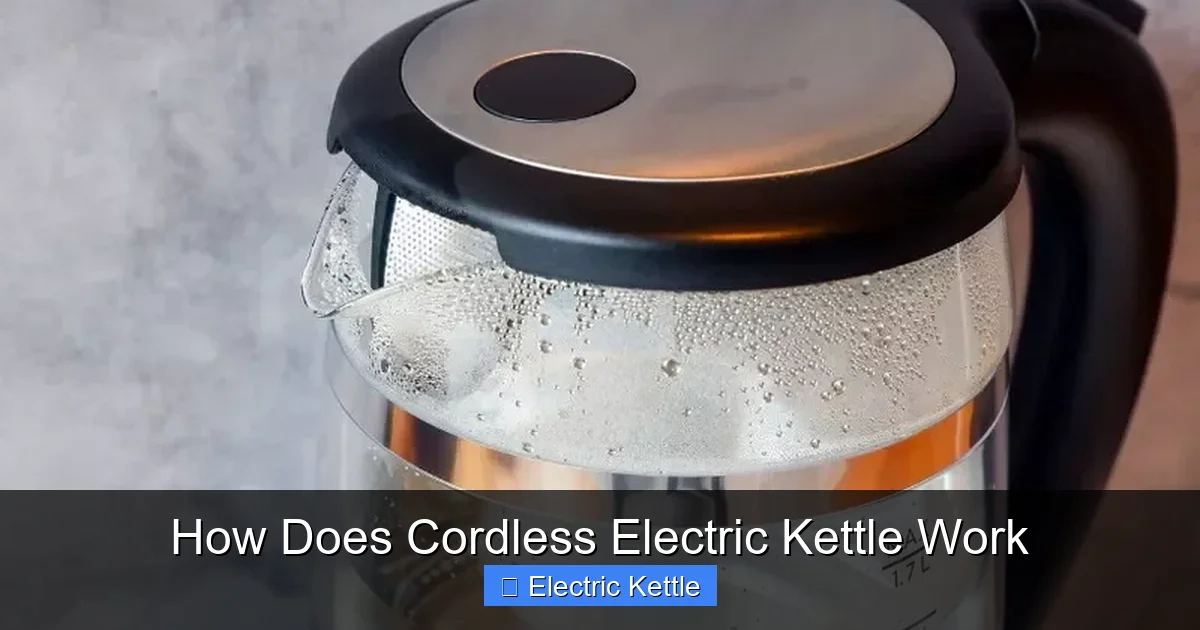
Visual guide about How Does Cordless Electric Kettle Work
Image source: irrorwxhiqijjr5q.ldycdn.com
To understand how a cordless electric kettle works, it’s essential to know its key components. Each part plays a vital role in ensuring safe, efficient, and convenient operation. Let’s break them down one by one.
1. The Kettle Body
The kettle body is the main container that holds the water. It’s typically made from stainless steel, glass, or BPA-free plastic. Stainless steel is popular for its durability, resistance to rust, and sleek appearance. Glass kettles offer a modern, transparent look, allowing you to see the water level and boiling process—great for monitoring, but they can be more fragile. Plastic models are lightweight and affordable, but you’ll want to ensure they’re labeled BPA-free to avoid harmful chemicals leaching into your water.
Inside the kettle, you’ll find a concealed heating element—usually a flat, spiral-shaped coil or a disc at the bottom. This element is what generates the heat needed to boil the water. Unlike older kettles where the heating element was exposed, modern designs hide it beneath a smooth surface, making cleaning easier and reducing the risk of mineral buildup.
2. The Power Base
The power base is the stationary part of the kettle that plugs into the wall outlet. It contains the electrical circuitry and a circular connector that aligns with the kettle when placed on top. This connector uses spring-loaded pins or a magnetic coupling to transfer electricity from the base to the kettle. The design ensures a secure connection while allowing the kettle to be lifted and repositioned easily.
The base also houses the control panel in advanced models. This might include buttons for temperature selection, a digital display, or indicator lights that show when the kettle is heating or has finished boiling. Some bases even have built-in timers or memory functions that remember your preferred settings.
3. The Heating Element
The heating element is the heart of the cordless electric kettle. It’s usually made of a high-resistance metal alloy, such as nichrome, which heats up quickly when electricity passes through it. When you press the “on” button, current flows from the base through the connector to the heating element, causing it to glow red-hot within seconds.
The element is designed to transfer heat directly to the water with minimal loss. Because it’s submerged or in direct contact with the kettle’s base, nearly all the energy goes into heating the water—not the surrounding air. This direct transfer is why electric kettles are so much faster than stovetop methods.
4. Thermostat and Temperature Control
Most cordless kettles include a thermostat—a temperature-sensitive switch that monitors the water’s heat. Once the water reaches boiling point (usually around 100°C or 212°F), the thermostat triggers an automatic shut-off mechanism, cutting power to the heating element. This prevents overheating and saves energy.
In premium models, you’ll find variable temperature control. These kettles allow you to select specific temperatures—like 80°C for green tea or 90°C for white tea—ensuring optimal flavor extraction without scalding delicate leaves. The thermostat in these models is more precise, often using digital sensors instead of mechanical switches.
5. Safety Features
Safety is a top priority in cordless electric kettles. Beyond automatic shut-off, many models include boil-dry protection. This feature detects when there’s no water in the kettle and shuts off the power to prevent the heating element from burning out. It’s especially useful if you accidentally turn on an empty kettle.
Other safety features include cool-touch handles, which stay relatively cool even when the water inside is boiling, and lids that lock securely to prevent spills. Some kettles also have anti-slip bases and cord storage compartments to reduce tripping hazards.
6. Filter and Spout
Many cordless kettles come with a built-in mesh filter near the spout. This filter catches limescale, sediment, and other impurities, ensuring cleaner, better-tasting water. It’s especially helpful in areas with hard water, where mineral buildup can affect both taste and appliance lifespan.
The spout itself is designed for smooth, drip-free pouring. A well-designed spout minimizes splashing and allows for precise control—perfect for pouring over tea leaves or instant coffee without making a mess.
How the Cordless Electric Kettle Works: Step-by-Step
Now that we’ve covered the components, let’s walk through the process of how a cordless electric kettle operates—from the moment you press the button to the first sip of your tea.
Step 1: Filling the Kettle
Start by opening the lid and filling the kettle with cold water. Most models have a minimum and maximum water level marked inside, usually indicated by lines or numbers. It’s important not to overfill, as boiling water can expand and cause spills. Similarly, don’t operate the kettle with too little water, as this can trigger the boil-dry protection or damage the heating element.
Once filled, close the lid securely. Some kettles have a locking mechanism to prevent accidental opening during boiling.
Step 2: Placing on the Base
Place the kettle onto the power base, ensuring it’s centered and the connector aligns properly. You’ll usually hear a soft click or feel a slight resistance when it’s seated correctly. The base should be on a flat, stable surface away from edges to prevent tipping.
Plug the base into a grounded electrical outlet. Make sure the outlet is easily accessible in case you need to unplug it quickly.
Step 3: Selecting Temperature (If Applicable)
If your kettle has temperature control, press the corresponding button for your desired setting. For example, select “Green Tea” for 80°C or “Boil” for 100°C. The display will show the chosen temperature, and the kettle will adjust its heating cycle accordingly.
Basic models may only have an on/off switch, in which case the kettle will heat to boiling point by default.
Step 4: Heating Process
Press the power button to start heating. Electricity flows from the base through the connector to the heating element. Within seconds, the element begins to heat up, transferring thermal energy to the water.
You’ll hear a gentle bubbling sound as the water approaches boiling. This is normal and indicates the heating process is working. The thermostat continuously monitors the temperature, ensuring precise control.
Step 5: Automatic Shut-Off
Once the water reaches the target temperature, the thermostat triggers the automatic shut-off. The heating element stops, and the kettle emits a beep or light signal to indicate it’s ready. This usually happens in 3–4 minutes, depending on the water volume and starting temperature.
The shut-off mechanism not only saves energy but also prevents overheating, which could damage the kettle or pose a fire risk.
Step 6: Pouring and Use
Lift the kettle from the base—no cords to untangle. The handle stays cool to the touch, allowing safe handling. Pour the hot water into your cup, teapot, or instant meal container.
If your kettle has a keep-warm function, it may continue to maintain the temperature for a set period (e.g., 30 minutes). Otherwise, the water will gradually cool.
Step 7: Cleaning and Storage
After use, unplug the base and allow the kettle to cool completely before cleaning. Wipe the exterior with a damp cloth and rinse the interior with water. For limescale buildup, use a mixture of vinegar and water or a commercial descaling solution.
Store the kettle on the base or separately, depending on your kitchen setup. Some bases have cord wraps to keep things tidy.
Benefits of Using a Cordless Electric Kettle
Cordless electric kettles offer a range of advantages that make them a smart investment for any kitchen. Let’s explore the key benefits in detail.
Speed and Efficiency
One of the biggest selling points is speed. Cordless electric kettles can boil water in just 3–4 minutes—significantly faster than stovetop kettles or microwaves. This is because the heating element is in direct contact with the water, minimizing heat loss. Plus, they use less energy overall, making them more efficient than boiling water on a gas or electric stove.
For example, boiling 1 liter of water on a stove might take 6–8 minutes and use more gas or electricity. A cordless kettle does it in half the time with less energy, saving both time and money in the long run.
Convenience and Portability
The cordless design means you can lift the kettle and move it anywhere—no need to stay near the outlet or untangle cords. This is especially useful when serving tea to guests, preparing meals in another room, or using the kettle in a small apartment or office.
Many models are lightweight and compact, making them easy to carry and store. Some even come with travel-friendly features like foldable handles or dual voltage settings for international use.
Safety Features
Modern cordless kettles are packed with safety mechanisms. Automatic shut-off prevents overheating, while boil-dry protection ensures the kettle won’t operate without water. Cool-touch handles and secure lids reduce the risk of burns and spills.
These features make cordless kettles safer than stovetop methods, where unattended boiling can lead to accidents. They’re also ideal for households with children or elderly users who may forget to turn off the stove.
Precise Temperature Control
Advanced models offer variable temperature settings, allowing you to brew different types of tea or coffee at their ideal temperatures. For instance, green tea tastes best at 70–80°C, while black tea needs near-boiling water. With a cordless kettle, you can select the perfect temperature with the push of a button—no guessing or waiting for the water to cool.
This precision enhances flavor and aroma, making your beverages taste better. It’s also useful for preparing baby formula, instant oatmeal, or French press coffee, where temperature matters.
Energy and Cost Savings
Cordless electric kettles are more energy-efficient than stovetops because they heat only the water, not the entire pot or surrounding air. Studies show that electric kettles use up to 50% less energy than gas stoves for the same task.
Over time, this translates to lower utility bills. If you boil water multiple times a day, the savings add up quickly. Plus, faster boiling means less time waiting, which is a win for busy lifestyles.
Easy to Clean and Maintain
With smooth interiors and removable filters, cordless kettles are easy to clean. Regular descaling prevents limescale buildup, which can affect performance and taste. Most models are dishwasher-safe or can be wiped down with a cloth.
The cordless design also means fewer parts to clean—no cords to wipe or wrap around.
Common Misconceptions About Cordless Electric Kettles
Despite their popularity, there are several myths and misunderstandings about cordless electric kettles. Let’s clear them up.
Myth 1: “Cordless kettles are less powerful.”
False. Cordless kettles are just as powerful—if not more so—than corded models. The heating element and wattage (typically 1500–3000 watts) are the same. The only difference is the detachable design, which doesn’t affect performance.
Myth 2: “They’re unsafe because there’s no cord.”
Actually, the opposite is true. The cordless design reduces tripping hazards and makes the kettle easier to handle. Plus, safety features like automatic shut-off and boil-dry protection make them safer than many stovetop alternatives.
Myth 3: “They use more electricity.”
No—cordless kettles are highly energy-efficient. They heat water faster and with less waste, using less electricity than boiling water on a stove. In fact, they’re one of the most efficient ways to heat water.
Myth 4: “They’re fragile and break easily.”
While glass models can be delicate, stainless steel and high-quality plastic kettles are built to last. With proper care, a cordless kettle can serve you for 5–10 years or more.
Myth 5: “They’re only for tea and coffee.”
Not at all! Cordless kettles are versatile. Use them for instant noodles, oatmeal, baby formula, hot chocolate, or even sterilizing baby bottles. They’re a multitasking kitchen hero.
Tips for Choosing and Using a Cordless Electric Kettle
If you’re ready to buy a cordless electric kettle, here are some practical tips to help you choose the right one and use it effectively.
Choosing the Right Model
– **Capacity:** Choose based on your needs. A 1-liter kettle is great for individuals, while 1.5–1.7 liters suits families.
– **Material:** Stainless steel is durable and easy to clean. Glass is stylish but fragile. Plastic is lightweight but ensure it’s BPA-free.
– **Temperature Control:** If you drink different types of tea, look for variable temperature settings.
– **Safety Features:** Ensure it has automatic shut-off, boil-dry protection, and a cool-touch handle.
– **Ease of Cleaning:** Removable filters and smooth interiors make maintenance simpler.
Using Your Kettle Safely
– Always fill within the min/max water levels.
– Never operate an empty kettle.
– Place the base on a stable, heat-resistant surface.
– Unplug when not in use.
– Keep away from children and pets.
Maintaining Your Kettle
– Descale regularly, especially in hard water areas.
– Clean the exterior with a damp cloth.
– Rinse the filter after each use.
– Store in a dry place.
Conclusion
A cordless electric kettle is more than just a convenient appliance—it’s a smart, safe, and efficient tool that simplifies daily routines. By understanding how it works, from the heating element to the thermostat, you can appreciate the engineering that goes into every cup of hot water. Whether you’re brewing tea, making coffee, or preparing a quick meal, a cordless kettle delivers speed, precision, and peace of mind.
With features like automatic shut-off, variable temperature control, and easy portability, it’s no wonder these kettles have become a kitchen essential. They save time, energy, and effort—all while reducing the risk of accidents. And with proper care, they’ll serve you reliably for years to come.
So the next time you’re waiting for water to boil, consider making the switch. A cordless electric kettle isn’t just a luxury—it’s a practical upgrade that enhances your kitchen experience. From morning routines to late-night snacks, it’s the quiet hero that keeps your hot water flowing, one perfect pour at a time.
Frequently Asked Questions
How does a cordless electric kettle heat water without a cord?
A cordless electric kettle uses a power base that plugs into the wall. When the kettle is placed on the base, electrical current flows through a concealed connector to the heating element inside the kettle, allowing it to heat water without a direct cord.
Is it safe to leave a cordless electric kettle unattended?
Yes, most cordless kettles have automatic shut-off and boil-dry protection, making them safe to use unattended. However, it’s still best to stay nearby during the first few uses to ensure proper function.
Can I use a cordless electric kettle for purposes other than boiling water?
Absolutely! You can use it to prepare instant meals, baby formula, oatmeal, or even sterilize small items. Just avoid putting anything other than water inside unless the manufacturer specifies otherwise.
How often should I descale my cordless electric kettle?
It depends on your water hardness. In areas with hard water, descale every 1–2 months. In softer water areas, every 3–4 months is usually sufficient. Look for reduced boiling speed or white deposits as signs it’s time.
Do cordless kettles use more electricity than stovetop kettles?
No, cordless electric kettles are more energy-efficient. They heat water faster and with less waste, using less electricity than boiling water on a gas or electric stove.
Can I travel with a cordless electric kettle?
Yes, many models are compact and lightweight. Look for dual voltage (110V/220V) compatibility and a foldable handle for easy packing. Always check local electrical standards before use.