Electric kettle auto shut off is a smart safety feature that turns off the kettle once water reaches boiling point. It uses temperature sensors and bimetallic strips to detect heat and cut power automatically, preventing overheating and saving energy.
Key Takeaways
- Auto shut off prevents overheating: The feature stops heating once water boils, reducing fire and damage risks.
- Uses temperature-sensitive components: Bimetallic strips or thermostats detect heat and trigger the shut-off mechanism.
- Enhances energy efficiency: Stops unnecessary power use after boiling, saving electricity over time.
- Improves safety and convenience: No need to monitor the kettle—ideal for busy households.
- Requires proper maintenance: Regular cleaning ensures sensors work correctly and extend kettle life.
- Works with various heating elements: Compatible with both exposed and concealed heating coils.
- Not all kettles are equal: Higher-quality models offer more reliable and faster shut-off responses.
📑 Table of Contents
- Introduction to Electric Kettle Auto Shut Off
- The Science Behind Auto Shut Off: How It Detects Boiling
- Key Components That Make Auto Shut Off Possible
- Safety Benefits of Auto Shut Off
- Energy Efficiency and Environmental Impact
- Common Issues and Maintenance Tips
- Choosing a Kettle with Reliable Auto Shut Off
- Conclusion
Introduction to Electric Kettle Auto Shut Off
Imagine this: you’re in the middle of a busy morning, rushing to get ready for work, and you’ve just poured water into your electric kettle for a quick cup of tea. You press the button, walk away to brush your teeth, and—boom—your kettle turns itself off right when the water starts to boil. No alarms, no spills, no burnt smell. Just perfectly heated water, ready to pour.
That’s the magic of the electric kettle auto shut off feature. It’s one of those small technological wonders we often take for granted, but it plays a huge role in making our daily routines safer, easier, and more efficient. Whether you’re brewing coffee, making instant noodles, or preparing baby formula, this feature ensures your kettle knows exactly when to stop heating—without you having to stand guard.
But how does it actually work? What’s happening inside that sleek, modern appliance that allows it to “know” when the water is boiling? The answer lies in a combination of clever engineering, heat-sensitive materials, and smart design. In this article, we’ll dive deep into the mechanics behind the electric kettle auto shut off system. You’ll learn about the components involved, how they interact, and why this feature is so important for both safety and energy savings. Whether you’re a tech enthusiast, a safety-conscious parent, or just someone who loves a good cup of tea, this guide will give you a clear understanding of one of the most useful features in modern kitchen appliances.
The Science Behind Auto Shut Off: How It Detects Boiling
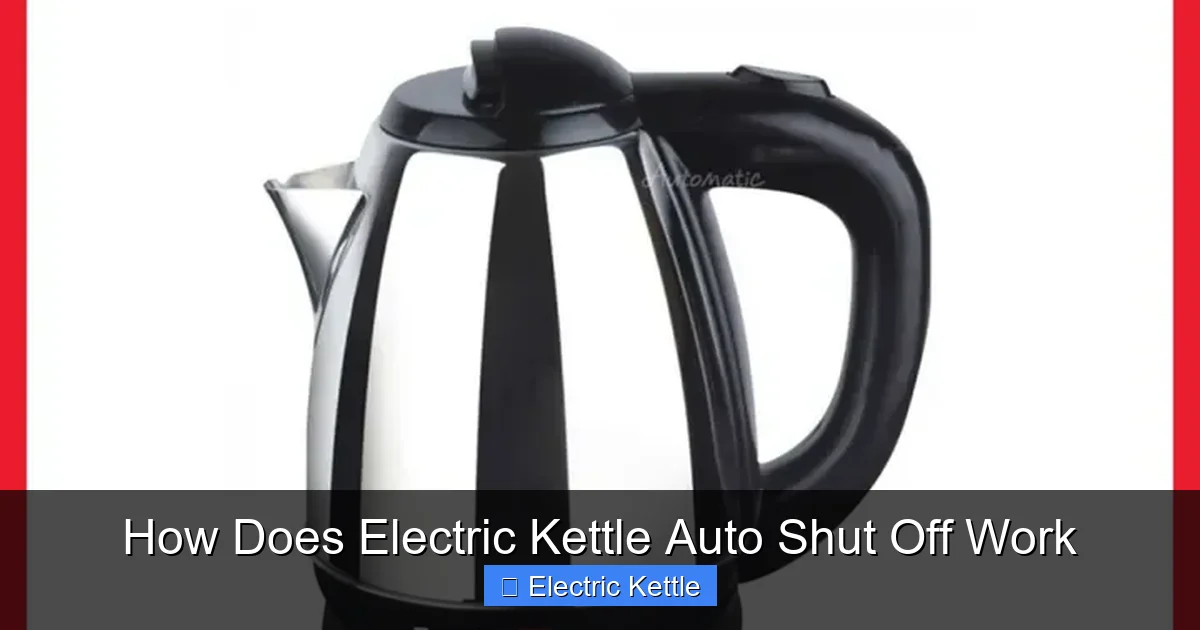
Visual guide about How Does Electric Kettle Auto Shut Off Work
Image source: lzd-img-global.slatic.net
At the heart of every electric kettle with auto shut off is a simple yet brilliant principle: water boils at a specific temperature—100°C (212°F) at sea level. Once that temperature is reached, the kettle needs to stop heating to prevent damage, save energy, and avoid potential hazards like steam burns or electrical faults. But how does the kettle “sense” that moment?
The answer lies in temperature-sensitive components that respond to heat changes. These components are usually located near the heating element or inside the kettle’s base. When the water heats up, the surrounding air and metal parts also warm up. The auto shut off system monitors these temperature changes and triggers a switch to cut off the power supply once boiling is detected.
One of the most common methods uses a bimetallic strip—a thin piece of metal made by bonding two different metals together. Because the two metals expand at different rates when heated, the strip bends as temperature rises. When the water reaches boiling point, the strip bends enough to physically disconnect the electrical circuit, turning off the kettle. This mechanical action is fast, reliable, and doesn’t require external power, making it ideal for household appliances.
Another method involves electronic thermostats or thermistors—tiny sensors that measure temperature electronically. These are often found in more advanced kettles and can offer more precise control. They send signals to a microprocessor, which then cuts power to the heating element. Some high-end models even allow you to set specific temperatures (like 80°C for green tea), and the auto shut off activates at your chosen setting.
In both cases, the goal is the same: detect when the water has boiled and stop the heating process immediately. This not only prevents overheating but also ensures consistent performance every time you use the kettle.
Why Boiling Point Matters
Water’s boiling point is a fixed physical property under normal atmospheric pressure. This consistency makes it an ideal trigger for auto shut off systems. Unlike other liquids, water reliably reaches 100°C when boiling, giving the kettle a clear signal to act. Even at higher altitudes, where boiling point drops slightly, modern kettles are designed to compensate, ensuring the shut-off still occurs at the right moment.
Speed and Accuracy of Detection
The speed at which a kettle detects boiling can vary. Lower-quality models might take a few extra seconds to respond, leading to slight over-boiling or steam buildup. Premium kettles, on the other hand, use more sensitive sensors and faster-acting mechanisms, shutting off within seconds of reaching boiling point. This precision improves safety and helps preserve the taste of your beverages—over-boiling can sometimes give water a flat or metallic flavor.
Key Components That Make Auto Shut Off Possible
To understand how electric kettle auto shut off works, it helps to know the key parts involved. These components work together like a well-oiled machine, each playing a specific role in detecting heat and stopping the heating process.
The Bimetallic Strip
One of the most common and reliable components is the bimetallic strip. As mentioned earlier, it’s made of two different metals—usually steel and copper—bonded together. When heated, the copper expands more than the steel, causing the strip to bend. In electric kettles, this strip is positioned near the heating element or inside the thermostat assembly.
When the water boils, the heat transfers to the strip, causing it to bend and push against a switch. This action breaks the electrical circuit, cutting off power to the heating coil. The moment the power is off, the strip begins to cool and slowly returns to its original shape. However, the switch remains open until the user manually resets it—usually by pressing the kettle’s button again. This ensures the kettle doesn’t restart automatically, adding an extra layer of safety.
Bimetallic strips are durable, cost-effective, and require no external power, making them ideal for everyday appliances. They’re found in most standard electric kettles and are a proven technology used for decades.
Thermostats and Thermistors
In more advanced kettles, electronic thermostats or thermistors are used instead of mechanical strips. A thermistor is a type of resistor whose resistance changes with temperature. As the water heats up, the thermistor detects the rising temperature and sends a signal to the kettle’s control board.
This signal triggers a relay or solid-state switch to cut power to the heating element. Because thermistors are highly sensitive, they can detect temperature changes very quickly, allowing for precise shut-off. Some kettles even use multiple thermistors to monitor different zones, ensuring even heating and accurate detection.
Electronic systems also allow for programmable features, such as variable temperature settings. For example, you can set the kettle to shut off at 70°C for delicate teas or 90°C for coffee. This level of control isn’t possible with basic bimetallic strips, making thermistors a favorite in premium models.
The Heating Element and Base Assembly
The heating element is where the magic begins. Whether it’s an exposed coil or a concealed disc at the bottom of the kettle, this component converts electrical energy into heat. The auto shut off system is closely linked to the heating element because it needs to monitor the temperature near the heat source.
In kettles with concealed elements, the base often contains the thermostat or bimetallic strip. Heat from the element warms the base, which in turn activates the shut-off mechanism. This design protects the internal components from direct contact with water, improving durability and safety.
The Power Switch and Circuit Board
The power switch is the user-facing part of the system—the button you press to start boiling. But behind it lies a network of wires, relays, and sometimes a small circuit board. When you press the button, it completes the circuit, allowing electricity to flow to the heating element.
When the auto shut off triggers, the circuit is broken—either mechanically (via the bimetallic strip) or electronically (via the thermostat). The switch may stay in the “on” position, but no power reaches the element. To restart, you must press the button again, which resets the mechanism.
In smart kettles, the circuit board may include additional features like LED indicators, timers, or Bluetooth connectivity. But the core function remains the same: detect boiling and cut power.
Safety Benefits of Auto Shut Off
The electric kettle auto shut off feature isn’t just convenient—it’s a critical safety mechanism. Without it, kettles could overheat, boil dry, or even cause electrical fires. Let’s explore how this feature protects you and your home.
Prevents Dry Boiling
One of the biggest risks with electric kettles is dry boiling—when the kettle is turned on without water. This can happen if you accidentally press the button or forget to fill it. Without water to absorb the heat, the heating element can overheat rapidly, damaging the kettle or worse, starting a fire.
Auto shut off systems are designed to detect abnormal temperature spikes. If the kettle heats up too quickly—indicating a lack of water—the thermostat or bimetallic strip will trigger an emergency shut-off. This prevents the element from reaching dangerous temperatures and protects the appliance from permanent damage.
Many modern kettles also include a secondary safety feature: a thermal fuse. This is a one-time-use component that melts if the temperature exceeds a certain limit, permanently breaking the circuit. While this means the kettle will need repair, it’s a small price to pay for preventing a fire.
Reduces Risk of Burns and Scalds
Boiling water produces steam, which can cause serious burns if released suddenly. If a kettle continues heating after boiling, pressure can build up, leading to splashing or steam bursts when opened. Auto shut off stops the heating process immediately, minimizing steam production and reducing the risk of accidental burns.
Additionally, because the kettle turns off on its own, you’re less likely to rush over and handle a hot appliance. This is especially important in homes with children or elderly individuals who may be more vulnerable to accidents.
Prevents Electrical Hazards
Overheating can damage internal wiring and insulation, increasing the risk of short circuits or electrical shocks. By cutting power at the right moment, auto shut off helps maintain the integrity of the kettle’s electrical system. It also reduces the chance of component failure, which could lead to sparks or smoke.
In rare cases, a faulty kettle without proper shut-off could continue drawing power even after boiling, overloading the circuit. This is why safety certifications like UL or CE often require auto shut off as a standard feature.
Extends Appliance Lifespan
Constant overheating wears down the heating element, seals, and internal components. By stopping the heating process at the right time, auto shut off reduces thermal stress and prolongs the life of the kettle. A well-maintained kettle with a reliable shut-off system can last 5–10 years or more.
Energy Efficiency and Environmental Impact
Beyond safety, the electric kettle auto shut off feature plays a big role in energy conservation. Let’s look at how it helps reduce electricity use and supports a more sustainable lifestyle.
Stops Unnecessary Power Consumption
Without auto shut off, a kettle might continue heating long after the water has boiled. This wastes electricity and increases your energy bill. For example, if your kettle uses 1500 watts and runs for an extra 2 minutes unnecessarily, that’s 50 watt-hours of wasted energy per use. Over a year, that adds up to several kilowatt-hours—enough to power a light bulb for days.
Auto shut off ensures the kettle only uses the energy needed to reach boiling point. Once that’s achieved, power is cut off immediately. This precision makes electric kettles one of the most energy-efficient ways to heat water, especially compared to stovetop kettles or microwaves.
Supports Eco-Friendly Habits
Many people overfill their kettles, boiling more water than they need. Combined with auto shut off, this can still lead to energy waste. However, some modern kettles include features like minimum fill lines and variable temperature settings to encourage efficient use.
For instance, if you only need one cup of water, you can fill the kettle to the minimum level and set it to shut off at 80°C. This uses less energy and preserves the flavor of delicate teas. Over time, these small choices add up to significant energy savings and a lower carbon footprint.
Reduces Standby Power Loss
Unlike some appliances that draw power even when “off,” most electric kettles with auto shut off completely disconnect the heating element. This means no standby power loss. Once the water boils and the kettle shuts off, it’s truly off—until you press the button again.
This is a key advantage over older models or kettles without proper shut-off systems, which may continue to draw small amounts of power or require manual unplugging.
Common Issues and Maintenance Tips
Even the best auto shut off systems can develop problems over time. Understanding common issues and how to maintain your kettle ensures it continues to work safely and efficiently.
Limescale Buildup Affects Performance
In hard water areas, mineral deposits (limescale) can accumulate on the heating element and around the thermostat. This insulating layer reduces heat transfer, causing the kettle to take longer to boil. It can also trick the sensors into thinking the water hasn’t reached boiling point, delaying or preventing auto shut off.
To prevent this, descale your kettle regularly using vinegar or a commercial descaling solution. Simply fill the kettle with equal parts water and white vinegar, boil, let it sit for an hour, then rinse thoroughly. Doing this every 1–2 months keeps the heating element clean and sensors accurate.
Faulty Thermostat or Bimetallic Strip
Over time, the bimetallic strip or thermostat may wear out or become misaligned. This can cause the kettle to shut off too early (before boiling) or not at all. If your kettle isn’t heating properly or shuts off unexpectedly, the thermostat may need replacement.
Avoid trying to repair it yourself unless you’re experienced. Instead, contact the manufacturer or a qualified technician. Some kettles have user-replaceable thermostats, but others require professional service.
Stuck or Worn-Out Switch
The power switch can also fail, especially if it’s used frequently. A stuck switch might prevent the kettle from turning off, while a worn-out one might not reset properly after shut-off. If pressing the button doesn’t start the kettle or it won’t stay on, the switch may need cleaning or replacement.
Regular cleaning with a dry cloth and avoiding excessive force can help extend the switch’s life.
Tips for Long-Lasting Performance
- Always fill the kettle to at least the minimum level to prevent dry boiling.
- Use filtered or softened water if you live in a hard water area.
- Unplug the kettle when not in use to reduce wear on internal components.
- Avoid slamming the lid or dropping the kettle, which can damage sensors.
- Store the kettle in a dry, cool place to prevent moisture buildup.
Choosing a Kettle with Reliable Auto Shut Off
Not all electric kettles are created equal when it comes to auto shut off. Here’s what to look for when shopping for a safe, efficient model.
Look for Safety Certifications
Choose kettles with recognized safety certifications like UL (Underwriters Laboratories), CE (Conformité Européenne), or ETL. These labels indicate the appliance has been tested for electrical safety and includes essential features like auto shut off.
Check the Type of Shut-Off Mechanism
Basic models use bimetallic strips, which are reliable but less precise. Mid-range and premium kettles often feature electronic thermostats or thermistors, offering faster response times and programmable settings. If you want precise temperature control, go for a model with a digital display and variable settings.
Consider Additional Safety Features
Some kettles include extra protections, such as:
- Boil-dry protection (shuts off if no water is detected)
- Overheat protection (cuts power if internal temperature gets too high)
- Auto lid lock (prevents opening while boiling)
- Cordless design (reduces tripping hazards and improves convenience)
These features enhance safety and make the kettle easier to use.
Read User Reviews
Before buying, check customer reviews for mentions of auto shut off performance. Look for comments like “shuts off quickly,” “never overheats,” or “reliable thermostat.” Avoid models with frequent complaints about failing shut-off systems.
Choose the Right Size and Material
Larger kettles (1.7L+) take longer to boil and use more energy, so auto shut off is even more important. Opt for stainless steel or BPA-free plastic bodies, which are durable and safe. Glass kettles look nice but can be fragile and may not conduct heat as efficiently.
Conclusion
The electric kettle auto shut off feature is a small but powerful innovation that makes our lives safer, easier, and more energy-efficient. By using temperature-sensitive components like bimetallic strips or thermistors, it detects when water reaches boiling point and cuts power automatically. This prevents overheating, reduces fire risks, and saves electricity.
From preventing dry boiling to extending the life of your appliance, the benefits are clear. And with proper maintenance—like regular descaling and careful handling—you can enjoy reliable performance for years to come.
Whether you’re brewing your morning coffee or preparing a quick meal, you can trust that your kettle knows exactly when to stop. So the next time you press that button and walk away, remember: it’s not just convenience—it’s smart engineering at work.
Frequently Asked Questions
How does an electric kettle know when to turn off?
An electric kettle uses temperature-sensitive components like bimetallic strips or thermistors to detect when water reaches boiling point. Once the temperature hits 100°C, these components trigger a switch that cuts off power to the heating element.
Can an electric kettle work without auto shut off?
Technically yes, but it’s unsafe. Without auto shut off, the kettle could overheat, boil dry, or cause a fire. Most modern kettles include this feature as a mandatory safety standard.
Why does my kettle shut off before boiling?
This could be due to limescale buildup, a faulty thermostat, or a misaligned bimetallic strip. Descaling the kettle or checking the thermostat may resolve the issue.
Is it safe to leave an electric kettle unattended?
Yes, as long as it has a working auto shut off feature. This allows the kettle to turn off automatically once boiling is complete, reducing the risk of accidents.
How often should I descale my kettle?
Descale every 1–2 months if you have hard water, or every 3–4 months with soft water. Regular descaling ensures the heating element and sensors work properly.
Do all electric kettles have auto shut off?
Most modern electric kettles include auto shut off as a standard safety feature. However, older or very basic models may not, so always check the product specifications before buying.