Electric kettles boil water remarkably fast—typically in 3 to 5 minutes—making them one of the quickest ways to heat water at home. Speed depends on wattage, capacity, and design, but even budget models outperform stovetop kettles. With the right kettle, you can enjoy hot tea, coffee, or instant meals in record time.
Key Takeaways
- Most electric kettles boil water in 3–5 minutes: High-wattage models (1500W–3000W) heat water faster than lower-powered ones.
- Wattage is the biggest speed factor: Higher wattage means more power and quicker boiling—look for at least 1500W for fast results.
- Smaller volumes boil faster: Heating 1 cup takes less than half the time of boiling a full 1.7-liter kettle.
- Material and design matter: Kettles with flat heating elements and insulated walls retain heat better and boil faster.
- Energy efficiency doesn’t slow you down: Electric kettles use less energy than stovetops and still boil water quickly.
- Smart features can improve convenience: Temperature control and keep-warm functions let you boil only what you need, saving time.
- Regular maintenance keeps speed consistent: Descaling prevents mineral buildup that can slow heating over time.
📑 Table of Contents
- How Fast Do Electric Kettles Boil Water? A Complete Guide
- What Determines Boiling Speed in Electric Kettles?
- Average Boiling Times: What to Expect
- Tips to Boil Water Faster
- Energy Efficiency and Speed: Do They Go Hand in Hand?
- Top Electric Kettles for Speed
- Maintenance Tips to Keep Your Kettle Fast
- Conclusion: Speed, Simplicity, and Smart Design
How Fast Do Electric Kettles Boil Water? A Complete Guide
Imagine this: it’s 7 a.m., you’re running late, and all you want is a hot cup of coffee. You flick the switch on your electric kettle, and within minutes—boom—your water is boiling. No waiting, no watching the stove, no guessing. That’s the magic of modern electric kettles. They’ve become a kitchen staple for good reason: speed, convenience, and reliability.
But just how fast do electric kettles boil water? The short answer? Most high-quality electric kettles can bring water to a rolling boil in just 3 to 5 minutes. That’s significantly faster than stovetop kettles, which often take 8 to 12 minutes depending on your stove type. Even compared to microwaves—which can take 3 to 4 minutes just for one cup—electric kettles are more efficient and consistent.
The real beauty lies in the details. While 3–5 minutes is the average, the exact time depends on several factors: the kettle’s wattage, how much water you’re heating, the starting temperature of the water, and even the design of the heating element. But don’t worry—we’ll break it all down so you know exactly what to expect and how to get the fastest boil possible.
What Determines Boiling Speed in Electric Kettles?
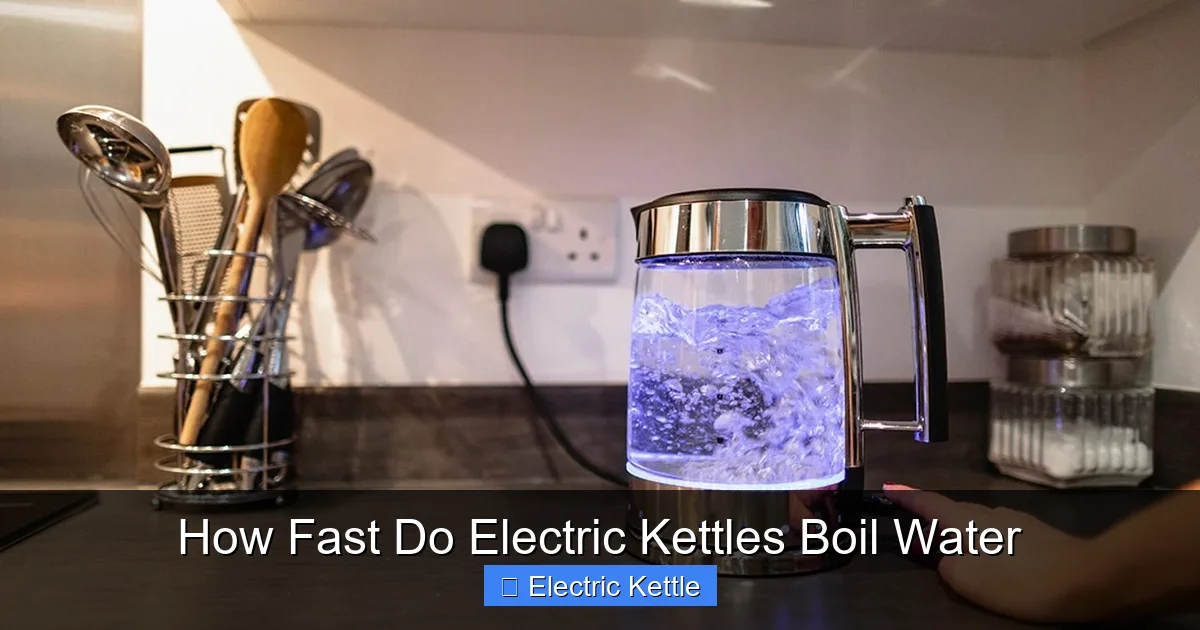
Visual guide about How Fast Do Electric Kettles Boil Water
Image source: media.product.which.co.uk
So, why do some kettles boil water in under 3 minutes while others take closer to 6? It all comes down to a few key factors. Understanding these will help you choose the right kettle and use it efficiently.
Wattage: The Power Behind the Speed
The most important factor is wattage—the amount of electrical power the kettle uses. Think of wattage like horsepower in a car: more power means faster performance. Most household electric kettles range from 1200 watts to 3000 watts. Here’s how that translates to boiling time:
– A 1200W kettle might take 5–7 minutes to boil 1 liter of water.
– A 1500W kettle typically boils the same amount in 4–5 minutes.
– A 2000W or 3000W model can do it in just 3–4 minutes.
For example, the popular Breville BKE820XL Smart Kettle, which runs at 1500W, boils 1 liter in about 4 minutes. Meanwhile, high-performance models like the Mueller Ultra Kettle (1850W) can boil a full liter in under 3.5 minutes. If speed is your top priority, aim for a kettle with at least 1500W—preferably 2000W or higher.
Water Volume: Less Is More (When It Comes to Speed)
Here’s a simple truth: the more water you heat, the longer it takes. Most kettles have a minimum and maximum fill line. If you only need one cup (about 250ml), you’ll boil it in less than half the time it takes to heat a full 1.7-liter kettle.
For instance, boiling 500ml in a 1500W kettle might take just 2 minutes, while boiling 1.7 liters could take 5–6 minutes. This is why many smart kettles now come with variable temperature settings and portion-based heating—so you only heat what you need. It saves time, energy, and keeps your water tasting fresher.
Starting Water Temperature
Cold tap water starts at around 10–15°C (50–59°F), while warm tap water might be 20–25°C (68–77°F). The warmer the starting temperature, the faster the boil. In winter, when tap water is colder, boiling times may increase slightly. Conversely, in summer or in warmer climates, your kettle might boil a bit faster.
This is especially noticeable if you’re using hot water from your sink. While it’s safe to use warm tap water in most kettles, avoid using water that’s already near boiling—it can confuse the thermostat and potentially damage the heating element over time.
Kettle Design and Heating Element
Not all kettles are built the same. The design of the heating element plays a big role in speed and efficiency. There are two main types:
– **Submerged heating elements:** These are traditional coils inside the water. They’re common in older or budget models but can be slower and harder to clean.
– **Flat heating elements:** Found in modern kettles, these are sealed beneath the base and transfer heat more efficiently. They heat water faster and are easier to maintain.
Kettles with flat, concealed elements—like those from Cuisinart or OXO—tend to boil water quicker and more evenly. Some premium models even use dual heating zones or rapid-boil technology to cut time further.
Insulation and Material
The material of the kettle also affects performance. Stainless steel kettles are durable and retain heat well, but they can take slightly longer to heat up initially. Glass kettles look sleek and let you watch the water boil, but they’re less insulated. Plastic kettles are lightweight and affordable but may not handle high heat as well over time.
Double-walled or vacuum-insulated kettles—like the Fellow Stagg EKG—keep water hot longer after boiling, but they may add a few seconds to the initial boil due to extra material. Still, the trade-off is often worth it for temperature control and energy savings.
Average Boiling Times: What to Expect
Now that you know what affects speed, let’s look at real-world boiling times. These are based on average conditions: room-temperature water (about 20°C), standard altitude, and typical household voltage.
Boiling 1 Cup (250ml)
– 1200W kettle: 1 minute 30 seconds to 2 minutes
– 1500W kettle: 1 minute to 1 minute 30 seconds
– 2000W+ kettle: Under 1 minute
This is perfect for a quick cup of tea or instant coffee. Many people are surprised by how fast a single cup can boil—especially with a high-wattage model.
Boiling 500ml (2 cups)
– 1200W kettle: 3 to 4 minutes
– 1500W kettle: 2 to 3 minutes
– 2000W+ kettle: 1 minute 45 seconds to 2 minutes 30 seconds
This is ideal for making tea for two or preparing instant oatmeal.
Boiling 1 Liter (4 cups)
– 1200W kettle: 5 to 7 minutes
– 1500W kettle: 4 to 5 minutes
– 2000W+ kettle: 3 to 4 minutes
This is the sweet spot for most households. A full liter is enough for multiple cups of tea, a pot of noodles, or filling a French press.
Boiling 1.7 Liters (Full Capacity)
– 1200W kettle: 7 to 10 minutes
– 1500W kettle: 6 to 8 minutes
– 2000W+ kettle: 5 to 6 minutes
While this takes longer, it’s still faster than most stovetop methods. And if you’re making a big batch of soup or pasta, the speed is a game-changer.
Comparison: Electric Kettle vs. Stovetop vs. Microwave
Let’s put electric kettles in context. Here’s how they stack up against other common water-heating methods:
– **Stovetop kettle (gas or electric):** Takes 8–12 minutes to boil 1 liter. Requires constant monitoring and uses more energy.
– **Microwave:** Takes 3–4 minutes to boil 1 cup, but can superheat water (causing dangerous eruptions). Also less energy-efficient for larger volumes.
– **Electric kettle:** Boils 1 liter in 3–5 minutes, uses less energy, and shuts off automatically.
In short, electric kettles are the fastest, safest, and most efficient option for most people.
Tips to Boil Water Faster
Want to squeeze every second out of your kettle’s performance? Here are some practical tips to speed up the process.
Choose the Right Wattage
If you’re shopping for a new kettle, prioritize wattage. Look for models with 1500W or higher. While 1200W kettles work fine, they’re noticeably slower. High-wattage models are especially useful in homes with multiple people or frequent use.
Only Heat What You Need
Avoid filling the kettle to the max if you only need one cup. Use the minimum fill line or measure your water. This reduces boiling time and saves energy. Some kettles even have cup markings on the interior for easy measuring.
Use Warm Tap Water (When Safe)
If your tap water is lukewarm, use it instead of cold. It can cut boiling time by 30 seconds to a minute. Just make sure your water is safe to drink and your kettle is designed for warm water input.
Keep Your Kettle Clean
Mineral buildup from hard water can insulate the heating element, slowing down heat transfer. Descale your kettle every 1–2 months using vinegar or a commercial descaler. A clean kettle heats faster and lasts longer.
Close the Lid
Always make sure the lid is securely closed. An open lid lets heat escape, increasing boiling time. Most kettles won’t even start heating if the lid isn’t closed properly—so it’s a safety and efficiency feature.
Use the Right Settings (If Available)
Many modern kettles have temperature presets: 175°F for green tea, 195°F for white tea, 212°F for boiling. If you don’t need a full boil, select a lower temperature. The kettle will heat faster and use less energy.
Energy Efficiency and Speed: Do They Go Hand in Hand?
One common myth is that faster kettles use more energy. But that’s not necessarily true. In fact, electric kettles are among the most energy-efficient appliances in your kitchen.
How Electric Kettles Save Energy
Electric kettles convert nearly 80–90% of their energy into heat, with minimal loss. Stovetops, especially gas, lose a lot of heat to the air. Microwaves are less efficient for heating water because they heat the container too.
A study by the University of Cambridge found that electric kettles use about 25% less energy than stovetops to boil the same amount of water. Even high-wattage kettles are efficient because they complete the job quickly, reducing overall energy use.
Smart Features That Improve Efficiency
Many modern kettles come with features that boost both speed and efficiency:
– **Variable temperature control:** Lets you heat water to the exact degree needed—no wasted energy boiling water hotter than necessary.
– **Keep-warm function:** Maintains temperature for 10–30 minutes without reboiling.
– **Auto shut-off:** Turns off the kettle once boiling is complete, preventing overuse.
– **Rapid-boil mode:** Some kettles have a “fast boil” setting that uses maximum power for the first minute, then reduces to maintain temperature.
These features not only save time but also reduce electricity consumption over time.
Top Electric Kettles for Speed
If you’re looking for the fastest electric kettles on the market, here are a few top performers based on wattage, design, and user reviews.
Mueller Ultra Kettle (1850W)
– Boils 1 liter in under 3.5 minutes
– Stainless steel with flat heating element
– Boil-dry protection and auto shut-off
– Great value for the price
Breville BKE820XL Smart Kettle (1500W)
– 6 preset temperatures
– Boils 1 liter in about 4 minutes
– Sleek design with LCD display
– Ideal for tea lovers
Fellow Stagg EKG (1200W)
– Slightly lower wattage but excellent temperature control
– Boils 1 liter in 4–5 minutes
– Precision pour-over design
– Popular among coffee enthusiasts
Hamilton Beach 40880 (1500W)
– Budget-friendly option
– Boils 1 liter in 4–5 minutes
– Cordless design with 360° swivel base
– Great for small kitchens
Cosori Electric Gooseneck Kettle (1200W)
– Designed for pour-over coffee
– Boils 1 liter in 4–5 minutes
– Variable temperature and keep-warm
– Elegant glass and stainless steel build
While higher wattage generally means faster boiling, design and features also matter. Choose based on your needs: speed, precision, or style.
Maintenance Tips to Keep Your Kettle Fast
Even the fastest kettle will slow down over time if not properly maintained. Here’s how to keep it running at peak performance.
Descale Regularly
Hard water leaves limescale deposits that insulate the heating element. To descale:
1. Fill the kettle halfway with equal parts water and white vinegar.
2. Boil the solution, then let it sit for 30 minutes.
3. Rinse thoroughly and boil fresh water once to remove any vinegar taste.
Do this every 1–2 months, or more often if you live in a hard water area.
Clean the Exterior and Lid
Wipe down the outside with a damp cloth. Remove the lid (if detachable) and clean any residue from the inside. This prevents buildup that can affect the seal and heating.
Check the Power Cord and Base
Make sure the cord isn’t frayed and the base is clean and dry. A dirty or damaged connection can reduce power delivery and slow heating.
Store Properly
Keep your kettle in a dry place. Avoid storing it with water inside, as this can promote mineral buildup and odors.
Conclusion: Speed, Simplicity, and Smart Design
So, how fast do electric kettles boil water? In most cases, they do it in 3 to 5 minutes—sometimes even faster. With the right model, you can have boiling water in under 3 minutes for a full liter, or under a minute for a single cup. That’s a huge time-saver in a busy household.
But speed isn’t the only benefit. Electric kettles are energy-efficient, safe, and convenient. They outperform stovetops and microwaves in both speed and consistency. And with features like temperature control, auto shut-off, and rapid-boil modes, they’re smarter than ever.
Whether you’re brewing tea, making coffee, or cooking instant meals, an electric kettle is one of the best tools you can have in your kitchen. Just remember: wattage matters, volume affects time, and regular maintenance keeps your kettle fast and reliable.
So next time you’re waiting for water to boil, ask yourself—could you be doing it faster? With the right electric kettle, the answer is a resounding yes.
Frequently Asked Questions
How fast do most electric kettles boil water?
Most electric kettles boil 1 liter of water in 3 to 5 minutes, depending on wattage and design. High-wattage models (1500W and above) are typically the fastest.
Does a higher wattage kettle boil water faster?
Yes, higher wattage means more power and faster boiling. A 2000W kettle will boil water significantly faster than a 1200W model, all else being equal.
Can I boil water faster by using less?
Absolutely. Boiling 500ml takes about half the time of boiling 1 liter. Only heat the amount you need to save time and energy.
Is it safe to use warm tap water in an electric kettle?
Yes, as long as the water is safe to drink. Using warm tap water can reduce boiling time by 30 seconds to a minute.
Why is my electric kettle taking longer to boil than before?
Mineral buildup from hard water can insulate the heating element. Descale your kettle regularly to maintain speed and efficiency.
Are electric kettles more energy-efficient than stovetops?
Yes, electric kettles use about 25% less energy than stovetops to boil the same amount of water, making them both faster and more efficient.