Electric kettles boil water significantly faster than stovetop methods—often in under 5 minutes. Speed depends on wattage, capacity, and water temperature, but most modern models deliver hot water in 3–4 minutes, making them a time-saving kitchen essential.
Key Takeaways
- Boiling speed varies by wattage: Higher-wattage kettles (1500W–3000W) boil water faster, often in 2–4 minutes.
- Capacity matters: Smaller volumes (1 liter or less) heat up quicker than full-capacity kettles.
- Starting water temperature affects time: Cold tap water takes longer than warm or room-temperature water.
- Energy efficiency is a bonus: Electric kettles use less energy than stovetops to boil the same amount of water.
- Material and design influence performance: Stainless steel and glass kettles may heat slightly slower than rapid-boil models with optimized elements.
- Smart features can optimize speed: Some kettles have variable temperature settings and rapid-boil modes for faster results.
- Regular maintenance improves speed: Descaling and cleaning mineral buildup helps maintain peak boiling performance.
📑 Table of Contents
- How Fast Does Electric Kettle Boil Water? A Complete Guide
- Why Electric Kettles Are Faster Than Stovetops
- What Affects Boiling Speed in Electric Kettles?
- How to Make Your Electric Kettle Boil Faster
- Energy Efficiency: Speed vs. Cost
- Top Electric Kettles for Fast Boiling
- Common Myths About Electric Kettle Boiling Speed
- Conclusion: Speed, Efficiency, and Convenience
How Fast Does Electric Kettle Boil Water? A Complete Guide
Imagine this: it’s 7 a.m., you’re running late, and all you want is a hot cup of coffee or tea. You fill your electric kettle, press the button, and within minutes—boom—your water is boiling. No waiting, no watching the stove, no guessing. That’s the magic of the modern electric kettle.
But just how fast does an electric kettle boil water? The answer isn’t one-size-fits-all. It depends on several factors, including the kettle’s power, size, design, and even the temperature of the water you start with. Still, on average, most electric kettles can bring a full liter of water to a rolling boil in just 3 to 5 minutes. That’s dramatically faster than a stovetop kettle, which can take 8 to 12 minutes or more.
In this guide, we’ll break down everything you need to know about electric kettle boiling speed—what affects it, how to maximize it, and why it’s one of the most efficient ways to heat water in your kitchen. Whether you’re a tea lover, a busy parent, or just someone who values speed and convenience, understanding how fast your electric kettle boils water can help you make smarter choices and save precious minutes every day.
Why Electric Kettles Are Faster Than Stovetops
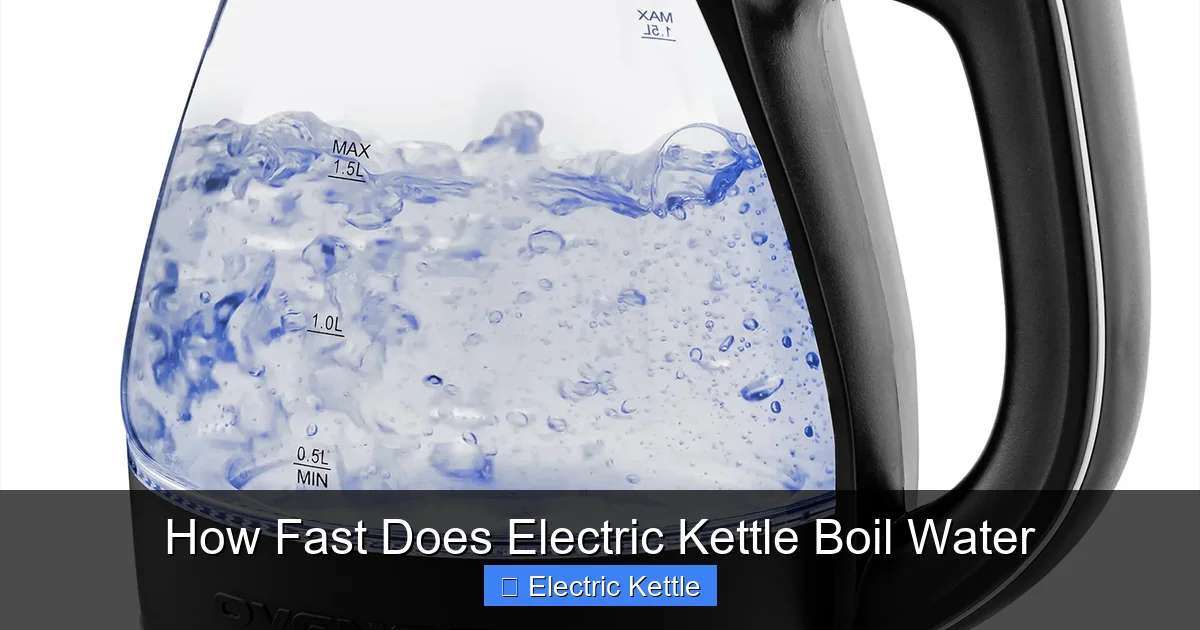
Visual guide about How Fast Does Electric Kettle Boil Water
Image source: m.media-amazon.com
Let’s be honest—waiting for water to boil on the stove feels like watching paint dry. You turn on the burner, place the kettle on the flame, and then… nothing. For what feels like forever. Meanwhile, your electric kettle is already whistling (or beeping) that it’s done.
So why the big difference in speed?
It all comes down to efficiency. Electric kettles are designed to convert nearly all of their electrical energy directly into heat. The heating element is submerged in the water (or very close to it), so heat transfer is fast and direct. There’s minimal energy loss to the surrounding air.
Stovetops, especially gas burners, lose a lot of heat to the environment. Only about 40–55% of the heat actually goes into the water. The rest escapes into the air around the pot. Electric stovetops are a bit better, but still not as efficient as a well-designed electric kettle.
Another advantage? Electric kettles are usually made with materials and shapes that maximize heat absorption. Many have flat, wide bases and optimized heating coils that distribute heat evenly. Plus, they’re often insulated or designed to retain heat, so once the water starts warming up, it keeps going without cooling off.
Real-World Comparison: Electric vs. Stovetop
Let’s put some numbers to it. In a typical test, a 1500-watt electric kettle boils 1 liter of cold tap water (around 68°F or 20°C) in about 3 minutes and 30 seconds. A gas stovetop kettle under the same conditions might take 8 to 10 minutes. An electric coil stovetop could take 6 to 8 minutes.
That’s a difference of up to 6 minutes saved—every single time you boil water. Over a week, that adds up to over 30 minutes of saved time. Multiply that by a year, and you’ve gained nearly a full day of extra time just by switching to an electric kettle.
And it’s not just about speed. Electric kettles are also safer. They automatically shut off when the water reaches boiling point, so you don’t have to worry about forgetting the stove on. No more dried-out kettles or fire hazards.
What Affects Boiling Speed in Electric Kettles?
Now that we know electric kettles are fast, let’s dig into what actually determines how fast they boil water. It’s not just about flipping a switch—several key factors come into play.
1. Wattage: The Power Behind the Speed
Wattage is the biggest factor in boiling speed. Simply put, the higher the wattage, the faster the kettle heats water.
Most household electric kettles range from 1200 watts to 3000 watts. Here’s a quick breakdown:
– 1200–1500W: Common in basic models. Boils 1 liter in about 4–5 minutes.
– 1800–2200W: Mid-range to high-end kettles. Boils 1 liter in 3–4 minutes.
– 2500–3000W: Premium or commercial-grade models. Can boil 1 liter in under 3 minutes.
For example, a 3000W kettle might boil a full liter in just 2 minutes and 30 seconds—ideal for offices, large families, or anyone who needs hot water fast.
But higher wattage isn’t always better. It can increase your electricity bill slightly, and not all kitchen circuits can handle 3000W without tripping a breaker. Most homes are fine with 1500–2200W kettles, which offer a great balance of speed and efficiency.
2. Water Volume and Capacity
How much water you’re heating makes a huge difference. A kettle filled to the brim will take longer to boil than one with just half a liter.
Most kettles have a minimum and maximum fill line. Heating the minimum amount (often around 0.5 liters) can cut boiling time in half. For instance, a 1500W kettle might boil 0.5 liters in just 2 minutes, compared to 4 minutes for a full liter.
This is why it’s smarter to only boil the water you need. If you’re making one cup of tea, don’t fill the kettle to the top. Use just enough for your cup—plus a little extra to account for evaporation. This saves time, energy, and money.
3. Starting Water Temperature
The temperature of the water you start with plays a big role. Cold tap water from the mains might be around 50–60°F (10–15°C) in winter, while in summer it could be closer to 70°F (21°C).
Boiling cold water takes longer than warm water. For example, heating water from 50°F to 212°F (100°C) requires more energy than heating it from 70°F to 212°F.
If you’re in a hurry, consider using warm tap water instead of cold. Many modern homes have instant hot water taps, or you can run the hot water for a few seconds before filling your kettle. This small trick can shave 30–60 seconds off your boiling time.
4. Kettle Material and Design
Not all kettles are created equal. The material and design affect how efficiently heat is transferred to the water.
– Stainless steel kettles: Durable and stylish, but can take slightly longer to heat because metal conducts heat quickly to the outside (losing some to the air).
– Glass kettles: Allow you to see the water boiling, but glass is a poorer conductor than metal, so heating may be a bit slower.
– Plastic kettles: Lightweight and affordable, but not ideal for high heat. Some may warp or release odors over time.
– Rapid-boil or concealed-element designs: These are the fastest. The heating element is hidden under a flat base, which increases surface contact with water and reduces heat loss.
Kettles with optimized heating elements—like those with spiral or flat coils—tend to boil water faster than older, exposed-coil models.
5. Altitude and Environmental Factors
Believe it or not, your location can affect boiling time. Water boils at lower temperatures at higher altitudes. For example, at 5,000 feet above sea level, water boils at about 203°F (95°C) instead of 212°F (100°C).
This means it takes less energy to bring water to a boil, so technically, it could boil faster. However, because the boiling point is lower, your tea or coffee might not extract flavors as well. Some high-end kettles have altitude compensation settings to adjust heating time accordingly.
Other environmental factors include room temperature and air circulation. A kettle in a cold kitchen might lose heat faster, while one in a warm, enclosed space could retain heat better.
How to Make Your Electric Kettle Boil Faster
Want to squeeze every second out of your boiling time? Here are some practical tips to make your electric kettle work faster and more efficiently.
Use the Right Amount of Water
As mentioned earlier, only boil what you need. If you’re making one cup, fill the kettle to the 1-cup mark (usually around 0.3–0.5 liters). This reduces the volume of water that needs to heat up, cutting boiling time significantly.
Overfilling not only wastes energy but also increases boiling time. Plus, it can strain the kettle’s heating element over time.
Start with Warm Water
If your tap has hot water, use it. Filling your kettle with warm water (around 100–120°F or 38–49°C) can reduce boiling time by up to 30–50%. This is especially helpful in the morning when you’re in a rush.
Just be careful not to use water that’s too hot—some kettles have safety sensors that may not activate if the water is already near boiling.
Choose a High-Wattage Kettle
If speed is your top priority, invest in a kettle with at least 1800W. Models with 2200W or more are ideal for fast boiling. Look for features like “rapid boil” or “express heat” in the product description.
Keep in mind that higher wattage may require a dedicated outlet, especially in older homes with lower-capacity circuits.
Keep Your Kettle Clean and Descaled
Mineral buildup from hard water can coat the heating element, acting as an insulator and slowing down heat transfer. Over time, this can increase boiling time by 30 seconds to a full minute.
To prevent this, descale your kettle every 1–3 months, depending on water hardness. Use a mixture of white vinegar and water (1:1 ratio), let it sit for an hour, then rinse thoroughly. Some kettles even have built-in descaling alerts.
Use the Lid Properly
Always make sure the lid is securely closed when boiling. An open lid allows steam to escape, which cools the water and slows down the boiling process. A tight seal helps maintain heat and pressure, speeding up the process.
Preheat the Kettle (Optional)
Some high-end kettles have a “preheat” function that warms the interior before adding water. While not common, this can reduce initial heating time, especially in cold environments.
Alternatively, you can run a quick cycle with hot water (without boiling) to warm the kettle before adding cold water. This is a bit of a hack, but it can help in a pinch.
Energy Efficiency: Speed vs. Cost
One of the biggest myths about electric kettles is that they’re energy hogs. In reality, they’re one of the most energy-efficient ways to boil water—especially when used correctly.
Electric kettles convert about 80–90% of their electrical energy into heat, compared to 40–55% for gas stovetops. That means less wasted energy and lower utility bills over time.
Let’s look at the numbers. Boiling 1 liter of water requires about 0.1 kWh of energy. At an average electricity rate of $0.13 per kWh, that’s just 1.3 cents per boil.
Even if you boil water 5 times a day, that’s only about 6.5 cents per day—or $23.73 per year. Compare that to gas, which might cost slightly less per boil but takes much longer and uses more energy overall.
And remember: boiling only the water you need saves even more. Heating 0.5 liters uses half the energy of heating 1 liter.
Smart Kettles and Energy-Saving Features
Modern electric kettles often come with energy-saving features that help optimize both speed and efficiency:
– Variable temperature control: Lets you heat water to specific temperatures (e.g., 175°F for green tea), so you’re not overheating and wasting energy.
– Auto shut-off: Turns off the kettle once boiling is reached, preventing unnecessary energy use.
– Keep-warm function: Maintains water temperature for a set time without reboiling, saving energy if you need hot water later.
– LED indicators: Show when the kettle is heating or ready, so you don’t leave it on longer than needed.
These features not only save energy but also protect your kettle from overheating and extend its lifespan.
Top Electric Kettles for Fast Boiling
If you’re in the market for a new kettle and speed is a priority, here are some top-performing models known for their fast boiling times:
1. Breville BKE820XL IQ Electric Kettle
– Wattage: 1500W
– Capacity: 1.7 liters
– Boil time: ~3.5 minutes for 1 liter
– Features: Variable temperature control, keep-warm function, LCD display
This premium kettle offers precision and speed, ideal for tea and coffee lovers who want exact temperatures.
2. Cuisinart CPK-17 PerfecTemp
– Wattage: 1500W
– Capacity: 1.7 liters
– Boil time: ~4 minutes for 1 liter
– Features: 6 preset temperatures, auto shut-off, blue LED indicator
A reliable mid-range option with excellent temperature control and consistent performance.
3. Mueller Ultra Kettle
– Wattage: 1100W
– Capacity: 1.8 liters
– Boil time: ~5 minutes for 1 liter
– Features: Stainless steel, rapid boil, auto shut-off
A budget-friendly choice that still delivers solid performance for everyday use.
4. Fellow Stagg EKG Pro
– Wattage: 1200W
– Capacity: 0.9 liters
– Boil time: ~3 minutes for 0.9 liters
– Features: Gooseneck spout, precise temperature control, sleek design
Perfect for pour-over coffee enthusiasts who need speed and accuracy.
5. Smeg KLF04
– Wattage: 3000W
– Capacity: 1.7 liters
– Boil time: ~2.5 minutes for 1 liter
– Features: Retro design, rapid boil, auto shut-off
One of the fastest kettles on the market, ideal for large households or offices.
Common Myths About Electric Kettle Boiling Speed
Despite their popularity, electric kettles are surrounded by some misconceptions. Let’s clear up a few common myths.
Myth 1: Higher Wattage Always Means Faster Boiling
While wattage is a major factor, it’s not the only one. A poorly designed 3000W kettle with a small heating element might not boil water faster than a well-engineered 1500W model. Efficiency, element design, and insulation all play a role.
Myth 2: All Electric Kettles Boil at the Same Speed
Not true. As we’ve seen, differences in wattage, capacity, and design can lead to significant variations in boiling time—sometimes up to 2–3 minutes apart.
Myth 3: Boiling Water Multiple Times Makes It “Stale”
This is a myth. Reboiling water doesn’t make it unsafe or “stale.” It may lose a tiny amount of dissolved oxygen, but this has no real impact on taste or health. In fact, many people prefer reboiled water for tea because it brews more evenly.
Myth 4: Electric Kettles Waste More Energy Than Stovetops
Actually, the opposite is true. Electric kettles are more energy-efficient because they transfer heat directly to the water with minimal loss.
Myth 5: You Should Always Fill the Kettle to the Top
Filling beyond what you need wastes energy and increases boiling time. Only boil the amount of water you’ll use.
Conclusion: Speed, Efficiency, and Convenience
So, how fast does an electric kettle boil water? On average, between 3 and 5 minutes for a full liter—and sometimes even faster. That’s a game-changer compared to traditional stovetop methods, especially when you’re in a hurry.
But speed isn’t the only benefit. Electric kettles are energy-efficient, safe, and convenient. With the right model and a few smart habits—like using the right water amount and keeping it clean—you can boil water faster and save time, energy, and money.
Whether you’re brewing your morning coffee, preparing instant noodles, or making a soothing cup of tea, an electric kettle is one of the most reliable tools in your kitchen. And now that you know what affects boiling speed, you can choose the best kettle for your needs and get that hot water faster than ever.
So go ahead—press that button, listen for the beep, and enjoy your perfectly boiled water in record time.
Frequently Asked Questions
How fast does a 1500W electric kettle boil water?
A 1500W electric kettle typically boils 1 liter of cold water in about 3.5 to 4.5 minutes. Smaller volumes, like 0.5 liters, can boil in under 3 minutes.
Can an electric kettle boil water in 2 minutes?
Yes, high-wattage kettles (2500W–3000W) can boil 1 liter of water in under 3 minutes, with some reaching a boil in just 2 minutes and 30 seconds.
Does starting with hot water make the kettle boil faster?
Yes, using warm or hot tap water can reduce boiling time by 30–60 seconds, depending on the starting temperature and kettle wattage.
Why is my electric kettle taking longer to boil water?
Common reasons include mineral buildup (scale), low wattage, overfilling, or using very cold water. Descaling and using the right water amount can help.
Is it safe to reboil water in an electric kettle?
Yes, it’s completely safe. Reboiling water doesn’t make it harmful, though it may slightly reduce dissolved oxygen, which some say affects taste.
Do smart kettles boil water faster?
Not necessarily faster, but they offer precise temperature control and features like rapid-boil modes that can optimize heating for specific needs.