An electric kettle typically heats water to 212°F (100°C) at sea level, reaching a full boil in minutes. However, some models offer variable temperature control for precise brewing, making them ideal for different beverages.
Have you ever stood in your kitchen, waiting for your electric kettle to finish heating, and wondered just how hot it actually gets? You’re not alone. Whether you’re brewing a cup of tea, making instant coffee, or preparing hot water for cooking, understanding the temperature capabilities of your electric kettle can make a big difference in both taste and efficiency. Electric kettles are a staple in modern kitchens—fast, convenient, and energy-efficient. But behind that simple “click” and the rising steam lies a fascinating process of heat transfer, precision engineering, and safety design.
So, how hot does an electric kettle get? The short answer is: it depends. Most standard electric kettles are designed to bring water to a full boil, which at sea level is 212°F (100°C). But that’s just the beginning. Some kettles go beyond boiling, offering variable temperature settings that let you heat water to lower, more precise temperatures—perfect for delicate green teas or French press coffee. Others are built for speed, using high-wattage heating elements to reach boiling point in under three minutes. And while all kettles are designed with safety in mind, understanding how they work helps you use them more effectively and avoid common pitfalls.
Key Takeaways
- Standard boiling point: Most electric kettles heat water to 212°F (100°C), the boiling point at sea level.
- Altitude affects temperature: At higher elevations, water boils at lower temperatures, so kettles may not reach 212°F.
- Variable temperature models: Advanced kettles allow you to set specific temperatures, perfect for green tea or coffee.
- Heating speed varies: Kettles heat water in 3–5 minutes, depending on wattage and water volume.
- Safety features prevent overheating: Auto shut-off and boil-dry protection keep your kettle safe.
- Energy efficiency: Electric kettles use less energy than stovetops for heating water.
- Proper use extends lifespan: Avoid overfilling and use filtered water to reduce mineral buildup.
📑 Table of Contents
Understanding the Boiling Point of Water
Before diving into how electric kettles work, it’s important to understand what “boiling” actually means. Boiling occurs when water reaches a temperature high enough for its vapor pressure to equal the atmospheric pressure around it. At sea level, this happens at 212°F (100°C). At this point, bubbles form throughout the liquid, and steam rises rapidly—this is what we see as a rolling boil.
But here’s the catch: boiling point isn’t the same everywhere. It changes with altitude. For every 500 feet you go above sea level, the boiling point drops by about 1°F. So if you live in Denver, Colorado—about 5,280 feet above sea level—water boils at around 203°F (95°C). That means your electric kettle won’t reach 212°F, no matter how long it runs. This might seem like a minor detail, but it can affect how well your tea steeps or how your coffee extracts. For example, some teas require near-boiling water to release their full flavor, and if your kettle can’t reach that temperature, you might end up with a weaker brew.
Why Boiling Point Matters for Beverages
Different beverages require different water temperatures for optimal flavor. Black tea, for instance, benefits from water at or near boiling (200–212°F), while green tea is best brewed at lower temperatures (160–180°F) to avoid bitterness. White tea is even more delicate, often needing water around 150–160°F. If you use boiling water on green or white tea, you risk scalding the leaves and creating a bitter, astringent taste.
This is where variable temperature electric kettles shine. Instead of just boiling water, they let you choose the exact temperature you need. Some models have preset buttons for different types of tea or coffee, while others allow manual temperature selection. This precision can elevate your daily cup from average to exceptional.
How Electric Kettles Heat Water
Visual guide about How Hot Does an Electric Kettle Get
Image source: media.sciencephoto.com
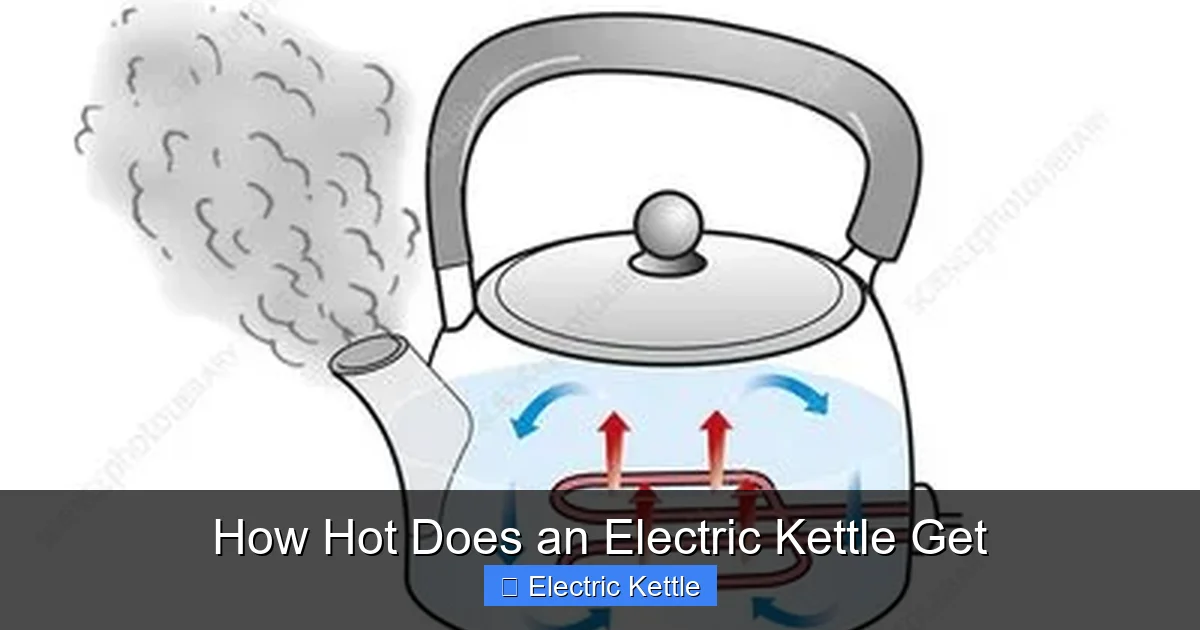
Electric kettles work by converting electrical energy into heat through a heating element, usually located at the base of the kettle. When you plug in the kettle and press the “on” button, electricity flows through this element, which becomes hot—often glowing red—and transfers that heat to the water.
Most kettles use either an immersed or concealed heating element. Immersed elements are in direct contact with the water, making them very efficient but harder to clean. Concealed elements are housed under a stainless steel plate at the bottom of the kettle, which keeps the heating surface smooth and easy to wipe down. This design also reduces mineral buildup, especially in areas with hard water.
The Role of Wattage in Heating Speed
One of the biggest factors affecting how hot and how fast your kettle gets is its wattage. Most household electric kettles range from 1,200 to 3,000 watts. Higher wattage means faster heating. For example, a 1,500-watt kettle might take 4–5 minutes to boil a liter of water, while a 3,000-watt model can do it in under 3 minutes.
This speed isn’t just about convenience—it’s also about energy efficiency. Because electric kettles heat water directly and quickly, they use less energy than boiling water on a stovetop, where heat is lost to the surrounding air. In fact, studies show that electric kettles can be up to 80% more energy-efficient than gas or electric stovetops for heating water.
Thermostats and Temperature Control
Modern electric kettles are equipped with thermostats—small devices that monitor water temperature and automatically shut off the heating element when the desired temperature is reached. In standard kettles, this is usually set to the boiling point. But in variable temperature models, the thermostat can be programmed to stop at lower temperatures.
These thermostats use either bimetallic strips or digital sensors. Bimetallic strips bend when heated, triggering a switch to cut power. Digital sensors are more precise and allow for exact temperature settings. Some high-end kettles even have LED displays that show the current water temperature in real time.
Types of Electric Kettles and Their Temperature Ranges
Not all electric kettles are created equal. Depending on your needs and preferences, you might choose a basic model or one with advanced features. Here’s a breakdown of the most common types and their temperature capabilities.
Standard Electric Kettles
These are the most common type—simple, affordable, and effective. They heat water to a full boil (212°F at sea level) and automatically shut off when done. They’re great for making black tea, instant coffee, or hot water for cooking. Most have a capacity of 1 to 1.7 liters and come in plastic, stainless steel, or glass designs.
While they don’t offer temperature control, they’re reliable and easy to use. Just fill, press the button, and wait. The downside? You can’t adjust the temperature, so they’re not ideal for delicate teas or specialty coffee methods.
Variable Temperature Electric Kettles
If you’re serious about tea or coffee, a variable temperature kettle is a game-changer. These kettles let you select specific temperatures, usually in 5–10°F increments, from around 140°F up to 212°F. Some models have preset buttons labeled “Green Tea,” “White Tea,” “Coffee,” or “Oolong,” each set to the ideal temperature for that beverage.
For example, a green tea setting might heat water to 175°F, while a French press coffee setting could be 200°F. This precision helps extract the best flavors without bitterness. Many variable temperature kettles also have a “keep warm” feature that maintains the water at your chosen temperature for up to an hour.
Gooseneck Electric Kettles
Originally designed for pour-over coffee, gooseneck kettles have a long, narrow spout that allows for precise pouring. This control is essential for methods like Chemex or V60, where water flow affects extraction. Many gooseneck kettles are electric and offer variable temperature settings, making them a favorite among coffee enthusiasts.
These kettles often heat water to the same temperatures as standard models but with added control. Some even have built-in scales or timers to help you brew the perfect cup.
Smart Electric Kettles
The latest innovation in electric kettles is the “smart” kettle. These Wi-Fi-enabled devices can be controlled via smartphone apps, allowing you to set temperatures, schedule boiling times, or receive notifications when your water is ready. Some can even integrate with voice assistants like Alexa or Google Assistant.
Smart kettles typically offer full temperature control and may include features like water quality monitoring or usage tracking. While they’re more expensive, they’re ideal for tech-savvy users who want maximum convenience and customization.
Safety Features That Prevent Overheating
One of the biggest concerns with any heating appliance is safety—especially when it comes to water and electricity. Fortunately, modern electric kettles are designed with multiple safety features to prevent overheating, fires, or other hazards.
Auto Shut-Off
The most important safety feature is the auto shut-off mechanism. Once the water reaches the set temperature (usually boiling), the thermostat triggers a switch that cuts power to the heating element. This prevents the kettle from continuing to heat, which could damage the unit or create a fire risk.
Most kettles shut off within seconds of reaching boiling point, and some even emit a beep or light to signal that the water is ready.
Boil-Dry Protection
Another critical feature is boil-dry protection. If you accidentally turn on the kettle without water, the heating element can overheat and become damaged—or worse, start a fire. Boil-dry protection detects when there’s no water in the kettle and automatically shuts off the power before damage occurs.
This feature is especially important for forgetful users or households with children. It adds an extra layer of protection and helps extend the life of your kettle.
Cool-Touch Exteriors and Handles
Many electric kettles are designed with cool-touch exteriors, meaning the outside of the kettle stays relatively cool even when the water inside is boiling. This reduces the risk of burns when handling the kettle. Handles are often made of heat-resistant materials and are ergonomically designed for a secure grip.
Some models also have lids that lock during heating to prevent accidental spills or steam burns.
Overheat Protection
In rare cases, a malfunctioning thermostat or power surge could cause the kettle to overheat. To guard against this, many kettles include overheat protection circuits that monitor internal temperature and cut power if something goes wrong.
These circuits are a last line of defense, ensuring that even if other safety features fail, the kettle won’t become a hazard.
Factors That Affect How Hot an Electric Kettle Gets
While most electric kettles are designed to reach a full boil, several factors can influence the actual temperature they achieve. Understanding these can help you get the best performance from your appliance.
Altitude
As mentioned earlier, altitude has a direct impact on boiling point. The higher you are above sea level, the lower the boiling temperature. This means your kettle may not reach 212°F, even if it’s working perfectly. If you live in a high-altitude area, consider using a variable temperature kettle with a lower setting for boiling—this can help compensate for the reduced temperature.
Water Quality and Mineral Content
Hard water, which contains high levels of calcium and magnesium, can affect how efficiently your kettle heats water. Over time, minerals build up on the heating element, forming limescale. This layer acts as an insulator, reducing heat transfer and making the kettle work harder to reach the same temperature.
Using filtered or distilled water can help reduce limescale buildup. Regular descaling with vinegar or a commercial cleaner also keeps your kettle running efficiently.
Kettle Capacity and Fill Level
The amount of water in your kettle affects heating time and temperature. A half-full kettle will heat faster than a full one, but it may not reach the same peak temperature if the heating element isn’t fully submerged. Most kettles have minimum and maximum fill lines—always stay within these to ensure safe and efficient operation.
Overfilling can cause water to spill over when boiling, potentially damaging electrical components. Underfilling can trigger boil-dry protection or reduce heating efficiency.
Power Supply and Voltage
Electric kettles are designed to work at specific voltages—usually 120V in North America and 220–240V in Europe and Asia. Using a kettle with the wrong voltage can affect performance. For example, a 220V kettle plugged into a 120V outlet will heat much more slowly and may not reach full temperature.
If you’re traveling, make sure your kettle is compatible with local voltage, or use a voltage converter.
Tips for Using Your Electric Kettle Safely and Efficiently
Getting the most out of your electric kettle isn’t just about knowing how hot it gets—it’s also about using it correctly. Here are some practical tips to help you brew better, save energy, and keep your kettle in top condition.
Choose the Right Temperature for Your Beverage
If your kettle has variable temperature settings, use them! Match the water temperature to the type of tea or coffee you’re making. For example:
– White tea: 150–160°F
– Green tea: 160–180°F
– Oolong tea: 185–205°F
– Black tea: 200–212°F
– French press coffee: 200°F
– Pour-over coffee: 195–205°F
Using the right temperature ensures optimal flavor and avoids bitterness.
Descale Regularly
Limescale buildup is the enemy of efficiency. To descale your kettle, fill it halfway with equal parts water and white vinegar, let it sit for an hour, then boil and discard the solution. Rinse thoroughly with clean water. Repeat if necessary.
For mild buildup, you can also use a commercial descaling solution or lemon juice.
Don’t Reboil Water
Reboiling water can concentrate minerals and reduce oxygen levels, which may affect taste. It’s best to use fresh water each time. If you need hot water again, refill the kettle instead of reheating the same batch.
Store Properly
When not in use, store your kettle unplugged and with the lid open to allow moisture to escape. This prevents mold and odors. Avoid stacking heavy items on top of it, especially if it’s made of glass.
Use the Right Kettle for the Job
If you’re a coffee lover, consider a gooseneck kettle for pour-over brewing. If you drink a lot of tea, a variable temperature model is worth the investment. Match your kettle to your habits for the best experience.
Conclusion
So, how hot does an electric kettle get? In most cases, it heats water to 212°F (100°C)—the boiling point at sea level. But modern kettles offer much more than just boiling. With variable temperature controls, smart features, and advanced safety systems, they’re capable of delivering precise, efficient, and safe heating for all your hot water needs.
Whether you’re brewing a delicate green tea, making a strong cup of coffee, or just heating water for pasta, understanding your kettle’s capabilities helps you get the best results. Factors like altitude, water quality, and kettle type all play a role, but with the right knowledge and care, your electric kettle can be a reliable kitchen companion for years to come.
Investing in a quality kettle—especially one with temperature control—can elevate your daily routine. And by following simple maintenance tips, you’ll keep it running smoothly and safely. So the next time you hear that familiar click and see the steam rise, you’ll know exactly what’s happening inside: science, precision, and a perfect cup of hot water, just the way you like it.
Frequently Asked Questions
How hot does an electric kettle get in Fahrenheit?
Most electric kettles heat water to 212°F (100°C) at sea level, which is the standard boiling point. However, this temperature may be lower at higher altitudes.
Can an electric kettle get hotter than boiling?
No, electric kettles are designed to stop heating once water reaches boiling point. They cannot superheat water beyond 212°F under normal conditions due to built-in thermostats and safety features.
Do all electric kettles boil water to the same temperature?
Most standard kettles boil water to 212°F, but variable temperature models allow you to set lower temperatures for different beverages like green tea or coffee.
Why doesn’t my electric kettle reach 212°F?
If you live at a high altitude, water boils at a lower temperature. For example, at 5,000 feet, water boils around 203°F, so your kettle won’t reach 212°F.
Is it safe to leave an electric kettle on?
Yes, as long as it has auto shut-off and boil-dry protection. These safety features prevent overheating and automatically turn off the kettle when water reaches boiling point or if it’s empty.
How long does it take for an electric kettle to boil water?
Most electric kettles take 3 to 5 minutes to boil a full liter of water, depending on wattage. Higher-wattage models (2,500–3,000W) can boil water in under 3 minutes.