An electric kettle typically keeps water hot for 15 to 60 minutes after boiling, depending on insulation, material, and ambient temperature. While most standard models don’t have built-in heating elements to maintain temperature, insulated or smart kettles can extend heat retention significantly.
Key Takeaways
- Standard electric kettles cool quickly: Without insulation or heating, water loses heat rapidly, often dropping 10–20°F within 15 minutes.
- Insulated kettles retain heat longer: Double-walled or vacuum-insulated models can keep water hot for up to 1–2 hours.
- Material matters: Stainless steel kettles retain heat better than glass or plastic due to lower thermal conductivity.
- Room temperature and lid sealing affect cooling: A tightly sealed lid and cooler environments slow heat loss.
- Smart kettles offer temperature control: Some advanced models reheat water automatically to maintain desired temperatures.
- Preheating and minimizing air exposure help: Filling the kettle just before use and avoiding frequent opening preserves warmth.
- Energy efficiency vs. convenience trade-off: Keeping water hot uses more electricity, so balance warmth needs with energy use.
📑 Table of Contents
- How Long Does an Electric Kettle Keep Water Hot?
- Why Electric Kettles Don’t Keep Water Hot Indefinitely
- Factors That Affect How Long Water Stays Hot
- How Different Kettle Types Compare in Heat Retention
- Practical Tips to Keep Water Hot Longer
- Energy Efficiency vs. Convenience: Finding the Balance
- Conclusion: Making the Most of Your Electric Kettle
How Long Does an Electric Kettle Keep Water Hot?
If you’ve ever poured a cup of tea only to find your water cooling faster than expected, you’re not alone. One of the most common questions about electric kettles is: *How long does an electric kettle keep water hot?* The short answer? It depends. Most standard electric kettles don’t have built-in mechanisms to maintain water temperature after boiling. Once the heating element shuts off, the water begins to cool almost immediately. But that doesn’t mean all hope is lost. With the right kettle and a few smart habits, you can extend how long your water stays hot—sometimes for over an hour.
Understanding heat retention in electric kettles involves looking at several factors: the kettle’s design, material, insulation, ambient temperature, and even how you use it. While a basic plastic or glass kettle might keep water hot for just 15 to 20 minutes, a high-quality insulated stainless steel model can maintain warmth for up to 60 minutes or more. Some advanced smart kettles even go a step further by reheating water automatically to keep it at your preferred temperature. So, whether you’re brewing coffee, making instant soup, or preparing baby formula, knowing how long your kettle keeps water hot can make a big difference in convenience and energy use.
In this guide, we’ll break down everything you need to know about electric kettle heat retention. From the science behind cooling to practical tips for keeping your water warm longer, we’ll cover it all. Whether you’re shopping for a new kettle or just want to get more out of your current one, this article will help you make informed decisions and enjoy hotter water for longer.
Why Electric Kettles Don’t Keep Water Hot Indefinitely
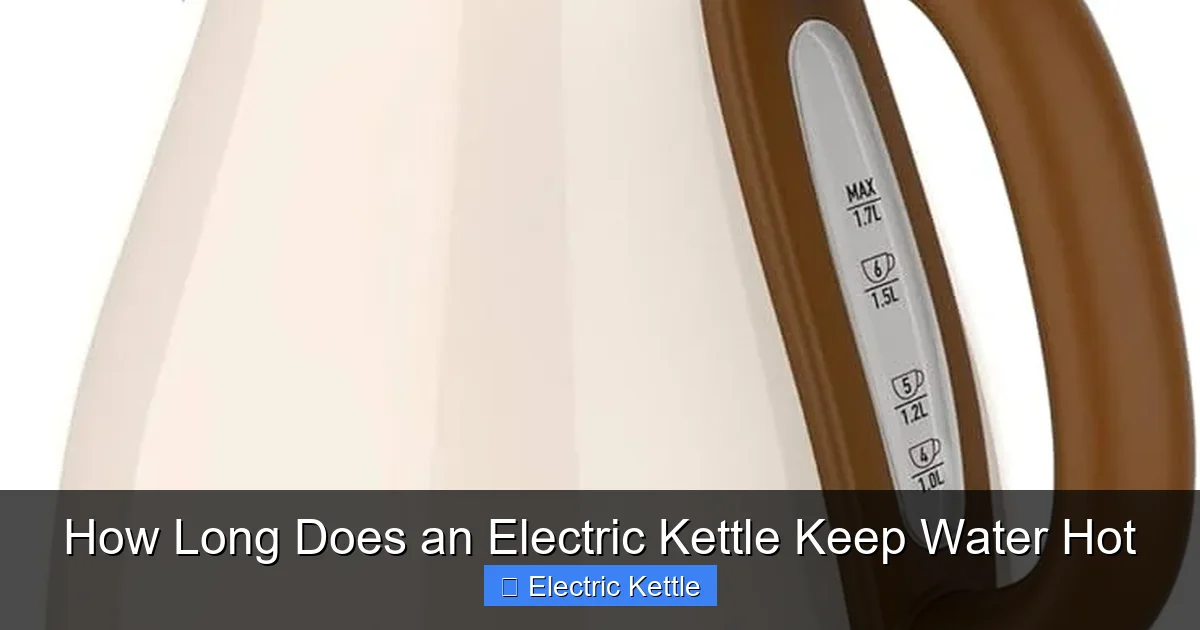
Visual guide about How Long Does an Electric Kettle Keep Water Hot
Image source: m.media-amazon.com
At first glance, it might seem odd that an electric kettle—designed to heat water quickly—doesn’t also keep it hot. After all, wouldn’t it be convenient if your kettle acted like a thermos? The truth is, most electric kettles are built for speed and efficiency, not long-term heat retention. Once the water reaches boiling point (usually around 212°F or 100°C at sea level), the heating element automatically shuts off via a thermostat. This is a safety feature to prevent overheating and save energy. But it also means the kettle stops actively heating the water.
Without continuous heat input, the water begins to lose energy to its surroundings through conduction, convection, and radiation. This process starts the moment the kettle turns off. Heat escapes through the walls of the kettle, the lid, and even the steam that rises from the spout. The rate of cooling depends on several factors, including the material of the kettle, whether the lid is closed, and the temperature of the room. For example, a kettle sitting in a cold kitchen will lose heat faster than one in a warm living room.
Another reason most kettles don’t maintain temperature is energy efficiency. Keeping water hot requires constant electricity, which increases your energy bill and isn’t necessary for most users. Most people boil water once and use it immediately—whether for tea, coffee, or cooking. So manufacturers prioritize quick heating over long-term insulation. However, this design choice means that if you’re someone who likes to boil water and use it over time, you might find your water cooling faster than you’d like.
The Role of Thermostats and Auto-Shutoff
Modern electric kettles come equipped with thermostats and auto-shutoff features for safety and efficiency. These components detect when the water has reached the desired temperature and cut power to the heating element. While this prevents boiling over and reduces fire risk, it also means the kettle stops contributing heat. Unlike a slow cooker or a coffee maker with a warming plate, most kettles don’t have a “keep warm” function. Once the water cools below the set point, the kettle won’t reheat it unless you manually restart the boil.
This design is perfectly fine for quick, one-time use. But if you’re making multiple cups of tea or need hot water over a longer period, you’ll notice the temperature dropping. Some users mistakenly believe their kettle is malfunctioning when the water cools, not realizing that cooling is a natural process. Understanding this helps set realistic expectations and encourages smarter usage habits.
Heat Loss Mechanisms in Electric Kettles
Heat escapes from an electric kettle in several ways. The primary method is conduction—heat moving through the kettle’s material into the surrounding air. If your kettle is made of thin plastic or glass, heat transfers quickly. Stainless steel is better at retaining heat, but even it isn’t perfect. Convection also plays a role: warm air rises from the spout and lid, carrying heat away. If the lid isn’t sealed tightly, this effect is amplified.
Radiation is another factor, though less significant. All objects emit infrared radiation, and a hot kettle is no exception. While this contributes to cooling, it’s usually a smaller portion of total heat loss compared to conduction and convection. Finally, evaporation—especially if the lid is open—can cool the water rapidly. Steam carries away a lot of thermal energy, so keeping the lid closed is one of the simplest ways to slow cooling.
Factors That Affect How Long Water Stays Hot
Not all electric kettles are created equal when it comes to heat retention. Several key factors determine how long your water will stay hot after boiling. Understanding these can help you choose the right kettle and use it more effectively.
Kettle Material: Stainless Steel vs. Glass vs. Plastic
The material of your kettle plays a major role in how well it retains heat. Stainless steel kettles are generally the best for heat retention. They have low thermal conductivity, meaning they don’t transfer heat to the environment as quickly as other materials. This helps keep the water inside warmer for longer. Many high-end kettles use double-walled stainless steel with vacuum insulation, similar to a thermos, which can dramatically slow cooling.
Glass kettles, while aesthetically pleasing and easy to clean, are poor insulators. Glass conducts heat relatively well, so water in a glass kettle cools faster. They’re also more fragile and can break if exposed to sudden temperature changes. Plastic kettles are lightweight and affordable, but they’re the worst at retaining heat. Plastic has high thermal conductivity and can also absorb odors or leach chemicals when heated repeatedly. For long-term heat retention, stainless steel is the clear winner.
Insulation and Double-Wall Design
Insulation is the secret weapon for keeping water hot. Some electric kettles feature double-wall construction with a vacuum layer between the inner and outer walls. This design minimizes heat transfer, much like a thermos flask. These kettles can keep water hot for 60 to 90 minutes or more, depending on the model. While they’re usually more expensive, they’re ideal for households that need hot water over time.
Even without vacuum insulation, some kettles have foam or air gaps between layers to reduce heat loss. These aren’t as effective as vacuum insulation but still offer better performance than single-wall designs. When shopping for a kettle, look for terms like “insulated,” “double-wall,” or “heat-retaining” in the product description.
Lid Seal and Spout Design
A tightly sealed lid is essential for minimizing heat loss. If the lid doesn’t close securely, steam escapes, carrying heat with it. Some kettles have silicone gaskets or locking mechanisms to ensure a tight seal. Others have flip-top lids that are harder to seal properly. A loose lid can reduce heat retention by 20% or more.
The spout design also matters. Kettles with narrow, enclosed spouts lose less heat than those with wide, open openings. Some models have spout covers or internal baffles to reduce steam loss. If you’re serious about keeping water hot, choose a kettle with a well-sealed lid and a compact spout.
Room Temperature and Environment
The environment around your kettle affects how quickly it cools. A kettle in a cold room (say, 60°F or 15°C) will lose heat faster than one in a warm kitchen (75°F or 24°C). Drafts, open windows, or air conditioning can accelerate cooling. Placing your kettle on a heat-resistant surface away from cold walls or windows can help.
Humidity also plays a role. In dry environments, evaporation happens faster, which can cool the water more quickly. While this effect is minor compared to conduction, it’s still worth considering if you live in a very dry climate.
Initial Water Temperature and Volume
The starting temperature of the water affects how long it stays hot. If you’re using cold tap water (around 50–60°F), it will take longer to boil and cool faster afterward. Preheating the kettle with a small amount of hot water before adding your main volume can reduce initial heat loss. This is a common trick used in coffee brewing to stabilize temperature.
The volume of water also matters. A full kettle retains heat better than a half-full one because there’s more thermal mass. Water cools proportionally to its surface area, so a larger volume loses heat more slowly. If you only need a small amount of hot water, consider using a smaller kettle or filling it to at least half capacity.
How Different Kettle Types Compare in Heat Retention
Not all electric kettles are designed the same way, and their heat retention capabilities vary widely. Let’s compare the most common types to see how they stack up.
Standard Electric Kettles
These are the most common kettles on the market. They’re affordable, lightweight, and heat water quickly. However, they typically have single-wall construction and no insulation. As a result, water cools rapidly—often dropping 15–20°F in the first 15 minutes. After 30 minutes, the water may be lukewarm. These kettles are best for immediate use, like making a single cup of tea or coffee.
Insulated Electric Kettles
Insulated kettles are designed specifically for heat retention. They use double-wall stainless steel with vacuum insulation to slow cooling. These models can keep water hot for 60 to 90 minutes, sometimes longer. They’re ideal for offices, families, or anyone who needs hot water over time. The downside? They’re heavier and more expensive than standard kettles.
Smart Electric Kettles
Smart kettles take heat retention to the next level. Many come with built-in temperature control, allowing you to set and maintain specific temperatures (e.g., 185°F for green tea). Some models have “keep warm” functions that reheat the water when it drops below a certain point. These kettles can keep water hot for hours, but they use more electricity. They’re perfect for tea enthusiasts or people who want precision and convenience.
Gooseneck Kettles
Gooseneck kettles are popular among pour-over coffee lovers. They have a long, narrow spout for precise pouring. While many are made of stainless steel and offer decent heat retention, their open design can lead to faster cooling. Some high-end gooseneck kettles include insulation or temperature control, but standard models cool quickly.
Travel Kettles and Mini Kettles
Compact kettles are great for travel or small spaces, but they often sacrifice heat retention for portability. Most are made of plastic or thin stainless steel and lack insulation. Water cools within 15–20 minutes. If you need hot water on the go, consider pairing a mini kettle with a thermos.
Practical Tips to Keep Water Hot Longer
Even if you don’t have an insulated kettle, there are several strategies you can use to extend how long your water stays hot.
Use a Kettle with a Tight-Sealing Lid
Always choose a kettle with a well-fitting lid. After boiling, make sure it’s closed securely. If your lid has a gasket or silicone seal, check it regularly for wear and tear. A loose lid is one of the biggest causes of rapid cooling.
Preheat the Kettle
Before adding your main volume of water, pour in a small amount of hot water, swirl it around, and pour it out. This preheats the kettle’s interior, reducing the initial heat loss when you add cold water. It’s a simple step that can make a noticeable difference.
Minimize Air Exposure
Avoid opening the lid frequently. Each time you peek inside, you let heat escape. If you need to check the temperature, use a thermometer instead of lifting the lid. Also, pour water quickly and fully when using it to reduce the time the kettle is open.
Use a Kettle Cosy or Insulating Cover
A kettle cosy is a fabric cover that fits over your kettle like a sweater. It traps heat and slows cooling. You can buy one or make your own with insulating material. While not as effective as built-in insulation, a cosy can extend heat retention by 10–15 minutes.
Boil Only What You Need
While it might seem counterintuitive, boiling more water than you need can actually help retain heat. A fuller kettle has more thermal mass and cools more slowly. However, avoid overfilling, as this can cause spills and reduce efficiency.
Place the Kettle on an Insulating Surface
Avoid placing your kettle directly on cold countertops, especially stone or tile. Use a wooden board, silicone mat, or trivet to reduce heat loss through the base. This simple step can help maintain temperature, especially in colder environments.
Energy Efficiency vs. Convenience: Finding the Balance
One of the biggest trade-offs with heat retention is energy use. Keeping water hot requires electricity, either through reheating (in smart kettles) or through insulation that reduces the need to reboil. While insulated kettles are more energy-efficient in the long run—because you don’t have to reheat water as often—smart kettles with “keep warm” functions consume power continuously.
If you’re environmentally conscious or trying to reduce your electricity bill, consider how often you actually need hot water. For most people, boiling water once and using it within 30 minutes is sufficient. Reheating water repeatedly uses more energy than boiling it once. Insulated kettles offer the best of both worlds: they keep water hot without constant power use.
Smart kettles are convenient but should be used wisely. If you set a “keep warm” temperature, make sure you actually use the water within a few hours. Otherwise, you’re wasting energy. Some models have timers or auto-shutoff features to help manage this.
Conclusion: Making the Most of Your Electric Kettle
So, how long does an electric kettle keep water hot? The answer ranges from 15 minutes for a basic plastic kettle to over an hour for a well-insulated stainless steel model. While most standard kettles aren’t designed to maintain temperature, smart habits and the right equipment can significantly extend heat retention.
If you frequently need hot water over time, consider investing in an insulated or smart kettle. These models offer better performance and convenience, especially for tea lovers, large households, or office settings. For everyday use, simple tips like sealing the lid, preheating the kettle, and minimizing air exposure can make a big difference.
Ultimately, the best kettle for you depends on your needs, budget, and usage patterns. Whether you’re brewing a single cup or preparing meals for a family, understanding how heat retention works will help you get the most out of your electric kettle. With the right knowledge and tools, you can enjoy hot water whenever you need it—without constantly reboiling.
Frequently Asked Questions
How long does a standard electric kettle keep water hot?
A standard electric kettle typically keeps water hot for 15 to 30 minutes after boiling. Without insulation or heating, the water cools rapidly, especially if the lid is opened frequently.
Can an electric kettle reheat water automatically?
Most standard kettles cannot reheat water automatically. However, some smart kettles have a “keep warm” function that reheats water when it drops below a set temperature.
Does a stainless steel kettle keep water hotter longer than glass?
Yes, stainless steel kettles retain heat better than glass due to lower thermal conductivity. Double-walled stainless steel models with insulation perform even better.
How can I make my kettle keep water hot longer?
Use a tight-sealing lid, preheat the kettle, minimize air exposure, and consider using a kettle cosy. Choosing an insulated model also helps significantly.
Is it energy-efficient to keep water hot in a kettle?
Insulated kettles are energy-efficient because they reduce the need to reboil. Smart kettles with reheating functions use more electricity, so use them wisely.
Should I leave water in the kettle after boiling?
It’s best to use boiled water within a few hours. Leaving water in the kettle for too long can affect taste and promote mineral buildup, especially in hard water areas.