Most electric kettles last between 3 to 5 years with regular use, but quality, maintenance, and usage habits can significantly impact longevity. High-end models with stainless steel construction and advanced features may last up to 7 years or more when properly cared for.
Key Takeaways
- Typical Lifespan: Electric kettles generally last 3 to 5 years, depending on build quality and usage frequency.
- Build Quality Matters: Stainless steel and glass kettles often outlast plastic models due to better heat resistance and durability.
- Regular Cleaning Extends Life: Descaling every 1–3 months prevents mineral buildup that can damage internal components.
- Usage Habits Impact Longevity: Overfilling, dry boiling, or using hard water frequently can shorten your kettle’s life.
- Brand and Warranty Indicate Reliability: Reputable brands often offer longer warranties and more durable designs.
- Signs It’s Time to Replace: Slow heating, leaks, strange noises, or inconsistent boiling are red flags.
- Energy Efficiency Declines Over Time: Older kettles may use more power to heat water, increasing utility costs.
📑 Table of Contents
- How Long Should an Electric Kettle Last? A Complete Guide
- What Is the Average Lifespan of an Electric Kettle?
- Factors That Influence How Long an Electric Kettle Lasts
- How to Extend the Life of Your Electric Kettle
- Signs It’s Time to Replace Your Electric Kettle
- Choosing a Long-Lasting Electric Kettle
- Conclusion: Maximizing Your Electric Kettle’s Lifespan
How Long Should an Electric Kettle Last? A Complete Guide
Imagine starting your morning routine—only to find your trusty electric kettle sputtering, leaking, or refusing to heat. It’s frustrating, especially when you’re counting on that quick cup of tea or instant coffee. Electric kettles are among the most convenient kitchen appliances, but like any device, they don’t last forever. So, how long should an electric kettle last?
The short answer? Most electric kettles last between 3 to 5 years with regular use. However, this number can vary widely based on several factors, including the kettle’s build quality, how often you use it, and how well you maintain it. Some high-end models from reputable brands can last up to 7 years or more, while cheaper, low-quality kettles might start showing problems after just 18 months. Understanding what affects your kettle’s lifespan—and how to care for it—can help you get the most out of your investment.
In this guide, we’ll explore the average lifespan of electric kettles, the key factors that influence durability, maintenance tips to extend their life, and signs that it’s time to replace yours. Whether you’re shopping for a new kettle or trying to squeeze a few more months out of your current one, this article will give you the knowledge you need to make informed decisions.
What Is the Average Lifespan of an Electric Kettle?
The typical electric kettle lasts between 3 and 5 years, but this range is influenced by several variables. To understand why some kettles wear out faster than others, it helps to look at the components that make up these appliances and how they degrade over time.
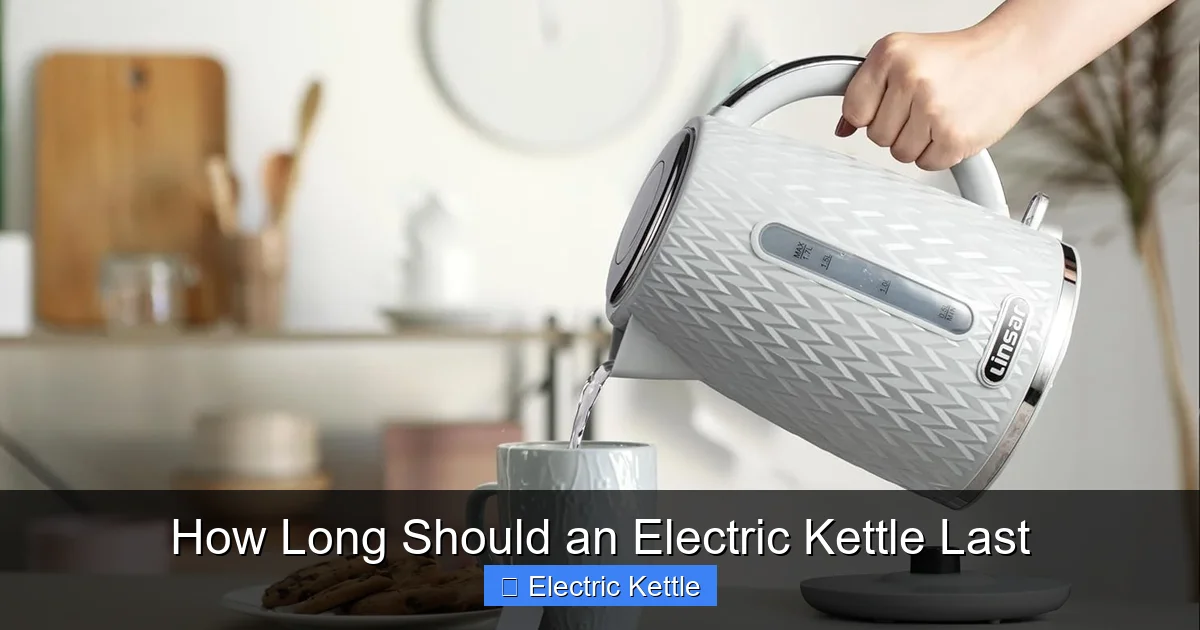
Visual guide about How Long Should an Electric Kettle Last
Image source: storables.com
Internal Components and Wear
Electric kettles rely on a heating element—usually a concealed coil or plate at the base—to heat water quickly. Over time, this element can degrade due to constant exposure to heat and mineral deposits, especially if you live in an area with hard water. The thermostat, which regulates temperature and shuts off the kettle when boiling is reached, is another critical part. If it fails, your kettle might overheat or fail to turn off, posing a safety risk.
The power cord and switch mechanisms also endure repeated use. Frequent plugging and unplugging, bending, or exposure to moisture can lead to fraying or electrical faults. Even the lid and handle can wear out, especially if made from low-quality plastic that becomes brittle with heat exposure.
Usage Frequency and Patterns
How often you use your kettle plays a big role in its lifespan. Someone who boils water multiple times a day—say, for tea, coffee, oatmeal, or instant noodles—will naturally put more strain on the appliance than someone who uses it once a week. Daily users may notice performance issues after 2–3 years, while occasional users might get 6–7 years out of the same model.
But it’s not just about frequency—it’s also about how you use it. For example, boiling an empty kettle (dry boiling) can damage the heating element almost instantly. Overfilling beyond the maximum line can cause water to spill into the base, potentially damaging electrical components. These habits, even if done occasionally, can significantly reduce your kettle’s life.
Environmental Factors
The environment in which your kettle operates also matters. High humidity, exposure to steam, or placing the kettle near a stove can accelerate wear. Similarly, using hard water—water with high mineral content like calcium and magnesium—leads to limescale buildup. This not only affects taste and efficiency but can also insulate the heating element, causing it to overheat and fail prematurely.
For instance, if you live in a region like the Midwest or parts of the UK where hard water is common, you might notice your kettle developing a chalky white residue inside. Without regular descaling, this buildup can reduce heating efficiency and shorten the appliance’s life.
Factors That Influence How Long an Electric Kettle Lasts
Not all electric kettles are created equal. Several key factors determine how long your kettle will serve you reliably. Understanding these can help you choose a longer-lasting model and take better care of the one you have.
Build Quality and Materials
The materials used in your kettle’s construction have a direct impact on durability. Here’s a quick breakdown:
- Stainless Steel: Highly durable, resistant to rust and corrosion, and excellent at retaining heat. Stainless steel kettles often last the longest—up to 7 years or more—especially if they have a double-wall design for insulation.
- Glass: Offers a sleek, modern look and allows you to see the water boiling. High-quality borosilicate glass is heat-resistant and long-lasting, but it can crack if dropped or exposed to sudden temperature changes.
- Plastic: Lightweight and affordable, but more prone to wear. Over time, plastic can discolor, absorb odors, and degrade when exposed to high heat. Look for BPA-free, heat-resistant plastics if you choose this option.
For example, a Breville BKE820XL Smart Kettle made of stainless steel with a digital temperature control can last 6–7 years with proper care. In contrast, a budget plastic kettle from a lesser-known brand might start showing cracks or heating issues after just 2 years.
Brand Reputation and Warranty
Reputable brands like Cuisinart, KitchenAid, Hamilton Beach, and Russell Hobbs often invest more in quality control and durable components. They also tend to offer longer warranties—typically 1 to 3 years—which is a good indicator of expected lifespan. A longer warranty suggests the manufacturer stands behind the product’s durability.
Cheaper, off-brand kettles may cost less upfront but often use inferior materials and lack robust safety features. They’re more likely to fail early, leaving you without a working kettle and no recourse for repair or replacement.
Heating Technology
Modern kettles use either concealed heating elements or exposed coils. Concealed elements are housed under a stainless steel plate, making them easier to clean and less prone to damage from mineral buildup. Exposed coils, while cheaper to manufacture, are more vulnerable to limescale and can be harder to descale effectively.
Some high-end models also feature rapid-boil technology or temperature control settings, allowing you to heat water to specific temperatures for different beverages. While these features add convenience, they also introduce more electronic components that could potentially fail over time. However, when well-made, they don’t necessarily reduce lifespan—they just require more precise engineering.
Water Quality and Hardness
As mentioned earlier, hard water is one of the biggest enemies of electric kettles. The minerals in hard water form limescale, which coats the heating element and interior surfaces. This buildup acts as an insulator, forcing the element to work harder and hotter to heat the water. Over time, this can lead to overheating, reduced efficiency, and eventual failure.
If you live in a hard water area, consider using a water filter or buying a kettle with a built-in filter. Some models, like the OXO Brew Adjustable Temperature Pour-Over Kettle, include removable mesh filters to catch sediment and reduce scale buildup.
How to Extend the Life of Your Electric Kettle
The good news? You can significantly extend the life of your electric kettle with a few simple habits and maintenance routines. A little care goes a long way in preventing common issues and keeping your kettle running smoothly for years.
Regular Descaling
Descaling is the most important maintenance task for any electric kettle. It removes limescale buildup caused by hard water. How often you need to descale depends on your water hardness and usage frequency:
- Soft water, light use: Every 3–6 months
- Hard water, daily use: Every 1–2 months
To descale, fill the kettle halfway with equal parts water and white vinegar. Let it sit for 30–60 minutes, then boil the solution. After boiling, let it cool, then rinse thoroughly with clean water. For stubborn scale, repeat the process or use a commercial descaling solution. Avoid using harsh chemicals or abrasive scrubbers, which can damage the interior.
For example, if you notice your kettle taking longer to boil or leaving a white film on the inside, it’s time to descale. Skipping this step can lead to permanent damage.
Proper Filling and Usage
Always fill your kettle between the minimum and maximum water levels. Overfilling can cause water to spill into the base, potentially damaging the electrical components. Underfilling—especially boiling with very little water—can lead to dry boiling, which damages the heating element.
Never operate the kettle without water. Even a few seconds of dry boiling can cause irreversible damage. If you accidentally do this, unplug the kettle immediately and let it cool before using it again.
Cleaning the Exterior and Filter
Wipe down the exterior with a damp cloth regularly to prevent dust and grease buildup. If your kettle has a removable filter (usually near the spout), clean it weekly with warm soapy water to prevent clogs and ensure smooth pouring.
Avoid submerging the base or cord in water. Only the kettle itself should be rinsed—never the electrical components.
Safe Storage and Handling
Store your kettle in a dry, cool place away from direct heat sources. Don’t wrap the cord tightly around the base, as this can strain the wires over time. Instead, loosely coil it or use a cord organizer.
Handle the kettle gently. Dropping it—especially a glass model—can cause cracks or damage internal parts. Always lift it by the handle, not the lid.
Using Filtered or Softened Water
If you have hard water, consider using filtered or distilled water in your kettle. This reduces mineral buildup and extends the time between descaling sessions. While it may seem like a small change, it can make a big difference in longevity.
For example, switching to filtered water in a hard water area could extend your kettle’s life by 1–2 years, simply by reducing limescale accumulation.
Signs It’s Time to Replace Your Electric Kettle
Even with the best care, electric kettles eventually reach the end of their useful life. Knowing when to replace yours can save you from frustration, safety hazards, and higher energy bills.
Slow Heating or Inconsistent Boiling
If your kettle takes noticeably longer to boil water than it used to, or if it fails to reach a full boil, the heating element may be failing. This is often due to limescale buildup or internal wear. While descaling might help temporarily, persistent slowness is a sign the element is degrading.
Leaks or Water in the Base
Water leaking from the spout, base, or around the handle is a serious issue. It could indicate a cracked interior, a faulty seal, or damage to the electrical housing. Water near the base is especially dangerous—it can cause short circuits or electric shocks. If you notice leaks, stop using the kettle immediately and replace it.
Strange Noises or Smells
Unusual sounds—like popping, sizzling, or grinding—during operation can signal internal damage. A burning smell, especially if accompanied by smoke, is a red flag. This could mean the heating element is overheating or insulation is melting. Unplug the kettle right away and do not use it again.
Electrical Issues or Failure to Turn On
If your kettle won’t turn on, the power cord is frayed, or the switch feels loose, it’s time for a replacement. Electrical faults can be dangerous and are often not worth repairing, especially in older models.
Visible Damage or Discoloration
Cracks in glass kettles, warped plastic, or rust on stainless steel models compromise safety and performance. Discoloration or a persistent odor that doesn’t go away after cleaning may indicate material degradation.
Increased Energy Bills
As kettles age, their efficiency drops. An older kettle may use more electricity to heat the same amount of water, leading to higher utility costs. If you notice a spike in your energy bill and your kettle is over 5 years old, it might be time to upgrade to a more energy-efficient model.
Choosing a Long-Lasting Electric Kettle
If you’re in the market for a new electric kettle, choosing one designed for durability can help you avoid frequent replacements. Here’s what to look for:
Material and Construction
Opt for stainless steel or high-quality glass over plastic. Look for models with a concealed heating element and a double-wall design for better insulation and safety.
Brand and Warranty
Stick with trusted brands that offer at least a 1-year warranty. Read customer reviews to see how long others have used the model without issues.
Features That Enhance Longevity
Consider kettles with automatic shut-off, boil-dry protection, and removable filters. These features not only improve safety but also reduce wear on internal components.
Capacity and Usage Match
Choose a kettle size that matches your needs. A 1.7-liter kettle is ideal for families, while a 1-liter model suits individuals or small households. Overloading a small kettle or underusing a large one can both lead to inefficiency.
Energy Efficiency
Look for kettles with high wattage (1500W or more) for faster boiling, but also check for energy-saving features like temperature control. Some models let you heat water to lower temperatures, saving energy when you don’t need a full boil.
For example, the Breville BKE820XL offers precise temperature control, a stainless steel body, and a 3-year warranty—making it a top choice for long-term use.
Conclusion: Maximizing Your Electric Kettle’s Lifespan
So, how long should an electric kettle last? On average, 3 to 5 years is a realistic expectation, but with the right care and a quality build, yours could last much longer. The key lies in understanding the factors that affect durability—like materials, usage habits, and water quality—and taking proactive steps to maintain your appliance.
Regular descaling, proper filling, gentle handling, and using filtered water can all extend your kettle’s life. Meanwhile, choosing a reputable brand with durable materials and safety features sets you up for success from the start. And when the time comes to replace it, knowing the warning signs—like leaks, slow heating, or strange noises—can help you act before a minor issue becomes a major problem.
Your electric kettle is more than just a convenience—it’s a daily companion in your kitchen routine. Treat it well, and it will serve you reliably for years to come. Whether you’re brewing your morning coffee, preparing instant soup, or steeping a soothing cup of tea, a well-maintained kettle ensures every boil is quick, safe, and efficient.
Frequently Asked Questions
How often should I descale my electric kettle?
You should descale your electric kettle every 1–3 months, depending on water hardness and usage. If you use it daily with hard water, aim for monthly descaling to prevent limescale buildup.
Can I use vinegar to clean my electric kettle?
Yes, white vinegar is safe and effective for descaling. Mix equal parts water and vinegar, let it sit, then boil and rinse thoroughly. Avoid using harsh chemicals or abrasive tools.
Is it safe to leave water in my electric kettle overnight?
It’s best to empty the kettle after each use. Stagnant water can promote bacterial growth and accelerate limescale formation, especially in hard water areas.
Why is my electric kettle making a loud noise?
Loud noises like popping or sizzling may indicate limescale buildup on the heating element. Descaling usually resolves the issue. If the noise persists, the element may be damaged.
Can I repair my electric kettle if it stops working?
Most electric kettles are not designed for user repair. If it’s under warranty, contact the manufacturer. Otherwise, it’s usually safer and more cost-effective to replace it.
Do glass kettles last longer than stainless steel ones?
Not necessarily. High-quality stainless steel kettles often outlast glass models because they’re more resistant to impacts and heat stress. Glass can crack if dropped or exposed to sudden temperature changes.