Boiling water in an electric kettle typically takes 2 to 5 minutes, depending on the kettle’s wattage, water volume, and starting temperature. Understanding these factors helps you save time, energy, and ensure safety—whether you’re making tea, coffee, or instant meals.
Key Takeaways
- Boiling time varies by kettle wattage: Higher-wattage kettles (1500W–3000W) boil water faster than lower-wattage models.
- Water volume matters: Less water boils quicker—only fill to the level you need to save time and energy.
- Starting water temperature affects speed: Cold tap water takes longer than warm or room-temperature water.
- Altitude impacts boiling point: At higher elevations, water boils at lower temperatures and may take slightly longer to reach a rolling boil.
- Kettle design and material influence efficiency: Stainless steel and glass kettles may heat differently than plastic or rapid-boil models.
- Regular maintenance improves performance: Descaling your kettle prevents mineral buildup that slows heating.
- Safety and efficiency go hand in hand: Never overfill, always use on a stable surface, and unplug when not in use.
📑 Table of Contents
- How Long to Boil Water in Electric Kettle: The Complete Guide
- Understanding the Basics: What Affects Boiling Time?
- How Long Does It Actually Take? Real-World Examples
- Kettle Design and Material: Does It Matter?
- Tips to Boil Water Faster and More Efficiently
- Safety Tips When Using an Electric Kettle
- Conclusion: Master Your Kettle for Faster, Safer Boiling
How Long to Boil Water in Electric Kettle: The Complete Guide
Have you ever stood by your kitchen counter, staring at your electric kettle, wondering why it’s taking so long to boil? Or maybe you’re in a rush and need that water hot—fast—for your morning coffee or instant noodles. You’re not alone. One of the most common questions people ask about electric kettles is: How long does it actually take to boil water?
The truth is, the time it takes to boil water in an electric kettle isn’t a one-size-fits-all answer. It depends on several factors—some you can control, others you can’t. But once you understand what influences boiling time, you can optimize your kettle use for speed, energy efficiency, and safety. Whether you’re a tea enthusiast, a busy parent, or just someone who values convenience, knowing how long to boil water in an electric kettle can make your daily routine smoother and more enjoyable.
In this guide, we’ll break down everything you need to know about boiling water in an electric kettle. From the science behind heating to practical tips for faster results, we’ll cover it all. You’ll learn how wattage, water volume, and even your location affect boiling time. Plus, we’ll share expert advice on maintaining your kettle and using it safely. By the end, you’ll be able to predict boiling times like a pro and get that perfect cup of tea or coffee exactly when you want it.
Understanding the Basics: What Affects Boiling Time?
Before we dive into specific timeframes, it’s important to understand what actually determines how long it takes to boil water in an electric kettle. Think of your kettle as a small, efficient heating system. It converts electrical energy into heat, which then transfers to the water. But not all kettles—or situations—are created equal.
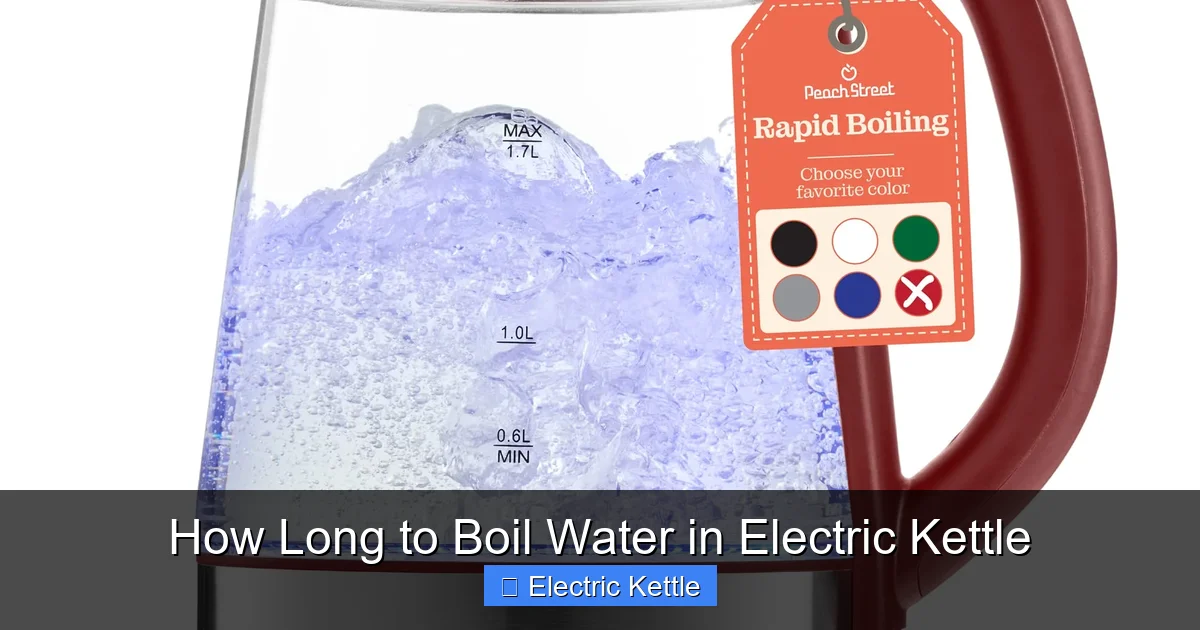
Visual guide about How Long to Boil Water in Electric Kettle
Image source: m.media-amazon.com
The Role of Wattage
One of the biggest factors is the kettle’s wattage. Wattage measures how much power the kettle uses. Higher wattage means more energy is delivered to the heating element per second, which translates to faster boiling. Most standard electric kettles range from 1200 watts to 3000 watts.
For example, a 1500-watt kettle will typically boil one cup (250ml) of water in about 2 to 3 minutes. A 3000-watt model—common in commercial or high-performance kettles—can do the same in under 90 seconds. If you’re using a lower-wattage kettle, like a 1200-watt model, expect closer to 4 minutes for a single cup.
Here’s a quick reference:
- 1200W kettle: ~4 minutes for 1 cup
- 1500W kettle: ~2.5 minutes for 1 cup
- 1800W kettle: ~2 minutes for 1 cup
- 3000W kettle: ~1.5 minutes for 1 cup
Keep in mind that these times are approximate and can vary based on other factors we’ll discuss below.
Water Volume and Starting Temperature
Another major factor is how much water you’re boiling. It takes significantly longer to heat a full kettle than just a cup or two. For instance, boiling 1 liter of water will take nearly twice as long as boiling 500ml, even in the same kettle.
Why? Because more water means more mass to heat. The heating element has to transfer enough energy to raise the temperature of all that water from, say, 20°C (68°F) to 100°C (212°F)—the boiling point at sea level.
Also, the starting temperature of the water matters. Cold tap water from the mains might be around 10–15°C (50–59°F) in winter, while in summer it could be closer to 20–25°C (68–77°F). If you use warm water from the tap or pre-heated water, your kettle will reach boiling point faster.
Pro tip: If you’re in a hurry, try using slightly warm tap water instead of cold. You could save 30 seconds to a minute, which adds up over time.
Altitude and Boiling Point
Did you know that water doesn’t always boil at 100°C (212°F)? It depends on your altitude. At higher elevations, atmospheric pressure is lower, which means water boils at a lower temperature.
For example, at 1,500 meters (about 5,000 feet) above sea level, water boils at around 95°C (203°F). At 3,000 meters (nearly 10,000 feet), it’s closer to 90°C (194°F). This doesn’t necessarily mean it takes longer to boil—in fact, it might boil slightly faster because it reaches a lower temperature—but the reduced heat can affect how well your tea or coffee extracts flavor.
So, if you live in the mountains, your kettle might technically “boil” faster, but your beverages might not taste as strong. Some high-end kettles have temperature control settings that let you adjust for altitude, which can help.
How Long Does It Actually Take? Real-World Examples
Now that we’ve covered the science, let’s look at some real-world examples. These scenarios will help you estimate boiling times based on your specific kettle and usage.
Scenario 1: Morning Coffee Routine
Let’s say you’re making a single cup of pour-over coffee. You fill your 1500-watt kettle with 250ml of cold tap water (around 15°C). On average, this will take about 2 minutes and 30 seconds to reach a full boil.
If you use a 3000-watt kettle, that time drops to about 1 minute and 45 seconds. That’s a big difference when you’re half-awake and craving caffeine!
Scenario 2: Making Instant Noodles for Two
You’re cooking instant ramen for you and a friend, so you need about 500ml of boiling water. Using the same 1500-watt kettle, this will take roughly 4 to 5 minutes. With a 3000-watt model, you’re looking at 3 to 3.5 minutes.
Notice how doubling the water volume doesn’t double the time? That’s because the heating element is working at full capacity, but the larger volume still requires more total energy.
Scenario 3: Boiling a Full Kettle
Some people fill their kettle to the max every time—don’t do this unless you need all that water. A full 1.7-liter kettle on a 1500-watt model can take 7 to 9 minutes to boil. That’s a long wait if you only need one cup!
Instead, only fill your kettle with the amount of water you actually need. Most kettles have clear markings inside to help you measure. This saves time, energy, and reduces wear on the heating element.
Scenario 4: Using Warm Water
Imagine you’re making tea in the middle of the day, and the tap water is already warm from earlier use. You fill your 1500-watt kettle with 250ml of 25°C water instead of 15°C. This small change can shave off 20–30 seconds from the boiling time.
It might not seem like much, but over weeks and months, those seconds add up. Plus, it’s an easy habit to adopt.
Kettle Design and Material: Does It Matter?
Not all electric kettles are built the same. The design, material, and features of your kettle can influence how quickly—and evenly—it heats water.
Stainless Steel vs. Glass vs. Plastic
Stainless steel kettles are durable, retain heat well, and often have powerful heating elements. They’re great for fast boiling and are less likely to retain odors. However, they can be heavier and may take slightly longer to cool down.
Glass kettles are stylish and let you see the water boiling—fun to watch, but they’re more fragile. They also tend to have slightly lower wattage, which can mean longer boiling times. Plus, glass doesn’t insulate as well, so heat can escape more easily.
Plastic kettles are lightweight and affordable, but they’re generally less efficient. Many have lower wattage and can retain smells or degrade over time. They’re also not recommended for boiling water repeatedly, as heat can leach chemicals from low-quality plastic.
If speed is your priority, go for a stainless steel kettle with high wattage (1800W or more).
Heating Element Type
Some kettles have exposed heating elements, while others have concealed ones under a flat base. Concealed elements are easier to clean and less prone to scale buildup, but they may transfer heat slightly less efficiently.
Exposed elements heat water faster but require more maintenance. If you live in a hard water area, you’ll need to descale regularly to prevent mineral deposits from slowing down heating.
Temperature Control Features
Many modern kettles come with variable temperature settings—perfect for different types of tea or coffee. For example, green tea brews best at 70–80°C, while black tea needs near-boiling water.
These kettles often have built-in thermostats that stop heating once the desired temperature is reached. While this doesn’t necessarily speed up boiling, it does improve precision and energy efficiency.
Some high-end models even have rapid-boil modes that use extra power to heat water in under a minute. These are ideal for people who value speed above all else.
Tips to Boil Water Faster and More Efficiently
Want to get that water boiling faster without buying a new kettle? Here are some practical tips to speed up the process and make your kettle more efficient.
Only Boil What You Need
This is the #1 rule for faster boiling. Every extra milliliter of water adds time and energy. If you’re making one cup of tea, don’t fill the kettle to the top. Use the minimum markings or measure with a cup.
Studies show that overfilling kettles wastes billions of watts of electricity each year. By boiling only what you need, you save time, reduce energy bills, and extend your kettle’s lifespan.
Use Warm or Room-Temperature Water
As mentioned earlier, starting with warmer water reduces boiling time. If you’re near a sink, try using water that’s been sitting in the pipes for a while—it’s often warmer than cold tap water first thing in the morning.
Avoid using hot water from the tap for drinking or cooking, though. It can contain higher levels of lead or other contaminants from your plumbing.
Keep Your Kettle Clean and Descaled
Mineral buildup from hard water can coat the heating element, acting like insulation and slowing down heat transfer. This is called scaling, and it’s one of the most common reasons kettles slow down over time.
To descale, use a mixture of white vinegar and water (50/50), fill the kettle, let it sit for an hour, then boil and rinse thoroughly. Do this every 1–2 months if you live in a hard water area.
Regular cleaning not only improves speed but also prevents odd tastes and extends the life of your kettle.
Use the Right Kettle for Your Needs
If you’re always in a rush, consider upgrading to a high-wattage kettle (2000W or more). Look for models with rapid-boil technology or insulated walls that retain heat.
For households with multiple people, a larger kettle (1.5–2 liters) might be more efficient than boiling small amounts multiple times.
Place the Kettle on a Stable, Flat Surface
Even though it seems obvious, an unstable surface can cause the kettle to tilt or not make proper contact with the base, leading to slower heating or safety issues. Always use a flat, heat-resistant countertop.
Avoid Reboiling Water
Reboiling water not only wastes energy but can also concentrate impurities and reduce oxygen levels, which affects taste. If you need more hot water, boil a fresh batch instead.
Safety Tips When Using an Electric Kettle
While electric kettles are generally safe, it’s important to use them correctly to avoid accidents and maintain performance.
Never Overfill the Kettle
Most kettles have a “max” fill line. Exceeding it can cause boiling water to spill over, potentially damaging the base or causing burns. It can also trigger the kettle’s safety shut-off, interrupting your routine.
Don’t Operate an Empty Kettle
Running a kettle with no water can damage the heating element and pose a fire risk. Most modern kettles have automatic shut-off when dry, but it’s still best to avoid it.
Unplug When Not in Use
Even when off, leaving the kettle plugged in can pose a risk, especially if there’s a power surge or fault. Unplugging it when not in use is a simple safety habit.
Keep the Cord Away from Water
Always ensure the power cord and plug stay dry. Never immerse the base or cord in water, and avoid placing the kettle near the sink edge where it could fall in.
Let the Kettle Cool Before Cleaning
After boiling, allow the kettle to cool for a few minutes before handling or cleaning. The interior can remain extremely hot, and sudden temperature changes can crack glass kettles.
Conclusion: Master Your Kettle for Faster, Safer Boiling
So, how long to boil water in an electric kettle? The answer is: it depends—but now you know exactly what it depends on. From wattage and water volume to altitude and maintenance, every detail plays a role in determining boiling time.
By understanding these factors and applying the tips in this guide, you can boil water faster, save energy, and enjoy better-tasting beverages. Whether you’re brewing tea, making coffee, or preparing a quick meal, your electric kettle can be a reliable, efficient tool—when used wisely.
Remember: boil only what you need, keep your kettle clean, and choose the right model for your lifestyle. With a little knowledge and care, you’ll get perfectly boiled water in record time, every single day.
Frequently Asked Questions
How long does it take to boil water in a 1500-watt electric kettle?
A 1500-watt electric kettle typically takes 2 to 3 minutes to boil one cup (250ml) of cold water. For a full 1.7-liter kettle, it may take 7 to 9 minutes.
Does a higher-wattage kettle boil water faster?
Yes, higher-wattage kettles deliver more power to the heating element, resulting in faster boiling times. A 3000-watt kettle can boil water nearly twice as fast as a 1500-watt model.
Can I speed up boiling by using warm water?
Yes, using warm or room-temperature water reduces the time needed to reach boiling point. You can save 20–30 seconds per cup compared to cold tap water.
Why is my electric kettle taking longer to boil water?
Common reasons include mineral buildup (scale), low wattage, overfilling, or using very cold water. Regular descaling and proper usage can restore performance.
Is it safe to reboil water in an electric kettle?
While not dangerous, reboiling water can concentrate impurities and reduce oxygen, affecting taste. It’s better to boil fresh water each time.
Does altitude affect how long it takes to boil water?
At higher altitudes, water boils at a lower temperature due to reduced air pressure. This may cause it to boil slightly faster, but the lower heat can impact brewing quality.