Choosing the right electric kettle isn’t just about looks—it’s about power, capacity, and efficiency. This guide breaks down everything you need to know about how much electric kettle performance fits your lifestyle, from wattage and speed to energy costs and long-term savings.
Key Takeaways
- Wattage determines speed: Higher wattage (1500W–3000W) boils water faster, but uses more energy per minute.
- Capacity matters for households: 1.5L–1.7L suits most families; smaller kettles save space and energy for individuals.
- Energy efficiency varies: Look for insulated models or auto shut-off to reduce wasted electricity.
- Cost per boil is low: Boiling a full kettle costs around 5–10 cents, depending on local electricity rates.
- Material impacts performance: Stainless steel retains heat better; glass and plastic may heat faster but cool quicker.
- Smart features add convenience: Temperature control, keep-warm functions, and rapid boil modes enhance usability.
- Long-term savings add up: An efficient kettle can save $20–$50 over 5 years compared to older, less efficient models.
📑 Table of Contents
- How Much Electric Kettle Power Do You Really Need?
- Understanding Electric Kettle Wattage: What It Means for You
- Electric Kettle Capacity: How Much Water Should You Boil?
- Energy Efficiency: How Much Does It Cost to Boil Water?
- Electric Kettle Materials: How They Affect Performance
- Smart Features: Do You Need Them?
- Long-Term Costs and Durability
- Conclusion: Finding the Right Balance
How Much Electric Kettle Power Do You Really Need?
Let’s be honest—most of us don’t think twice about our electric kettle until it breaks. Then, suddenly, we’re standing in an appliance aisle, staring at rows of shiny kettles, wondering: *How much electric kettle power do I actually need?* Is 1500 watts enough? Should I go for 3000? And what about capacity—do I really need a 2-liter beast if I live alone?
The truth is, the “right” electric kettle depends on your daily habits, household size, and even your morning coffee routine. Whether you’re brewing tea for one or making hot water for a family of five, understanding how much electric kettle performance you require can save you time, money, and frustration.
In this guide, we’ll walk you through everything you need to know—from wattage and boiling speed to energy consumption and long-term costs. We’ll help you figure out not just *how much* electric kettle you need, but *what kind* of kettle will make your life easier, faster, and more efficient.
Understanding Electric Kettle Wattage: What It Means for You
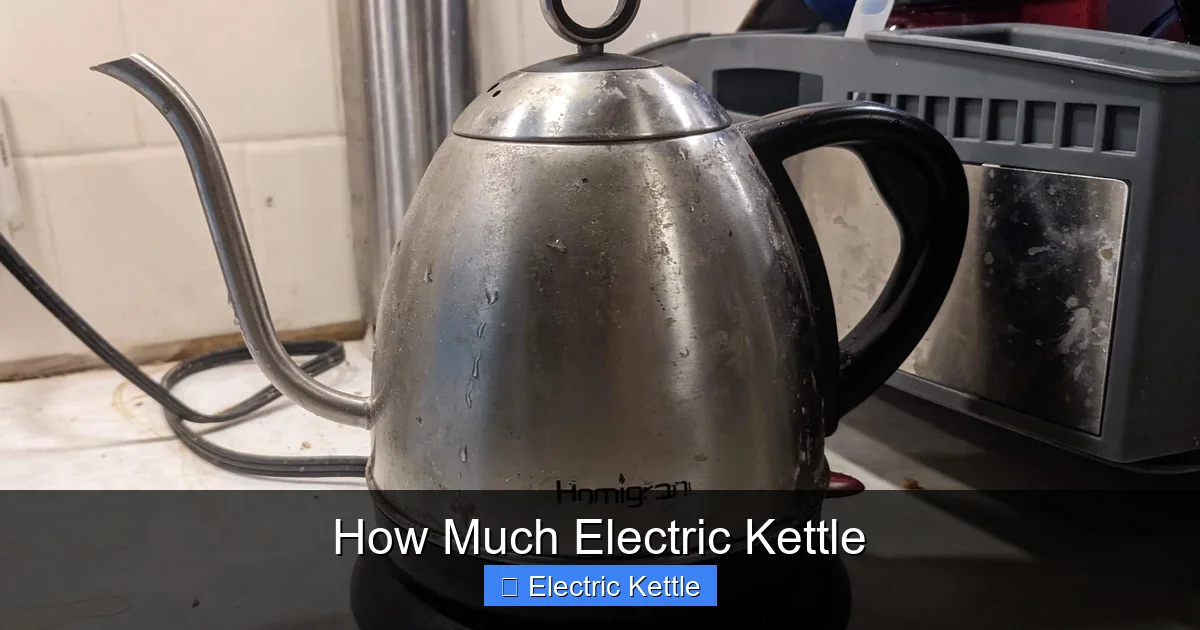
Visual guide about How Much Electric Kettle
Image source: jefftk.com
When you see an electric kettle labeled “1500W” or “3000W,” that number refers to its **wattage**—the amount of electrical power it uses per second. In simple terms, wattage = speed. The higher the wattage, the faster your kettle heats water.
Most home electric kettles range from **1200W to 3000W**, with the average falling between **1500W and 1800W**. Here’s how that breaks down in real life:
– A **1500W kettle** might take about 3–4 minutes to boil 1 liter of water.
– A **3000W kettle** can do the same in under 2 minutes.
So, if you’re someone who’s always in a rush—grabbing a quick coffee before work or heating water for instant noodles during a lunch break—a higher-wattage kettle could be a game-changer. But if you’re more relaxed about your morning routine, a standard 1500W model will serve you just fine.
Does Higher Wattage Mean Higher Energy Bills?
This is where things get interesting. Yes, a 3000W kettle uses more power *per minute* than a 1500W one. But because it boils water faster, the total energy used might not be that different.
Let’s do the math:
Energy (in kilowatt-hours, or kWh) = (Wattage × Time in hours) ÷ 1000
– A 1500W kettle boiling for 4 minutes (0.067 hours):
(1500 × 0.067) ÷ 1000 = **0.10 kWh**
– A 3000W kettle boiling for 2 minutes (0.033 hours):
(3000 × 0.033) ÷ 1000 = **0.10 kWh**
Surprised? Both use roughly the same amount of energy to boil the same amount of water. So while the high-wattage kettle draws more power, it finishes the job faster, balancing out the total consumption.
That said, if you frequently boil only a small amount of water (like one cup), a lower-wattage kettle might be more efficient because it doesn’t waste energy heating excess water.
Regional Differences in Wattage
It’s also worth noting that wattage can vary by country due to voltage differences. In the U.S., standard voltage is 120V, so kettles typically max out around 1500W–1800W. In Europe and many other regions, where voltage is 220V–240V, kettles can safely reach 2500W–3000W.
This means if you’re traveling or buying a kettle abroad, check the voltage compatibility. Using a 240V kettle on a 120V outlet will result in slow boiling—and possibly a damaged appliance.
Electric Kettle Capacity: How Much Water Should You Boil?
Now that we’ve covered power, let’s talk about **capacity**—how much water your kettle can hold. This is just as important as wattage, especially if you’re trying to figure out *how much electric kettle* capacity fits your lifestyle.
Most electric kettles range from **0.5 liters to 2.0 liters**, with the sweet spot for most households being **1.5L to 1.7L**.
Choosing the Right Size for Your Household
– **1 person (studio apartment, solo dweller):** A 0.8L–1.0L kettle is perfect. It’s compact, heats quickly, and won’t waste energy boiling water you don’t need.
– **2–3 people (couple or small family):** Go for 1.5L–1.7L. This size handles multiple cups of tea, instant coffee, or small pots of pasta without constant refilling.
– **4+ people or frequent entertainers:** A 1.8L–2.0L kettle is ideal. It’s great for making hot water for soup, noodles, or serving guests.
But here’s a pro tip: **Only boil what you need.** Filling your kettle to the max every time—even if you only need one cup—wastes energy and increases wear on the heating element. Many modern kettles have “minimum fill” markers (often around 0.5L) to help you avoid this.
Compact vs. Family-Sized: Space and Convenience
If you’re short on counter space, a smaller kettle might be better—even if you have a family. Some compact models are designed to heat water quickly and efficiently, so you can boil in batches without sacrificing speed.
On the other hand, if you’re making hot water for multiple people at once (think: Sunday morning pancakes with coffee, tea, and hot chocolate), a larger kettle saves time and effort.
Also consider **cordless designs**—many kettles detach from their base, making them easy to carry to the table or pour without tripping over cords. This is especially helpful with larger kettles that can get heavy when full.
Energy Efficiency: How Much Does It Cost to Boil Water?
Let’s talk money. How much does it actually cost to use your electric kettle? The answer might surprise you—it’s probably less than you think.
On average, boiling a full 1.7L kettle costs between **5 and 10 cents**, depending on your local electricity rate. In the U.S., the average residential rate is about **$0.15 per kWh**, so let’s use that for our example.
Using the formula from earlier:
(1800W × 0.05 hours) ÷ 1000 = 0.09 kWh
0.09 kWh × $0.15 = **$0.0135 per boil**
That’s just over **1 cent per boil**. Even if you boil water 5 times a day, that’s only about **$1.80 per year**.
Comparing Kettle vs. Stovetop
You might be wondering: is an electric kettle more efficient than boiling water on the stove? The answer is almost always **yes**.
Gas stovetops are notoriously inefficient—only about 40% of the heat actually transfers to the pot. Electric stovetops are better (around 70% efficiency), but still lag behind electric kettles, which can be **80–90% efficient** because the heating element is submerged directly in the water.
So, not only does an electric kettle boil water faster, it also uses less energy overall. Over time, this adds up—especially if you’re boiling water multiple times a day.
Tips to Reduce Energy Use
Even though the cost per boil is low, small habits can make a difference over time:
– **Boil only what you need.** One cup? Don’t fill the kettle to the top.
– **Descale regularly.** Mineral buildup (especially in hard water areas) insulates the heating element, making it work harder and use more energy.
– **Use the right kettle for the job.** If you’re only making tea, a small, fast kettle is better than a large, slow one.
– **Choose models with insulation.** Some kettles have double walls or thermal lining to keep water hot longer, reducing the need to reboil.
Electric Kettle Materials: How They Affect Performance
Not all kettles are created equal—and the material they’re made from plays a big role in how they perform, how long they last, and even how your tea tastes.
Stainless Steel
Stainless steel kettles are durable, stylish, and excellent at retaining heat. They’re also easy to clean and resistant to rust and corrosion. Because the heating element is usually hidden beneath the base, there’s no direct contact with water, which helps prevent scaling and keeps flavors neutral.
However, stainless steel kettles tend to be heavier and may take slightly longer to cool down after use.
Glass
Glass kettles are sleek, modern, and let you watch the water boil—which some people find satisfying. They heat up quickly and don’t retain odors or flavors.
But glass is fragile. Dropping it or exposing it to sudden temperature changes (like pouring cold water into a hot kettle) can cause it to crack. Also, glass doesn’t insulate well, so water cools faster.
Plastic (BPA-Free)
Plastic kettles are lightweight, affordable, and often come in fun colors. Most modern models are BPA-free, so you don’t have to worry about chemicals leaching into your water.
The downside? Plastic can absorb odors over time, and some people report a slight “plastic taste” with cheaper models. Also, plastic doesn’t retain heat well and may degrade with frequent use.
Copper and Other Materials
Copper kettles are rare and usually found in high-end or decorative models. They conduct heat beautifully but require regular polishing and can react with acidic liquids. Most home users stick to stainless steel, glass, or plastic for practicality.
Smart Features: Do You Need Them?
Modern electric kettles come with a range of features that go beyond basic boiling. But are they worth it? Let’s break down the most common ones.
Temperature Control
Not all beverages need boiling water. Green tea, for example, tastes bitter if brewed with water that’s too hot. A kettle with **variable temperature settings** (e.g., 160°F for green tea, 200°F for French press coffee) lets you customize the heat for different drinks.
This is a great feature if you’re a tea or coffee enthusiast. Look for models with preset buttons or a dial for easy adjustment.
Keep-Warm Function
Some kettles can maintain water at a set temperature for 30 minutes to an hour. This is handy if you’re making multiple cups or waiting for someone to join you.
But be cautious: keeping water hot uses energy. If you’re only making one cup, it’s more efficient to boil fresh water each time.
Rapid Boil and Quiet Mode
High-wattage kettles often advertise “rapid boil” technology. As we’ve seen, this just means they use more power to heat water faster.
Some models also offer a “quiet mode” that reduces noise by heating more slowly. This is great for early mornings or light sleepers, but it defeats the purpose of a fast kettle.
Auto Shut-Off and Boil-Dry Protection
These are **safety must-haves**. Auto shut-off turns the kettle off once water reaches boiling point, preventing overheating. Boil-dry protection cuts power if the kettle is turned on without water, protecting the element and reducing fire risk.
Always choose a kettle with these features—they’re non-negotiable for safety.
Long-Term Costs and Durability
When figuring out *how much electric kettle* you’re willing to spend, consider not just the upfront price, but the long-term value.
A $30 kettle might seem like a bargain, but if it breaks after a year, you’re back to square one. A $70–$100 model with a solid warranty, good reviews, and durable materials could last 5–10 years.
What to Look for in a Durable Kettle
– **Stainless steel interior:** Resists scaling and doesn’t affect taste.
– **Removable limescale filter:** Makes cleaning easier and extends lifespan.
– **Strong warranty:** At least 2 years is a good sign of manufacturer confidence.
– **Positive user reviews:** Look for feedback on longevity and reliability.
Maintenance Tips to Extend Life
– **Descale monthly** if you have hard water. Use vinegar or a commercial descaler.
– **Wipe the exterior** regularly to prevent buildup.
– **Avoid overfilling** to prevent water from spilling into the base.
– **Store in a dry place** when not in use.
Conclusion: Finding the Right Balance
So, how much electric kettle do you really need? The answer isn’t one-size-fits-all. It depends on your lifestyle, household size, and how you use your kettle.
If you’re a busy professional who needs fast, hot water on demand, a high-wattage, 1.7L stainless steel kettle with temperature control might be perfect. If you live alone and only make tea occasionally, a compact 1.0L glass kettle could be all you need.
The key is to balance **speed, capacity, efficiency, and safety**—without overpaying for features you’ll never use. And remember: even though the cost per boil is low, small choices add up. Boil only what you need, maintain your kettle well, and choose a model that fits your daily routine.
In the end, the best electric kettle isn’t the most powerful or the most expensive—it’s the one that makes your life easier, one perfect cup at a time.
Frequently Asked Questions
How much does it cost to boil an electric kettle?
Boiling a full 1.7L electric kettle typically costs between 5 and 10 cents, depending on your local electricity rate. On average, it uses about 0.1 kWh of energy per boil.
Is a higher wattage kettle better?
Higher wattage means faster boiling, but not necessarily higher energy use. A 3000W kettle may boil water in half the time of a 1500W one, using roughly the same total energy.
What size electric kettle should I buy?
For individuals, a 0.8L–1.0L kettle is ideal. For families of 2–4, choose 1.5L–1.7L. Larger households or entertainers may prefer 1.8L–2.0L.
Are electric kettles more efficient than stovetops?
Yes. Electric kettles are 80–90% efficient, while gas stovetops are only about 40% efficient. Electric kettles boil water faster and use less energy overall.
Do I need a kettle with temperature control?
It depends on your habits. If you drink green tea, white tea, or specialty coffee, temperature control helps avoid bitterness. For basic boiling, it’s not essential.
How often should I descale my electric kettle?
In hard water areas, descale monthly. In soft water areas, every 2–3 months is sufficient. Regular descaling improves performance and extends the kettle’s lifespan.