Boiling a kettle uses about 0.1 to 0.2 kWh of electricity per use, costing just a few cents. However, habits like overfilling or frequent reheating can add up over time. Smart usage and choosing an efficient kettle can significantly cut energy waste and save money.
Key Takeaways
- Typical energy use: Boiling a standard 1.7-liter electric kettle uses between 0.1 and 0.2 kWh of electricity, depending on size and efficiency.
- Cost per boil: At average U.S. electricity rates (about $0.15/kWh), each boil costs roughly 1.5 to 3 cents.
- Overfilling wastes energy: Boiling more water than needed increases energy use and can shorten your kettle’s lifespan.
- Efficient kettles save power: Modern, well-insulated kettles with rapid-boil technology use less energy and heat water faster.
- Reboiling is inefficient: Reheating water that’s already hot uses extra electricity—only boil what you need.
- Switch to eco mode: Some smart kettles offer energy-saving settings that reduce power consumption by up to 20%.
- Small changes add up: Using your kettle wisely can save $10–$20 per year and reduce your carbon footprint.
📑 Table of Contents
- Introduction: The Humble Kettle and Your Energy Bill
- How Much Electricity Does It Take to Boil a Kettle?
- Calculating the Real Cost of Boiling Water
- Energy-Saving Tips for Kettle Users
- The Environmental Impact of Boiling Water
- Smart Kettles and the Future of Energy Efficiency
- Conclusion: Boil Smarter, Not Harder
Introduction: The Humble Kettle and Your Energy Bill
We’ve all done it—walked into the kitchen, flipped the switch, and waited for that familiar whistle or click as the kettle boils. Whether it’s for morning coffee, afternoon tea, or instant noodles, the electric kettle is one of the most used appliances in homes around the world. It’s fast, convenient, and seemingly harmless. But have you ever stopped to wonder: how much electricity does it actually take to boil a kettle?
It’s a simple question with a surprisingly important answer. While a single boil might seem insignificant, the cumulative effect of daily use—especially in households with multiple people—can quietly add up on your energy bill. And with rising electricity costs and growing awareness about energy efficiency, understanding your kettle’s power consumption is more relevant than ever.
In this guide, we’ll break down exactly how much electricity it takes to boil a kettle, explore the factors that influence energy use, and share practical tips to help you boil smarter—not harder. Whether you’re a tea enthusiast, a busy parent, or just someone trying to cut down on household energy waste, this article will give you the knowledge you need to make informed decisions. Let’s dive in.
How Much Electricity Does It Take to Boil a Kettle?
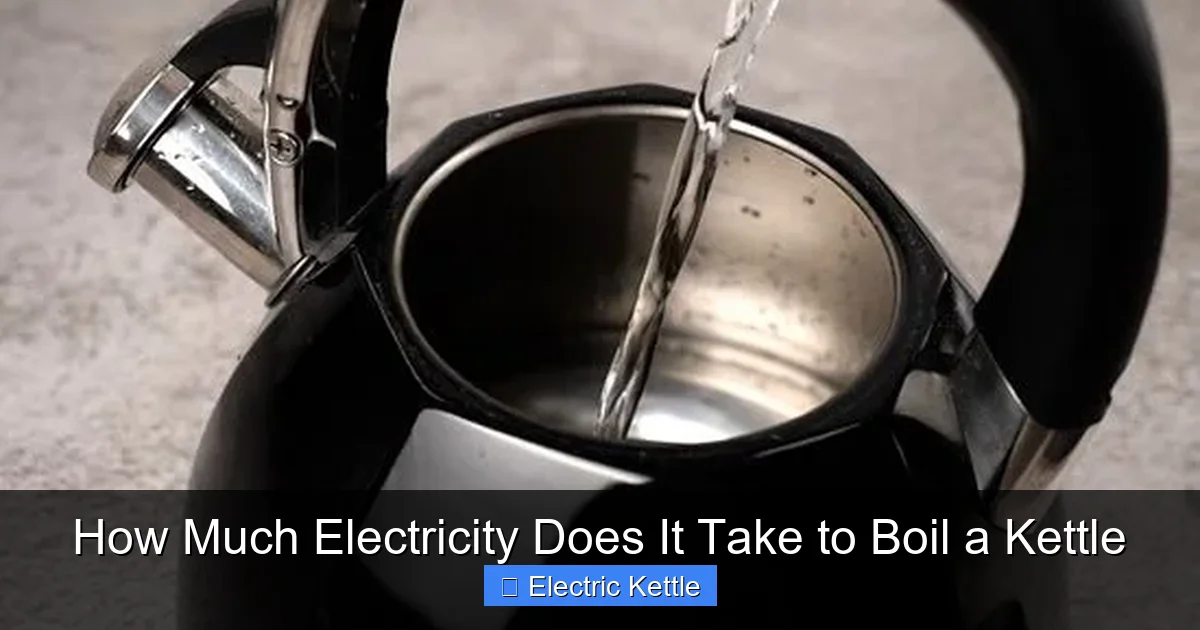
Visual guide about How Much Electricity Does It Take to Boil a Kettle
Image source: wikihow.com
So, what’s the real number? On average, boiling a standard 1.7-liter electric kettle uses between 0.1 and 0.2 kilowatt-hours (kWh) of electricity. To put that in perspective, a kilowatt-hour is the amount of energy used by a 1,000-watt appliance running for one hour. Most electric kettles range from 1,200 to 3,000 watts, with the majority falling around 1,500 to 2,500 watts.
Let’s do a quick example. Say you have a 2,000-watt kettle and you boil it for about 3 minutes (0.05 hours). The calculation is simple:
Energy (kWh) = Power (kW) × Time (hours)
So: 2 kW × 0.05 h = 0.1 kWh.
That means each time you boil your kettle, you’re using about 0.1 kWh. At the average U.S. electricity rate of around $0.15 per kWh, that’s just 1.5 cents per boil. In the UK, where rates are higher (around £0.30/kWh), it’s about 3 pence. So individually, it’s not much. But if you boil your kettle 5 times a day, that’s 0.5 kWh daily—or about 15 kWh per month. Over a year, that’s 180 kWh, costing roughly $27 in the U.S. or £54 in the UK.
Now, consider a household of four people, each boiling the kettle twice a day. That’s 8 boils daily, 24 kWh per month, and over 280 kWh per year. Suddenly, the kettle isn’t so innocent anymore.
But here’s the good news: small changes in how you use your kettle can make a noticeable difference. We’ll explore those later. First, let’s look at what affects how much electricity your kettle uses.
Factors That Influence Kettle Energy Use
Not all kettles are created equal—and neither are all boiling habits. Several factors determine how much electricity your kettle consumes:
1. Kettle Wattage: Higher-wattage kettles heat water faster but use more power per minute. A 3,000-watt kettle might boil in 2 minutes, while a 1,200-watt model takes 5. Even though the high-wattage kettle uses more power, it may still use less total energy because it runs for less time. However, most households don’t need ultra-high wattage unless they’re boiling large amounts frequently.
2. Amount of Water: This is the biggest factor. Boiling a full kettle when you only need one cup is a classic energy-wasting move. Water has a high heat capacity, meaning it takes a lot of energy to raise its temperature. The more water you heat, the more electricity you use—linearly. Boiling twice the water takes twice the energy.
3. Starting Water Temperature: Cold tap water in winter can be significantly cooler than in summer. The colder the starting temperature, the more energy needed to reach boiling point (100°C or 212°F). If your kitchen is cold or your water comes from a deep well, this can add a few seconds—and a few watts—to your boil time.
4. Kettle Efficiency: Older kettles or poorly designed models may lose heat to the surrounding air, especially if they’re not well-insulated. Modern kettles often have better heating elements and thermal insulation, reducing energy loss and improving efficiency.
5. Frequency of Use: How often you boil your kettle matters. Reboiling water that’s already hot—like when you forget your tea and reheat it—wastes energy. Once water reaches boiling point, it stays hot for a while. Letting it cool slightly before reheating, or only boiling what you need, saves power.
Calculating the Real Cost of Boiling Water
Let’s make this practical. How much does it really cost to boil your kettle? We’ll use real-world examples to show the impact.
Example 1: Single Person, One Boil per Day
– Kettle: 2,000 watts
– Water: 500 ml (about 2 cups)
– Boil time: 2 minutes (0.033 hours)
– Energy used: 2 kW × 0.033 h = 0.066 kWh
– Cost (U.S.): 0.066 × $0.15 = $0.01 (1 cent)
– Annual cost: $0.01 × 365 = $3.65
Not bad, right? But now let’s scale it up.
Example 2: Family of Four, Two Boils per Person per Day
– Total boils: 8 per day
– Average energy per boil: 0.1 kWh (assuming full kettle sometimes)
– Daily energy: 8 × 0.1 = 0.8 kWh
– Daily cost: 0.8 × $0.15 = $0.12
– Annual cost: $0.12 × 365 = $43.80
That’s over $40 a year—just for boiling water. And that’s a conservative estimate. If you’re boiling full kettles multiple times a day, the number could easily double.
Now, compare that to other appliances. A typical refrigerator uses about 1–2 kWh per day, so your kettle usage could be 40% of your fridge’s daily consumption. It’s not the biggest energy hog in your home, but it’s not negligible either.
Comparing Kettle Types: Which Is Most Efficient?
Not all kettles are equally efficient. Here’s a quick breakdown:
Standard Electric Kettles: These are the most common. They have exposed heating elements or hidden coils at the base. Efficiency varies, but most modern models are reasonably efficient if used correctly.
Variable Temperature Kettles: These allow you to set specific temperatures (e.g., 80°C for green tea). They use slightly more electronics, but they prevent over-boiling, which saves energy in the long run.
Insulated or Thermal Kettles: Some kettles have double-walled insulation, keeping water hot longer. This reduces the need to reboil, saving energy over time.
Smart Kettles: Wi-Fi-enabled kettles with apps and scheduling can be convenient, but they often have standby power consumption. Look for models with low standby draw or auto-shutoff features.
In general, a well-maintained, mid-range electric kettle used efficiently will give you the best balance of speed, cost, and energy use.
Energy-Saving Tips for Kettle Users
Now that you know how much electricity it takes to boil a kettle, let’s talk about how to reduce that number. Small changes in habit can lead to meaningful savings—both on your bill and for the planet.
1. Only Boil What You Need
This is the golden rule. If you’re making one cup of tea, don’t fill the kettle to the max. Use a measuring cup or the kettle’s markings to pour just the amount you’ll use. Boiling excess water is the number one energy waste with kettles.
For example, boiling 1 liter instead of 0.5 liters uses twice the energy. Over a month, that could mean 10–15 extra kWh—worth $1.50–$2.25 in the U.S.
2. Descale Your Kettle Regularly
Limescale buildup—common in hard water areas—insulates the heating element, making it less efficient. This means your kettle has to work harder and longer to boil water, using more electricity.
Descaling every 1–3 months (depending on water hardness) can improve efficiency by up to 25%. Use vinegar, citric acid, or a commercial descaler. Simply fill the kettle, boil, let it sit for 30 minutes, then rinse thoroughly.
3. Use the Right Kettle for the Job
If you only make one or two cups at a time, consider a smaller kettle (1–1.2 liters). Larger kettles take longer to heat and often encourage overfilling. A compact model heats faster and uses less energy for small amounts.
Also, look for kettles with rapid-boil technology. Some models can boil a cup of water in under a minute, reducing standby losses and total energy use.
4. Avoid Reboiling Water
Once water has boiled, it stays hot for a long time. If you forget your tea and it cools slightly, don’t reboil it. Instead, heat it gently on the stove or in a microwave. Reboiling uses nearly as much energy as the first boil and can degrade water quality over time.
5. Turn Off at the Wall
Even when not in use, some kettles draw a small amount of standby power—especially smart models. Unplugging or using a smart plug can eliminate this “vampire” energy drain.
6. Consider Alternative Methods
For small amounts of water, a microwave can be more efficient. Heating one cup in a microwave uses about 0.03–0.05 kWh, compared to 0.06–0.1 kWh in a kettle. However, microwaves heat unevenly and can’t boil water safely beyond a point, so use caution.
For larger quantities, a stove-top kettle might be an option, but gas and electric stovetops are generally less efficient than electric kettles due to heat loss.
The Environmental Impact of Boiling Water
Beyond cost, there’s an environmental angle to consider. Electricity generation—especially from fossil fuels—produces carbon emissions. Every kWh of electricity used contributes to your carbon footprint.
In the U.S., the average carbon intensity is about 0.85 pounds of CO₂ per kWh. So, boiling your kettle once (0.1 kWh) emits about 0.085 pounds of CO₂. That might seem tiny, but multiply it by millions of households, and it adds up.
If a family of four boils the kettle 8 times a day, that’s 0.8 kWh daily—or 292 kWh per year. That translates to about 248 pounds of CO₂ emissions annually. Over a decade, that’s over a ton of carbon dioxide.
By boiling only what you need, descaling regularly, and choosing efficient appliances, you can reduce this impact significantly. It’s a small step, but every bit counts in the fight against climate change.
Smart Kettles and the Future of Energy Efficiency
Technology is making kettles smarter—and greener. Newer models come with features designed to reduce energy use:
Eco Modes: These limit power output or reduce boil time for smaller amounts, cutting energy use by 15–20%.
Keep-Warm Functions: Instead of reboiling, some kettles maintain water at a set temperature for up to an hour. This uses less energy than repeated boiling.
Automatic Shutoff: Prevents over-boiling and reduces fire risk. Most modern kettles have this, but it’s worth checking.
Energy Monitoring: A few high-end models display real-time energy use, helping you track consumption and adjust habits.
While smart kettles may cost more upfront, the long-term savings in energy and convenience can make them worthwhile—especially for frequent users.
Conclusion: Boil Smarter, Not Harder
So, how much electricity does it take to boil a kettle? The answer is: not much per use, but potentially a lot over time. With average use, you’re looking at 0.1 to 0.2 kWh per boil, costing just a few cents. But habits like overfilling, reboiling, and using an inefficient model can quietly inflate your energy bill and environmental impact.
The good news? You have control. By boiling only what you need, maintaining your kettle, and choosing energy-efficient models, you can enjoy your daily cuppa without guilt. These small changes not only save money—they also contribute to a more sustainable lifestyle.
Next time you reach for the kettle, take a moment to think: how much water do I really need? A little mindfulness can go a long way. After all, the most efficient kettle is the one used wisely.
Frequently Asked Questions
How much does it cost to boil a kettle once?
Boiling a standard kettle once costs between 1.5 and 3 cents in the U.S., depending on electricity rates and kettle efficiency. In the UK, it’s about 2–4 pence per boil.
Is it cheaper to boil a kettle or use a microwave?
For small amounts (1–2 cups), a microwave is often more energy-efficient. However, kettles are faster and better for larger quantities or when you need boiling water.
Does boiling a full kettle use twice as much electricity?
Yes. The energy required to heat water is directly proportional to the amount. Boiling twice the water uses roughly twice the electricity.
How can I reduce my kettle’s energy use?
Only boil the water you need, descale regularly, avoid reboiling, and choose an energy-efficient model with rapid-boil or eco settings.
Do smart kettles use more electricity?
Smart kettles may use a small amount of standby power, but their energy-saving features (like precise temperature control) often offset this by reducing waste.
Is it bad to reboil water in a kettle?
Reboiling isn’t harmful to health, but it wastes energy and can concentrate impurities over time. It’s better to heat leftover water gently instead.