An average electric kettle uses between 1,200 and 3,000 watts of power, boiling water in just 2–4 minutes. While fast and convenient, understanding your kettle’s energy use helps reduce electricity bills and environmental impact.
Key Takeaways
- Typical wattage ranges from 1,200 to 3,000 watts: Most home electric kettles operate within this range, with higher wattage meaning faster boiling.
- Boiling time affects total energy use: A 1,500-watt kettle uses about 0.05 kWh per 3-minute boil, costing just a few cents per use.
- Overfilling increases energy waste: Only boil the water you need to save power and reduce heating time.
- Energy-efficient models save money long-term: Look for kettles with auto shut-off, insulated walls, and precise temperature control.
- Regular descaling improves efficiency: Limescale buildup forces the kettle to work harder, using more power over time.
- Electric kettles are more efficient than stovetops: They transfer heat directly to water, losing less energy than gas or electric stoves.
- Smart habits reduce overall consumption: Unplugging when not in use and using cold water taps can cut standby and heating energy.
📑 Table of Contents
- How Much Power Does an Electric Kettle Use?
- Understanding Electric Kettle Wattage and Energy Consumption
- Calculating Your Electric Kettle’s Energy Cost
- Electric Kettle vs. Other Water Heating Methods
- Factors That Affect Electric Kettle Power Use
- Energy-Efficient Electric Kettle Tips and Best Practices
- Environmental Impact of Electric Kettle Use
- Conclusion
How Much Power Does an Electric Kettle Use?
If you’ve ever stood in your kitchen waiting for water to boil, you’ve probably wondered: *How much power does an electric kettle really use?* It’s a fair question—especially if you’re trying to cut down on your electricity bill or live a more energy-conscious lifestyle. The good news is that electric kettles are among the most efficient ways to heat water, but their power consumption depends on several factors, including wattage, usage habits, and maintenance.
Most electric kettles sold today range from 1,200 to 3,000 watts. That might sound like a lot, but because they boil water so quickly—usually in 2 to 4 minutes—the total energy used per boil is actually quite low. For example, a typical 1,500-watt kettle running for 3 minutes uses about 0.075 kilowatt-hours (kWh) of electricity. Depending on your local electricity rate (say, $0.15 per kWh), that’s just over 1 cent per boil. Multiply that by a few uses a day, and you’re still looking at less than $5 a year in energy costs. Compared to boiling water on a gas stove or electric stovetop, electric kettles are often faster and more energy-efficient.
But here’s the catch: small habits can make a big difference. Overfilling your kettle, using it multiple times a day, or letting limescale build up can all increase your energy use without you even noticing. The goal of this guide is to help you understand exactly how much power your electric kettle uses, how to calculate your own energy costs, and how to use your kettle more efficiently—without sacrificing convenience.
Understanding Electric Kettle Wattage and Energy Consumption
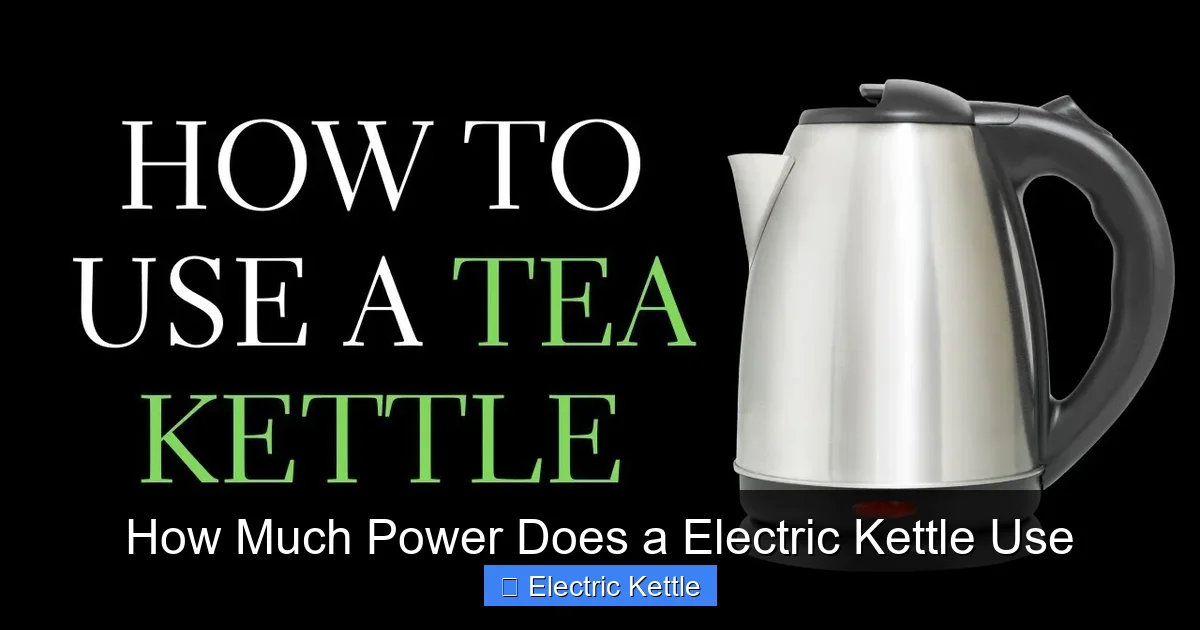
Visual guide about How Much Power Does a Electric Kettle Use
Image source: easylifeelectronic.com
When it comes to electric kettles, wattage is the key factor that determines how much power the appliance uses. Wattage refers to the rate at which the kettle consumes electricity—measured in watts (W). The higher the wattage, the more power the kettle draws, and the faster it can heat water.
Most household electric kettles fall into one of three wattage categories:
– **Low-power kettles (1,200–1,500W):** These are common in smaller households or regions with lower voltage (like 110V in the U.S.). They take a bit longer to boil water—around 4 to 6 minutes for a full liter—but use less power per minute.
– **Mid-range kettles (1,500–2,200W):** This is the sweet spot for most users. These kettles balance speed and efficiency, boiling a liter of water in about 3 to 4 minutes.
– **High-power kettles (2,200–3,000W):** Popular in countries with 220–240V systems (like the UK, Australia, and much of Europe), these kettles can boil water in under 2 minutes. They’re great for speed but draw more current, so they may require a dedicated circuit in some homes.
To understand how wattage translates into real energy use, let’s break it down with a simple formula:
**Energy (kWh) = (Wattage × Time in hours) ÷ 1,000**
For example, if you use a 1,800-watt kettle for 3 minutes (0.05 hours):
(1,800 × 0.05) ÷ 1,000 = 0.09 kWh
If your electricity costs $0.15 per kWh, that one boil costs about 1.35 cents. Now, imagine you boil water 5 times a day—that’s roughly 6.75 cents daily, or about $24.70 per year. Not bad, right? But if you’re using a 3,000-watt kettle and boiling more than you need, that number can climb.
Why Wattage Matters for Efficiency
Higher wattage doesn’t always mean better efficiency. While a 3,000-watt kettle boils water faster, it also draws more power in a shorter time. In contrast, a 1,200-watt kettle takes longer but uses less total energy if you’re only heating a small amount of water. The key is matching the kettle’s power to your needs.
For instance, if you only need one cup of water for tea, using a high-wattage kettle to boil a full liter is inefficient. The extra energy used to heat the extra water is wasted. That’s why many modern kettles now come with features like variable temperature settings and minimum fill lines—to help you use only the water (and power) you need.
Voltage and Regional Differences
Another factor that affects power use is the electrical system in your country. In the U.S., standard household voltage is 110–120V, which limits how much power a kettle can draw safely. Most U.S. kettles top out around 1,500W. In contrast, countries with 220–240V systems (like the UK, Germany, or India) can support kettles up to 3,000W, allowing for much faster boiling.
This is why you’ll often see British kettles described as “rapid boil” or “3,000W”—they’re designed to take advantage of the higher voltage. If you’re traveling or buying a kettle online, make sure it’s compatible with your local voltage to avoid damage or reduced performance.
Calculating Your Electric Kettle’s Energy Cost
Now that you know how wattage and time affect energy use, let’s talk about money. How much does it actually cost to use your electric kettle every day?
To calculate your personal energy cost, you’ll need three pieces of information:
1. **Your kettle’s wattage** (check the label or user manual)
2. **How long it runs per boil** (use a timer if unsure)
3. **Your electricity rate** (found on your utility bill, usually in cents per kWh)
Let’s walk through a real-life example.
Say you have a 1,500-watt kettle that takes 3 minutes to boil one liter of water. You use it 4 times a day. Your electricity rate is $0.14 per kWh.
Step 1: Convert minutes to hours
3 minutes = 0.05 hours
Step 2: Calculate energy per boil
(1,500W × 0.05h) ÷ 1,000 = 0.075 kWh
Step 3: Multiply by daily uses
0.075 kWh × 4 = 0.3 kWh per day
Step 4: Multiply by cost per kWh
0.3 kWh × $0.14 = $0.042 per day
Step 5: Annual cost
$0.042 × 365 = $15.33 per year
So, for less than $16 a year, you can enjoy hot water for tea, coffee, instant meals, and more. That’s incredibly affordable—especially when you consider the convenience and speed.
But what if you’re using a higher-wattage kettle or boiling more water?
Let’s try a 2,500-watt kettle boiling for 2.5 minutes, 5 times a day, at $0.16 per kWh:
(2,500 × 0.0417) ÷ 1,000 = 0.104 kWh per boil
0.104 × 5 = 0.52 kWh per day
0.52 × $0.16 = $0.0832 per day
$0.0832 × 365 = $30.37 per year
Still under $31—reasonable for daily use. But if you’re boiling more than you need or using the kettle excessively, costs can add up.
Tips to Reduce Your Kettle’s Energy Bill
Even though electric kettles are efficient, small changes can make a difference over time:
– **Only boil what you need:** If you’re making one cup of tea, don’t fill the kettle to the max. Use the minimum fill line or measure your water.
– **Use cold water:** Starting with cold tap water is more efficient than reheating warm water, which may have been sitting in a thermos or kettle.
– **Descaling regularly:** Limescale buildup insulates the heating element, forcing the kettle to work harder and use more power. Clean it every 1–2 months with vinegar or a descaling solution.
– **Unplug when not in use:** While most kettles don’t use standby power, unplugging eliminates any phantom load and extends the appliance’s life.
– **Choose an energy-efficient model:** Look for kettles with insulated walls, auto shut-off, and temperature control. These features prevent over-boiling and reduce heat loss.
Electric Kettle vs. Other Water Heating Methods
One of the biggest advantages of electric kettles is their efficiency compared to other ways of heating water. Let’s compare them to stovetop kettles, microwaves, and electric stovetops.
Electric Kettle vs. Stovetop Kettle
A stovetop kettle—whether used on gas or electric—relies on transferring heat from a flame or coil to the kettle, then to the water. This process loses energy at each step. Studies show that electric kettles are about 80–90% efficient, while stovetop methods are only 60–70% efficient.
For example, boiling a liter of water on a gas stove can take 5–7 minutes and use more total energy than an electric kettle doing the same job in 3 minutes. Plus, gas stoves release heat into the air, which is wasted unless you’re cooking something else.
Electric Kettle vs. Microwave
Microwaves heat water by agitating molecules, but they’re not ideal for large quantities. Heating a full cup of water in a microwave can take 2–3 minutes, similar to a kettle, but microwaves are less efficient at transferring energy to water—especially if the container isn’t microwave-safe or the water isn’t stirred.
Also, microwaves can create “superheated” water—water that’s hotter than boiling but doesn’t appear to bubble. This can be dangerous, as it may erupt when disturbed. Electric kettles, with their automatic shut-off and visible boiling, are safer and more consistent.
Electric Kettle vs. Electric Stovetop
Electric stovetops use radiant heat coils that take time to warm up and cool down. Even with a covered pot, boiling water can take 6–10 minutes. The kettle, by contrast, heats water directly through an immersed element, minimizing heat loss.
In terms of energy use, an electric kettle typically uses 20–30% less energy than an electric stovetop to boil the same amount of water. That’s a significant saving, especially if you boil water frequently.
Factors That Affect Electric Kettle Power Use
While wattage and usage time are the biggest factors, several other elements can influence how much power your kettle uses.
Water Volume
The more water you heat, the more energy it takes. Heating 500ml uses roughly half the energy of heating 1 liter. Always fill your kettle to the level you need—don’t guess.
Some kettles have markings for 1 cup, 2 cups, etc. Use them. If yours doesn’t, try measuring with a measuring cup until you get a feel for it.
Starting Water Temperature
Cold water takes longer to heat than warm water. If you’re reheating water that’s already been boiled (like from a thermos), it will boil faster and use less energy. But avoid reboiling water unnecessarily—it can concentrate impurities and waste power.
Limescale Buildup
In hard water areas, minerals like calcium and magnesium accumulate on the heating element. This limescale acts as an insulator, reducing heat transfer and forcing the kettle to run longer. Over time, this can increase energy use by 10–20%.
Regular descaling (every 1–2 months) keeps your kettle efficient. Use a 50/50 mix of white vinegar and water, let it sit for an hour, then rinse thoroughly.
Kettle Design and Insulation
Modern kettles often feature double-walled insulation or thermal bodies that retain heat. These models keep water hot longer after boiling, reducing the need to reheat. Some even have keep-warm functions that maintain temperature for 30–60 minutes.
While these features add cost, they can save energy if you’re making multiple hot drinks in a short time.
Auto Shut-Off and Temperature Control
Most electric kettles turn off automatically when water reaches boiling point. This prevents over-boiling and saves energy. High-end models go further, offering temperature settings for different beverages—like 80°C for green tea or 90°C for French press coffee.
These precise controls prevent heating water hotter than necessary, which saves power and protects delicate flavors.
Energy-Efficient Electric Kettle Tips and Best Practices
Using your electric kettle efficiently isn’t just about saving money—it’s also about reducing your environmental footprint. Here are some practical tips to get the most out of your kettle while using the least amount of power.
1. Boil Only What You Need
This is the #1 rule. If you’re making one cup of tea, don’t fill the kettle to the max. Use the minimum fill line or measure your water. Overfilling is the biggest source of energy waste in daily kettle use.
2. Use Cold Tap Water
Always start with cold water from the tap. Warm or hot water from the tap may seem convenient, but it often comes from a water heater that uses gas or electricity. Using cold water ensures you’re only heating what’s necessary.
3. Descale Regularly
Limescale buildup reduces efficiency and shortens your kettle’s lifespan. Clean it every 1–2 months, especially if you live in a hard water area. Use vinegar, lemon juice, or a commercial descaler.
4. Choose the Right Kettle
If you’re in the market for a new kettle, look for:
– **High efficiency rating** (check energy labels if available)
– **Auto shut-off**
– **Variable temperature settings**
– **Insulated body**
– **Quick boil time**
Brands like Breville, Russell Hobbs, and Bosch offer models with advanced energy-saving features.
5. Unplug When Not in Use
While most kettles don’t use standby power, unplugging eliminates any risk of phantom load and protects against power surges. It’s a small habit with long-term benefits.
6. Use a Kettle with a Keep-Warm Function
If you make multiple hot drinks in a row, a keep-warm kettle can maintain temperature for 30–60 minutes without reboiling. This saves energy compared to reheating cold water each time.
7. Avoid Reboiling Water
Once water has boiled, avoid reheating it unless necessary. Repeated boiling increases energy use and can concentrate dissolved solids, affecting taste and safety.
Environmental Impact of Electric Kettle Use
While electric kettles are efficient, their environmental impact depends on how your electricity is generated. In regions where power comes from coal or natural gas, each kWh of electricity produces carbon emissions. In areas with renewable energy (solar, wind, hydro), the impact is much lower.
Still, reducing energy use helps lower your carbon footprint. By boiling only what you need and maintaining your kettle, you’re contributing to a more sustainable lifestyle.
Additionally, electric kettles last 5–10 years with proper care. Choosing a durable, repairable model reduces waste compared to disposable or low-quality appliances.
Conclusion
So, how much power does an electric kettle use? The answer is: not as much as you might think—especially when used wisely. Most kettles use between 1,200 and 3,000 watts, but because they boil water so quickly, the total energy per use is minimal. With smart habits like boiling only what you need, descaling regularly, and choosing an efficient model, you can enjoy fast, convenient hot water while keeping your energy bills and environmental impact low.
Electric kettles are one of the most efficient ways to heat water, outperforming stovetops, microwaves, and even some electric stoves. By understanding your kettle’s power use and adopting energy-saving practices, you can make every boil count—without burning a hole in your pocket or the planet.
Frequently Asked Questions
How much electricity does a 1,500-watt kettle use per boil?
A 1,500-watt kettle running for 3 minutes uses about 0.075 kWh of electricity. At $0.15 per kWh, that’s just over 1 cent per boil.
Is it cheaper to boil water in an electric kettle or on the stove?
Yes, electric kettles are generally cheaper and more efficient than stovetops. They heat water faster and lose less energy to the surrounding air.
Can I reduce my kettle’s power use by descaling it?
Absolutely. Limescale buildup insulates the heating element, making the kettle work harder. Regular descaling improves efficiency and reduces energy use.
Do electric kettles use power when turned off?
Most modern kettles don’t use standby power when off, but unplugging ensures no phantom load and protects against power surges.
What’s the most energy-efficient way to boil water?
Use an electric kettle with auto shut-off, boil only the water you need, and descale it regularly. This minimizes energy waste and maximizes efficiency.
Are high-wattage kettles worth the extra power draw?
High-wattage kettles boil faster, which can save time and energy if you’re heating full volumes. But for small amounts, a lower-wattage kettle may be more efficient.