An electric kettle typically takes 2 to 5 minutes to boil water, depending on wattage, capacity, and water temperature. Higher-wattage models and smaller volumes boil faster, making them ideal for quick tea, coffee, or cooking needs.
Key Takeaways
- Boiling Time Range: Most electric kettles take between 2 to 5 minutes to boil a full liter of water, with smaller amounts boiling even faster.
- Wattage Matters: Higher-wattage kettles (1500W–3000W) heat water significantly faster than lower-wattage models (1000W–1200W).
- Water Volume Impact: Boiling half a liter takes about half the time of boiling a full liter, so only heat what you need.
- Starting Temperature: Cold tap water takes longer than room-temperature or pre-warmed water, especially in winter months.
- Kettle Material & Design: Stainless steel and glass kettles may retain heat differently than plastic, but heating speed is more influenced by internal elements.
- Energy Efficiency: Electric kettles are among the most energy-efficient ways to boil water compared to stovetop or microwave methods.
- Smart Features Help: Some modern kettles offer variable temperature settings and rapid-boil modes that optimize speed and precision.
📑 Table of Contents
How Much Time Does an Electric Kettle Take to Boil Water?
If you’ve ever stood in your kitchen waiting for water to boil—whether for your morning coffee, a cup of tea, or instant noodles—you’ve probably wondered: just how fast is an electric kettle, really? The answer isn’t one-size-fits-all. While many people assume all electric kettles work at the same speed, the truth is that boiling time can vary significantly based on several key factors.
On average, a standard electric kettle takes between 2 and 5 minutes to bring a full liter (about 4 cups) of water to a rolling boil. That might seem like a wide range, but it reflects real-world differences in kettle design, power, and usage. For example, a high-powered 3000-watt kettle can boil a liter in under 3 minutes, while a smaller 1200-watt model might take closer to 5 or even 6 minutes. If you’re only heating a single cup (around 250ml), you could be looking at just 1 to 2 minutes—perfect for a quick caffeine fix.
But speed isn’t the only thing that matters. Efficiency, safety, and consistency also play big roles in how well your kettle performs. And while you might be tempted to crank up the heat or fill the kettle to the brim every time, doing so can actually slow things down or waste energy. The good news? With a little knowledge, you can optimize your kettle’s performance and get hot water faster—without burning a hole in your electricity bill.
Factors That Affect Boiling Time
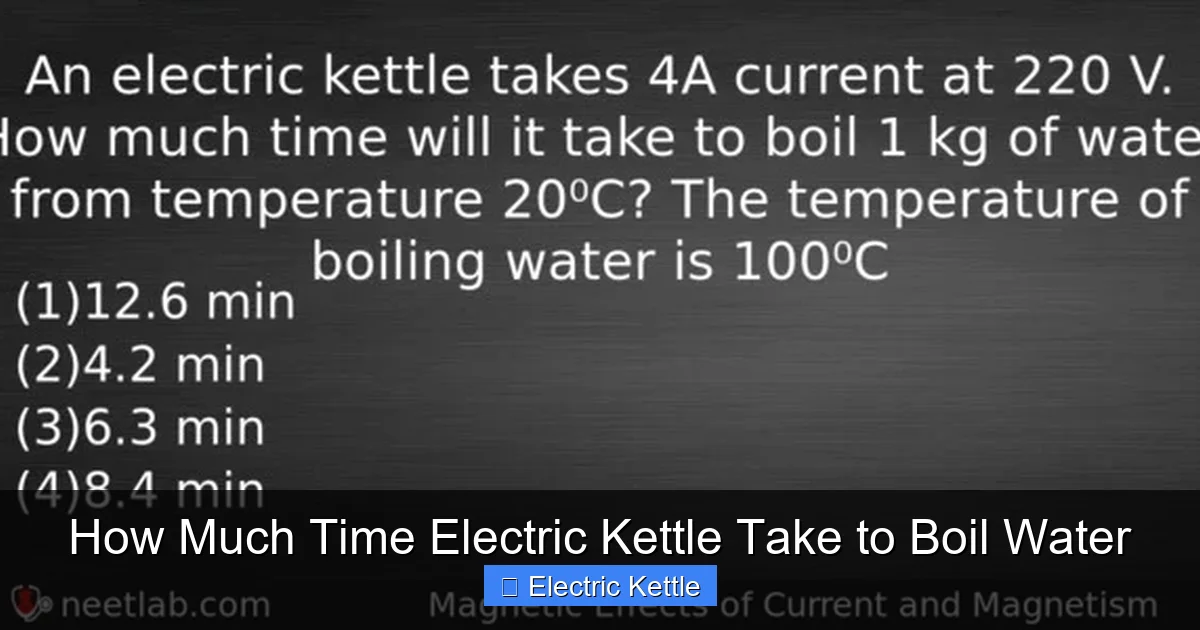
Visual guide about How Much Time Electric Kettle Take to Boil Water
Image source: neetlab.com
So why do some kettles boil water in under two minutes while others seem to take forever? The answer lies in a combination of design, power, and environmental factors. Understanding these can help you choose the right kettle and use it more efficiently.
Wattage: The Power Behind the Speed
The most significant factor influencing how fast your electric kettle boils water is its wattage. Wattage refers to the amount of electrical power the kettle uses—and more power generally means faster heating. Most household electric kettles range from 1000 watts to 3000 watts, with the average falling around 1500 to 1800 watts.
Here’s a quick breakdown:
– A 1200W kettle might take 4–5 minutes to boil 1 liter.
– A 1500W kettle typically does it in 3–4 minutes.
– A 2000W or 3000W model can boil the same amount in 2–3 minutes.
Higher wattage means the heating element can transfer more energy to the water per second, resulting in quicker boiling. If speed is a priority—say, you’re making multiple cups of tea throughout the day—opting for a higher-wattage kettle is a smart move. Just keep in mind that more power can also mean higher electricity usage, though the short boiling time usually keeps overall consumption low.
Water Volume: Less Is More (When It Comes to Speed)
Another major factor is how much water you’re heating. Electric kettles are most efficient when filled to their recommended capacity, but boiling a full liter will always take longer than boiling half a liter. This is simple physics: more water requires more energy to heat up.
For example:
– Boiling 500ml (2 cups) in a 1500W kettle might take 2 minutes.
– Boiling 1 liter (4 cups) in the same kettle could take 3.5 to 4 minutes.
This is why many energy experts recommend only filling your kettle with the amount of water you actually need. Not only does this reduce boiling time, but it also saves electricity. Over time, consistently overfilling your kettle can add up to noticeable energy waste—especially if you’re doing it multiple times a day.
Starting Water Temperature
The temperature of the water you start with also plays a role. Cold tap water, especially in winter or in cooler climates, can be as low as 10°C (50°F), while room-temperature water might be closer to 20–25°C (68–77°F). The colder the starting temperature, the longer it will take to reach boiling point (100°C or 212°F at sea level).
If you’re in a hurry, consider using water that’s already been sitting in a warm room or even pre-warmed in a thermos. Some modern kettles also come with “rapid boil” or “express” modes that optimize heating for faster results, though these often require higher wattage to be effective.
Altitude and Atmospheric Pressure
Believe it or not, your location can affect boiling time. Water boils at lower temperatures at higher altitudes due to decreased atmospheric pressure. For example, at 2,000 meters (about 6,500 feet) above sea level, water boils at around 93°C (199°F) instead of 100°C (212°F). While this means water reaches its boiling point faster, it also means it’s not as hot—which can affect brewing times for tea or coffee.
However, most electric kettles are designed to heat water to a rolling boil regardless of altitude, so the time difference is usually minimal. Still, if you live in a high-altitude area, you might notice your kettle boiling slightly faster than someone at sea level.
Kettle Material and Design
The material of your kettle—whether stainless steel, glass, or plastic—can influence heat retention and, to a lesser extent, boiling speed. Stainless steel kettles are durable and retain heat well, but they don’t necessarily heat faster than glass or plastic models. The real difference comes from the heating element’s efficiency and the kettle’s insulation.
Some premium kettles feature double-walled insulation or concealed heating elements that improve heat transfer and reduce energy loss. Others have flat bases that maximize contact with the heating element, leading to more efficient boiling. While material alone won’t drastically change boiling time, a well-designed kettle can make a noticeable difference in performance.
How to Boil Water Faster in an Electric Kettle
Now that you know what affects boiling time, let’s talk about how to make your kettle work faster—without sacrificing safety or efficiency. These practical tips can help you get hot water quicker, whether you’re rushing to make breakfast or hosting guests.
Use Only the Water You Need
This is the number one tip for faster boiling: don’t overfill. If you only need one cup of water, don’t fill the kettle to the max. Heating less water means less energy is required, and the kettle can reach boiling point much faster. Plus, you’ll save electricity and reduce wear on the heating element over time.
Many kettles have clear water level indicators, so it’s easy to measure the right amount. Some even have markings for 1 cup, 2 cups, etc., making it simple to pour just what you need.
Start with Warmer Water
If you’re really in a rush, consider using water that’s already at room temperature or slightly warmed. For example, water from a hot water tap (not boiling, just warm) can cut boiling time by 30 seconds to a minute. Just be cautious—using very hot water from the tap can sometimes contain impurities or minerals, so it’s best to use filtered or cold water if possible.
Alternatively, keep a thermos of warm water on hand for quick reheating. This is especially useful for people who make multiple hot drinks throughout the day.
Choose a High-Wattage Kettle
If you’re in the market for a new kettle, prioritize wattage. Look for models with at least 1500W, and consider 2000W or higher if speed is a top priority. Many modern kettles now offer 2500W to 3000W power, enabling near-instant boiling for small amounts.
Keep in mind that higher-wattage kettles may require a dedicated outlet or circuit, especially in older homes. Always check your electrical setup before purchasing a high-powered model.
Keep the Kettle Clean and Descaled
Mineral buildup from hard water can insulate the heating element, slowing down heat transfer and increasing boiling time. Over time, limescale can reduce efficiency by 20% or more.
To prevent this, descale your kettle regularly using vinegar or a commercial descaling solution. Simply fill the kettle halfway with equal parts water and white vinegar, let it sit for an hour, then boil and rinse thoroughly. Doing this every 1–2 months (or more often in hard water areas) will keep your kettle running at peak performance.
Use the Right Settings (If Available)
Many modern electric kettles come with variable temperature settings for different beverages—green tea at 80°C, coffee at 90°C, etc. While these don’t necessarily boil water faster, they can save time by heating water to the ideal temperature without over-boiling.
Some kettles also have a “rapid boil” or “express” mode that maximizes power output for the fastest possible heating. If your kettle has this feature, use it when you need water in a hurry.
Close the Lid Properly
It might seem obvious, but always make sure the lid is securely closed before turning on the kettle. An open or loose lid allows heat to escape, slowing down the boiling process. Most kettles are designed to automatically shut off when boiling is detected, but only if the lid is closed.
Electric Kettle vs. Other Methods: Which Is Fastest?
When it comes to boiling water, you have several options: electric kettle, stovetop kettle, microwave, or even a hot water dispenser. But which is the fastest—and most efficient?
Electric Kettle vs. Stovetop Kettle
Stovetop kettles are classic and charming, but they’re generally slower than electric models. A typical gas or electric stovetop kettle takes 5 to 8 minutes to boil a liter of water, depending on the burner size and heat output. Electric stovetops are especially slow, while gas burners can be faster—but still not as quick as a high-wattage electric kettle.
Electric kettles win on speed, convenience, and energy efficiency. They heat water directly through an internal element, with minimal heat loss. Stovetop kettles lose heat to the air and the stove surface, making them less efficient.
Electric Kettle vs. Microwave
Microwaves can heat water quickly—sometimes in under 2 minutes for a single cup—but they’re not ideal for larger volumes. Heating a full liter in a microwave can take 4 to 6 minutes and may result in uneven heating or “superheating,” where water becomes dangerously hot without appearing to boil.
Superheating can cause sudden eruptions when the water is disturbed, posing a burn risk. Electric kettles, by contrast, provide consistent, controlled heating and automatic shut-off for safety.
Electric Kettle vs. Hot Water Dispenser
Hot water dispensers (like those in offices or instant hot water taps) can deliver near-boiling water in seconds. However, they’re expensive to install and use more energy over time since they keep water hot continuously.
Electric kettles only use power when boiling, making them more energy-efficient for home use. They’re also portable, affordable, and easy to maintain.
Energy Efficiency and Environmental Impact
While speed is important, it’s also worth considering how much energy your kettle uses—and how that affects your electricity bill and the environment.
Electric kettles are among the most energy-efficient appliances for boiling water. They convert nearly all the electricity they use into heat, with minimal waste. In contrast, stovetop kettles lose heat to the surrounding air, and microwaves use energy to create electromagnetic waves, not direct heat.
According to the U.S. Department of Energy, electric kettles use about 20–30% less energy than stovetop methods to boil the same amount of water. Over a year, this can add up to significant savings—especially if you boil water multiple times a day.
To maximize efficiency:
– Only boil the water you need.
– Use a kettle with automatic shut-off.
– Choose a model with good insulation.
– Descale regularly to maintain performance.
Choosing the Right Electric Kettle for Speed
If you’re shopping for a new electric kettle and speed is a priority, here’s what to look for:
High Wattage (1500W or Higher)
As discussed, wattage is the biggest factor in boiling speed. Aim for at least 1500W, and consider 2000W or more if you want near-instant results.
Rapid Boil or Express Mode
Some kettles advertise “rapid boil” technology, which uses maximum power to heat water as quickly as possible. These are great for busy mornings or when you need hot water in a hurry.
Variable Temperature Control
While not directly related to speed, variable temperature settings let you heat water to the perfect temperature for different drinks—saving time by avoiding over-boiling.
Good Insulation and Design
Look for kettles with flat bases, concealed heating elements, and minimal heat loss. Stainless steel and glass models often perform better than plastic.
Automatic Shut-Off and Boil-Dry Protection
Safety features like automatic shut-off prevent overheating and save energy by turning off the kettle once boiling is reached.
Brand and Reviews
Stick with reputable brands like Breville, Cuisinart, Hamilton Beach, or Russell Hobbs. Read customer reviews to see real-world boiling times and reliability.
Conclusion
So, how much time does an electric kettle take to boil water? The short answer: usually between 2 and 5 minutes for a full liter, with smaller amounts boiling even faster. But the real story is in the details—wattage, water volume, starting temperature, and kettle design all play crucial roles in determining speed.
By understanding these factors and using your kettle wisely—filling it only with the water you need, keeping it clean, and choosing a high-performance model—you can enjoy faster boiling times without wasting energy. Electric kettles are not only convenient and safe but also among the most efficient ways to heat water, outperforming stovetop and microwave methods in both speed and energy use.
Whether you’re brewing tea, making coffee, or preparing instant meals, a good electric kettle can be a game-changer. So next time you’re waiting for water to boil, remember: a few smart choices can make all the difference.
Frequently Asked Questions
How long does it take a 1500W electric kettle to boil water?
A 1500W electric kettle typically takes 3 to 4 minutes to boil 1 liter of water. For smaller amounts, like 500ml, it may take just 1.5 to 2 minutes.
Can I boil water faster by filling the kettle less?
Yes, boiling less water significantly reduces boiling time. Heating 250ml can take under 2 minutes, compared to 4+ minutes for a full liter.
Does altitude affect how fast an electric kettle boils water?
Yes, at higher altitudes, water boils at a lower temperature, so it may reach boiling point slightly faster—but the water won’t be as hot as at sea level.
Is it safe to use a high-wattage electric kettle?
Yes, as long as it’s used on a compatible outlet and follows safety guidelines. High-wattage kettles are safe and often more efficient due to shorter boiling times.
Why is my electric kettle taking longer to boil water than before?
This could be due to limescale buildup, a faulty heating element, or using colder water. Regular descaling and maintenance can restore performance.
Are electric kettles more efficient than microwaves for boiling water?
Yes, electric kettles are generally more energy-efficient and safer for boiling water, especially for larger volumes, and reduce the risk of superheating.