Choosing the right electric kettle can transform your daily routine—whether you’re brewing tea, making coffee, or preparing instant meals. With so many options on the market, it’s important to consider factors like capacity, material, speed, and smart features to find the best fit for your kitchen and needs.
Key Takeaways
- Capacity matters: Choose a kettle that matches your household size—small (1–1.5L) for individuals, larger (1.7–2L) for families.
- Material affects taste and durability: Stainless steel is durable and odor-free, while glass offers visibility but requires careful handling.
- Boiling speed and wattage go hand in hand: Higher wattage (1500W–3000W) means faster boiling, ideal for busy mornings.
- Temperature control is a game-changer: Variable temperature settings let you brew delicate teas or French press coffee perfectly.
- Safety features are non-negotiable: Look for auto shut-off, boil-dry protection, and cool-touch exteriors.
- Ease of cleaning saves time: Removable filters and wide openings make maintenance simple and hygienic.
- Design and noise level impact daily use: A sleek, quiet kettle enhances your kitchen experience without disruption.
📑 Table of Contents
- How to Choose an Electric Kettle: Your Complete Guide
- Understanding Electric Kettle Capacity
- Material Matters: Stainless Steel, Glass, Plastic, and More
- Wattage and Boiling Speed: How Fast Is Fast Enough?
- Temperature Control and Specialty Features
- Safety Features You Can’t Ignore
- Ease of Use and Maintenance
- Design, Noise, and Aesthetics
- Conclusion
How to Choose an Electric Kettle: Your Complete Guide
If you’ve ever stood in front of your kitchen counter, staring at a row of electric kettles wondering which one to pick, you’re not alone. With so many models, brands, and features to consider, choosing the right electric kettle can feel overwhelming. But it doesn’t have to be. Whether you’re a tea enthusiast, a coffee lover, or just someone who appreciates a quick cup of hot water for instant noodles, the right electric kettle can make all the difference.
An electric kettle is more than just a convenience—it’s a daily workhorse in modern kitchens. Unlike stovetop kettles, electric models heat water quickly, often in under five minutes, and many come with advanced features like temperature control, keep-warm functions, and even smart connectivity. But with so many options available, how do you know which one is right for you? The key is to focus on your specific needs, lifestyle, and kitchen habits. Are you brewing delicate green tea that requires a precise 175°F? Do you need to boil water for a family of four every morning? Or are you simply looking for something reliable, quiet, and easy to clean?
In this guide, we’ll walk you through everything you need to know to choose an electric kettle that fits your life. From capacity and material to safety features and smart technology, we’ll break down the essentials so you can make an informed decision. By the end, you’ll know exactly what to look for—and why it matters.
Understanding Electric Kettle Capacity
Visual guide about How to Choose an Electric Kettle
Image source: myborosil.com
One of the first things to consider when choosing an electric kettle is its capacity. This refers to how much water the kettle can hold and boil at once. Getting this right ensures you’re not constantly refilling a too-small kettle or wasting energy heating more water than you need.
What Size Kettle Do You Need?
Electric kettles typically range from 1 liter to 2 liters in capacity. Here’s a quick breakdown:
– 1–1.2 liters: Ideal for individuals or couples. Perfect for making 2–3 cups of tea or coffee. Great for small kitchens or offices.
– 1.5–1.7 liters: A versatile middle ground. Suitable for small families or frequent tea drinkers. Can handle 4–6 cups.
– 1.8–2 liters: Best for larger households or those who entertain often. Can boil enough water for a full pot of French press coffee or multiple servings.
For example, if you live alone and only make one cup of tea in the morning, a 1-liter kettle is sufficient. But if you have a family of four who all drink tea or coffee throughout the day, a 1.7-liter model will save you time and effort.
Why Capacity Affects Performance
Choosing the wrong capacity can lead to frustration. A kettle that’s too small means constant refills, while one that’s too large wastes electricity and takes up valuable counter space. Additionally, overfilling a small kettle can cause boiling water to spill out, creating a safety hazard.
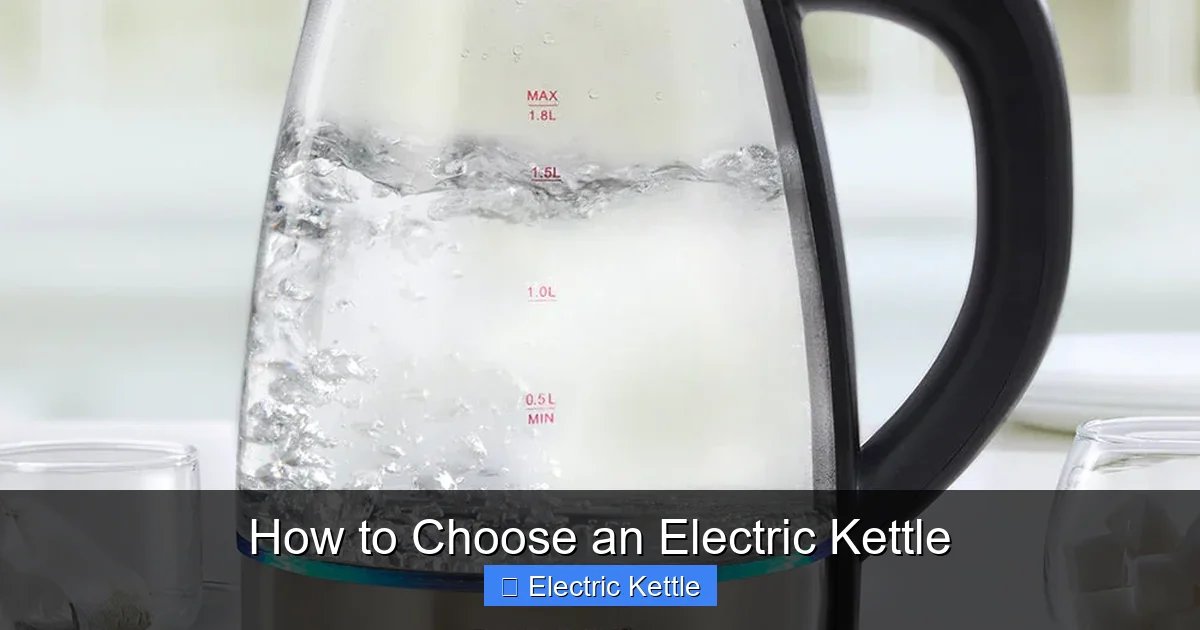
Pro tip: Look for kettles with clear water level indicators. These markings inside the kettle help you measure the exact amount of water you need, preventing overfilling and improving efficiency.
Material Matters: Stainless Steel, Glass, Plastic, and More
The material of your electric kettle affects not only its appearance but also its performance, durability, and even the taste of your water. Let’s explore the most common materials and what each offers.
Stainless Steel Kettles
Stainless steel is one of the most popular choices for electric kettles—and for good reason. It’s durable, resistant to rust and corrosion, and doesn’t retain odors or flavors from previous uses. This means your green tea won’t taste like yesterday’s coffee.
Stainless steel kettles often have a sleek, modern look that fits well in contemporary kitchens. They’re also excellent at retaining heat, so your water stays warm longer after boiling. However, many models have an exterior that gets hot during use, so always check for cool-touch handles and bases.
One downside? Stainless steel kettles can be heavier than other materials, and some users report a slight metallic taste if the interior isn’t properly coated. Look for food-grade stainless steel (like 304 or 18/8) to ensure safety and purity.
Glass Kettles
Glass kettles offer a unique advantage: you can see the water boiling. This visual appeal is not just aesthetic—it lets you monitor the boiling process and avoid overfilling. Many glass kettles also come with LED lighting that illuminates the water as it heats, adding a touch of elegance to your kitchen.
Glass is non-reactive, meaning it won’t alter the taste of your water. It’s also easy to clean and doesn’t retain stains or odors. However, glass is more fragile than metal, so it requires careful handling. Avoid sudden temperature changes (like pouring cold water into a hot glass kettle), as this can cause cracking.
If you choose a glass kettle, look for reinforced borosilicate glass, which is more resistant to thermal shock. Also, ensure the heating element is concealed (not exposed), as this reduces the risk of damage and makes cleaning easier.
Plastic Kettles
Plastic kettles are lightweight, affordable, and often come in fun colors and designs. They’re a good option for those on a budget or for use in offices and dorm rooms.
However, plastic has some drawbacks. It can retain odors and stains over time, and some lower-quality plastics may leach chemicals into the water when heated—especially if they’re not BPA-free. Always choose a kettle labeled “BPA-free” and avoid leaving water sitting in the kettle for long periods.
Plastic kettles also tend to have shorter lifespans and may warp or discolor with repeated use. If you go this route, opt for high-quality, heat-resistant plastic and clean it regularly to prevent buildup.
Other Materials: Ceramic and Copper
Ceramic kettles are less common but offer a stylish, artisanal look. They’re great for slow brewing and retain heat well, but they’re heavy and fragile. Copper kettles are rare in electric models but prized for their excellent heat conductivity. However, they require regular polishing and can be expensive.
For most people, stainless steel and glass offer the best balance of performance, safety, and style.
Wattage and Boiling Speed: How Fast Is Fast Enough?
If you’re someone who values efficiency, boiling speed is a critical factor. The speed at which your kettle heats water depends largely on its wattage—the amount of power it uses.
Understanding Wattage
Electric kettles typically range from 1200 watts to 3000 watts. Here’s what that means in real terms:
– 1200–1500W: Slower boiling, suitable for light use. May take 5–7 minutes to boil 1 liter.
– 1800–2200W: Standard range for most home kettles. Boils 1 liter in 3–4 minutes.
– 2500–3000W: High-performance kettles. Can boil 1 liter in under 3 minutes.
Higher wattage means faster boiling, but it also uses more electricity. If you’re concerned about energy consumption, look for kettles with energy-efficient designs or eco modes that reduce power usage.
Why Speed Matters
For busy mornings, a fast-boiling kettle can be a lifesaver. Imagine needing hot water for coffee before heading out the door—every second counts. High-wattage kettles are also better for larger volumes of water.
However, speed isn’t everything. Some high-wattage kettles can be noisy, and the rapid boiling may cause more steam and splashing. If you’re sensitive to noise, look for models with quiet boil technology or insulated walls that reduce sound.
Pro tip: If you live in an area with voltage fluctuations, choose a kettle with a wide voltage range (e.g., 110V–240V) to ensure consistent performance.
Temperature Control and Specialty Features
Not all hot water is created equal. Different beverages require different temperatures for optimal flavor. That’s where temperature control comes in.
Why Temperature Matters
– Green and white teas: Brew best at 160°F–185°F. Boiling water can scorch the leaves, resulting in a bitter taste.
– Black tea and coffee: Need near-boiling water (200°F–212°F) to extract full flavor.
– Oolong and herbal teas: Fall in the middle, around 185°F–205°F.
If you’re a tea connoisseur, a kettle with variable temperature settings is a must. Many modern electric kettles offer preset options for different beverages, so you can press a button and walk away.
Keep-Warm and Delayed Start Functions
Some advanced kettles include a keep-warm feature that maintains your water at the desired temperature for up to an hour. This is great if you’re preparing multiple cups or need hot water for cooking.
Delayed start allows you to set the kettle to boil at a specific time—perfect for having hot water ready when you wake up.
Smart Kettles and App Connectivity
The latest innovation in electric kettles is smart technology. These kettles connect to your smartphone via Wi-Fi or Bluetooth, allowing you to control temperature, set timers, and even receive notifications when your water is ready.
While not essential, smart kettles are ideal for tech-savvy users who want precision and convenience. Just be aware that they often come with a higher price tag and may require a stable internet connection.
Safety Features You Can’t Ignore
Safety should always be a top priority when choosing an electric kettle. After all, you’re dealing with boiling water and electricity—two things that don’t mix well without proper safeguards.
Auto Shut-Off
This feature automatically turns off the kettle once the water reaches boiling point. It prevents overheating, reduces energy waste, and minimizes the risk of fire or damage.
Boil-Dry Protection
If you accidentally turn on the kettle without water, boil-dry protection shuts it off immediately. This prevents the heating element from burning out and protects the kettle from damage.
Cool-Touch Exterior and Handle
A cool-touch exterior ensures the outside of the kettle doesn’t get dangerously hot during use. This is especially important if you have children or pets at home. Look for ergonomic, heat-resistant handles that stay cool even when the water inside is boiling.
Stability and Cordless Design
A stable base prevents the kettle from tipping over. Cordless models allow you to lift and pour without being tethered to the base, making them safer and more convenient. Just make sure the base has non-slip feet and a secure connection.
Ease of Use and Maintenance
A great electric kettle should be easy to use and simple to clean. After all, no one wants to spend more time maintaining their kettle than enjoying their tea.
Pouring and Handling
Look for a kettle with a comfortable grip, a well-designed spout, and a lid that opens smoothly. A gooseneck spout offers precision pouring, ideal for pour-over coffee.
Cleaning and Descaling
Mineral buildup from hard water can affect performance and taste. Choose a kettle with a removable limescale filter and a wide opening for easy cleaning. Some models even have self-cleaning functions or indicator lights that remind you when it’s time to descale.
Regular maintenance—like wiping the exterior and rinsing the interior—keeps your kettle in top condition.
Design, Noise, and Aesthetics
Finally, consider how the kettle fits into your kitchen. A stylish, quiet kettle enhances your daily experience.
Noise Level
Some kettles whistle when done, while others operate almost silently. If you’re sensitive to noise, look for models with insulated walls or quiet boil technology.
Aesthetic Appeal
From minimalist stainless steel to colorful glass designs, there’s a kettle for every taste. Choose one that complements your kitchen decor and makes you happy to use it every day.
Conclusion
Choosing the right electric kettle doesn’t have to be complicated. By focusing on your needs—capacity, material, speed, temperature control, safety, and ease of use—you can find a model that fits seamlessly into your routine. Whether you’re brewing a single cup of tea or preparing coffee for a crowd, the perfect kettle is out there. Take your time, compare features, and invest in quality. Your future self will thank you with every perfectly brewed cup.
Frequently Asked Questions
What is the best material for an electric kettle?
Stainless steel and glass are the top choices. Stainless steel is durable and doesn’t affect taste, while glass offers visibility and a clean flavor. Avoid low-quality plastic to prevent chemical leaching.
How much wattage do I need in an electric kettle?
For most homes, 1800W–2200W is ideal. It offers a good balance of speed and energy efficiency. Higher wattage (2500W+) is better for large volumes or fast boiling.
Can I use an electric kettle for coffee?
Yes! Many electric kettles, especially those with temperature control, are perfect for pour-over, French press, or instant coffee. Just ensure the water reaches the right temperature for your brew method.
Are smart electric kettles worth it?
If you value precision and convenience, yes. Smart kettles allow remote control, custom temperature settings, and notifications. However, they’re more expensive and require a smartphone app.
How often should I clean my electric kettle?
Clean the exterior weekly and descale the interior every 1–2 months, depending on water hardness. Regular cleaning prevents mineral buildup and maintains performance.
Is it safe to leave water in an electric kettle?
It’s best to empty the kettle after each use. Stagnant water can promote bacterial growth and mineral deposits. Rinse it out daily for optimal hygiene.