Cleaning your electric kettle with baking soda is a simple, eco-friendly way to remove stubborn limescale, odors, and mineral buildup. This method is safe, affordable, and works on most kettle models—keeping your appliance efficient and your water tasting fresh.
If you’ve ever noticed a chalky white film inside your electric kettle or caught a strange smell when boiling water, you’re not alone. Over time, minerals from tap water—especially in areas with hard water—accumulate inside your kettle, forming limescale. This buildup doesn’t just look unappealing; it can also affect how well your kettle heats, how long it takes to boil, and even the taste of your tea, coffee, or instant soups. The good news? You don’t need expensive descaling solutions or harsh chemicals to fix it. One of the simplest, most effective, and budget-friendly ways to clean your electric kettle is with a household staple: baking soda.
Baking soda, or sodium bicarbonate, is a mild alkali that reacts with acids and helps break down mineral deposits, grease, and odors. It’s non-toxic, safe for food-contact surfaces, and gentle enough not to damage your kettle’s interior. Whether you have a stainless steel, glass, or plastic electric kettle, baking soda can help restore it to like-new condition. Plus, it’s something most people already have in their pantry—no special trips to the store required. In this guide, we’ll walk you through exactly how to clean your electric kettle with baking soda, step by step, so you can enjoy cleaner, better-tasting water with every boil.
Key Takeaways
- Baking soda is a natural, non-toxic cleaner ideal for removing limescale and odors from electric kettles without harsh chemicals.
- Regular cleaning improves performance by preventing mineral buildup that can slow heating and affect water taste.
- The process takes under 30 minutes and requires only baking soda, water, and a soft cloth or sponge.
- Always unplug the kettle before cleaning and avoid submerging the base or electrical components in water.
- For heavy buildup, combine baking soda with vinegar for a powerful one-two punch against tough deposits.
- Clean your kettle every 2–4 weeks depending on water hardness and usage frequency.
- Rinse thoroughly after cleaning to ensure no residue remains that could affect taste or safety.
📑 Table of Contents
- Why Clean Your Electric Kettle Regularly?
- What You’ll Need to Clean Your Electric Kettle with Baking Soda
- Step-by-Step Guide: How to Clean Electric Kettle Baking Soda
- Enhancing the Cleaning Power: Baking Soda and Vinegar Combo
- Maintaining a Clean Kettle: Tips for Long-Term Care
- Troubleshooting Common Cleaning Issues
- Why Baking Soda Beats Commercial Cleaners
- Final Thoughts: A Clean Kettle Means Better-Tasting Water
Why Clean Your Electric Kettle Regularly?
Many people underestimate how important it is to clean their electric kettle. After all, it’s just boiling water—how dirty can it get? But the truth is, every time you heat water, minerals like calcium and magnesium are left behind as the water evaporates. Over weeks and months, these minerals form a hard, crusty layer known as limescale. This buildup doesn’t just look gross; it can actually reduce the efficiency of your kettle. The scale acts as an insulator, forcing the heating element to work harder and use more energy to reach boiling point. That means longer wait times and higher electricity bills.
Beyond performance issues, limescale can also harbor bacteria and mold, especially in hard-to-reach corners or around the spout. Even if you can’t see it, stale water left in the kettle between uses can develop odors or slimy residues. And let’s be honest—nobody wants to drink tea that tastes faintly of metal or mildew. Regular cleaning with baking soda helps prevent these problems before they start. It’s a quick maintenance task that pays off in better-tasting beverages, longer appliance life, and peace of mind.
Signs Your Kettle Needs Cleaning
So how do you know when it’s time to give your kettle a deep clean? Here are a few telltale signs:
– **White or gray chalky deposits** inside the kettle, especially near the heating element or water line.
– **Slow boiling times**—your kettle takes noticeably longer to heat up than it used to.
– **Unusual smells** when boiling water, even if you’ve just rinsed it out.
– **Discolored water** or floating particles after boiling.
– **Reduced water flow** from the spout, which could indicate clogged mineral buildup.
If you notice any of these, it’s definitely time for a cleaning. And while there are commercial descaling products on the market, baking soda offers a natural, cost-effective alternative that’s just as effective—especially for routine maintenance.
What You’ll Need to Clean Your Electric Kettle with Baking Soda
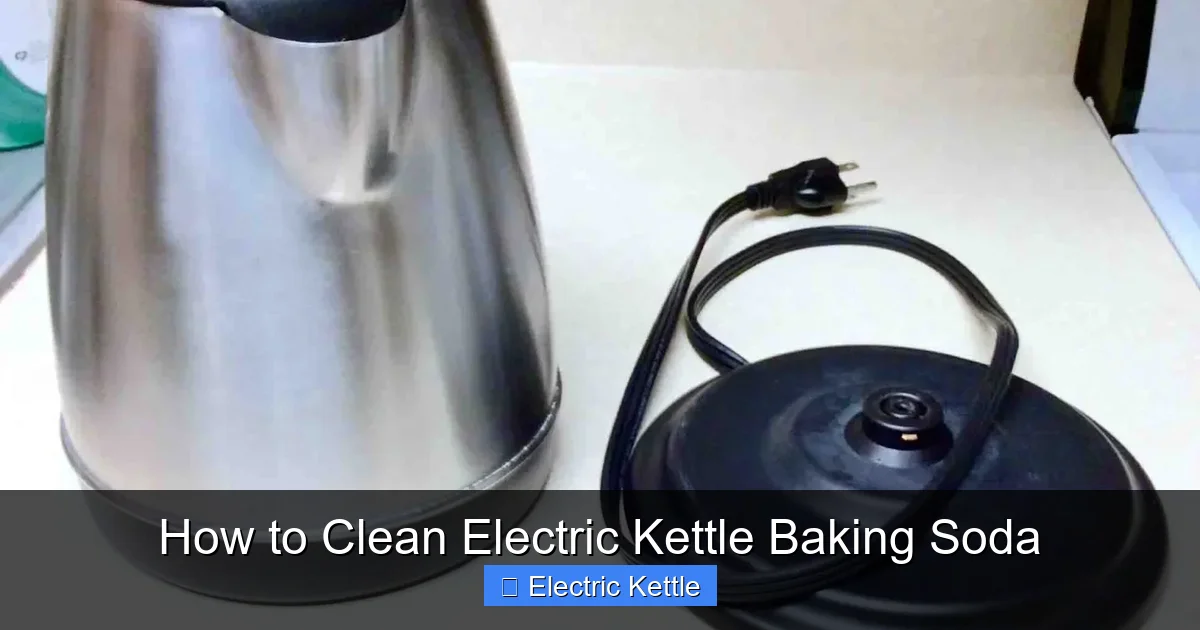
Visual guide about How to Clean Electric Kettle Baking Soda
Image source: i0.wp.com
One of the best things about using baking soda to clean your electric kettle is how little you need. You probably already have everything on hand. Here’s a quick checklist:
– **Baking soda** (about 1–2 tablespoons, depending on kettle size)
– **Water** (enough to fill the kettle to the minimum fill line)
– **Soft sponge or cloth** (non-abrasive to avoid scratching)
– **White vinegar** (optional, for extra cleaning power)
– **Toothbrush or small brush** (for scrubbing tight spots)
– **Clean towel** (for drying)
That’s it! No fancy tools or expensive cleaners. Just simple, safe ingredients that are gentle on your kettle and the environment. If your kettle has a removable filter (common in many models), you’ll also want to take that out and clean it separately—more on that later.
Safety First: Precautions Before Cleaning
Before you start, it’s important to follow a few safety guidelines:
– **Always unplug the kettle** before cleaning. Never attempt to clean it while it’s plugged in or still warm.
– **Do not submerge the base or electrical components** in water. Most electric kettles are not waterproof below the heating element. Only the interior chamber should be cleaned with liquid.
– **Allow the kettle to cool completely** if it’s been recently used. Hot surfaces can cause burns or react unpredictably with cleaning solutions.
– **Use only non-abrasive tools**. Avoid steel wool or harsh scrubbers that could scratch the interior lining, especially in glass or coated kettles.
Taking these simple precautions ensures your safety and helps protect your appliance from damage.
Step-by-Step Guide: How to Clean Electric Kettle Baking Soda
Now that you’re prepared, let’s get into the actual cleaning process. This method works for most electric kettles, whether they’re made of stainless steel, glass, or BPA-free plastic. Follow these steps carefully for the best results.
Step 1: Prepare the Baking Soda Solution
Start by filling your kettle with water up to the minimum fill line—usually marked inside the chamber. You don’t need to fill it to the top unless you’re dealing with heavy buildup. Add 1 to 2 tablespoons of baking soda to the water. For smaller kettles (under 1 liter), 1 tablespoon is usually enough. For larger models or particularly dirty kettles, you can use up to 2 tablespoons.
Stir gently with a non-metallic utensil (like a silicone spatula or wooden spoon) to help the baking soda dissolve. Don’t worry if it doesn’t all dissolve immediately—it will continue to break down as it heats.
Step 2: Boil the Solution
Plug in your kettle and turn it on. Let the baking soda solution come to a full boil. As it heats, the baking soda will react with the minerals in the water and begin breaking down limescale and other deposits. You may notice some fizzing or bubbling—this is normal and a sign the cleaning process is working.
Once the kettle reaches boiling point, turn it off and unplug it immediately. Let the solution sit inside the kettle for at least 15–20 minutes. This soaking time allows the baking soda to penetrate and loosen stubborn buildup, especially around the heating element and spout.
Step 3: Scrub Gently
After the solution has cooled slightly (but is still warm), use a soft sponge or cloth to wipe the interior of the kettle. Focus on areas with visible limescale or discoloration. For tight spots—like around the spout or under the lid—use a toothbrush or small cleaning brush dipped in the baking soda solution.
Be gentle. Scrubbing too hard can scratch the surface, especially in glass kettles. The baking soda should have softened most of the buildup, so light pressure is usually enough. If you encounter particularly tough spots, let the solution sit a bit longer or repeat the boiling process.
Step 4: Rinse Thoroughly
Once you’ve scrubbed the interior, pour out the baking soda solution. Rinse the kettle several times with clean water to remove any residue. It’s important to rinse well—any leftover baking soda could affect the taste of your next brew.
Fill the kettle with fresh water, swish it around, and pour it out. Repeat this 2–3 times until the water runs clear and there’s no soapy or chalky taste.
Step 5: Dry and Reassemble
Use a clean, dry towel to wipe the interior and exterior of the kettle. Make sure no water remains in the spout or around the base. If your kettle has a removable filter or mesh screen, take it out, rinse it under warm water, and scrub it with a toothbrush if needed. Let all parts air-dry completely before reassembling.
Once everything is dry, your kettle is ready to use again—clean, fresh, and free of limescale.
Enhancing the Cleaning Power: Baking Soda and Vinegar Combo
While baking soda alone is effective for regular maintenance, sometimes you need a little extra help—especially if your kettle has heavy limescale buildup or persistent odors. That’s where vinegar comes in. White distilled vinegar is acidic and works beautifully with baking soda to create a powerful cleaning reaction that dissolves even the toughest mineral deposits.
How the Baking Soda and Vinegar Reaction Works
When baking soda (a base) meets vinegar (an acid), they react to form carbon dioxide gas, water, and a mild salt. This fizzing action helps lift and break apart limescale, making it easier to wipe away. It’s a natural, chemical-free way to deep-clean your kettle without resorting to commercial descalers.
Step-by-Step: Baking Soda and Vinegar Method
Here’s how to use both ingredients for a thorough clean:
1. **Fill the kettle** with equal parts water and white vinegar (e.g., 1 cup water + 1 cup vinegar). Add 1 tablespoon of baking soda.
2. **Boil the mixture** and let it sit for 20–30 minutes. The fizzing will be more intense than with baking soda alone.
3. **Scrub the interior** with a soft sponge or brush, paying attention to scaled areas.
4. **Rinse thoroughly** with clean water—multiple times—to remove all traces of vinegar and baking soda.
5. **Optional: Boil fresh water** once more to eliminate any lingering vinegar smell.
This method is ideal for kettles that haven’t been cleaned in months or those used in areas with very hard water. Just remember: always rinse well to avoid any sour taste in your next cup of tea.
Maintaining a Clean Kettle: Tips for Long-Term Care
Cleaning your kettle with baking soda doesn’t have to be a monthly chore. With a few simple habits, you can keep it fresh and efficient between deep cleans.
Clean Every 2–4 Weeks
How often you clean depends on your water hardness and usage. If you live in an area with hard water or use your kettle daily, aim to clean it every 2 weeks. For softer water or occasional use, once a month is usually sufficient. Regular maintenance prevents heavy buildup and makes each cleaning quicker and easier.
Empty After Each Use
Don’t let water sit in your kettle for long periods. After boiling, pour out any unused water. Stagnant water encourages mineral deposits and can develop odors. If you’re making multiple cups of tea, only boil what you need.
Use Filtered Water
If your tap water is particularly hard, consider using filtered or distilled water in your kettle. This reduces mineral content and slows limescale formation. It’s a small change that can significantly extend the time between cleanings.
Wipe the Exterior Regularly
While the interior gets the most attention, don’t forget the outside. Wipe down the handle, base, and cord with a damp cloth to remove fingerprints, dust, and spills. Avoid getting water near the electrical components.
Check the Filter
Many electric kettles have a mesh filter near the spout to catch sediment. Remove and rinse it weekly to prevent clogs. If it’s damaged or heavily scaled, replace it according to the manufacturer’s instructions.
Troubleshooting Common Cleaning Issues
Even with the best care, you might run into a few hiccups. Here’s how to handle common problems:
Lingering Vinegar Smell After Cleaning
If your kettle still smells like vinegar after rinsing, boil a full kettle of fresh water and let it cool. Pour it out and rinse again. Repeat once if needed. The smell should disappear after one or two rinses.
Baking Soda Residue Left Behind
This usually happens if the solution wasn’t rinsed thoroughly. Simply fill the kettle with clean water, swish it around, and pour it out several times. A final boil with fresh water can help ensure no residue remains.
Stubborn Limescale That Won’t Come Off
For extremely tough buildup, try the vinegar and baking soda method twice in one session. Let the solution soak longer—up to an hour—before scrubbing. In rare cases, you may need a commercial descaler, but baking soda should handle most situations.
Discoloration or Staining
Brown or yellow stains can result from overheating or mineral deposits. Baking soda paste (made with a little water) can be gently applied to stained areas and left for 10 minutes before scrubbing. Avoid abrasive cleaners that could scratch the surface.
Why Baking Soda Beats Commercial Cleaners
You might be wondering: why choose baking soda over store-bought descaling solutions? The answer comes down to safety, cost, and environmental impact.
Non-Toxic and Food-Safe
Baking soda is completely safe for use around food and drink. Unlike some chemical cleaners, it doesn’t leave behind harmful residues or fumes. You don’t have to worry about rinsing it excessively or risking contamination.
Affordable and Accessible
A box of baking soda costs just a few dollars and lasts for months. Commercial descalers can be pricey, especially if you need to use them frequently. Baking soda gives you the same results for a fraction of the cost.
Eco-Friendly
Baking soda is biodegradable and doesn’t contribute to water pollution. Many commercial cleaners contain phosphates, chlorine, or synthetic fragrances that can harm the environment. Choosing baking soda is a small but meaningful step toward greener living.
Versatile
Beyond kettles, baking soda can clean coffee makers, microwaves, sinks, and more. It’s a multi-purpose cleaner that reduces the need for multiple products cluttering your cabinets.
Final Thoughts: A Clean Kettle Means Better-Tasting Water
Cleaning your electric kettle with baking soda is one of those small tasks that makes a big difference. It’s quick, easy, and effective—keeping your appliance running smoothly and your beverages tasting their best. Whether you’re a daily tea drinker or just boil water for cooking, a clean kettle ensures you’re starting with the purest possible base.
By incorporating this simple routine into your household maintenance, you’ll extend the life of your kettle, save energy, and enjoy fresher, cleaner water with every use. And the best part? You’re doing it naturally, safely, and affordably. So the next time you notice that chalky buildup or catch a weird smell, don’t reach for harsh chemicals. Grab your baking soda, follow these steps, and give your kettle the refresh it deserves.
Frequently Asked Questions
Can I use baking soda to clean a glass electric kettle?
Yes, baking soda is safe for glass kettles. It’s non-abrasive and won’t scratch the surface. Just use a soft sponge and avoid harsh scrubbing.
How often should I clean my electric kettle with baking soda?
For most users, cleaning every 2–4 weeks is ideal. If you have hard water or use your kettle daily, aim for every 2 weeks.
Will baking soda leave a taste in my water?
No, as long as you rinse the kettle thoroughly after cleaning. Any residue will be washed away during rinsing.
Can I use baking soda on a kettle with a non-stick coating?
Yes, but use extra care. Avoid abrasive tools and scrub gently to prevent damaging the coating.
Is it safe to mix baking soda and vinegar in my kettle?
Yes, it’s safe and effective for deep cleaning. Just rinse well afterward to remove all traces of the mixture.
What if my kettle still smells after cleaning?
Boil a full kettle of fresh water and let it cool. Repeat once if needed. This helps eliminate any lingering odors.