Hard water deposits can build up inside your electric kettle, affecting taste, performance, and lifespan. This guide shows you safe, natural, and effective ways to clean and prevent limescale using common household ingredients.
If you’ve ever noticed a white, chalky buildup inside your electric kettle—especially around the heating element or on the interior walls—you’re not alone. That’s hard water deposits, also known as limescale, and it’s one of the most common issues kettle owners face, particularly in areas with high mineral content in tap water. While it might seem harmless at first, ignoring these deposits can lead to longer boiling times, reduced heating efficiency, and even an unpleasant metallic or chalky taste in your tea, coffee, or hot water.
The good news? Cleaning hard water deposits from an electric kettle is easier than you think—and you probably already have the tools at home. Whether you’re dealing with a light film or a thick crust of limescale, this guide will walk you through safe, effective, and affordable methods to restore your kettle to like-new condition. We’ll cover everything from the science behind limescale to step-by-step cleaning techniques, maintenance tips, and how to prevent buildup in the future.
Key Takeaways
- Vinegar is the most effective natural cleaner: A 50/50 mix of white vinegar and water dissolves limescale quickly and safely.
- Lemon juice offers a fresh alternative: Its citric acid breaks down deposits and leaves a pleasant scent.
- Baking soda works for light buildup: Ideal for maintenance cleaning or when vinegar isn’t available.
- Regular cleaning prevents major buildup: Clean your kettle every 2–4 weeks if you have hard water.
- Never use abrasive tools on the interior: Scrubbing with steel wool or harsh brushes can damage the heating element or interior surface.
- Rinse thoroughly after cleaning: Always run 2–3 cycles with clean water to remove any cleaning residue.
- Use filtered water to reduce future deposits: This simple habit extends time between cleanings and improves taste.
📑 Table of Contents
- What Are Hard Water Deposits and Why Do They Form?
- Signs Your Electric Kettle Needs Cleaning
- Best Methods to Clean Hard Water Deposits
- Step-by-Step Cleaning Guide for Different Kettle Types
- How Often Should You Clean Your Electric Kettle?
- Preventing Hard Water Deposits in the Future
- Safety Tips and What to Avoid
- Conclusion
What Are Hard Water Deposits and Why Do They Form?
Hard water contains high levels of dissolved minerals—primarily calcium and magnesium. When you heat water in your electric kettle, these minerals don’t evaporate. Instead, they precipitate out of the solution and cling to surfaces, forming a hard, white, crusty layer known as limescale. Over time, this buildup accumulates, especially around the heating element, which is constantly exposed to hot water.
This process is accelerated by repeated heating cycles. Each time you boil water, more minerals are left behind. If you live in a region with particularly hard water—common in places like the Midwest, Southwest, or parts of Europe—you may notice limescale forming within just a few weeks of regular use.
While limescale isn’t harmful to drink in small amounts, it can cause several problems:
– It insulates the heating element, making your kettle work harder and use more energy.
– It can lead to overheating or even damage the heating coil over time.
– It may affect the taste of your beverages, giving them a slightly metallic or chalky flavor.
– In severe cases, flakes of limescale can break off and end up in your cup.
Understanding why limescale forms is the first step in tackling it. The minerals in hard water are the culprits, and heat is the catalyst. So, the key to prevention and cleaning lies in breaking down these mineral deposits using substances that react with calcium and magnesium.
Signs Your Electric Kettle Needs Cleaning
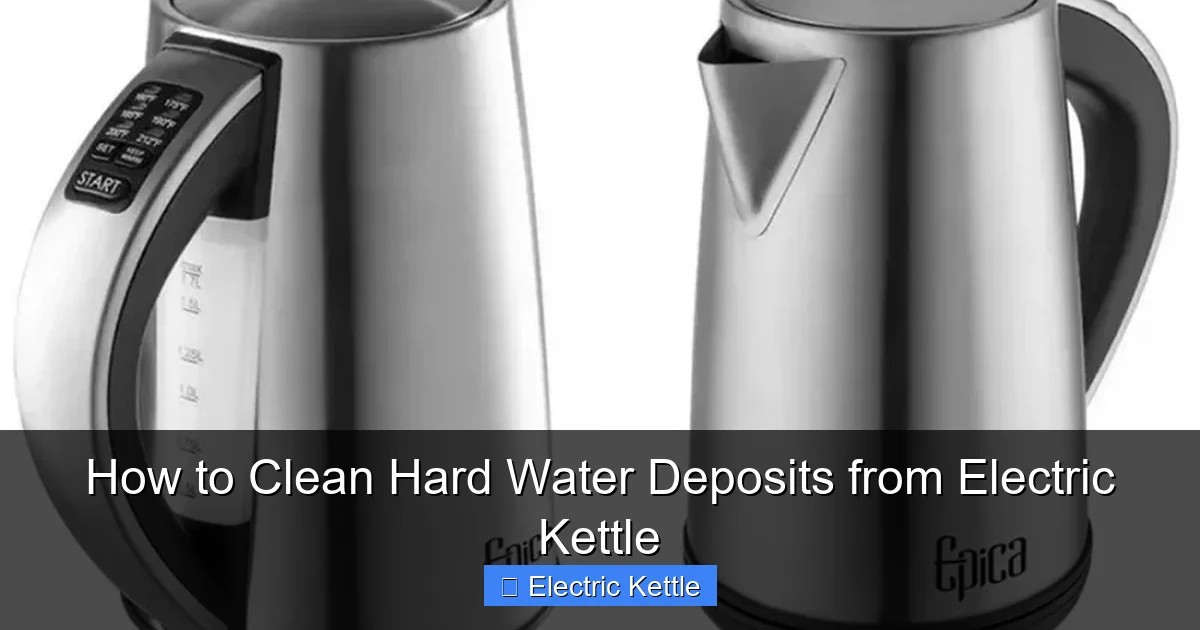
Visual guide about How to Clean Hard Water Deposits from Electric Kettle
Image source: irrorwxhiqijjr5q.ldycdn.com
You don’t need to wait until your kettle looks like a science experiment to clean it. There are several telltale signs that it’s time to remove hard water deposits:
Visible White or Chalky Residue
The most obvious sign is a white, flaky, or crusty buildup on the interior walls, around the spout, or especially near the heating element. This is limescale in its purest form. If you can see it, it’s time to act.
Longer Boiling Times
If your kettle used to boil water in 3 minutes but now takes 5 or 6, limescale could be the culprit. The mineral layer acts as an insulator, reducing heat transfer from the element to the water. Your kettle has to work longer and harder to reach boiling point.
Unusual Noises During Heating
A kettle that makes popping, crackling, or sizzling sounds more than usual may have limescale buildup. As water heats, trapped air and steam can get caught under the scale, causing these noises. It’s not just annoying—it’s a sign your kettle is under stress.
Metallic or Chalky Taste in Beverages
If your tea or coffee suddenly tastes off—like it has a mineral or metallic aftertaste—limescale could be leaching into your water. Even small amounts can affect flavor, especially in delicate drinks like green tea or herbal infusions.
Water Spitting or Splashing
Limescale buildup around the spout or inside the lid can disrupt the smooth flow of steam and water. This may cause your kettle to spit or splash hot water when pouring, which is not only messy but potentially dangerous.
Reduced Water Flow or Clogged Spout
In severe cases, limescale can partially block the spout or internal components, making it harder to pour water smoothly. You might notice a weak stream or gurgling sounds when pouring.
If you notice any of these signs, don’t wait. The sooner you clean your kettle, the easier it will be to remove the deposits—and the less damage they’ll cause over time.
Best Methods to Clean Hard Water Deposits
Now that you know what to look for, let’s dive into the most effective ways to clean your electric kettle. The good news is that you don’t need harsh chemicals or expensive tools. Simple household ingredients like vinegar, lemon, and baking soda are powerful enough to dissolve limescale safely and effectively.
Method 1: White Vinegar Solution (Most Effective)
White distilled vinegar is the gold standard for cleaning limescale. Its acetic acid content reacts with calcium carbonate (the main component of limescale), breaking it down into water-soluble compounds that can be easily rinsed away.
What You’ll Need:
– 1 cup white distilled vinegar
– 1 cup water
– Soft cloth or sponge (non-abrasive)
– Optional: toothbrush for hard-to-reach areas
Step-by-Step Instructions:
- Mix the solution: Combine equal parts white vinegar and water in your kettle. For a 1-liter kettle, use 1 cup vinegar and 1 cup water. If your kettle is larger, adjust accordingly, but keep the 1:1 ratio.
- Boil the solution: Turn on the kettle and let it boil. Allow it to sit for 15–30 minutes after boiling. The longer it sits, the more time the vinegar has to break down the limescale.
- Scrub gently: After soaking, unplug the kettle and let it cool slightly. Use a soft cloth or sponge to wipe away any remaining residue. For stubborn spots near the heating element, use a soft toothbrush—never steel wool or metal scrapers.
- Rinse thoroughly: Pour out the vinegar solution and rinse the kettle 2–3 times with clean water. Run the kettle through 2–3 full cycles with fresh water to ensure no vinegar taste remains.
- Wipe dry: Use a clean, dry cloth to wipe the interior and exterior. Let it air dry completely before using again.
Pro Tip: If your kettle has a strong vinegar smell after cleaning, add a slice of lemon or a few drops of lemon juice to the final rinse cycle to neutralize the odor.
Method 2: Lemon Juice (Natural and Fresh-Smelling)
Lemon juice is another excellent option, especially if you prefer a citrusy scent over vinegar. Its citric acid content is highly effective at dissolving limescale, and it leaves your kettle smelling fresh.
What You’ll Need:
– Juice of 1–2 lemons (or 1/4 cup bottled lemon juice)
– Water
– Soft cloth or sponge
Step-by-Step Instructions:
- Fill the kettle: Pour the lemon juice into the kettle and add enough water to cover the affected areas—usually about 1–2 cups, depending on kettle size.
- Boil and soak: Boil the lemon solution, then let it sit for 30–60 minutes. The longer it sits, the better it works.
- Scrub and rinse: After soaking, scrub gently with a soft cloth or sponge. Rinse thoroughly with clean water, running 2–3 full cycles to remove any lemon residue.
- Optional boost: For extra cleaning power, add a tablespoon of baking soda to the lemon solution. It will fizz slightly, helping to lift deposits.
Pro Tip: Use fresh lemons when possible—bottled juice works, but fresh lemon juice has higher citric acid content and better results.
Method 3: Baking Soda Paste (For Light Buildup or Maintenance)
Baking soda is milder than vinegar or lemon but still effective for light limescale or regular maintenance. It’s a great option if you’re sensitive to strong smells or want a gentler approach.
What You’ll Need:
– 2–3 tablespoons baking soda
– Water (to make a paste)
– Soft cloth or sponge
Step-by-Step Instructions:
- Make a paste: Mix baking soda with a small amount of water to form a thick paste.
- Apply to affected areas: Use a soft cloth or sponge to apply the paste to the interior walls, spout, and around the heating element. Let it sit for 15–30 minutes.
- Scrub gently: Use the cloth or a soft toothbrush to scrub away the deposits. Baking soda is slightly abrasive, so it helps lift buildup without scratching.
- Rinse well: Rinse the kettle thoroughly with clean water, running 2–3 cycles to ensure no residue remains.
Pro Tip: For best results, combine baking soda with vinegar. Add 1/2 cup vinegar to the kettle, let it fizz, then add 1–2 tablespoons of baking soda. The reaction creates carbon dioxide, which helps loosen deposits.
Method 4: Commercial Descalers (For Heavy Buildup)
If your kettle has severe limescale or you prefer a ready-made solution, commercial descalers are available. Brands like Durgol, Urnex, or even generic “kettle descalers” are formulated specifically for electric kettles and coffee makers.
How to Use:
– Follow the instructions on the package—most require diluting the solution with water, boiling, soaking, and rinsing.
– Always rinse thoroughly after use to avoid chemical taste.
– Use only as directed—overuse can damage seals or internal components.
Pro Tip: Look for descalers labeled “food-safe” or “suitable for kettles.” Avoid generic drain cleaners or harsh chemicals—they’re not safe for appliances that heat drinking water.
Step-by-Step Cleaning Guide for Different Kettle Types
Not all electric kettles are the same. Some have stainless steel interiors, others glass or plastic. Some have removable lids, while others are sealed. The cleaning method may vary slightly depending on your kettle’s design.
Stainless Steel Kettles
Stainless steel is durable and resistant to corrosion, but it can still accumulate limescale. Use vinegar or lemon methods as described above. Avoid abrasive scrubbers—they can scratch the surface and create spots for future buildup.
Tip: After cleaning, wipe the exterior with a damp cloth and a drop of olive oil to restore shine.
Glass Kettles
Glass kettles show limescale clearly, making them easier to monitor. However, glass can be more fragile. Use gentle cleaning methods and avoid sudden temperature changes (e.g., don’t pour cold water into a hot kettle).
Tip: A soft sponge or microfiber cloth works best. Never use steel wool or harsh brushes.
Plastic Kettles
Plastic interiors are prone to staining and can absorb odors. Vinegar and lemon are safe, but rinse thoroughly to avoid lingering smells. Avoid high-heat cleaning methods that could warp the plastic.
Tip: If your plastic kettle smells after cleaning, soak it in a solution of water and baking soda for 30 minutes, then rinse.
Kettles with Removable Lids or Filters
Some kettles have removable lids, mesh filters, or anti-splash guards. These components can trap limescale and should be cleaned separately.
How to Clean:
– Remove the lid or filter according to the manufacturer’s instructions.
– Soak in vinegar or lemon solution for 30 minutes.
– Scrub with a soft brush, rinse, and dry completely before reassembling.
Tip: Check your user manual—some filters are not dishwasher-safe.
How Often Should You Clean Your Electric Kettle?
The frequency of cleaning depends on how hard your water is and how often you use your kettle.
– Soft water areas: Clean every 2–3 months.
– Moderate hard water: Clean every 4–6 weeks.
– Very hard water: Clean every 2–3 weeks.
If you notice limescale forming faster, increase the frequency. Regular maintenance prevents heavy buildup and keeps your kettle running efficiently.
Signs it’s time to clean:
– You see visible deposits.
– Boiling time has increased.
– Your tea or coffee tastes off.
Preventing Hard Water Deposits in the Future
Cleaning is important, but prevention is even better. Here are simple habits to reduce limescale buildup:
Use Filtered or Distilled Water
The easiest way to prevent limescale is to use water with lower mineral content. A water filter pitcher or under-sink filter can significantly reduce calcium and magnesium levels. Distilled water is even better—it contains almost no minerals.
Tip: If you use a filter, replace the cartridge regularly to maintain effectiveness.
Empty the Kettle After Each Use
Don’t let water sit in the kettle overnight. Residual water evaporates, leaving behind minerals that contribute to buildup. Always empty and rinse the kettle after use.
Wipe the Interior Weekly
Once a week, wipe the inside of the kettle with a damp cloth to remove any early-stage deposits before they harden.
Descale Regularly
Even with filtered water, some minerals may still enter the kettle. Make descaling a monthly habit—it takes just 15 minutes and saves you from major cleanups later.
Choose a Kettle with a Removable Filter
Some kettles come with built-in mesh filters that trap minerals before they reach the heating element. These filters are easy to clean and help reduce buildup.
Safety Tips and What to Avoid
While cleaning your kettle is generally safe, there are a few important precautions to keep in mind:
Never Use Abrasive Tools
Avoid steel wool, metal scrapers, or harsh brushes. They can scratch the interior, damage the heating element, or create pits where limescale can accumulate more easily.
Don’t Overfill During Cleaning
When using vinegar or lemon solutions, don’t fill the kettle beyond the maximum water line. Boiling an overfilled kettle can cause spills or damage the electrical components.
Unplug Before Cleaning
Always unplug the kettle and let it cool completely before adding any cleaning solution. Never submerge the base or electrical parts in water.
Avoid Mixing Cleaning Agents
Never mix vinegar and bleach—this creates toxic chlorine gas. Also, avoid combining vinegar with hydrogen peroxide unless you’re sure it’s safe (generally, it’s not recommended for kettles).
Rinse Thoroughly
Residual vinegar or lemon can affect taste and potentially corrode internal parts over time. Always rinse 2–3 times and run clean water cycles.
Conclusion
Hard water deposits are a common but manageable problem for electric kettle owners. With the right tools and techniques, you can keep your kettle clean, efficient, and tasting great. Whether you choose vinegar, lemon, baking soda, or a commercial descaler, regular cleaning prevents buildup and extends the life of your appliance.
Remember: prevention is key. Use filtered water, empty the kettle after each use, and clean it every few weeks if you have hard water. A little maintenance goes a long way in ensuring your kettle performs at its best—and your tea and coffee taste exactly as they should.
By following the steps in this guide, you’ll not only remove existing limescale but also create habits that keep your kettle in top condition for years to come. So grab that vinegar, give your kettle some love, and enjoy cleaner, better-tasting hot water every time.
Frequently Asked Questions
Can I use apple cider vinegar to clean my electric kettle?
While apple cider vinegar contains acetic acid, it’s less effective than white distilled vinegar and can leave a strong odor. White vinegar is clearer, stronger, and better for cleaning without staining or smelling.
Is it safe to drink water after cleaning with vinegar?
Yes, as long as you rinse the kettle thoroughly. Run 2–3 full cycles with clean water to remove any vinegar residue. The taste and smell will disappear completely.
How do I clean the outside of my electric kettle?
Wipe the exterior with a damp cloth and mild dish soap. For stainless steel, use a microfiber cloth and a drop of olive oil to polish. Avoid soaking the base or electrical parts.
Can limescale damage my electric kettle?
Yes, over time. Limescale insulates the heating element, causing overheating, longer boiling times, and potential damage. Regular cleaning prevents these issues.
What if my kettle has a plastic interior?
Plastic kettles can be cleaned with vinegar or lemon, but rinse thoroughly to avoid odors. Avoid high heat and abrasive tools that could warp or scratch the surface.
How do I know if my water is hard?
Signs include soap not lathering well, white spots on dishes, or dry skin after showering. You can also test your water with a home hardness test kit or check your local water report online.