
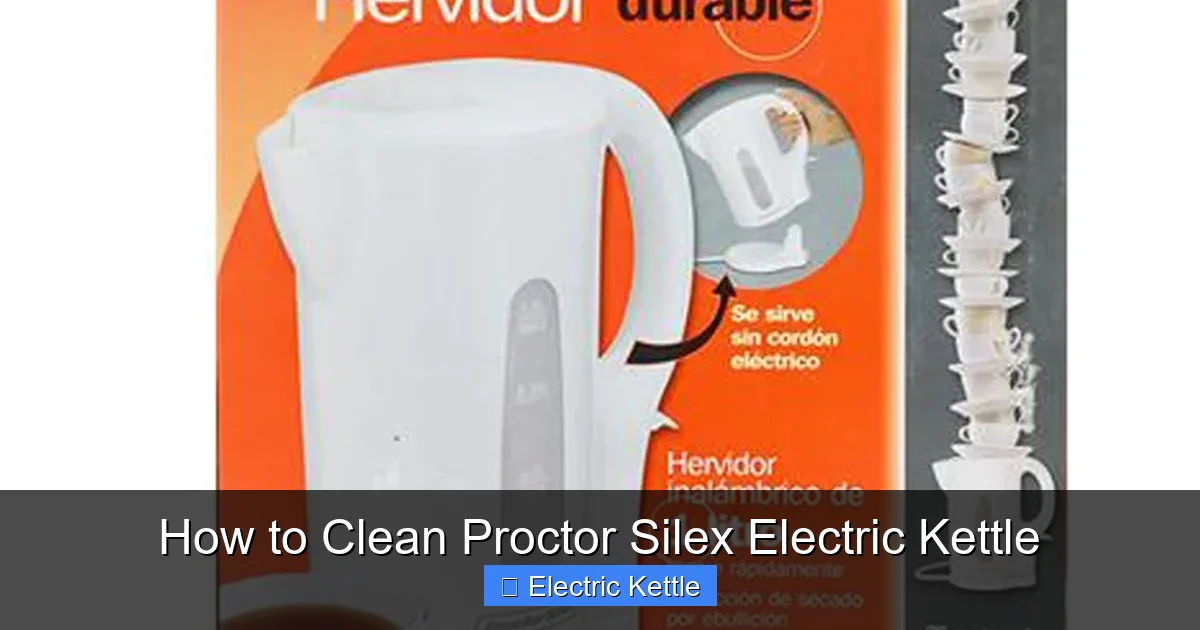
Keeping your Proctor Silex electric kettle clean ensures better-tasting water, longer appliance life, and safer daily use. This guide walks you through step-by-step cleaning methods, from vinegar soaks to descaling tips, so your kettle stays in top shape.
This is a comprehensive guide about how to clean proctor silex electric kettle.
Key Takeaways
- Regular cleaning prevents limescale buildup: Hard water leaves mineral deposits that affect performance and taste—clean your kettle every 2–4 weeks.
- White vinegar is the best natural cleaner: It dissolves calcium and magnesium deposits safely without harsh chemicals.
- Never submerge the base or electrical parts: Only the interior and removable parts should get wet to avoid damage or shock.
- Rinse thoroughly after cleaning: Residual vinegar or cleaning solution can affect water taste if not rinsed well.
- Use a soft cloth for the exterior: Wipe the outside with a damp microfiber cloth to maintain shine and prevent scratches.
- Descale before deep cleaning: Always remove heavy limescale first with a vinegar solution before wiping down surfaces.
- Store with the lid open: Let your kettle air-dry completely and store it uncovered to prevent musty odors.
[FEATURED_IMAGE_PLACEHOLDER]
Why Cleaning Your Proctor Silex Electric Kettle Matters
If you use your Proctor Silex electric kettle daily—whether for morning coffee, instant oatmeal, or herbal tea—you might not think much about what’s happening inside. But over time, invisible minerals from hard water settle on the heating element and interior walls. These deposits, known as limescale, can slow down heating, reduce efficiency, and even alter the taste of your water. Worse, they can harbor bacteria if left unchecked.
Cleaning your electric kettle isn’t just about aesthetics. It’s about performance, safety, and longevity. A well-maintained Proctor Silex kettle heats faster, uses less energy, and lasts years longer than a neglected one. Plus, you’ll enjoy cleaner, better-tasting beverages every time. Think of it like changing the oil in your car—small maintenance now prevents big problems later.
Many people assume that because they’re only boiling water, their kettle stays clean. But that’s a myth. Boiling actually concentrates minerals, accelerating buildup. Even if you use filtered water, some minerals still get through. And if you’ve ever noticed a chalky white film inside your kettle or a strange smell when you first turn it on, that’s a clear sign it’s time for a deep clean.
The good news? Cleaning a Proctor Silex electric kettle is simple, quick, and requires only household items. You don’t need special tools or expensive cleaners. With just vinegar, water, and a soft cloth, you can restore your kettle to like-new condition in under 30 minutes. And once you get into a routine, it becomes second nature—like washing your coffee mug or wiping down the counter.
In this guide, we’ll walk you through every step of the cleaning process, from quick daily wipes to monthly deep cleans. We’ll cover safe cleaning solutions, how to handle tough limescale, and tips for keeping your kettle spotless between cleanings. Whether you’re a first-time owner or a long-time user, these tips will help you get the most out of your appliance.
Understanding Your Proctor Silex Electric Kettle
Before diving into cleaning, it’s helpful to know what makes your Proctor Silex electric kettle unique. These kettles are known for their simplicity, durability, and fast boiling times. Most models feature a stainless steel interior, a clear water-level window, and an automatic shut-off function for safety. Some include a removable mesh filter to catch sediment, and many have cordless designs for easy pouring.
The heating element is typically concealed beneath the base of the kettle—this is important because it means you can’t see it, but mineral buildup still affects it. Over time, limescale coats this element, forcing the kettle to work harder and longer to heat water. This not only increases energy use but can also shorten the kettle’s lifespan.
Another key feature is the lid mechanism. Most Proctor Silex kettles have a push-button or flip-top lid that opens for filling and cleaning. This design makes it easy to reach inside, but it also means you need to be careful not to force the lid or damage the hinge during cleaning.
The exterior is usually made of heat-resistant plastic or stainless steel, depending on the model. While it doesn’t come into direct contact with water, it can collect fingerprints, dust, and grease from handling. Regular wiping keeps it looking fresh and prevents grime from building up.
Understanding these components helps you clean more effectively. For example, knowing that the heating element is hidden means you should focus on descaling the interior thoroughly. And recognizing that the base contains electrical parts reminds you to never submerge it in water.
Also, check your user manual for model-specific instructions. Some Proctor Silex kettles have dishwasher-safe parts, while others recommend hand washing only. Always follow the manufacturer’s guidelines to avoid voiding your warranty or damaging the unit.
What Causes Buildup in Electric Kettles?
The main culprit behind kettle buildup is hard water. Hard water contains high levels of dissolved minerals—primarily calcium and magnesium. When you boil water, these minerals don’t evaporate. Instead, they precipitate out and stick to surfaces, forming a hard, chalky layer called limescale.
Limescale starts small—tiny white spots on the interior walls or around the heating element. But over time, it thickens and spreads. In severe cases, it can completely coat the heating element, reducing heat transfer and causing the kettle to overheat or shut off prematurely.
You might not notice limescale at first, but your kettle will. It may take longer to boil, make unusual noises, or leave a metallic or chalky taste in your water. Some people also report a faint “eggy” smell when the kettle is first turned on—this is often due to bacteria growing in the mineral deposits.
Other factors can contribute to buildup, too. Using unfiltered tap water, boiling water repeatedly without cleaning, or leaving water sitting in the kettle for long periods all increase the risk. Even if you use filtered water, some minerals still pass through, especially if your filter isn’t designed to remove hardness.
Interestingly, the more you use your kettle, the faster buildup occurs. Daily users in hard-water areas may need to clean their kettles monthly, while occasional users in soft-water regions might go several months between cleanings.
The good news is that limescale is completely removable with the right approach. And once you eliminate it, your kettle will perform like new again.
How to Clean Proctor Silex Electric Kettle: Step-by-Step Guide
Cleaning your Proctor Silex electric kettle is easier than you might think. With a few simple steps, you can remove limescale, eliminate odors, and keep your kettle in peak condition. Here’s a detailed, step-by-step guide to help you do it right.
Gather Your Supplies
Before you start, make sure you have everything you need. You’ll want to work efficiently and avoid interruptions. Here’s what to gather:
– White distilled vinegar (the best natural descaler)
– Fresh water
– A soft sponge or non-abrasive cloth
– A soft-bristled brush (like a bottle brush or toothbrush)
– A microfiber cloth for drying
– Optional: Baking soda (for extra scrubbing power)
– Optional: Lemon juice (for a fresh scent)
Avoid using steel wool, harsh scrubbers, or abrasive cleaners. These can scratch the stainless steel interior and damage the surface, making it easier for minerals to stick in the future.
Step 1: Empty and Rinse the Kettle
Start by unplugging the kettle and letting it cool completely. Never clean a hot kettle—this can cause burns or damage the components. Once it’s cool, pour out any remaining water. Give the interior a quick rinse with fresh water to remove loose debris or residue.
If there’s visible limescale, don’t worry—you’ll tackle that next. But removing loose particles first makes the deep clean more effective.
Step 2: Prepare the Vinegar Solution
For light to moderate buildup, mix equal parts white vinegar and water. For example, use 1 cup of vinegar and 1 cup of water. Pour this solution into the kettle, making sure it covers the areas with limescale—especially around the heating element and lower walls.
If your kettle has heavy buildup, you can use undiluted vinegar. But be cautious: pure vinegar is strong and may leave a strong odor if not rinsed thoroughly. For most users, a 50/50 mix works perfectly.
Let the solution sit for at least 30 minutes. For stubborn scale, leave it overnight. The acetic acid in vinegar breaks down calcium carbonate (the main component of limescale) into water-soluble compounds that can be easily rinsed away.
Step 3: Scrub Gently
After soaking, use a soft sponge or brush to gently scrub the interior. Focus on areas with visible scale, but avoid pressing too hard—especially near the heating element. You don’t want to damage the surface or dislodge any components.
For hard-to-reach spots, like under the lid or around the spout, use a soft-bristled toothbrush. These small brushes are perfect for getting into tight corners without scratching.
If you’re dealing with particularly tough buildup, sprinkle a little baking soda on your sponge before scrubbing. The mild abrasiveness helps lift stubborn deposits without harming the kettle.
Step 4: Boil the Solution (Optional but Effective)
For an extra-deep clean, bring the vinegar solution to a boil. This step accelerates the descaling process and helps loosen mineral deposits. Let it boil for 5–10 minutes, then turn off the kettle and let it cool.
Be cautious when handling the kettle after boiling—use oven mitts if needed. The vinegar smell will be strong, but it will dissipate after rinsing.
Step 5: Rinse Thoroughly
Pour out the vinegar solution and rinse the kettle several times with fresh water. You want to remove all traces of vinegar to avoid affecting the taste of your next cup of tea or coffee.
Fill the kettle, swish the water around, and pour it out. Repeat this process 3–4 times. You can also boil a full kettle of fresh water once or twice to ensure any residual vinegar is gone.
Step 6: Clean the Exterior and Accessories
While the interior dries, wipe down the exterior with a damp microfiber cloth. Avoid spraying water directly on the base or electrical components. For stubborn fingerprints or grease, use a mild soap solution, but rinse and dry immediately.
If your kettle has a removable filter or lid, wash these parts separately. Most are dishwasher-safe, but hand washing is gentler and helps preserve their shape and function.
Dry all parts with a clean towel or let them air-dry completely before reassembling.
Step 7: Final Rinse and Dry
Once everything is clean, give the kettle one final rinse with fresh water. Then, leave the lid open and let it air-dry completely. Storing your kettle with the lid closed can trap moisture and lead to mold or mildew.
Alternative Cleaning Methods
While vinegar is the most effective and widely recommended cleaner, there are other options if you prefer natural alternatives or don’t have vinegar on hand.
Lemon Juice Method
Fresh lemon juice works similarly to vinegar because it contains citric acid, which dissolves limescale. Cut a lemon in half and squeeze the juice into the kettle, then add water to cover the affected areas. Let it sit for 30–60 minutes, then scrub and rinse.
For extra power, you can boil the lemon juice and water mixture. The heat helps break down deposits faster. Plus, your kettle will smell fresh and citrusy afterward.
Baking Soda Paste
For light cleaning or polishing, make a paste with baking soda and water. Apply it to the interior with a soft cloth or sponge, gently scrubbing in circular motions. Baking soda is mildly abrasive, so it’s great for removing light stains or odors.
Rinse thoroughly after use. Avoid using baking soda on heavily scaled areas—it’s not strong enough to dissolve thick limescale on its own.
Commercial Descalers
If you prefer a ready-made solution, look for electric kettle descalers at your local grocery or hardware store. These products are specifically designed to remove limescale and are often safe for stainless steel interiors.
Follow the instructions on the label carefully. Most require you to mix the descaler with water, let it sit, then rinse multiple times. While effective, they can be more expensive than vinegar and may contain chemicals you’d rather avoid.
Prevention Tips
The best cleaning method is prevention. Here are a few tips to reduce buildup:
– Use filtered water whenever possible.
– Empty the kettle after each use—don’t let water sit overnight.
– Wipe the interior with a damp cloth weekly.
– Clean your kettle every 2–4 weeks, depending on usage and water hardness.
Maintaining Your Kettle Between Cleanings
Regular maintenance keeps your Proctor Silex kettle running smoothly and reduces the need for deep cleans. Here’s how to stay on top of it.
Daily Habits
After each use, empty any leftover water. This prevents minerals from settling and reduces the risk of mold or mildew. Wipe the exterior with a dry cloth to remove fingerprints and dust.
If you notice a few spots of scale, wipe them with a vinegar-dampened cloth right away. Catching buildup early makes it much easier to remove.
Weekly Wipe-Down
Once a week, give the interior a quick rinse and wipe with a soft sponge. This removes light residue and keeps the kettle fresh. You can also boil a kettle of water with a slice of lemon once a week to help prevent scale and add a pleasant scent.
Monthly Deep Clean
Even with regular maintenance, minerals will accumulate over time. Schedule a deep clean every month—or more often if you live in a hard-water area. This ensures your kettle stays efficient and your water tastes clean.
Set a reminder on your phone or calendar so you don’t forget. It only takes 20–30 minutes, and the peace of mind is worth it.
Troubleshooting Common Cleaning Issues
Sometimes, cleaning doesn’t go as planned. Here’s how to handle common problems.
Strong Vinegar Smell After Cleaning
If your kettle still smells like vinegar after rinsing, boil a full kettle of fresh water and pour it out. Repeat this 2–3 times. The heat helps evaporate any remaining odor.
You can also add a few drops of lemon juice to the final rinse water to neutralize the smell.
Scale Keeps Coming Back
If limescale returns quickly, you may have very hard water. Consider installing a water softener or using a dedicated water filter for your kettle. You can also increase cleaning frequency to every 2 weeks.
Scratches on the Interior
If you’ve accidentally scratched the stainless steel, avoid using abrasive cleaners in the future. Minor scratches won’t affect performance, but deep gouges can trap bacteria. Use only soft sponges and brushes.
Kettle Won’t Heat After Cleaning
This is rare but can happen if water gets into the electrical base. Make sure the kettle is completely dry before plugging it in. If the problem persists, unplug it and let it sit for 24 hours to ensure all moisture evaporates.
Conclusion
Cleaning your Proctor Silex electric kettle is a simple but essential task that pays off in better performance, cleaner water, and a longer-lasting appliance. With just vinegar, water, and a little time, you can remove limescale, eliminate odors, and keep your kettle in top condition.
Regular maintenance—like emptying the kettle after use and wiping it down weekly—goes a long way in preventing buildup. And when it’s time for a deep clean, follow the step-by-step guide to ensure you do it safely and effectively.
Remember, a clean kettle isn’t just about looks. It’s about enjoying pure, great-tasting water every time you boil. Whether you’re making your morning coffee or a soothing cup of tea, your Proctor Silex kettle will deliver consistent, reliable performance—year after year.
So don’t wait for scale to build up. Make cleaning a part of your routine, and your kettle will thank you with years of faithful service.
Frequently Asked Questions
How often should I clean my Proctor Silex electric kettle?
Clean your kettle every 2–4 weeks, depending on how often you use it and the hardness of your water. Daily users in hard-water areas may need to clean it monthly, while occasional users can go longer.
Can I use bleach to clean my electric kettle?
No, never use bleach or harsh chemicals. They can damage the interior and leave toxic residues. Stick to vinegar, lemon juice, or mild soap for safe, effective cleaning.
Is it safe to boil vinegar in my kettle?
Yes, boiling vinegar is safe and effective for removing limescale. Just make sure to rinse the kettle thoroughly afterward to remove any vinegar taste or smell.
Can I put my Proctor Silex kettle in the dishwasher?
Only the removable parts, like the lid and filter, may be dishwasher-safe. Never put the entire kettle or base in the dishwasher, as it contains electrical components.
Why does my kettle smell after cleaning?
A vinegar or lemon smell is normal after cleaning. Boil fresh water 2–3 times and rinse well to eliminate any lingering odor.
What if my kettle still has scale after cleaning?
For stubborn buildup, soak the kettle in undiluted vinegar overnight, then scrub gently. If the problem persists, consider using a commercial descaler or checking your water hardness.