An electric kettle no power problem can be frustrating, but it’s often fixable with basic troubleshooting. This guide walks you through common causes—from faulty plugs to internal wiring—and offers safe, practical solutions to get your kettle working again.
Key Takeaways
- Check the power source first: Always test the outlet with another device to rule out electrical issues.
- Inspect the plug and cord: Look for visible damage like fraying, burns, or loose connections.
- Test the base and heating element: A faulty base or burnt-out element is a common cause of no power.
- Reset the thermal fuse if possible: Some kettles have resettable fuses that trip during overheating.
- Clean mineral buildup: Limescale can interfere with electrical contacts and heating efficiency.
- Know when to replace: If internal components are damaged, replacement may be safer and more cost-effective.
- Practice safety first: Always unplug the kettle before inspecting or attempting repairs.
📑 Table of Contents
- Why Your Electric Kettle Has No Power—And How to Fix It
- Step 1: Check the Power Source and Outlet
- Step 2: Inspect the Plug and Power Cord
- Step 3: Examine the Kettle Base and Heating Element
- Step 4: Reset the Thermal Fuse or Safety Switch
- Step 5: Clean Mineral Buildup and Descale the Kettle
- Step 6: Know When to Replace Your Electric Kettle
- Conclusion: Get Your Kettle Back to Boiling
Why Your Electric Kettle Has No Power—And How to Fix It
We’ve all been there: you’re craving a hot cup of tea or coffee, you fill up your electric kettle, press the button, and… nothing. No hum, no heat, no steam. Just silence. If your electric kettle has no power, it’s easy to panic—especially if you rely on it daily. But before you toss it in the trash or rush out to buy a new one, take a deep breath. In most cases, the issue is fixable with a little detective work and some basic troubleshooting.
Electric kettles are among the most convenient kitchen appliances, but like any electrical device, they can develop problems over time. The good news? Many of these issues are minor and don’t require professional repair. Whether it’s a loose connection, a tripped safety switch, or mineral buildup interfering with the circuit, there’s likely a simple solution. This guide will walk you through every step—from checking the outlet to inspecting internal components—so you can confidently diagnose and fix your electric kettle no power issue.
We’ll cover everything you need to know, including safety tips, common causes, and when it’s time to call it quits and replace your kettle. By the end, you’ll not only have a working kettle but also a better understanding of how these handy devices operate. Let’s get started!
Step 1: Check the Power Source and Outlet
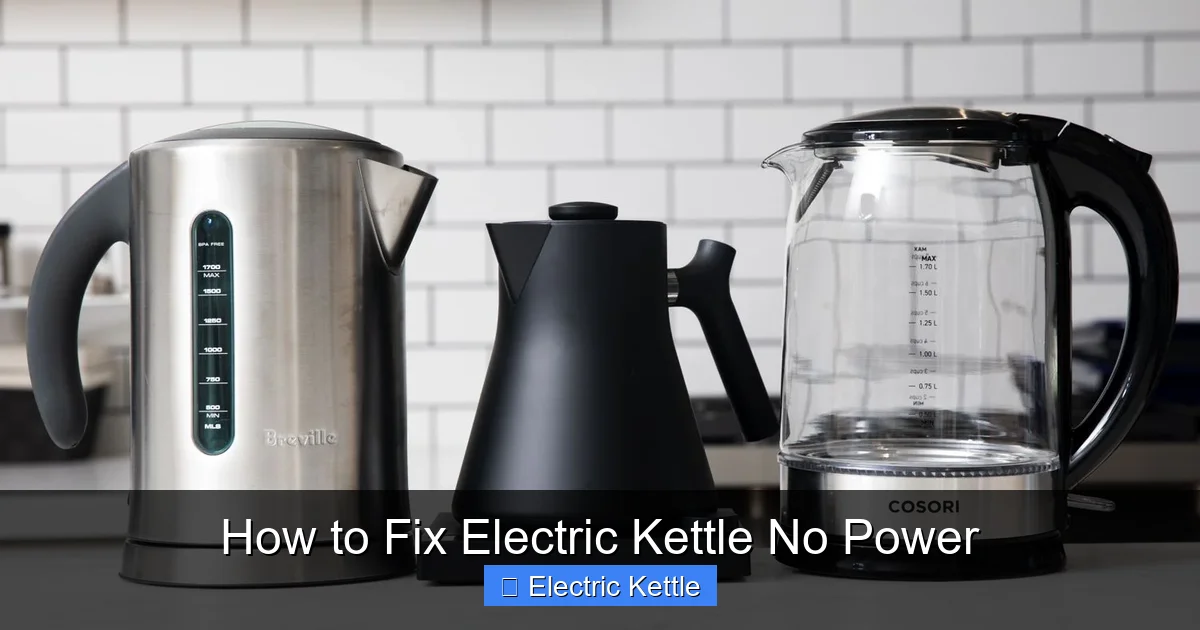
Visual guide about How to Fix Electric Kettle No Power
Image source: seriouseats.com
The first and most important step when your electric kettle has no power is to verify that the problem isn’t with your home’s electrical system. It sounds obvious, but many people skip this step and jump straight to assuming the kettle is broken. Don’t make that mistake.
Start by unplugging the kettle and plugging in another device—like a lamp, phone charger, or toaster—into the same outlet. If the other device works, the outlet is fine. If it doesn’t, the issue is likely with the outlet itself. Try a different outlet, preferably one on a different circuit. Sometimes outlets fail due to tripped breakers, loose wiring, or power surges.
Another thing to check: is the outlet switched? Some kitchen outlets are controlled by a wall switch (common under cabinets). Make sure the switch is turned on. Also, inspect the outlet for signs of damage—burn marks, scorch marks, or a burning smell. These could indicate a serious electrical issue that requires an electrician.
If you’re using an extension cord or power strip, try plugging the kettle directly into the wall. Extension cords can sometimes fail or not provide enough power, especially if they’re old or low-quality. A kettle draws a lot of current (usually 1500–3000 watts), so it needs a stable, direct connection.
Test with a Multimeter (Optional but Helpful)
If you’re comfortable using a multimeter, you can test the outlet for voltage. Set the multimeter to AC voltage (usually marked as V~) and insert the probes into the outlet slots. A standard U.S. outlet should read around 120 volts. If it reads significantly lower or zero, there’s an electrical issue beyond your kettle.
This step is especially useful if you live in an older home or have experienced recent power outages. Fluctuations in voltage can damage appliances over time, so it’s good to know your outlet is delivering consistent power.
Step 2: Inspect the Plug and Power Cord
If the outlet is working, the next place to look is the kettle’s plug and power cord. These are often the first points of failure because they’re subjected to bending, pulling, and wear every time you use the kettle.
Start by unplugging the kettle and giving the cord a close visual inspection. Look for:
– Frayed or exposed wires
– Cracks or splits in the insulation
– Burn marks or discoloration near the plug
– Loose connections where the cord meets the plug or the kettle base
Even small damage can interrupt the flow of electricity. For example, if the inner wires are nicked or broken, the kettle won’t receive power, even if the cord looks mostly intact.
Gently wiggle the cord near the plug and where it enters the kettle. If you hear a crackling sound or notice the kettle flicker on and off, there’s likely a loose or broken wire inside. This is a common issue, especially if the kettle is frequently moved or stored with the cord tightly coiled.
What to Do If the Cord Is Damaged
If you find visible damage, do not plug the kettle back in. Using a damaged cord can cause electric shock, short circuits, or even fire. At this point, you have two options:
1. **Replace the cord (if possible):** Some electric kettles have detachable cords that can be replaced. Check your user manual or the manufacturer’s website for compatible replacement parts. This is usually a simple plug-and-play fix.
2. **Replace the kettle:** If the cord is hardwired (permanently attached), repair may not be safe or practical. In this case, it’s usually better to replace the kettle, especially if it’s older or low-cost.
Never attempt to tape or wrap a damaged cord as a permanent fix. Electrical tape is not a substitute for proper insulation and can fail under heat and moisture.
Step 3: Examine the Kettle Base and Heating Element
If the plug and cord are fine, the issue may lie in the kettle’s base or heating element. Most electric kettles use a flat, circular heating element located at the bottom of the water chamber. This element connects to the power base via metal contacts.
Over time, these contacts can become corroded, dirty, or misaligned, preventing proper electrical connection. This is one of the most common causes of an electric kettle no power issue—especially in areas with hard water.
Clean the Base Contacts
Turn the kettle upside down and inspect the metal contacts on the base (the part that sits on the power station). Look for:
– White or green corrosion (mineral buildup)
– Black or burnt spots
– Dirt, dust, or food residue
Use a clean, dry cloth to wipe the contacts. For stubborn buildup, dip a cotton swab in white vinegar or isopropyl alcohol and gently scrub the metal surfaces. Avoid using water directly, as moisture can cause short circuits.
After cleaning, let the contacts dry completely before reassembling and testing the kettle.
Check the Power Base (Charging Station)
Don’t forget to inspect the power base—the part that plugs into the wall and holds the kettle. Look for:
– Bent or misaligned metal pins
– Cracks or damage to the plastic housing
– Signs of overheating (discoloration, melting)
If the pins are bent, you can sometimes straighten them carefully with needle-nose pliers. But be gentle—forcing them can break the internal wiring.
Also, make sure the kettle sits level and makes full contact with the base. If it wobbles or doesn’t seat properly, the electrical connection may be incomplete.
Test the Heating Element
If cleaning doesn’t help, the heating element itself may be faulty. You can test it with a multimeter set to the ohms (Ω) setting. Disconnect the kettle and locate the two terminals of the heating element (usually accessible by removing the base plate).
Touch the multimeter probes to the terminals. A working heating element should show low resistance (typically between 10–30 ohms, depending on the kettle’s wattage). If the reading is infinite (OL or “overload”), the element is broken and needs replacement.
Note: Replacing a heating element is complex and usually not worth the effort unless you’re experienced with appliance repair. In most cases, it’s more practical to replace the entire kettle.
Step 4: Reset the Thermal Fuse or Safety Switch
Many modern electric kettles include built-in safety features to prevent overheating or dry boiling. One of these is a thermal fuse—a small device that cuts power if the temperature gets too high. Unlike a circuit breaker, a thermal fuse is not resettable and must be replaced if it blows.
However, some kettles have a resettable thermal switch or overload protector that can be manually reset. This is often located near the heating element or under the base.
Locate and Reset the Safety Switch
To find the reset button:
– Unplug the kettle and let it cool completely.
– Remove the base plate (usually held by screws).
– Look for a small red or black button labeled “Reset” or “Thermal Cut-Off.”
Press the button firmly. You should hear a click. Reassemble the kettle and test it. If it powers on, the issue was a tripped safety switch—likely caused by overheating or dry boiling.
If there’s no reset button, the thermal fuse may have blown. This is a one-time-use component that melts when exposed to excessive heat. Replacing it requires soldering and electrical knowledge, so unless you’re comfortable with DIY electronics, it’s best to consult a professional or replace the kettle.
Prevent Future Trips
To avoid tripping the thermal fuse:
– Never run the kettle without water.
– Don’t overfill it—water should stay below the max line.
– Clean the kettle regularly to prevent mineral buildup, which can cause hot spots.
Step 5: Clean Mineral Buildup and Descale the Kettle
Hard water is a silent killer of electric kettles. Over time, minerals like calcium and magnesium accumulate inside the kettle, forming a chalky white deposit called limescale. This buildup can insulate the heating element, reduce efficiency, and even block electrical contacts.
Even if your kettle powers on, heavy scaling can cause it to overheat, trip safety switches, or fail prematurely. So even if the kettle seems to work, regular descaling is essential for longevity.
How to Descale Your Kettle
Here’s a simple, effective method using household ingredients:
1. **Fill the kettle halfway with equal parts water and white vinegar.** For example, 1 cup water + 1 cup vinegar.
2. **Let it sit for 1–2 hours.** For heavy buildup, you can boil the solution, let it cool, then soak overnight.
3. **Scrub gently with a soft brush or sponge.** Avoid abrasive tools that can scratch the interior.
4. **Rinse thoroughly.** Fill the kettle with clean water, boil it, and discard the water. Repeat 2–3 times to remove all vinegar taste.
5. **Wipe the exterior and base.** Use a damp cloth to clean the outside and the power contacts.
Alternative Descaling Methods
– **Lemon juice:** Cut a lemon in half, squeeze it into the kettle, and add water. Boil, let sit, then rinse.
– **Commercial descaler:** Products like Durgol or De’Longhi Descaling Solution are effective and safe for most kettles. Follow the instructions on the label.
How Often to Descale
– **Soft water areas:** Every 3–6 months
– **Hard water areas:** Every 1–2 months
Regular descaling not only prevents no power issues but also improves heating speed and extends the life of your kettle.
Step 6: Know When to Replace Your Electric Kettle
Despite your best efforts, some electric kettles are beyond repair. If you’ve tried all the steps above and the kettle still has no power, it may be time to retire it.
Here are signs it’s time to replace your kettle:
– The heating element is burnt out or cracked
– The base or cord is severely damaged
– The kettle frequently trips the thermal fuse
– It’s more than 5–7 years old
– Repair costs exceed 50% of a new kettle’s price
Modern electric kettles are relatively affordable, with many reliable models available under $50. Look for features like:
– Auto shut-off
– Boil-dry protection
– Removable limescale filter
– Cordless design with 360-degree base
– BPA-free materials
Investing in a quality kettle can save you money and frustration in the long run.
Safety First: When Not to DIY
While many kettle issues are fixable, some repairs involve high-voltage components and should only be handled by professionals. Never attempt to:
– Open the sealed heating chamber
– Rewire internal circuits
– Replace components without proper tools and knowledge
If you’re unsure, it’s always safer to consult the manufacturer or a qualified technician.
Conclusion: Get Your Kettle Back to Boiling
An electric kettle no power issue doesn’t have to mean the end of your tea-time routine. With a systematic approach—starting from the outlet and working your way inward—you can often identify and fix the problem yourself. From checking the plug to cleaning mineral buildup, each step brings you closer to a working kettle.
Remember, safety is paramount. Always unplug the kettle before inspecting it, and never ignore signs of electrical damage. When in doubt, replace rather than risk.
By following this guide, you’ll not only restore function to your kettle but also learn how to maintain it for years of reliable service. So the next time your kettle goes silent, don’t panic—grab a flashlight, a multimeter, and a little patience. Your perfect cup of tea is just a fix away.
Frequently Asked Questions
Why won’t my electric kettle turn on even though it’s plugged in?
This is usually due to a faulty outlet, damaged cord, or internal component failure. Start by testing the outlet with another device, then inspect the plug and cord for damage. If those are fine, check the base contacts and thermal fuse.
Can I fix a burnt-out heating element in my electric kettle?
Technically yes, but it’s rarely practical. Replacing a heating element requires disassembling the kettle and soldering new parts. For most people, buying a new kettle is safer and more cost-effective.
How often should I descale my electric kettle?
It depends on your water hardness. In hard water areas, descale every 1–2 months. In soft water areas, every 3–6 months is sufficient. Regular descaling prevents limescale buildup that can cause no power issues.
Is it safe to use my kettle if the cord is slightly frayed?
No. Even minor damage to the power cord can lead to electric shock or fire. Stop using the kettle immediately and replace the cord or the entire unit if the cord is hardwired.
My kettle powers on but doesn’t heat water. What’s wrong?
This could be due to a faulty heating element, mineral buildup, or a tripped thermal fuse. Clean the kettle first, then test the heating element with a multimeter. If it’s not working, the element may need replacement.
Can a tripped thermal fuse be reset?
Some kettles have resettable thermal switches with a manual reset button. If yours has one, press it after the kettle cools. If not, the fuse is likely blown and must be replaced—or the kettle replaced entirely.