Making coffee with an electric kettle is easier than you think—no coffee maker required. Whether you’re in a dorm, office, or traveling, this method delivers a hot, satisfying cup using just water, grounds, and a few smart techniques.
Key Takeaways
- Electric kettles heat water quickly and precisely, making them ideal for brewing coffee without a drip machine or French press.
- Use medium-coarse ground coffee for best results—too fine can lead to over-extraction and bitterness.
- Steep the coffee like tea by adding grounds directly to hot water or using a filter for cleaner taste.
- Control water temperature—aim for 195–205°F (90–96°C) to avoid scalding the coffee and ruining flavor.
- Clean your kettle regularly to prevent coffee oils and residue from affecting future brews or boiling performance.
- This method is portable and cost-effective, perfect for small spaces, travel, or emergency caffeine fixes.
- Experiment with ratios and steep times to customize strength and flavor to your preference.
📑 Table of Contents
- Why Use an Electric Kettle to Make Coffee?
- What You’ll Need to Get Started
- Step-by-Step Guide: How to Make Coffee with an Electric Kettle
- Tips for the Best Coffee Every Time
- Common Mistakes to Avoid
- Creative Variations and Add-Ins
- Why This Method Works for Travel and Small Spaces
- Environmental and Cost Benefits
- Final Thoughts: Simplicity Meets Quality
Why Use an Electric Kettle to Make Coffee?
Let’s be honest—most of us don’t wake up excited about complicated brewing rituals. Between busy mornings, small kitchens, or living in a dorm with limited appliances, convenience matters. That’s where the electric kettle comes in. It’s not just for tea anymore. In fact, learning how to make coffee with an electric kettle opens up a world of simple, fast, and surprisingly delicious brewing options.
Electric kettles are designed to heat water rapidly and efficiently. Many modern models even come with temperature control, allowing you to select the perfect heat level for different beverages. This precision is a game-changer for coffee lovers who know that water temperature dramatically affects flavor. Too hot, and you risk burning the grounds; too cool, and you won’t extract enough richness. With an electric kettle, you can hit that sweet spot every time.
Plus, using an electric kettle eliminates the need for bulky coffee makers, paper filters, or expensive pods. It’s a minimalist approach that doesn’t sacrifice quality. Whether you’re a student in a tiny apartment, a remote worker brewing at your desk, or a traveler in a hotel room, this method is flexible, affordable, and effective. All you need is your kettle, some ground coffee, and a few minutes.
What You’ll Need to Get Started
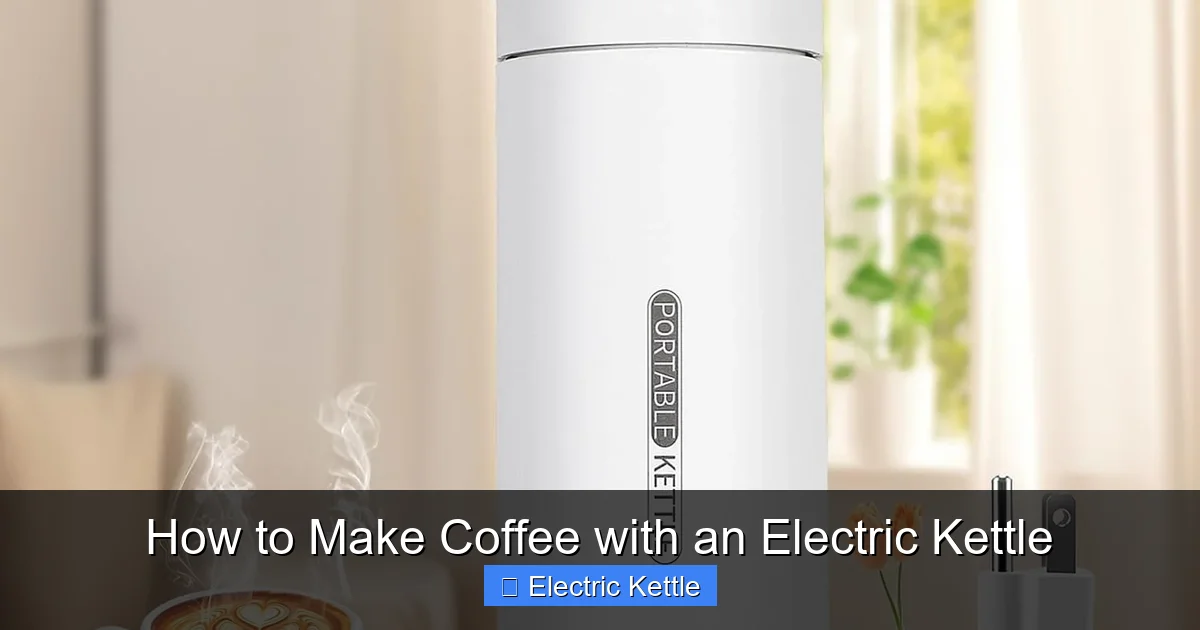
Visual guide about How to Make Coffee with an Electric Kettle
Image source: m.media-amazon.com
Before we dive into the brewing process, let’s make sure you have everything you need. The beauty of this method is its simplicity—no fancy gear required.
First and foremost, you’ll need an electric kettle. Most standard models work perfectly, but if yours has variable temperature settings, that’s even better. Look for one that can maintain or reach temperatures between 195°F and 205°F (90°C–96°C), which is the ideal range for coffee extraction.
Next, grab your coffee. Freshly ground beans are always best, but pre-ground coffee works too—just make sure it’s not too fine. A medium-coarse grind, similar to what you’d use for a French press, is ideal. Fine espresso grounds can over-extract and turn bitter when steeped in hot water for too long.
You’ll also need a cup or mug, a spoon for stirring, and optionally, a fine-mesh strainer, coffee filter, or reusable filter pouch. These help separate the grounds from the liquid if you’re not using a French press-style immersion method.
Finally, have a timer handy. Timing is crucial for getting the strength and flavor just right. Even a simple phone timer will do.
Choosing the Right Coffee
Not all coffee is created equal—especially when brewing with an electric kettle. Since you’re essentially doing a form of immersion brewing (like a French press), the grind size and freshness matter more than you might think.
Start with freshly roasted beans if possible. Coffee starts losing its aroma and flavor within weeks of roasting, so check the roast date on the bag. Aim for beans roasted within the last two to four weeks.
When it comes to grind, avoid anything labeled “espresso” or “extra fine.” These tiny particles can slip through filters and create a muddy, over-extracted brew. Instead, go for a medium or medium-coarse grind. If you’re grinding at home, set your burr grinder to a setting that resembles sea salt.
As for roast level, it’s really up to your taste. Light roasts offer bright, fruity notes and higher acidity, while dark roasts bring bold, smoky flavors. Medium roasts strike a balance and are great for beginners. Try a few different types to see what you like best.
Optional Tools to Improve Your Brew
While you can make coffee with just a kettle and a cup, a few extra tools can elevate your experience.
A reusable coffee filter or a fine-mesh strainer helps catch fine grounds and gives you a cleaner cup. You can even use a paper filter folded into a cone shape and placed over your mug—just like a makeshift pour-over.
If you have a French press, you can use it in combination with your electric kettle. Heat the water in the kettle, then pour it into the French press with your grounds. This gives you more control over steep time and makes cleanup easier.
For travelers, consider a portable pour-over dripper or a collapsible coffee filter. These lightweight tools fit in a backpack and let you brew a single cup anywhere.
And don’t forget a thermometer if your kettle doesn’t have temperature control. You can use a food-safe digital thermometer to check the water before adding coffee.
Step-by-Step Guide: How to Make Coffee with an Electric Kettle
Now for the fun part—actually making the coffee. There are a few different methods, but we’ll start with the simplest and most accessible: the direct immersion method.
Method 1: Direct Immersion (French Press Style)
This method is perfect if you don’t have a filter or French press. It’s quick, easy, and delivers a full-bodied cup.
Start by measuring your coffee. A good starting ratio is 1 tablespoon of ground coffee per 8 ounces (240 ml) of water. Adjust to taste—more coffee for a stronger brew, less for a milder one.
Add the grounds directly to your mug or cup. Then, fill your electric kettle with fresh, cold water. Avoid using water that’s been sitting in the kettle, as it may have absorbed flavors or minerals.
Turn on the kettle and heat the water. If your kettle has temperature control, set it to 200°F (93°C). If not, let it boil and then wait 30 seconds to cool slightly—this brings it down to the ideal range.
Once the water is ready, pour it slowly over the coffee grounds in your mug. Fill to your desired level, stirring gently with a spoon to ensure all the grounds are saturated.
Now, let it steep. Cover the mug with a saucer or lid to retain heat and prevent evaporation. Steep for 4 minutes—this is the standard time for medium-coarse grounds. If you like stronger coffee, go up to 5 minutes. For lighter flavor, try 3 minutes.
After steeping, use a spoon to press the grounds to the bottom, or pour the coffee through a fine-mesh strainer into another cup to catch any sediment.
Add milk, cream, or sweetener if you like, and enjoy your homemade brew.
Method 2: Using a Filter (Pour-Over Style)
If you prefer a cleaner, less gritty cup, this method mimics a pour-over using your electric kettle.
You’ll need a filter—either a paper cone filter or a reusable mesh filter. Place it in a dripper or over your mug. If you don’t have a dripper, you can improvise with a funnel or even a clean sock (yes, really—some travelers swear by it in a pinch).
Add your coffee grounds to the filter—again, about 1 tablespoon per 8 ounces of water.
Heat the water in your electric kettle to 200°F (93°C). Once ready, start pouring in a slow, circular motion, wetting all the grounds evenly. This is called “blooming” and helps release CO2 for better flavor.
Continue pouring in stages, allowing the water to drip through. Aim to finish pouring within 2–3 minutes. The total brew time should be around 4 minutes.
Once all the water has passed through, remove the filter and discard the grounds. Your coffee is ready to drink.
This method produces a brighter, cleaner cup with less sediment—ideal if you’re sensitive to grit or prefer a lighter body.
Method 3: Cold Brew with an Electric Kettle (Yes, Really!)
Wait—can you make cold brew with an electric kettle? Absolutely! While traditional cold brew uses room-temperature water, you can use your kettle to speed up the process.
Here’s how: Heat water in the kettle to just below boiling (around 180°F or 82°C). Pour it over a large amount of coarse-ground coffee in a jar or pitcher—use a 1:4 ratio of coffee to water (e.g., 1 cup coffee to 4 cups water).
Stir well, cover, and let it steep at room temperature for 12–24 hours. The hot start helps extract flavors faster, so you can shorten the steep time compared to cold water.
After steeping, strain the mixture through a fine filter or cheesecloth. Dilute with water or milk to taste, and serve over ice.
This method gives you a smooth, low-acid coffee concentrate perfect for iced drinks. Plus, it’s a great way to use your kettle for more than just hot beverages.
Tips for the Best Coffee Every Time
Even with the right tools and method, small details can make a big difference in flavor. Here are some pro tips to help you brew like a barista—no fancy machine required.
Use Fresh, Filtered Water
Coffee is over 98% water, so the quality of your H2O matters. Tap water with strong chlorine or mineral flavors can ruin an otherwise great brew. Use filtered or bottled water for the cleanest taste.
Avoid distilled or softened water, as they lack the minerals that help extract flavor from coffee.
Measure Your Coffee and Water
Eyeballing might work for tea, but coffee benefits from precision. Use a kitchen scale if possible—aim for a 1:15 to 1:17 ratio of coffee to water by weight. For example, 20 grams of coffee to 300 grams of water.
If you don’t have a scale, stick to the tablespoon rule: 1 tablespoon per 8 ounces of water. Level off the spoon—don’t pack it.
Preheat Your Mug
Cold mugs can drop the temperature of your coffee too quickly, leading to under-extraction. To prevent this, rinse your mug with hot water from the kettle before adding coffee. This keeps the brew hot longer and ensures even extraction.
Experiment with Steep Time
Steep time affects strength and flavor. Longer steeping pulls more oils and compounds, creating a bolder cup. But too long can lead to bitterness.
Start with 4 minutes and adjust based on taste. If your coffee tastes weak, try 5 minutes. If it’s bitter, go down to 3.
Keep a brewing journal to track your ratios, times, and results. Over time, you’ll dial in your perfect recipe.
Clean Your Kettle Regularly
Coffee oils and mineral buildup can affect both taste and performance. After brewing, rinse the kettle thoroughly. Once a week, descale it with a mixture of equal parts water and white vinegar. Let it sit for 30 minutes, then rinse well.
Avoid using soap inside the kettle, as it can leave a residue. Stick to vinegar or commercial descaling solutions.
Common Mistakes to Avoid
Even simple methods have pitfalls. Here are some common errors and how to fix them.
Using Water That’s Too Hot
Boiling water (212°F or 100°C) can scorch coffee grounds, creating a bitter, burnt taste. Always let boiling water cool for 30 seconds, or use a kettle with temperature control.
If your coffee tastes harsh or astringent, this is likely the culprit.
Grinding Too Fine
Fine grounds increase surface area, leading to over-extraction. This results in a sour, bitter cup. Stick to medium or coarse grinds unless you’re using a filter that can handle fines.
If you’re buying pre-ground coffee, look for labels like “French press” or “cold brew” for the right texture.
Skipping the Stir
After adding water, stir the grounds gently. This ensures even saturation and prevents dry pockets that lead to uneven extraction.
A quick stir takes just a few seconds but makes a noticeable difference in flavor.
Not Cleaning the Kettle
Residual coffee oils can go rancid and affect future brews. Always rinse the kettle after use and descale monthly.
A clean kettle doesn’t just taste better—it also boils faster and lasts longer.
Creative Variations and Add-Ins
Once you’ve mastered the basics, why not get creative? Your electric kettle can do more than just brew plain coffee.
Spiced Coffee
Add a cinnamon stick, a few cloves, or a slice of ginger to your mug before pouring in the hot water and coffee. Let it steep together for a warming, aromatic twist.
For a chai-inspired brew, include cardamom, black pepper, and a dash of nutmeg.
Iced Coffee Hack
Brew a strong concentrate using half the usual amount of water. Pour it directly over ice in a glass. The hot coffee melts the ice and dilutes to the perfect strength.
Add cold milk or a splash of simple syrup for a refreshing drink.
Flavored Syrups
Make your own syrups at home. Simmer equal parts sugar and water with vanilla, caramel, or fruit puree. Store in a jar and add to coffee as needed.
This saves money and avoids the artificial ingredients in store-bought syrups.
Milk Frothing
Some electric kettles can froth milk—especially models with a “milk” setting. Heat milk separately, then whisk or shake vigorously to create foam. Pour over your coffee for a café-style latte.
Alternatively, use a handheld frother or a French press to froth milk manually.
Why This Method Works for Travel and Small Spaces
One of the biggest advantages of making coffee with an electric kettle is its portability. Whether you’re in a hotel room, camping, or living in a tiny studio, this method requires minimal space and equipment.
Most electric kettles are compact and lightweight. Many travel models even fold or have detachable cords. Pair it with a reusable filter and a small bag of coffee, and you’re set for brewing anywhere.
Hotels often provide kettles in rooms—perfect for a quick morning cup without hunting down the lobby coffee. Just make sure to clean it first if it’s been used for tea or instant noodles.
Students love this method too. Dorm rooms rarely allow drip coffee makers, but electric kettles are usually permitted. It’s a safe, quiet way to brew without tripping breakers or disturbing roommates.
And for remote workers, a kettle on your desk means no more waiting in line at the office coffee station. Brew a fresh cup whenever you need a pick-me-up.
Environmental and Cost Benefits
Beyond convenience, this method is also eco-friendly and budget-conscious.
Electric kettles are energy-efficient. They heat only the water you need, unlike drip machines that often brew full pots. This saves electricity and reduces waste.
Using reusable filters or direct immersion eliminates paper waste. No pods, no filters, no plastic—just coffee and water.
And let’s talk cost. A quality electric kettle pays for itself in months. Compare that to daily café purchases—$3–$5 per cup adds up fast. With this method, you can enjoy barista-quality coffee for pennies per cup.
Plus, buying whole beans in bulk is cheaper than pre-ground or single-serve options. Grind only what you need for maximum freshness and savings.
Final Thoughts: Simplicity Meets Quality
Making coffee with an electric kettle isn’t just a workaround—it’s a smart, satisfying brewing method in its own right. It combines speed, control, and flexibility in a way few other techniques can match.
You don’t need a expensive machine or years of training. Just a kettle, some good coffee, and a little know-how. Whether you’re brewing a quick cup before work, experimenting with flavors, or traveling light, this approach delivers consistent results.
So next time you reach for the kettle to boil water for tea, think twice. That same appliance can brew a rich, aromatic cup of coffee that rivals your favorite café. It’s simple, it’s sustainable, and it puts you in control of your caffeine destiny.
Give it a try. Your taste buds—and your wallet—will thank you.
Frequently Asked Questions
Can I make coffee directly in an electric kettle?
It’s not recommended to brew coffee directly inside the kettle, as coffee oils and grounds can clog the heating element and affect future use. Always brew in a separate cup or container.
What’s the best grind size for electric kettle coffee?
Use a medium to medium-coarse grind, similar to sea salt. Fine grinds can over-extract and create bitterness, especially with longer steep times.
How do I prevent sediment in my coffee?
Use a fine-mesh strainer, paper filter, or reusable filter pouch to strain the coffee after steeping. This removes most of the fine grounds for a cleaner cup.
Can I use instant coffee with an electric kettle?
Yes! Simply heat water in the kettle, pour it over instant coffee in your mug, and stir. It’s the fastest method, though it won’t match the flavor of freshly ground beans.
How often should I clean my electric kettle?
Rinse after each use and descale monthly with vinegar or a descaling solution. Regular cleaning prevents buildup and keeps your coffee tasting fresh.
Is it safe to boil milk in an electric kettle?
Most kettles aren’t designed for milk, which can scorch, stick, and damage the interior. Use a separate pot or a kettle with a milk-specific setting if available.