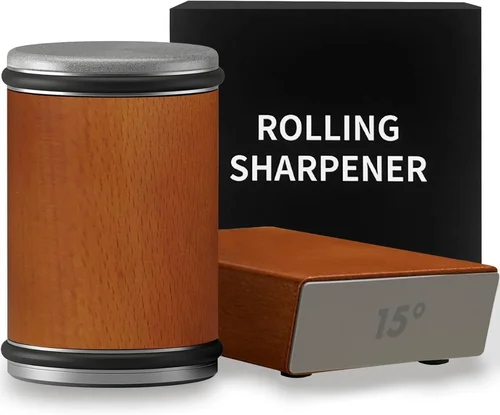
Knives are among the most essential tools in any kitchen, workshop, or outdoor kit. A sharp blade isn’t just about precision—it’s about safety, efficiency, and longevity. Yet, despite their importance, many people neglect proper knife maintenance, often because they’re unsure how to sharpen them correctly. This confusion leads to a common dilemma: should you use a rolling sharpener or a traditional sharpening stone? The answer isn’t always straightforward, and the choice can significantly impact your knives’ performance and lifespan.
In this comprehensive buying guide for 2026, we’ll cut through the noise and help you make an informed decision. Whether you’re a home cook, a professional chef, an outdoor enthusiast, or someone who simply wants to keep their kitchen tools in top shape, understanding the differences between rolling sharpeners and sharpening stones is crucial. We’ll explore the pros and cons of each method, break down key factors to consider when choosing a sharpener, compare different types on the market, and offer expert advice to help you avoid costly mistakes. By the end of this guide, you’ll know exactly what to look for and which option best suits your needs.
The knife sharpening market has evolved dramatically over the past decade. What once consisted of basic whetstones and manual pull-through sharpeners now includes electric models, guided-angle systems, ceramic rods, and innovative rolling mechanisms. With so many options available, it’s easy to feel overwhelmed. But the core question remains: which sharpening method delivers the best edge with the least risk of damage? Rolling sharpeners—often compact, handheld devices with rotating abrasive wheels—promise speed and convenience. Sharpening stones, on the other hand, offer precision and control but require more skill and time. Our goal is to help you weigh these trade-offs and choose the right tool for your lifestyle, skill level, and budget.

What to Look for When Buying Buying Guide
1. Budget & Price Range
Your budget plays a pivotal role in determining which type of sharpener you can realistically afford. Rolling sharpeners typically range from $15 to $60, making them accessible for most households. In contrast, high-quality sharpening stones—especially Japanese water stones or diamond stones—can cost anywhere from $30 to over $200 for a full set. While entry-level stones are affordable, professional-grade options demand a significant investment. It’s important to remember that cheaper isn’t always better. A $20 rolling sharpener might seem like a bargain, but if it damages your knives or fails to deliver a consistent edge, it’s a false economy. Conversely, investing in a premium stone set may be overkill if you only sharpen a few kitchen knives occasionally. Consider how often you’ll use the sharpener and the value of the knives you’re maintaining. For casual users, a mid-range rolling sharpener or a single high-quality stone may suffice. For professionals or serious enthusiasts, a combination of both might be ideal.
2. Performance Specifications
Performance is where the real differences between rolling sharpeners and stones become apparent. Rolling sharpeners often use fixed-angle guides and abrasive wheels (usually ceramic or tungsten carbide) to quickly restore a dull edge. They’re fast—often taking just 30 seconds per knife—and require minimal skill. However, their fixed angles may not match your knife’s original bevel, leading to uneven sharpening or excessive metal removal. Sharpening stones, especially when used with a guide or freehand, allow for precise angle control, typically between 15° and 20° per side, which is ideal for most kitchen knives. They also offer multiple grit levels: coarse (200–400) for repairing chips, medium (800–1000) for sharpening, and fine (3000–8000) for polishing. This versatility enables you to maintain, sharpen, and refine your edge in one system. Additionally, stones preserve more of the blade’s integrity by removing less material over time, which extends the knife’s lifespan. If performance and edge quality are your top priorities, stones generally outperform rolling sharpeners.
3. Build Quality & Durability
The longevity of your sharpener depends heavily on its construction. Rolling sharpeners are often made from plastic housings with metal or ceramic components. While convenient, many budget models feel flimsy and may wear out after a few months of regular use. Higher-end rolling sharpeners use reinforced materials and sealed bearings to improve durability, but they still can’t match the robustness of a solid sharpening stone. Stones, particularly those made from natural Arkansas novaculite or synthetic aluminum oxide, are incredibly durable and can last decades with proper care. Diamond stones are even more resilient, resisting flattening and wear. However, stones require maintenance—flattening, soaking (for water stones), and storage—to remain effective. Rolling sharpeners, by contrast, are virtually maintenance-free. If you value low upkeep and portability, a well-built rolling sharpener might suit you. But if you’re willing to invest time in maintenance for long-term reliability, stones are the clear winner.
4. Features & Functionality
Modern sharpeners come packed with features designed to simplify the sharpening process. Rolling sharpeners often include multiple slots for different stages of sharpening (coarse, fine, honing), non-slip bases, and ergonomic handles. Some even have built-in angle guides or LED lights for visibility. These features make them user-friendly, especially for beginners. Sharpening stones, while seemingly simple, offer advanced functionality when paired with accessories. Angle guides, stone holders, flattening plates, and soaking trays enhance precision and ease of use. Additionally, many stone sets include a combination of grits, allowing you to progress from repair to polish in one session. Some high-end systems even integrate with digital angle measurers or smartphone apps for real-time feedback. If you enjoy customization and fine-tuning, stones provide far greater flexibility. Rolling sharpeners, while feature-rich in their own right, are more limited in scope and adaptability.
5. Brand Reputation
Not all sharpeners are created equal, and brand reputation can be a reliable indicator of quality. Established brands like Work Sharp, Chef’s Choice, Lansky, and King have built their names on consistent performance and customer satisfaction. Work Sharp, for example, is known for its innovative electric and manual systems that blend rolling and stone-like sharpening. Chef’s Choice dominates the electric sharpener market with precision-engineered models. Lansky offers guided stone systems that bridge the gap between manual control and ease of use. Japanese brands like King and Suehiro are revered for their high-quality water stones, favored by professional chefs and collectors. When choosing a sharpener, research the brand’s history, customer reviews, and warranty policies. A reputable brand may cost more upfront but often delivers better long-term value through reliability and support.
6. Warranty & Support
A strong warranty and responsive customer support can make a big difference, especially if you’re investing in a higher-end sharpener. Most rolling sharpeners come with a 1- to 2-year limited warranty, covering defects in materials and workmanship. However, warranties often exclude damage from misuse, such as applying too much pressure or using the wrong knife type. Sharpening stones, being more durable, may come with longer warranties—some premium brands offer 5 years or more. Additionally, companies like King and Shapton provide excellent customer service, including replacement stones and sharpening guides. Before purchasing, check the warranty terms, return policy, and whether the company offers repair or replacement services. A good support system not only protects your investment but also gives you confidence in the product’s longevity.
7. Size & Portability
If you travel frequently, camp, or work in multiple locations, portability becomes a key consideration. Rolling sharpeners are generally compact and lightweight, fitting easily into a drawer, toolbox, or backpack. Many are designed for one-handed operation, making them ideal for on-the-go use. Some even come with protective cases or clips for belt attachment. Sharpening stones, especially larger ones, are bulkier and require a stable surface to use effectively. While travel-sized stones exist, they often sacrifice performance for size. If you need a sharpener for home use only, size may not matter much. But for outdoor enthusiasts, chefs working in food trucks, or anyone who values mobility, a rolling sharpener offers a clear advantage. That said, some hybrid systems—like the Work Sharp Guided Field Sharpener—combine stone-like precision with portability, offering a compelling middle ground.
8. User Reviews & Ratings
One of the best ways to gauge a product’s real-world performance is by reading user reviews. Platforms like Amazon, Wirecutter, and specialty knife forums provide insights from people who’ve used the sharpener extensively. Look for patterns in feedback: do multiple users report the same issue, such as inconsistent angles or broken components? Are there complaints about customer service or durability? Pay attention to reviews from users with similar needs—home cooks, professionals, or outdoor users—as their experiences will be most relevant. Also, check the average star rating, but don’t rely on it alone. A 4.5-star rating with 1,000 reviews is more trustworthy than a 5-star rating with only 10. Additionally, watch video reviews to see the sharpener in action. Seeing how it handles different knife types and edge conditions can reveal strengths and weaknesses not apparent in written descriptions.
Different Types of Buying Guide

Common Buying Mistakes to Avoid
❌ Mistake: Choosing Based on Price Alone
Why it’s bad: Opting for the cheapest sharpener might save you money upfront, but it often leads to poor performance, damaged knives, or the need to replace the sharpener quickly. A $10 rolling sharpener may use low-quality abrasives that round over the edge instead of creating a sharp apex.
What to do instead: Balance cost with quality. Look for mid-range options with good reviews and durable materials. Remember, a sharpener is an investment in your knives’ longevity.
❌ Mistake: Ignoring Knife Type and Steel Hardness
Why it’s bad: Not all sharpeners work well with all knives. Hardened Japanese blades (HRC 60+) require finer abrasives and precise angles, while softer German steel (HRC 55–58) can handle coarser sharpening. Using the wrong method can damage the edge or remove too much metal.
What to do instead: Match your sharpener to your knife’s steel and intended use. Use stones for high-hardness blades and rolling sharpeners for softer, everyday knives.
❌ Mistake: Over-Sharpening or Using Too Much Pressure
Why it’s bad: Applying excessive force or sharpening too frequently accelerates blade wear. Rolling sharpeners, in particular, can remove metal quickly if used aggressively, shortening the knife’s life.
What to do instead: Use light, consistent pressure and only sharpen when necessary. A few light passes are better than one heavy grind.
❌ Mistake: Neglecting Maintenance
Why it’s bad: Sharpening stones need to be flattened regularly, and rolling sharpeners may accumulate metal dust that clogs the wheels. Ignoring maintenance reduces effectiveness and can lead to inconsistent results.
What to do instead: Clean and maintain your sharpener according to the manufacturer’s instructions. Flatten stones monthly and wipe down rolling sharpeners after each use.
❌ Mistake: Assuming All Rolling Sharpeners Are Equal
Why it’s bad: Many budget rolling sharpeners use fixed angles that don’t match your knife’s bevel, leading to improper sharpening. Some even use ceramic wheels that can chip delicate edges.
What to do instead: Research the sharpener’s angle range and compatibility with your knives. Choose models with adjustable guides or multiple slots for different blade types.
❌ Mistake: Buying Without Testing or Reading Reviews
Why it’s bad: A sharpener that looks good online may perform poorly in real life. Without testing or reading detailed reviews, you risk buying a product that doesn’t meet your needs.
What to do instead: Watch video demonstrations, read long-term user reviews, and consider trying a model in-store if possible. Look for feedback on edge retention and ease of use.
Budget Guidelines: How Much Should You Spend?
- Entry-Level ($15 – $40): Ideal for casual users with basic kitchen knives. Expect simple rolling sharpeners or single-grit stones. Performance may be inconsistent, and build quality varies. Best for occasional touch-ups.
- Mid-Range ($40 – $100): The sweet spot for most buyers. Includes well-built rolling sharpeners with multiple stages, quality water stones, or guided systems. Offers a good balance of performance, durability, and ease of use.
- Premium ($100 – $200): For enthusiasts and professionals. Features high-end stones (e.g., Shapton GlassStone, Naniwa Super Stone), electric sharpeners with precision guides, or complete sharpening kits. Delivers superior edge quality and longevity.
- Luxury ($200+): Top-tier options for collectors and serious chefs. Includes multi-stone sets, diamond plates, and advanced systems with digital feedback. These are built to last decades and offer unparalleled control.
Expert Tips for Getting the Best Deal
- Buy During Sales: Look for discounts during Black Friday, Amazon Prime Day, or back-to-school seasons. Many brands offer 20–30% off during these periods.
- Check Retailer Policies: Buy from retailers with generous return policies (e.g., Amazon, REI, Williams Sonoma). This allows you to test the sharpener risk-free.
- Bundle Deals: Some brands sell sharpening kits that include stones, guides, and storage cases at a discount. These can save you money compared to buying items separately.
- Consider Refurbished Models: Reputable sellers often offer certified refurbished sharpeners at lower prices. These are tested and come with warranties.
- Read the Fine Print: Check warranty terms, shipping costs, and whether the product includes accessories. A lower price may hide extra fees.
- Test Before Committing: If possible, try a sharpener in-store or borrow one from a friend. Hands-on experience is invaluable.
- Invest in Accessories: A stone flattener, angle guide, or honing rod can enhance your sharpening experience and are often worth the extra cost.

Frequently Asked Questions
Q: Can a rolling sharpener damage my knives?
A: Yes, if used improperly. Rolling sharpeners with fixed angles may not match your knife’s bevel, leading to uneven sharpening or excessive metal removal. Always choose a model compatible with your knife type and use light pressure.
Q: Do I need to soak sharpening stones before use?
A: It depends on the stone. Water stones (e.g., King, Naniwa) typically require 10–15 minutes of soaking. Splash-and-go stones (e.g., Shapton) only need a quick rinse. Diamond stones do not require soaking.
Q: How often should I sharpen my knives?
A: It varies by use. Home cooks may sharpen every 3–6 months, while professionals may do it weekly. A better indicator is performance: if your knife struggles to cut tomatoes or paper, it’s time to sharpen.
Q: Can I use a rolling sharpener on Japanese knives?
A: It’s not recommended. Japanese knives often have harder steel and thinner edges, which can be damaged by the aggressive abrasives in rolling sharpeners. Use a water stone instead.
Q: What’s the difference between honing and sharpening?
A: Honing realigns the edge (using a steel rod), while sharpening removes metal to create a new edge. Honing should be done frequently; sharpening less often.
Q: Are electric sharpeners better than manual ones?
A: Electric sharpeners are faster and more consistent but can remove more metal. Manual methods (stones, rods) offer greater control and are better for precision work.
Q: How do I know if my stone is flat?
A: Place a straightedge (like a ruler) on the stone. If light shines through gaps, it’s uneven. Use a flattening plate or sandpaper on glass to restore flatness.
Q: Can I sharpen serrated knives with a rolling sharpener?
A: Some rolling sharpeners have a dedicated slot for serrated blades, but results vary. For best results, use a tapered ceramic rod or a specialized serrated sharpener.
Q: What’s the best angle for kitchen knives?
A: Most Western knives use 20° per side, while Japanese knives use 15°. Use an angle guide or marker method to maintain consistency.
Q: Should I buy a sharpener with multiple grits?
A: Yes, if you want versatility. A coarse grit repairs chips, medium sharpens, and fine polishes. A 3-stone set (400, 1000, 6000) covers most needs.
Our Final Recommendations
- Best for Budget-Conscious Buyers: Work Sharp Guided Field Sharpener – Combines stone-like precision with portability at under $50.
- Best Overall Value: King 1000/6000 Combination Water Stone – Affordable, effective, and durable for home cooks.
- Best Premium Option: Shapton GlassStone 5000 – Exceptional edge refinement for professionals and enthusiasts.
- Best for Beginners: Chef’s Choice Trizor XV – Electric sharpener with guided angles for consistent results.
- Best for Advanced Users: Lansky Deluxe 5-Stone System – Guided stone system offering full control over angle and grit.
Conclusion: Making the Right Choice
Choosing between a rolling sharpener and a sharpening stone ultimately comes down to your priorities: convenience versus precision, speed versus control, and budget versus performance. Rolling sharpeners excel in ease of use and portability, making them ideal for quick touch-ups and casual users. Sharpening stones, while requiring more skill and time, deliver superior edge quality and longevity, especially for high-end knives. For most people, the best approach is a hybrid: use a rolling sharpener for maintenance and a stone for periodic sharpening. This combination ensures your knives stay sharp without unnecessary wear.
As you evaluate your options, remember that the right sharpener is the one you’ll actually use. A $200 stone set gathering dust in a drawer is less valuable than a $30 rolling sharpener you use weekly. Consider your skill level, knife collection, and lifestyle. Read reviews, test when possible, and don’t be afraid to start small and upgrade later. With the right tool and a bit of practice, you’ll keep your knives in peak condition for years to come.
Investing in a quality sharpener isn’t just about maintaining edges—it’s about respecting your tools and enhancing your craft. Whether you’re slicing vegetables, filleting fish, or carving meat, a sharp knife makes all the difference. So take the time to choose wisely, maintain your sharpener, and enjoy the confidence that comes with a perfectly honed blade. Your knives—and your cooking—will thank you.