Choosing between an electric kettle and a microwave for heating water? Electric kettles are faster, more energy-efficient, and preserve better taste—making them the superior choice for daily use. While microwaves offer convenience, they fall short in speed, safety, and consistency when boiling water.
Key Takeaways
- Electric kettles boil water faster: Most models heat water in 3–5 minutes, while microwaves take longer and heat unevenly.
- Energy efficiency favors kettles: Electric kettles use less energy per boil, saving you money and reducing environmental impact.
- Better taste and safety: Kettles prevent overheating and scorching, preserving the natural flavor of water and beverages.
- Microwaves pose safety risks: Superheating can cause dangerous steam explosions when removing water from a microwave.
- Kettles offer precise temperature control: Advanced models let you select exact temperatures for tea, coffee, or baby formula.
- Durability and ease of use: Electric kettles are simple to clean, maintain, and often last longer than microwave components.
- Ideal for daily routines: If you drink tea, coffee, or instant meals often, an electric kettle streamlines your process.
📑 Table of Contents
- Is an Electric Kettle Better Than Microwave? A Head-to-Head Comparison
- Speed: Which Heats Water Faster?
- Energy Efficiency: Which Uses Less Power?
- Safety: Which Is Safer to Use?
- Taste and Quality: Does It Affect Your Beverages?
- Convenience and Versatility
- Cost and Longevity: Which Is a Better Investment?
- Conclusion: The Electric Kettle Wins
Is an Electric Kettle Better Than Microwave? A Head-to-Head Comparison
Let’s face it—boiling water is something we do almost every day. Whether it’s for morning coffee, afternoon tea, instant noodles, or baby formula, we all need hot water. But how we get there matters. Two of the most common appliances for this task are the electric kettle and the microwave. Both get the job done, but which one is truly better?
You’ve probably used both. Maybe you’ve nuked a cup of water in the microwave for your tea, only to find it lukewarm in some spots and scalding in others. Or perhaps you’ve waited patiently for your electric kettle to whistle, knowing it’ll deliver piping-hot water every time. The truth is, while both appliances heat water, they do it very differently—and those differences can impact your time, safety, taste, and even your electricity bill.
In this article, we’ll dive deep into the electric kettle vs. microwave debate. We’ll compare them across key factors like speed, energy use, safety, taste, and convenience. By the end, you’ll know exactly which appliance deserves a permanent spot on your countertop—and why an electric kettle might just be the smarter, safer, and tastier choice.
Speed: Which Heats Water Faster?
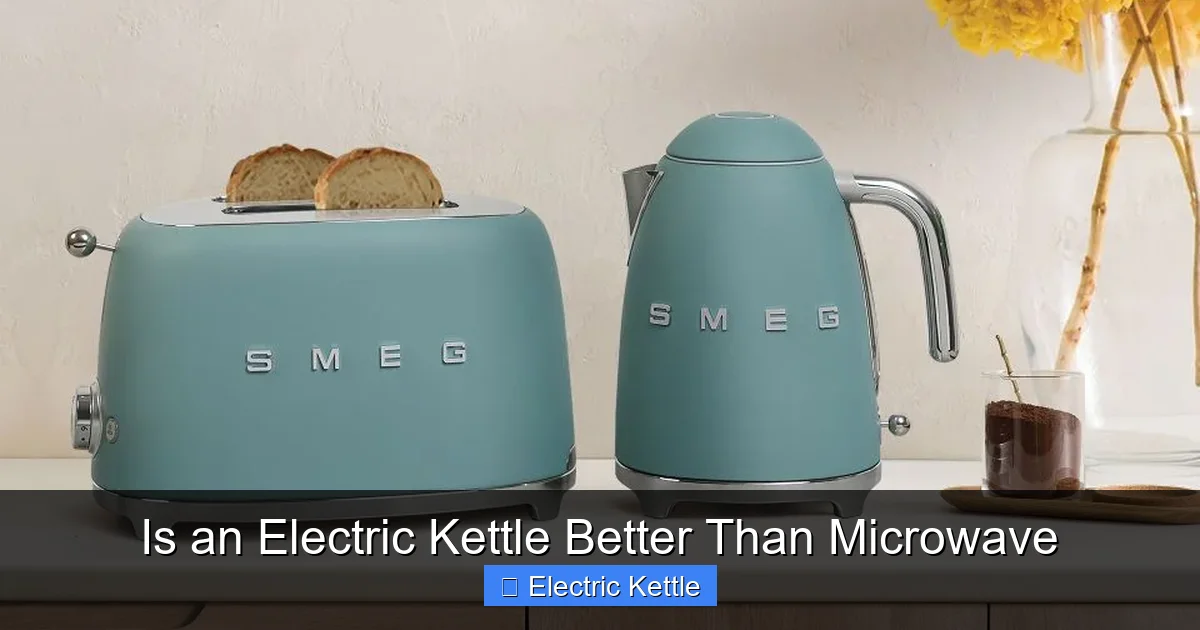
Visual guide about Is an Electric Kettle Better Than Microwave
Image source: smeg.com
When you’re craving a hot drink or need water for cooking, every second counts. So, which appliance wins the race?
Electric Kettle: The Speed Champion
Electric kettles are built for one job: boiling water—fast. Most standard models can bring a full liter of water to a boil in just 3 to 5 minutes. High-performance kettles with 1500–3000 watts of power can do it even quicker. That’s because the heating element is directly submerged in the water, transferring heat efficiently and evenly.
Imagine this: it’s 7 a.m., you’re half-awake, and you need coffee. You fill your kettle, press the button, and by the time you grab your mug and coffee grounds, the water is ready. No waiting. No guessing. Just hot water on demand.
Microwave: Slower and Less Predictable
Microwaves, on the other hand, heat water indirectly. They use electromagnetic waves to agitate water molecules, which generates heat. But this process isn’t as efficient—especially for larger volumes. A single cup of water might take 1.5 to 3 minutes, but a full liter could take 5 minutes or more. And here’s the catch: microwaves heat unevenly.
You’ve probably experienced this. You take your mug out, stir it, and suddenly it erupts in a mini geyser. That’s because some parts of the water got much hotter than others. This uneven heating means you often have to stop and stir multiple times, adding to the total time.
Real-World Example: Morning Rush
Let’s say you need two cups of hot water for tea. With an electric kettle, you fill it, press start, and in under 4 minutes, you’re pouring. With a microwave, you might spend 3 minutes heating, plus another minute stirring and waiting for it to cool slightly. Over time, those extra minutes add up—especially if you’re making multiple cups or reheating throughout the day.
Bottom line? If speed matters, the electric kettle wins—hands down.
Energy Efficiency: Which Uses Less Power?
We all want to save energy—and money. But which appliance is more efficient when it comes to boiling water?
Electric Kettle: The Energy Saver
Electric kettles are surprisingly energy-efficient. Because the heating element is in direct contact with the water, nearly all the energy goes into heating—not into the surrounding air. Studies show that electric kettles convert about 80–90% of their energy into heat, with minimal waste.
Let’s break it down: boiling one liter of water in an electric kettle typically uses around 0.1 kWh of electricity. That’s roughly 10–15 cents per boil, depending on your local rates. And since it’s so fast, it uses less total energy over time.
Microwave: Less Efficient for Water Heating
Microwaves are great for reheating food, but they’re not optimized for boiling water. They convert only about 50–60% of their energy into heat, with the rest lost as electromagnetic radiation or absorbed by the container. Plus, because microwaves heat unevenly, you often need to run them longer to ensure the water is fully hot.
For the same one-liter task, a microwave might use 0.15–0.2 kWh—up to 50% more energy than a kettle. Over a year, that difference adds up. If you boil water twice a day, you could be spending an extra $10–$15 annually just by using the microwave.
Environmental Impact
Using less energy doesn’t just save money—it’s better for the planet. Lower electricity consumption means fewer carbon emissions, especially if your power comes from fossil fuels. By choosing an electric kettle, you’re making a small but meaningful step toward a greener kitchen.
Tip: Use the Right Amount of Water
To maximize efficiency with either appliance, only heat the amount of water you need. Boiling a full kettle for one cup of tea wastes energy. Most kettles have minimum and maximum fill lines—stick to them. And in the microwave, use a microwave-safe container with room for expansion to avoid spills.
Safety: Which Is Safer to Use?
Safety might not be the first thing you think about when boiling water, but it should be. Both appliances have risks—but one is significantly safer than the other.
Electric Kettle: Built-In Safety Features
Modern electric kettles come with multiple safety mechanisms. Most have automatic shut-off when the water reaches boiling point, preventing overheating. Many also have boil-dry protection, which turns the kettle off if it’s empty or nearly empty. Some models even have cool-touch exteriors and secure lids to prevent burns.
These features make electric kettles very safe for everyday use. You can walk away while it boils, and it will turn off on its own. No need to stand by and monitor.
Microwave: The Risk of Superheating
Here’s a scary but real danger: superheating. This happens when water in a smooth container (like a glass or ceramic mug) heats beyond its boiling point without actually bubbling. When you disturb the water—by moving it, adding a tea bag, or stirring—it can erupt violently, spraying scalding water everywhere.
This isn’t just a theory. There are documented cases of people suffering severe burns from superheated water in microwaves. The risk is higher with distilled or very pure water, and in containers without scratches or imperfections (which help bubbles form).
Other Microwave Risks
– Container safety: Not all mugs are microwave-safe. Some can crack, leach chemicals, or even catch fire.
– Steam burns: When you remove a hot mug, steam can escape suddenly, burning your hands or face.
– Uneven heating: Hot spots can cause unexpected splashes when you stir.
Best Practices for Microwave Use
If you must use a microwave to heat water:
– Use a microwave-safe container with a rough interior (like a ceramic mug with texture).
– Place a wooden stir stick or microwave-safe object inside to promote bubbling.
– Heat in short intervals (30–60 seconds), stir between each.
– Let the water sit for 30 seconds before removing.
But honestly? Why take the risk when an electric kettle is safer, faster, and more reliable?
Taste and Quality: Does It Affect Your Beverages?
You might not think boiling water affects taste—but it does. And if you’re a tea or coffee lover, this could be a game-changer.
Electric Kettle: Preserves Flavor
Electric kettles heat water evenly and bring it to a full, rolling boil. This ensures consistent temperature, which is crucial for extracting the best flavors from tea leaves or coffee grounds. Many high-end kettles even offer variable temperature settings—perfect for delicate green teas that need lower temps (around 160–180°F) or French press coffee that needs near-boiling water.
When water is heated properly, it retains its natural minerals and oxygen content, which enhances taste. There’s no risk of scorching or overheating, which can give water a flat or metallic flavor.
Microwave: Can Alter Taste
Microwaves don’t heat water evenly. Some parts may be boiling while others are still cool. This inconsistency can lead to under-extraction (weak tea) or over-extraction (bitter coffee). Plus, the rapid, uneven heating can cause water to lose dissolved oxygen, making it taste “flat.”
Some people also report a slight “microwaved” taste—like the water was somehow altered. While this is subjective, it’s a common complaint among tea enthusiasts.
Example: Brewing the Perfect Cup
Let’s say you’re making a cup of oolong tea, which brews best at 195°F. With a temperature-controlled electric kettle, you can set it exactly. With a microwave, you’d have to guess, stir, and hope for the best. One method gives you precision; the other is a roll of the dice.
Even for simple black tea or instant coffee, the difference in water quality can affect the final flavor. If you care about taste, the electric kettle is the clear winner.
Convenience and Versatility
Both appliances are convenient—but in different ways. Let’s see how they stack up.
Electric Kettle: Simple and Reliable
Electric kettles are incredibly user-friendly. Fill, press, pour. No buttons to program, no timers to set. Most have clear water level indicators, so you know exactly how much to add. Many models are cordless, making them easy to carry to the sink or table.
They’re also versatile. Use them for:
– Tea and coffee
– Instant soups and oatmeal
– Baby formula
– Sterilizing bottles or utensils
– Cooking pasta or eggs (in some models)
Some advanced kettles even have keep-warm functions, so your water stays hot for up to an hour.
Microwave: Multi-Purpose but Limited for Water
Microwaves are great for reheating leftovers, defrosting, or cooking simple meals. But when it comes to boiling water, they’re less convenient. You need to choose the right container, monitor the time, stir, and wait. And if you’re heating multiple cups, you’ll need to do it one at a time.
Plus, microwaves take up more counter space and require more maintenance (cleaning spills, replacing turntables, etc.). And if your microwave breaks, it’s a bigger hassle than replacing a kettle.
Space and Maintenance
Electric kettles are compact and easy to store. Many have detachable bases and cord storage. Cleaning is simple—just wipe the exterior and descale the interior occasionally with vinegar.
Microwaves, especially built-in models, are harder to move and clean. Grease and food splatters can build up, and the interior can be tricky to reach.
Tip: Choose a Kettle with a Filter
If you live in an area with hard water, look for a kettle with a built-in limescale filter. It helps keep your water tasting fresh and extends the life of your appliance.
Cost and Longevity: Which Is a Better Investment?
Let’s talk money. Which appliance gives you more bang for your buck?
Electric Kettle: Affordable and Durable
Basic electric kettles start around $20, with high-end models reaching $80–$100. But even the pricier ones are a great value. They’re built to last—many come with 1–3 year warranties, and with proper care, they can work for 5–10 years.
The cost per use is extremely low. At 10 cents per boil, you’d need to use it 200 times to pay for a $20 kettle. Most people use it daily, so it pays for itself in weeks.
Microwave: Higher Upfront and Long-Term Costs
Microwaves cost more—anywhere from $50 for a basic model to $300+ for a high-end one. And they’re not designed specifically for boiling water. If you’re using your microwave primarily for that, you’re underutilizing it and potentially shortening its lifespan.
Plus, microwaves have more complex parts (magnetron, turntable motor, control board) that can fail. Repairs are expensive, and replacement is often cheaper than fixing.
Long-Term Value
An electric kettle is a dedicated tool for a common task. It’s efficient, reliable, and long-lasting. A microwave is a multi-purpose appliance—but not the best tool for boiling water. If you already own a microwave, that’s great. But if you’re choosing between buying a kettle or relying solely on the microwave for hot water, the kettle is the smarter investment.
Conclusion: The Electric Kettle Wins
So, is an electric kettle better than a microwave for boiling water? The answer is a resounding yes.
Electric kettles are faster, more energy-efficient, safer, and produce better-tasting water. They’re simple to use, easy to maintain, and built to last. While microwaves have their place in the kitchen, they’re not optimized for heating water—and using them for that purpose comes with risks and inefficiencies.
If you drink tea, coffee, or instant meals regularly, an electric kettle will save you time, money, and hassle. It’s a small appliance with a big impact on your daily routine.
Of course, you don’t have to ditch your microwave. It’s still great for reheating leftovers or cooking quick meals. But for boiling water? Let the kettle do what it does best.
Make the switch. Your taste buds—and your safety—will thank you.
Frequently Asked Questions
Can I boil water in a microwave safely?
Yes, but it comes with risks like superheating, which can cause sudden eruptions of boiling water. It’s safer to use a microwave-safe container with a rough interior and heat in short intervals while stirring.
Do electric kettles use a lot of electricity?
No, electric kettles are very energy-efficient. They use about 0.1 kWh per boil, which costs just a few cents. They’re actually more efficient than microwaves for heating water.
Can I use an electric kettle for anything besides tea and coffee?
Absolutely! Electric kettles are great for instant soups, oatmeal, baby formula, sterilizing bottles, and even cooking small meals like eggs or pasta in some models.
Why does microwaved water sometimes taste different?
Microwaves heat water unevenly and can reduce dissolved oxygen, leading to a “flat” taste. Electric kettles heat water more evenly, preserving its natural flavor and mineral content.
How often should I clean my electric kettle?
Clean your kettle every 1–2 months, or more often if you have hard water. Use a mixture of vinegar and water to descale the interior and remove limescale buildup.
Are temperature-controlled kettles worth the extra cost?
Yes, especially if you drink different types of tea or coffee. Precise temperature control ensures optimal flavor extraction and prevents bitterness from overheating delicate leaves.