An electric kettle is generally more energy efficient than stovetop kettles or microwaves because it heats water directly and quickly with minimal heat loss. It uses only the energy needed to boil the exact amount of water, making it a smart, eco-friendly choice for daily use.
Key Takeaways
- Electric kettles heat water faster than stovetop kettles or microwaves, reducing overall energy consumption.
- They use targeted heating elements that transfer energy directly to water, minimizing wasted heat.
- Boiling only the water you need prevents overuse and saves energy compared to heating a full kettle unnecessarily.
- Modern electric kettles often include insulation and auto-shutoff features that improve efficiency and safety.
- They consume less electricity per boil than gas stoves or electric cooktops when boiling the same amount of water.
- Choosing an energy-efficient model with good insulation and precise temperature control can further reduce power usage.
- Regular maintenance, like descaling, keeps your kettle running efficiently over time.
📑 Table of Contents
- Is an Electric Kettle More Energy Efficient? The Truth Behind the Boil
- How Electric Kettles Work: The Science of Efficient Heating
- Comparing Energy Use: Electric Kettle vs. Stovetop and Microwave
- Factors That Affect Electric Kettle Efficiency
- Environmental Impact: Is an Electric Kettle Greener?
- Tips to Maximize Your Electric Kettle’s Efficiency
- Conclusion: Yes, Electric Kettles Are More Energy Efficient
Is an Electric Kettle More Energy Efficient? The Truth Behind the Boil
If you’ve ever stood over a whistling stovetop kettle, waiting impatiently for your morning tea, you’ve probably wondered: is there a better way? Enter the electric kettle—a sleek, modern appliance that promises faster boiling and quieter operation. But beyond convenience, many people are now asking a more important question: Is an electric kettle more energy efficient?
The short answer? Yes—most of the time. Electric kettles are designed to heat water quickly and with minimal energy waste. Unlike stovetop kettles, which lose heat to the surrounding air and the stove surface, electric kettles transfer energy directly into the water through a submerged heating element. This direct transfer means less energy is lost in the process, making them inherently more efficient.
But efficiency isn’t just about how fast something boils. It’s also about how much energy is used to achieve that result. When you compare electric kettles to other common methods—like using a gas stove, electric cooktop, or even a microwave—electric kettles often come out on top in terms of energy use per boil. They’re especially efficient when you only need a small amount of hot water, like for a single cup of tea or instant coffee.
In this article, we’ll dive deep into the science of energy efficiency, compare different heating methods, and help you understand exactly why electric kettles are often the greener, smarter choice. Whether you’re trying to lower your electricity bill, reduce your carbon footprint, or just make your kitchen routine a little smoother, understanding how your kettle uses energy can make a big difference.
How Electric Kettles Work: The Science of Efficient Heating
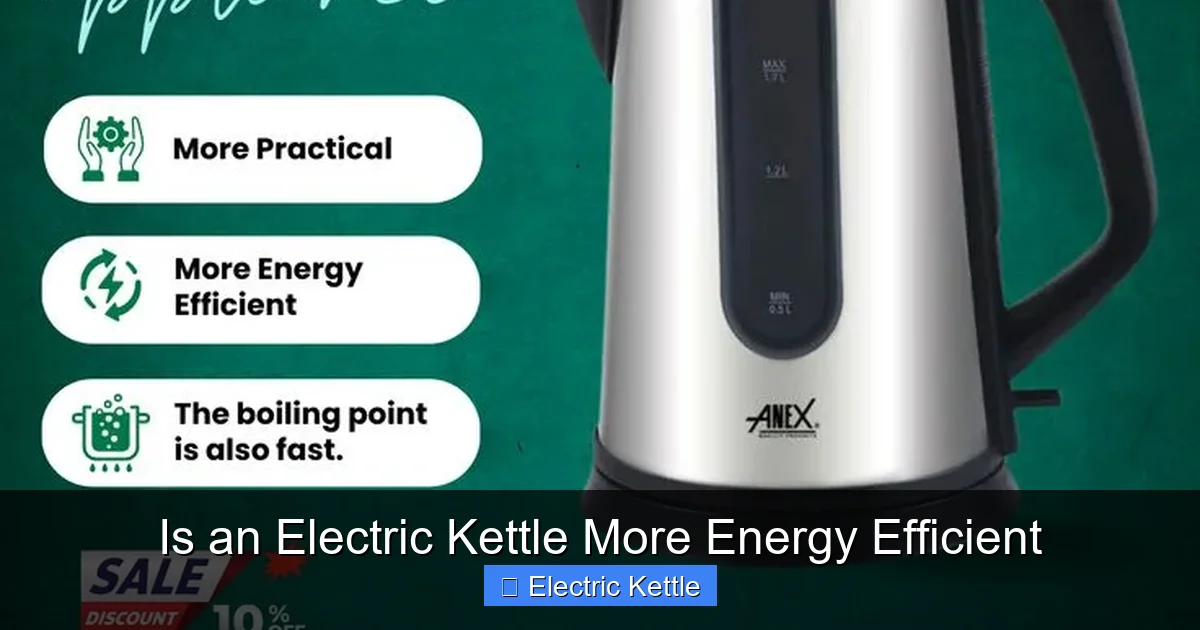
Visual guide about Is an Electric Kettle More Energy Efficient
Image source: i.pinimg.com
To understand why electric kettles are energy efficient, it helps to know how they work. At the heart of every electric kettle is a heating element—usually a coiled metal wire located at the base of the appliance. When you plug in the kettle and turn it on, electricity flows through this element, causing it to heat up rapidly. Because the element is submerged in water (or very close to it), the heat transfers directly into the liquid with minimal loss.
This direct transfer is key to efficiency. Unlike a gas flame or electric coil on a stovetop, which heats the bottom of a metal kettle and then transfers that heat to the water—losing energy to the air and the pot itself—an electric kettle’s heating element is in constant contact with the water. There’s no middleman. The energy goes straight from the electricity to the water, making the process faster and more efficient.
Direct vs. Indirect Heating
Let’s break it down: stovetop kettles use indirect heating. The flame or electric coil heats the metal of the kettle, and that metal then heats the water. Each step in this chain introduces energy loss. Heat escapes into the air, the stove surface stays hot long after use, and the kettle itself absorbs and radiates heat. Studies have shown that up to 30% of the energy used on a gas stove can be lost to the surrounding environment.
Electric kettles, on the other hand, use direct heating. The element is inside the water chamber, so nearly all the energy goes into heating the liquid. This means less wasted heat and faster boiling times. For example, a typical electric kettle can boil one liter of water in about 3 to 4 minutes, while a stovetop kettle might take 5 to 7 minutes, depending on the heat source.
Insulation and Auto-Shutoff Features
Modern electric kettles often come with features that boost efficiency even further. Many models are designed with double-walled insulation or heat-retaining lids that help keep water hot longer after boiling. This means you don’t need to reboil water as often, saving energy over time.
Another energy-saving feature is the auto-shutoff function. Once the water reaches boiling point (usually around 100°C or 212°F), the kettle automatically turns off. This prevents over-boiling, which not only wastes energy but can also damage the appliance or create safety hazards. Some advanced models even allow you to set specific temperatures for different beverages—like 80°C for green tea or 90°C for French press coffee—so you’re not overheating the water unnecessarily.
Comparing Energy Use: Electric Kettle vs. Stovetop and Microwave
Now that we understand how electric kettles work, let’s compare their energy use to other common methods of heating water. The goal is simple: which method uses the least electricity (or gas) to boil the same amount of water?
Electric Kettle vs. Gas Stove
Gas stoves are popular for their instant heat and control, but they’re not the most efficient way to boil water. When you light a gas burner, only about 40% to 55% of the energy actually goes into heating the water. The rest is lost to the air around the flame and the stove surface. This means you’re paying for more gas than you’re actually using.
In contrast, electric kettles convert about 80% to 90% of their electrical energy into heat that goes directly into the water. That’s a significant improvement. For example, boiling one liter of water on a gas stove might use the equivalent of 0.1 kWh of energy, while an electric kettle uses around 0.08 kWh for the same task. Over time, that difference adds up—especially if you boil water multiple times a day.
Electric Kettle vs. Electric Cooktop
Electric cooktops are more efficient than gas stoves but still lag behind electric kettles. A typical electric coil or smooth-top stove transfers about 70% to 75% of its energy to the water. The rest is lost to the air and the cooktop surface, which stays hot long after you’ve turned it off.
Electric kettles, again, come out ahead with 80% to 90% efficiency. They also heat water faster. For instance, a 1500-watt electric kettle can boil a liter of water in about 3 minutes, while a 1500-watt electric cooktop might take 5 to 6 minutes due to heat loss. Faster boiling means less time the appliance is running, which translates to lower energy use.
Electric Kettle vs. Microwave
Microwaves are often seen as a quick fix for heating water, but they’re surprisingly inefficient for this purpose. Microwaves heat water by exciting water molecules with electromagnetic waves, but they don’t heat evenly. You often end up with hot spots and cold zones, which means you may need to stir or reheat the water—using more energy.
Additionally, microwaves are designed to heat food, not water. They use more power than necessary for simple boiling tasks. A typical microwave uses about 1000 to 1500 watts, but only about 50% to 60% of that energy actually goes into heating the water. The rest is lost to the magnetron (the part that generates microwaves) and the cavity of the oven.
In comparison, an electric kettle uses its full power output efficiently. A 1500-watt electric kettle uses nearly all of that energy to heat water, making it a much better choice for boiling.
Real-World Example: Daily Energy Use
Let’s say you boil water three times a day—once for coffee, once for tea, and once for instant noodles. Here’s how the energy use might break down:
– Electric kettle: 0.08 kWh per boil × 3 = 0.24 kWh/day
– Gas stove: 0.1 kWh equivalent × 3 = 0.3 kWh/day
– Electric cooktop: 0.09 kWh × 3 = 0.27 kWh/day
– Microwave: 0.12 kWh × 3 = 0.36 kWh/day
Over a month, that’s a difference of nearly 3.6 kWh between the electric kettle and the microwave. At an average electricity rate of $0.13 per kWh, that’s about $0.47 in savings per month—or over $5 per year. Not a fortune, but it adds up, especially if you live in a household with multiple people boiling water daily.
Factors That Affect Electric Kettle Efficiency
While electric kettles are generally efficient, not all models are created equal. Several factors can influence how much energy your kettle uses and how efficiently it performs.
Kettle Capacity and Water Volume
One of the biggest factors is how much water you’re boiling. Electric kettles are most efficient when you boil only the amount of water you need. If you fill a 1.7-liter kettle to the top but only need one cup (about 250 ml), you’re wasting energy heating water you won’t use.
For example, boiling a full kettle might take 4 minutes and use 0.1 kWh, while boiling just one cup might take 1 minute and use only 0.025 kWh. That’s a 75% reduction in energy use for the same task. To maximize efficiency, always measure the water you need—many kettles have markings inside to help with this.
Heating Element Design
The type and placement of the heating element also matter. Kettles with concealed elements (where the heating coil is hidden under a stainless steel plate) tend to be more efficient than those with exposed elements. Concealed elements reduce scaling and allow for better heat transfer, which means faster boiling and less energy waste.
Some high-end models use rapid-boil technology or optimized coil designs that heat water even more efficiently. Look for kettles with high wattage (1500W or more) for faster boiling, but remember that higher wattage doesn’t always mean higher efficiency—it’s about how well the energy is used.
Insulation and Material
The material of the kettle affects how well it retains heat. Stainless steel kettles are durable and conduct heat well, but they can lose heat quickly if not insulated. Plastic kettles are lighter and often cheaper, but they may not retain heat as effectively.
Look for kettles with double-wall insulation or vacuum-sealed bases. These features help keep water hot longer after boiling, reducing the need to reboil. Some models even have “keep warm” functions that maintain temperature for up to 30 minutes using minimal energy.
Temperature Control and Smart Features
Advanced electric kettles often include variable temperature settings. Instead of boiling water to 100°C every time, you can select a lower temperature for delicate teas or coffee. This not only preserves flavor but also saves energy. For example, heating water to 80°C uses about 20% less energy than boiling it to 100°C.
Smart kettles with app connectivity or timers can also improve efficiency. You can schedule boiling times or monitor usage, helping you avoid unnecessary boils. Some models even track your energy consumption and suggest ways to reduce it.
Maintenance and Descaling
Over time, mineral deposits (scale) can build up inside your kettle, especially if you live in an area with hard water. This scale acts as an insulator, reducing heat transfer and making the kettle work harder to boil water. As a result, it uses more energy and takes longer to heat.
Regular descaling—using vinegar or a commercial descaling solution—can restore efficiency. Most manufacturers recommend descaling every 1 to 3 months, depending on water hardness. A well-maintained kettle will always perform better and use less energy.
Environmental Impact: Is an Electric Kettle Greener?
Energy efficiency isn’t just about saving money—it’s also about reducing your environmental footprint. The less energy you use, the fewer greenhouse gases are emitted, especially if your electricity comes from fossil fuels.
Carbon Footprint Comparison
Let’s look at the carbon impact of boiling water. In the U.S., the average carbon intensity of electricity is about 0.4 kg of CO₂ per kWh. Using our earlier example:
– Electric kettle: 0.24 kWh/day × 0.4 kg = 0.096 kg CO₂/day
– Gas stove: 0.3 kWh equivalent × 0.2 kg CO₂/kWh (for natural gas) = 0.06 kg CO₂/day
Wait—doesn’t that mean gas is better? Not so fast. While gas has a lower carbon intensity per kWh, it’s also less efficient. When you account for the higher energy use, the total emissions can be similar or even higher over time. Plus, gas stoves release methane, a potent greenhouse gas, during combustion and leaks.
Electric kettles, especially when powered by renewable energy (like solar or wind), have a much lower carbon footprint. If your home uses green energy, your electric kettle could be nearly carbon-neutral.
Longevity and Waste
Another environmental factor is product lifespan. Electric kettles typically last 3 to 5 years with proper care. Cheaper models may fail sooner, contributing to electronic waste. Choosing a durable, repairable kettle from a reputable brand can reduce waste and improve long-term sustainability.
Some companies now offer kettles with replaceable parts, like cords or heating elements, which extend the product’s life. Look for models with good warranties and eco-friendly certifications, such as Energy Star (though few kettles are currently certified, the principles apply).
Tips to Maximize Your Electric Kettle’s Efficiency
Even the most efficient appliance can waste energy if used poorly. Here are some practical tips to get the most out of your electric kettle:
Boil Only What You Need
This is the #1 rule for energy efficiency. Instead of filling the kettle to the top, measure the water you actually need. Use the markings inside the kettle or a measuring cup. Boiling excess water wastes energy and increases your electricity bill.
Use Fresh, Cold Water
Always start with cold water from the tap. Hot water from the tap may contain more minerals and can encourage scaling. Plus, it’s not always truly hot—using cold water ensures consistent boiling times and better efficiency.
Keep the Lid On
Never boil water with the lid off. The lid traps heat and steam, helping the water reach boiling point faster. Removing the lid increases heat loss and extends boiling time.
Descale Regularly
As mentioned earlier, mineral buildup reduces efficiency. Clean your kettle every few months with a mixture of vinegar and water. Let it sit for an hour, then rinse thoroughly.
Unplug When Not in Use
Even when off, some kettles draw a small amount of standby power. Unplugging the kettle when not in use eliminates this “phantom load” and saves a tiny bit of energy over time.
Choose the Right Kettle
If you’re in the market for a new kettle, look for one with:
– High efficiency (concealed element, good insulation)
– Variable temperature settings
– Auto-shutoff and boil-dry protection
– A capacity that matches your typical use (e.g., 1.0L for small households)
Avoid oversized kettles if you usually only boil small amounts. A smaller kettle will heat water faster and use less energy.
Conclusion: Yes, Electric Kettles Are More Energy Efficient
So, is an electric kettle more energy efficient? The evidence is clear: yes, especially when compared to stovetop kettles, microwaves, and electric cooktops. Electric kettles heat water faster, use less energy per boil, and waste less heat thanks to direct heating and smart design features.
They’re not just convenient—they’re a smart choice for your wallet and the planet. By boiling only the water you need, maintaining your kettle, and choosing an efficient model, you can maximize these benefits even further.
Whether you’re brewing your morning coffee, making instant oatmeal, or preparing a cup of herbal tea, an electric kettle helps you do it with less energy and more ease. In a world where energy costs are rising and environmental concerns are growing, small changes like switching to an electric kettle can make a meaningful difference.
So next time you hear that familiar click and whistle, take a moment to appreciate not just the hot water—but the energy you’ve saved in getting it.
Frequently Asked Questions
Is an electric kettle more energy efficient than a gas stove?
Yes, electric kettles are generally more energy efficient than gas stoves. They convert 80–90% of electrical energy into heat for the water, while gas stoves lose 40–60% of energy to the air and stove surface.
Does boiling a full kettle waste energy?
Yes, boiling more water than you need wastes energy. Always measure the amount you’ll actually use to maximize efficiency and reduce electricity consumption.
Can I save money by using an electric kettle?
Yes, using an electric kettle can lower your energy bills over time. It uses less electricity per boil than stovetops or microwaves, especially when you boil only the water you need.
Do electric kettles use a lot of electricity?
No, electric kettles are relatively low-energy appliances. A typical 1500W kettle uses about 0.08 kWh to boil one liter of water—equivalent to running a 100W light bulb for less than an hour.
How often should I descale my electric kettle?
Descaling every 1 to 3 months is recommended, depending on water hardness. Regular descaling maintains efficiency and extends the kettle’s lifespan.
Are plastic electric kettles less efficient than stainless steel?
Not necessarily. Efficiency depends more on the heating element and insulation than the material. However, stainless steel kettles often retain heat better and are more durable over time.