Choosing between an electric kettle and a microwave for heating water depends on your priorities. Electric kettles are faster, more energy-efficient, and preserve better taste—especially for tea and coffee—while microwaves offer convenience for small amounts but can overheat or unevenly heat water.
Key Takeaways
- Speed: Electric kettles boil water significantly faster than microwaves, often in under 3 minutes.
- Energy Efficiency: Kettles use less energy to heat the same amount of water, making them more eco-friendly and cost-effective.
- Temperature Control: Many electric kettles offer precise temperature settings, ideal for different types of tea and coffee.
- Safety: Kettles are designed with automatic shut-off and boil-dry protection, reducing risks compared to microwaving water.
- Taste & Quality: Water heated in a kettle maintains better flavor, while microwaved water can develop a flat or metallic taste.
- Convenience: Microwaves are better for reheating small amounts or when you don’t have a kettle, but kettles win for consistent performance.
- Durability & Maintenance: Electric kettles are built for repeated boiling and are easier to clean than microwave interiors.
📑 Table of Contents
- Is Electric Kettle Better Than Microwave? A Complete Guide to Heating Water
- How Do Electric Kettles and Microwaves Work?
- Speed: Which Heats Water Faster?
- Energy Efficiency: Which Uses Less Power?
- Taste and Water Quality: Does It Matter?
- Safety: Which Is Safer to Use?
- Convenience and Versatility
- Maintenance and Longevity
- Final Verdict: Is Electric Kettle Better Than Microwave?
Is Electric Kettle Better Than Microwave? A Complete Guide to Heating Water
Let’s face it—boiling water is something most of us do multiple times a day. Whether it’s for morning coffee, afternoon tea, instant noodles, or sterilizing baby bottles, we all need hot water. But how we get it can make a big difference. Two of the most common appliances used for this task are the electric kettle and the microwave. Both get the job done, but which one is truly better?
The answer isn’t always black and white. It depends on what you value most: speed, taste, energy use, safety, or convenience. Some people swear by their electric kettle for its speed and precision, while others rely on the microwave because it’s already in the kitchen and doesn’t take up extra counter space. But when you dig deeper, the electric kettle often comes out on top—especially if you care about the quality of your hot drinks or want to save on electricity.
In this article, we’ll break down the pros and cons of each method, compare them across key factors like speed and energy efficiency, and help you decide which appliance deserves a permanent spot in your kitchen. Whether you’re a tea enthusiast, a busy parent, or just someone trying to make smarter choices at home, this guide will give you the facts you need.
How Do Electric Kettles and Microwaves Work?
Electric Kettle: Simple, Direct Heating
An electric kettle is a straightforward appliance designed specifically for boiling water. It consists of a heating element (usually hidden under a stainless steel or plastic base), a water reservoir, and often a lid with a spout. When you plug it in and press the button, electricity flows through the heating element, which rapidly heats up and transfers that heat directly to the water.
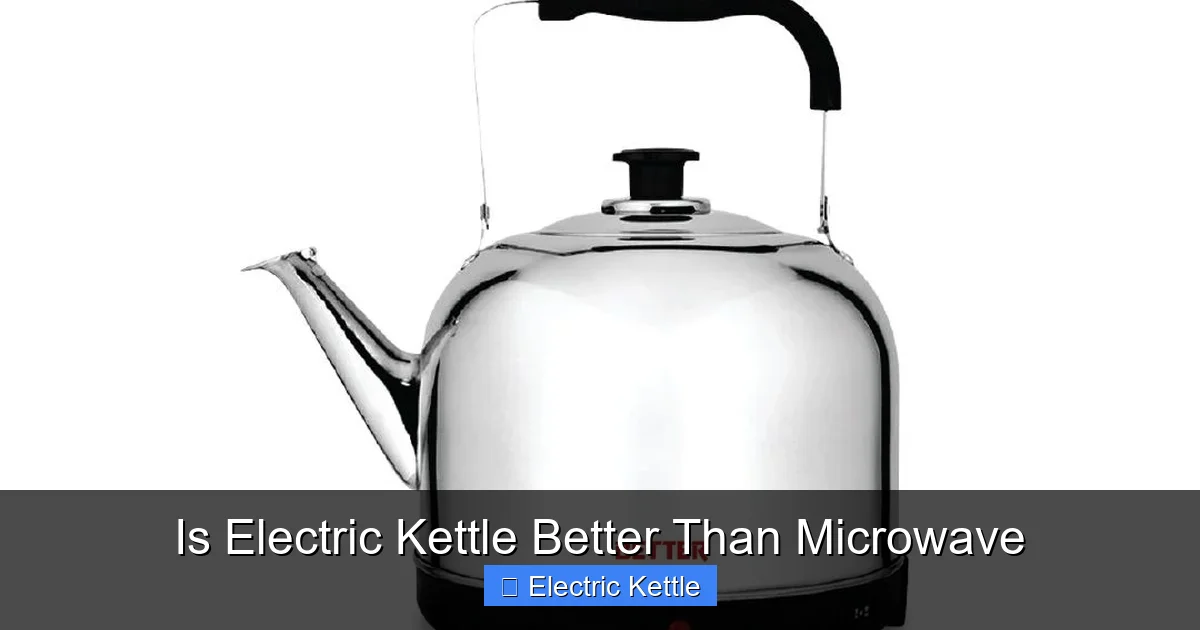
Visual guide about Is Electric Kettle Better Than Microwave
Image source: sukumart.com
Most modern electric kettles are fully automatic. Once the water reaches boiling point (100°C or 212°F at sea level), the kettle shuts off on its own. Many also come with features like keep-warm functions, variable temperature settings, and boil-dry protection. Because the heating element is in direct contact with the water, the process is fast and efficient.
Microwave: Indirect Heating with Waves
A microwave oven, on the other hand, uses electromagnetic waves (microwaves) to heat food and liquids. These waves cause water molecules in the substance to vibrate, creating friction and heat. Unlike a kettle, the microwave doesn’t heat the water directly—it heats the container, which then transfers heat to the water.
This indirect method has some drawbacks. Microwaves heat unevenly, meaning some parts of the water may become superheated (above boiling point without bubbling), while others remain cooler. This can lead to sudden boiling when disturbed—a dangerous phenomenon known as “bumping.” Also, microwaves are designed for general cooking, not specifically for boiling water, so they’re less optimized for this task.
Design Differences Matter
The design of each appliance reflects its purpose. Electric kettles are built for one job: heating water quickly and safely. Microwaves are multi-functional, handling everything from reheating leftovers to defrosting meat. While versatility is great, it means microwaves aren’t as efficient when it comes to boiling water.
For example, a typical electric kettle can boil 1 liter of water in 2–3 minutes. A microwave might take 4–6 minutes for the same amount—and that’s if you’re careful to avoid overheating. Plus, you need a microwave-safe container, which adds another step and another item to clean.
Speed: Which Heats Water Faster?
Electric Kettle: The Speed Champion
When it comes to speed, the electric kettle wins hands down. Most kettles can bring a full liter of water to a boil in under three minutes. High-performance models can do it in as little as 90 seconds. This is because the heating element is submerged or directly beneath the water, allowing for rapid and consistent heat transfer.
Let’s say you’re making tea in the morning. With an electric kettle, you fill it, press a button, and in two minutes, you’re pouring hot water over your tea bag. No waiting, no guessing. Some kettles even have a “quick boil” mode for smaller amounts, which saves even more time.
Microwave: Slower and Less Predictable
Microwaves are slower for boiling water. On average, it takes about 4 to 6 minutes to heat 1 liter of water in a microwave, depending on the wattage and the container used. Lower-wattage microwaves (600–800W) will take longer, while higher-wattage models (1000W+) might get close to kettle speeds—but still not as fast.
Even then, microwaves don’t heat water evenly. You might find that the top layer is scalding hot while the bottom is still lukewarm. To avoid this, you need to stir the water halfway through, which adds extra time and effort. And if you forget to place a microwave-safe object (like a wooden stick or stirrer) in the cup, you risk superheating—where water suddenly erupts when moved.
Real-World Example: Morning Routine
Imagine you’re rushing out the door and need hot water for coffee. With an electric kettle, you can have boiling water in under 3 minutes. With a microwave, you’re looking at 5–6 minutes, plus the time to find a safe container and stir the water. Over a week, that’s an extra 20–30 minutes spent waiting—time you could’ve used to enjoy your coffee sooner.
For frequent users—like tea drinkers or office workers—this time difference adds up. The electric kettle isn’t just faster; it’s more reliable. You know exactly how long it will take, every time.
Energy Efficiency: Which Uses Less Power?
Electric Kettle: Designed for Efficiency
Electric kettles are among the most energy-efficient appliances in the kitchen. They convert nearly all the electricity they use into heat, with minimal loss. Because the heating element is in direct contact with the water, there’s little wasted energy.
Studies show that electric kettles use about 20–30% less energy than microwaves to boil the same amount of water. For example, boiling 1 liter of water in a kettle might use around 0.1 kWh, while a microwave could use 0.13–0.15 kWh. Over time, this difference can lead to noticeable savings on your electricity bill.
Additionally, many modern kettles have features that enhance efficiency. Some automatically shut off when boiling is complete, preventing unnecessary energy use. Others allow you to boil only the amount of water you need, reducing waste.
Microwave: Less Efficient for Water Heating
Microwaves are less efficient when used solely for boiling water. Because they heat the container first and rely on indirect heating, more energy is lost in the process. The microwave also uses energy to power the magnetron (the part that generates microwaves), which isn’t 100% efficient.
Moreover, microwaves often require longer heating times, which means more electricity consumed. If you’re heating a small amount of water—say, one cup—the difference might seem negligible. But if you’re doing it multiple times a day, the inefficiency adds up.
Environmental Impact
Choosing the more energy-efficient option isn’t just good for your wallet—it’s better for the planet. Lower energy consumption means fewer greenhouse gas emissions, especially if your electricity comes from fossil fuels. By using an electric kettle instead of a microwave for boiling water, you’re making a small but meaningful step toward a greener lifestyle.
For eco-conscious households, this is a compelling reason to switch. Even if you already own a microwave, investing in an electric kettle can reduce your overall energy footprint.
Taste and Water Quality: Does It Matter?
Electric Kettle: Preserves Flavor
If you’re a tea or coffee lover, the way your water is heated can significantly affect the taste of your drink. Electric kettles heat water evenly and bring it to a consistent boil, which helps extract the best flavors from tea leaves and coffee grounds.
Many high-end kettles also offer variable temperature control. This means you can set the water to the ideal temperature for different types of tea—green tea at 70–80°C, black tea at 90–100°C, and so on. Overheating delicate teas can make them bitter, while underheating won’t release their full flavor. With a kettle, you get precision.
Microwave: Risk of Flat or Metallic Taste
Microwaved water can sometimes develop a flat or slightly metallic taste. This happens because microwaves heat water unevenly and can cause localized overheating. When water is superheated and then disturbed, it can release dissolved gases in a sudden burst, altering the taste.
Additionally, if you use a plastic or low-quality container in the microwave, chemicals from the material can leach into the water, especially when heated. Even microwave-safe containers can impart a slight odor or taste over time.
Practical Tip: Taste Test
Try this simple experiment: Boil the same amount of water using both methods. Let both cool slightly, then brew the same type of tea in each. Most people can taste the difference—water from the kettle usually produces a cleaner, more vibrant flavor.
For coffee, the difference is even more noticeable. Baristas and coffee experts almost always recommend using a kettle for pour-over or French press methods, as it allows for better control over water temperature and flow.
Safety: Which Is Safer to Use?
Electric Kettle: Built-In Safety Features
Electric kettles are designed with safety in mind. Most models include automatic shut-off when the water reaches boiling point, preventing overheating. Many also have boil-dry protection, which turns off the kettle if it’s turned on without water—a common cause of damage or fire.
The enclosed design minimizes the risk of burns. You’re less likely to spill boiling water compared to handling a hot mug from the microwave. Plus, kettles often have cool-touch exteriors and secure lids, reducing accidents.
Microwave: Potential Hazards
Microwaving water comes with unique risks. Superheating is the biggest concern—water can become dangerously hot without appearing to boil. When you remove the cup and add a tea bag or stir it, the water can erupt violently, causing severe burns.
To prevent this, always place a non-metallic object (like a wooden stirrer or chopstick) in the cup before heating. This provides nucleation sites for bubbles to form, reducing the risk of superheating. Still, it’s an extra step that many people forget.
There’s also the risk of using the wrong container. Metal objects can cause sparks, and some plastics release harmful chemicals when heated. Even microwave-safe containers can warp or crack over time.
Child Safety
If you have young children, an electric kettle with a secure lid and automatic shut-off is generally safer than a microwave. Kids are less likely to accidentally superheat water or spill a hot container. Some kettles even have child-lock features for added peace of mind.
Convenience and Versatility
Microwave: Great for Small Amounts and Reheating
The microwave shines when you need to heat a small amount of water quickly—like for a single cup of tea or to dissolve sugar in a recipe. It’s also unbeatable for reheating soups, sauces, or leftovers. If you don’t own a kettle or are in a pinch, the microwave is a reliable backup.
Plus, microwaves take up less counter space. If you’re in a small apartment or dorm room, you might not want another appliance cluttering your kitchen.
Electric Kettle: Consistency and Ease of Use
Once you get used to an electric kettle, it becomes second nature. Fill, press, pour. No need to watch the timer or stir halfway through. Many kettles also have water level indicators, so you only boil what you need.
Some models even have keep-warm functions, so your water stays hot for up to an hour. This is great for households where multiple people need hot water throughout the day.
Which Fits Your Lifestyle?
If you drink tea or coffee daily, an electric kettle is a worthwhile investment. It’s faster, safer, and produces better-tasting results. But if you only need hot water occasionally, or you’re short on space, the microwave might suffice.
For most people, though, the benefits of an electric kettle outweigh the convenience of using a microwave. It’s a small appliance that makes a big difference in daily routines.
Maintenance and Longevity
Cleaning an Electric Kettle
Electric kettles are relatively easy to clean. Most have removable lids and wide openings, making it simple to wipe the interior. To remove limescale (common in hard water areas), use a mixture of vinegar and water, let it sit, then rinse thoroughly.
With proper care, a good-quality kettle can last 5–10 years. Stainless steel models tend to be more durable than plastic ones, which can absorb odors or degrade over time.
Microwave Maintenance
Microwaves require regular cleaning, especially if you frequently heat liquids. Spills can harden and become difficult to remove. The turntable and interior walls need wiping after each use to prevent buildup.
While microwaves last a long time (10–15 years on average), using them for boiling water doesn’t add wear and tear—but it does add to the cleaning workload.
Cost Comparison
Electric kettles range from $20 to $100, depending on features. Basic models are affordable and effective, while premium kettles offer temperature control, quiet operation, and sleek designs. Given their longevity and efficiency, they’re a smart buy.
Microwaves are more expensive ($50–$300), but you’re likely already using one for other purposes. If you’re choosing between buying a kettle or relying on your microwave, the kettle is the more cost-effective option for boiling water.
Final Verdict: Is Electric Kettle Better Than Microwave?
After comparing speed, energy use, taste, safety, and convenience, the answer is clear: the electric kettle is generally better than the microwave for boiling water. It’s faster, more efficient, safer, and produces better-tasting results—especially for hot beverages.
That doesn’t mean the microwave is useless. It’s still great for reheating food and heating small amounts of water in a pinch. But if you’re serious about your tea, coffee, or daily hot water needs, an electric kettle is the superior choice.
Think of it this way: would you use a screwdriver to hammer a nail? It might work, but it’s not the right tool. The electric kettle is the right tool for boiling water. It’s designed for the job, and it does it exceptionally well.
So, if you don’t already own one, consider adding an electric kettle to your kitchen. It’s a small change that can make your mornings smoother, your drinks tastier, and your energy bills lower. And if you do have one, maybe it’s time to give it the spotlight it deserves.
Frequently Asked Questions
Can I boil water in a microwave safely?
Yes, but with caution. Always use a microwave-safe container and place a non-metallic object (like a wooden stirrer) inside to prevent superheating. Never heat water for too long, and let it sit for a moment before handling.
Does microwaved water taste different?
Some people notice a flat or slightly metallic taste in microwaved water, especially if it’s superheated or heated in a plastic container. Electric kettles generally produce better-tasting water for tea and coffee.
Are electric kettles energy efficient?
Yes, electric kettles are highly energy efficient. They use about 20–30% less energy than microwaves to boil the same amount of water and often have automatic shut-off features to save power.
Can I use an electric kettle for anything besides water?
Most electric kettles are designed for water only. Avoid putting milk, soup, or other liquids in them, as they can damage the heating element or leave stubborn residues. Some specialty kettles are made for broth or baby formula, but check the manual first.
How often should I clean my electric kettle?
Clean your kettle every 1–2 weeks, especially if you live in a hard water area. Use a vinegar-water solution to remove limescale buildup and rinse thoroughly to maintain performance and taste.
Is it safe to leave water in an electric kettle?
It’s best to empty the kettle after each use. Stagnant water can promote bacterial growth and mineral buildup. If you need hot water frequently, consider a model with a keep-warm function instead.