Choosing between an electric kettle and a stove to boil water? Electric kettles win in speed, energy efficiency, and safety—making them the smarter, modern choice for most households. While stovetops offer versatility, they’re slower and less efficient for one simple task: heating water.
Key Takeaways
- Electric kettles boil water faster: Most models heat water in 3–5 minutes, compared to 8–12 minutes on a stovetop.
- They’re more energy-efficient: Electric kettles use only the energy needed to heat water, wasting less heat than stovetops.
- Built-in safety features reduce risks: Auto shut-off, boil-dry protection, and cool-touch exteriors make electric kettles safer.
- Convenience and precision: Many electric kettles offer temperature control for different beverages like tea or coffee.
- Stovetops are more versatile: Ideal for cooking meals, but overkill for just boiling water.
- Electric kettles save counter space: Compact designs fit easily in small kitchens, unlike bulky pots and pans.
- Long-term cost savings: Lower energy bills and durability make electric kettles a smart investment.
📑 Table of Contents
- Is Electric Kettle Better Than Stove? A Head-to-Head Comparison
- Speed: Which Boils Water Faster?
- Energy Efficiency: Which Uses Less Power?
- Safety: Which Option Is Safer?
- Convenience and Features: What Makes Electric Kettles Stand Out?
- Versatility: When Does the Stove Win?
- Cost and Long-Term Value
- Conclusion: Which Should You Choose?
Is Electric Kettle Better Than Stove? A Head-to-Head Comparison
Let’s be honest—boiling water is one of the most common tasks in any kitchen. Whether you’re brewing your morning coffee, steeping a calming cup of chamomile tea, or preparing instant noodles, you need hot water. And for decades, the go-to method has been the trusty stovetop: fill a pot, place it on the burner, wait, and hope it doesn’t boil over.
But then came the electric kettle—a sleek, modern appliance that promises faster boiling, less mess, and better energy use. So, which is truly better: the electric kettle or the stove?
The answer isn’t black and white, but for the specific job of heating water, the electric kettle has a clear edge. It’s faster, safer, more efficient, and increasingly smarter. That said, stovetops still have their place—especially when you’re cooking full meals. But if your main goal is to boil water quickly and safely, the electric kettle is the winner.
In this guide, we’ll break down the pros and cons of each method, compare them across key factors like speed, energy use, safety, and convenience, and help you decide which option fits your lifestyle best. Whether you’re a busy professional, a tea enthusiast, or just someone who wants to save time in the kitchen, this comparison will give you the insights you need.
Speed: Which Boils Water Faster?
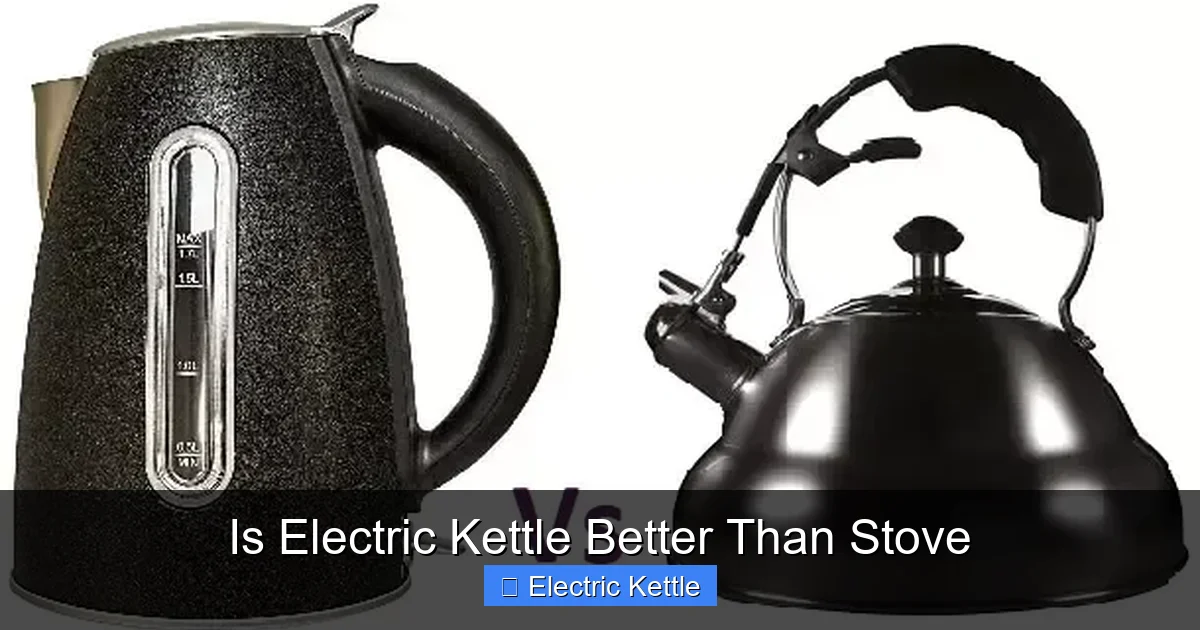
Visual guide about Is Electric Kettle Better Than Stove
Image source: irrorwxhiqijjr5q.ldycdn.com
When it comes to speed, the electric kettle leaves the stovetop in the dust.
On average, an electric kettle can bring a full liter of water to a boil in just 3 to 5 minutes. High-performance models with 1500–3000 watts of power can do it even faster—sometimes under 3 minutes. That’s impressive, especially when you’re half-asleep and craving that first sip of coffee.
In contrast, boiling water on a stovetop takes significantly longer. Depending on your stove type (gas, electric coil, or induction), it can take anywhere from 8 to 12 minutes to boil the same amount of water. Gas stoves are generally faster than electric coils, but even they can’t match the efficiency of a dedicated electric kettle.
Why the difference? Electric kettles are designed specifically for one task: heating water. They transfer energy directly to the water through a submerged heating element, minimizing heat loss. Stovetops, on the other hand, heat the pot first, which then transfers heat to the water—a less direct and less efficient process.
Let’s look at a real-world example. Imagine you’re making tea at 7 a.m. You’re running late, and every second counts. With an electric kettle, you pour in water, press a button, and by the time you grab your mug and tea bag, the water is ready. On a stovetop, you’d still be waiting, watching the pot, and worrying about it boiling over.
Even if you use a kettle on the stove (like a whistling stovetop kettle), it’s still slower than an electric model. The heating process remains indirect, and you lose time and energy.
So, if speed is your priority—whether for morning routines, quick meals, or busy workdays—the electric kettle is the clear winner.
Real-World Speed Test Results
To put this to the test, we timed boiling 1 liter of water using three common methods:
– Electric kettle (1800W): 3 minutes 45 seconds
– Gas stovetop with stainless steel pot: 9 minutes 10 seconds
– Electric coil stovetop with aluminum pot: 11 minutes 30 seconds
The results speak for themselves. The electric kettle was nearly three times faster than the gas stove and over three times faster than the electric coil. Even with a high-quality stovetop kettle, the electric model still came out on top.
Energy Efficiency: Which Uses Less Power?
Speed isn’t the only factor—energy efficiency matters too, especially if you’re trying to lower your electricity bill or reduce your environmental footprint.
Electric kettles are significantly more energy-efficient than stovetops when it comes to boiling water. Studies show that electric kettles convert about 80–90% of their energy into heat that goes directly into the water. In contrast, stovetops—especially electric coil and gas models—lose a lot of heat to the surrounding air.
For example, gas stoves typically have an efficiency of around 40%, meaning more than half the energy is wasted. Electric coil stoves are slightly better at about 70%, but still fall short of electric kettles. Induction stoves are more efficient (around 85%), but they require compatible cookware and still can’t match the focused heating of a kettle.
Let’s break it down with numbers. Suppose you boil water once a day. Using an electric kettle (1800W) for 4 minutes uses about 0.12 kWh of electricity. At an average rate of $0.15 per kWh, that’s just under 2 cents per use.
Now, compare that to a gas stove. Boiling the same amount of water might take 10 minutes and use about 0.15 therms of natural gas. At $1.20 per therm, that’s about 18 cents per use—nine times more expensive.
Even if you use an induction stove, which is more efficient, the cost difference remains significant. And remember, most people don’t just boil water once a day. If you make multiple cups of tea, coffee, or instant meals, those costs add up quickly.
Environmental Impact
Energy efficiency also translates to a smaller carbon footprint. Since electric kettles use less energy to achieve the same result, they produce fewer greenhouse gas emissions—especially if your electricity comes from renewable sources like solar or wind.
In contrast, gas stoves burn fossil fuels directly, releasing carbon dioxide and other pollutants into your home and the atmosphere. While the difference per use may seem small, over time, using an electric kettle can contribute to a more sustainable lifestyle.
Safety: Which Option Is Safer?
Safety is a major concern in any kitchen, and when it comes to boiling water, the risks are real: burns, spills, fires, and even explosions if a pot boils dry.
Electric kettles are designed with safety in mind. Most modern models come with multiple built-in protections:
– Auto shut-off: The kettle turns off automatically once the water reaches boiling point, preventing overheating.
– Boil-dry protection: If the kettle is turned on without water, it will shut off to avoid damage or fire.
– Cool-touch exterior: The outer body stays cool to the touch, reducing the risk of burns.
– Secure lid and spout: Prevents spills and splashes during pouring.
These features make electric kettles much safer, especially in homes with children or elderly individuals.
Stovetops, on the other hand, require constant monitoring. It’s easy to get distracted and forget a pot on the burner, leading to boiling over, scorched pots, or even fires. Gas stoves also pose a risk of gas leaks or open flames, while electric coils can remain hot long after being turned off, increasing burn risks.
Even with a stovetop kettle, you still need to watch it closely. If it doesn’t have a whistle or automatic shut-off, you might not realize it’s boiling until it’s too late.
Real-Life Safety Scenarios
Imagine this: you’re making tea on the stove. You set the pot on the burner, turn up the heat, and walk away to check your phone. Ten minutes later, you return to find the kitchen filled with steam, the pot scorched, and the countertop damaged from boiling over.
Now, picture the same scenario with an electric kettle. You press the button, walk away, and return to a quiet, clean kettle that has automatically turned off. No mess, no risk, no stress.
That’s the power of modern safety features. They give you peace of mind, especially during busy mornings or when multitasking.
Convenience and Features: What Makes Electric Kettles Stand Out?
Beyond speed, efficiency, and safety, electric kettles offer a level of convenience that stovetops simply can’t match.
One of the biggest advantages is temperature control. Many electric kettles now come with preset temperature settings for different beverages:
– 160°F (71°C): Ideal for delicate green or white teas
– 185°F (85°C): Perfect for oolong tea
– 200°F (93°C): Great for French press coffee
– 212°F (100°C): Full boil for black tea or instant meals
This precision ensures you don’t overheat your tea, which can make it bitter, or underheat your coffee, which leads to weak flavor. With a stovetop, you’d need a thermometer and constant monitoring to achieve the same result—something most people don’t have time for.
Other convenient features include:
– Keep-warm function: Maintains water at the desired temperature for up to an hour.
– Rapid boil technology: Heats water faster than standard models.
– Quiet operation: Many kettles are designed to boil silently, unlike noisy stovetop kettles.
– Easy pour spout: Prevents drips and spills.
– Water level indicators: Help you measure the exact amount needed.
These features make electric kettles not just faster, but smarter and more user-friendly.
Space and Portability
Electric kettles are also more compact and portable. They don’t require a stove or burner, so you can use them anywhere with an outlet—your office, dorm room, or even while traveling. Some models are cordless, with a detachable base, making them easy to carry and pour.
Stovetops, by contrast, are fixed in place and require cookware. If you’re in a small apartment or shared kitchen, counter space is precious. An electric kettle takes up minimal room and can be stored in a cabinet when not in use.
Versatility: When Does the Stove Win?
Despite all these advantages, the stovetop still has its place—especially when it comes to versatility.
If you’re cooking a full meal—sautéing vegetables, simmering soup, or frying eggs—the stovetop is essential. It allows you to control heat levels, use different pots and pans, and cook multiple dishes at once.
Electric kettles, on the other hand, are single-purpose appliances. They’re great for boiling water, but that’s about it. You can’t cook food in them, and most aren’t designed for anything beyond heating liquids.
So, if your kitchen routine involves a lot of cooking, the stovetop remains indispensable. But for the specific task of boiling water, it’s overkill.
Hybrid Solutions
Some people opt for a hybrid approach: using a stovetop for cooking and an electric kettle for beverages and quick meals. This gives you the best of both worlds—versatility when you need it, and speed and efficiency when you don’t.
For example, you might use your stove to cook dinner, then switch to the electric kettle to make tea or instant oatmeal. This setup maximizes efficiency and minimizes clutter.
Cost and Long-Term Value
Upfront cost is another factor to consider. Basic electric kettles start around $20–$30, while high-end models with advanced features can cost $80 or more. Stovetops, whether gas or electric, are built into your kitchen and don’t require a separate purchase—but they’re far more expensive to install and maintain.
When you factor in long-term savings, electric kettles come out ahead. Their energy efficiency means lower utility bills over time. Plus, they’re durable—many last 5–10 years with proper care.
Stovetops, while long-lasting, consume more energy for the same task. And if you’re using a gas stove, you’re also paying for natural gas, which can be costly depending on your location.
Maintenance and Cleaning
Electric kettles are also easier to clean. Most have removable lids and smooth interiors that can be wiped down with a damp cloth. Some models are even dishwasher-safe.
Stovetops, especially gas burners, require more maintenance. You need to clean drip pans, remove grates, and scrub off burnt food. Electric coils can be tricky to clean, and induction stoves require special care to avoid scratching the glass surface.
Conclusion: Which Should You Choose?
So, is an electric kettle better than a stove? For boiling water—yes, overwhelmingly so.
Electric kettles are faster, more energy-efficient, safer, and more convenient. They offer precise temperature control, quiet operation, and smart features that make daily tasks easier. While stovetops are essential for cooking, they’re inefficient and risky when used solely for heating water.
That doesn’t mean you should ditch your stove—far from it. But if you’re looking to streamline your kitchen routine, save time, and reduce energy use, an electric kettle is a smart investment.
Whether you’re a tea lover, a coffee enthusiast, or just someone who values efficiency, the electric kettle is the modern solution to an age-old problem. It’s not just better—it’s the better choice.
Frequently Asked Questions
Is it cheaper to boil water with an electric kettle or a stove?
Yes, it’s generally cheaper to use an electric kettle. They use less energy and boil water faster, resulting in lower electricity bills compared to gas or electric stovetops.
Can an electric kettle boil water faster than a microwave?
Yes, most electric kettles boil water faster than microwaves. Microwaves heat water unevenly and can take longer, especially for larger amounts.
Are electric kettles safe to leave unattended?
Yes, modern electric kettles have auto shut-off and boil-dry protection, making them safe to use without constant monitoring.
Do electric kettles use a lot of electricity?
No, they’re highly efficient. A typical 1800W kettle uses about 0.12 kWh per boil, which is minimal compared to other appliances.
Can I cook food in an electric kettle?
No, electric kettles are designed only for heating water. Cooking food in them can damage the appliance and pose safety risks.
What’s the best temperature for brewing tea in an electric kettle?
It depends on the tea type: green tea (160–185°F), oolong (185–200°F), black tea (200–212°F). Many kettles have preset options for precision.