Choosing between an electric kettle and a gas stove to boil water? The answer isn’t always obvious. While electric kettles are faster and more energy-efficient, the actual cost depends on your local energy prices, usage habits, and appliance efficiency. This guide breaks down the numbers so you can decide what’s truly cheaper for your home.
Key Takeaways
- Electric kettles are generally more energy-efficient than gas stoves, converting over 80% of energy into heat, compared to gas’s 40-55% efficiency.
- Boiling water on gas may seem cheaper per unit, but inefficiencies and heat loss often make electric kettles more cost-effective over time.
- Electric kettles boil water faster, reducing energy waste and saving time—especially useful in busy households.
- Initial cost vs. long-term savings: Electric kettles are affordable upfront and lead to lower energy bills with regular use.
- Environmental impact favors electric if your electricity comes from renewable sources, making it a greener choice.
- Usage frequency matters: Frequent users (3+ times daily) will see greater savings with electric kettles.
- Safety and convenience are added perks—electric kettles auto-shut off and reduce kitchen clutter.
📑 Table of Contents
- Is Electric Kettle Cheaper Than Gas? A Complete Cost Comparison
- Understanding Energy Costs: Electricity vs. Gas
- Speed Matters: Time Is Money (and Energy)
- Long-Term Costs: Appliance Lifespan and Maintenance
- Environmental Impact: Beyond the Dollar Sign
- When Gas Might Be Cheaper (And When It’s Not)
- Practical Tips to Save Money (No Matter Which You Use)
- Conclusion: So, Is an Electric Kettle Cheaper Than Gas?
Is Electric Kettle Cheaper Than Gas? A Complete Cost Comparison
If you’ve ever stood in your kitchen, kettle in hand, wondering whether to plug in the electric kettle or fire up the gas stove, you’re not alone. It’s a common dilemma: which method is truly cheaper for boiling water? At first glance, gas might seem like the economical choice—after all, natural gas is often cheaper per unit than electricity. But the real answer isn’t that simple.
The truth is, cost isn’t just about the price of energy. It’s also about efficiency, speed, usage patterns, and long-term savings. An electric kettle might use more expensive electricity, but it heats water faster and wastes less energy. A gas stove might have cheaper fuel, but it loses a lot of heat to the surrounding air. So which one wins in the battle of the boil?
In this detailed guide, we’ll break down the costs, compare energy efficiency, and help you decide whether an electric kettle is cheaper than gas for your household. Whether you’re a tea lover, a coffee enthusiast, or just someone who wants to save a few bucks on your utility bill, this article will give you the facts—no jargon, no fluff.
Understanding Energy Costs: Electricity vs. Gas
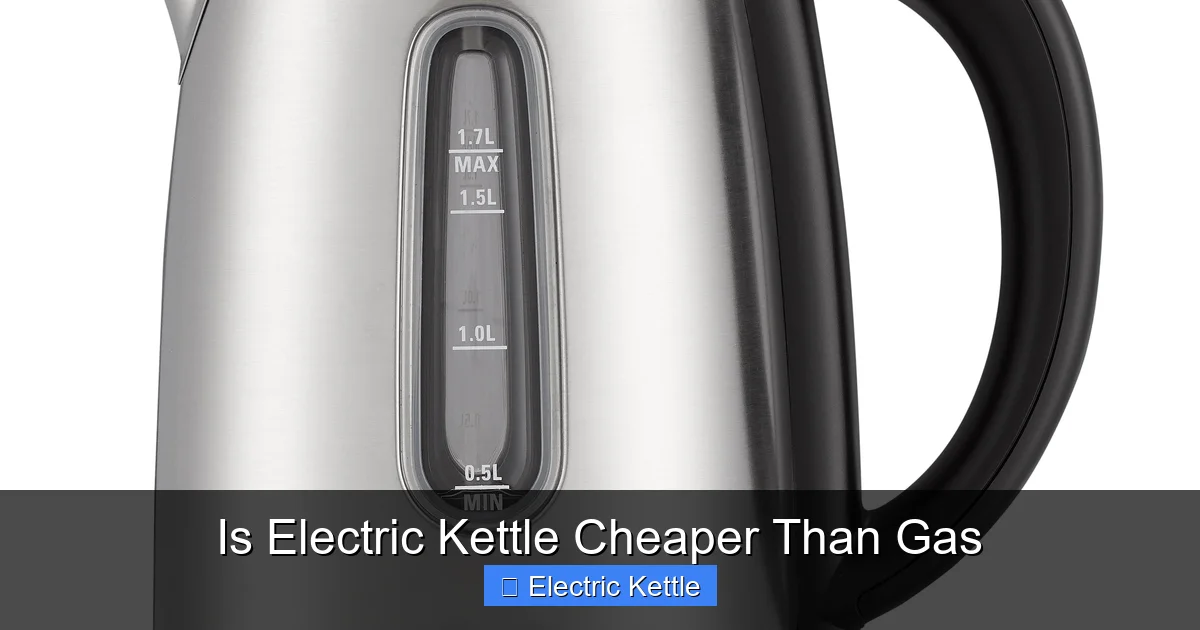
Visual guide about Is Electric Kettle Cheaper Than Gas
Image source: i5.walmartimages.com
Before we dive into kettles and stovetops, let’s talk about the basics: how much does it actually cost to boil water using electricity versus gas?
In most countries, electricity is priced per kilowatt-hour (kWh), while natural gas is billed per therm or per cubic meter (depending on your region). As of 2024, the average cost of electricity in the U.S. is around $0.15 per kWh, while natural gas averages about $1.20 per therm (which is roughly equivalent to 29.3 kWh of energy).
At first glance, gas seems cheaper—$1.20 for 29.3 kWh versus $0.15 per kWh for electricity. But here’s the catch: not all that energy actually goes into heating your water. In fact, a lot of it is lost.
How Much Energy Does It Take to Boil Water?
To boil one liter (about 4 cups) of water from room temperature (20°C or 68°F) to boiling (100°C or 212°F), you need approximately 0.1 kWh of energy. This is a standard calculation based on the specific heat capacity of water.
So, theoretically, boiling one liter of water should cost:
– Electricity: 0.1 kWh × $0.15 = $0.015 (1.5 cents)
– Gas: 0.1 kWh equivalent = 0.0034 therms × $1.20 = $0.004 (0.4 cents)
Wait—does that mean gas is cheaper? Not so fast.
The Efficiency Factor: Why Real-World Costs Differ
The numbers above assume 100% efficiency, which doesn’t exist in real life. Appliances lose energy in the form of heat, steam, and radiation.
Electric kettles are highly efficient—typically converting 80% to 90% of the electrical energy into heat that goes directly into the water. That means only 10–20% is lost.
Gas stoves, on the other hand, are far less efficient. Studies show that only about 40% to 55% of the heat from a gas flame actually transfers to the pot. The rest is lost to the air around the burner.
So, to deliver 0.1 kWh of useful heat to the water:
– An electric kettle needs: 0.1 kWh ÷ 0.85 (85% efficiency) = 0.118 kWh
– A gas stove needs: 0.1 kWh ÷ 0.45 (45% efficiency) = 0.222 kWh
Now let’s recalculate the real cost:
– Electric: 0.118 kWh × $0.15 = $0.0177 (about 1.8 cents)
– Gas: 0.222 kWh equivalent = 0.0076 therms × $1.20 = $0.0091 (about 0.9 cents)
Hmm—gas still seems cheaper? But wait, there’s more.
Speed Matters: Time Is Money (and Energy)
One of the biggest advantages of electric kettles is speed. A typical electric kettle can boil 1 liter of water in 2 to 3 minutes. A gas stove takes 5 to 8 minutes, depending on the flame and pot size.
Why does this matter for cost? Because the longer something runs, the more energy it uses—even if it’s inefficient.
Let’s say you boil water 3 times a day. Over a month, that’s 90 boils. Using our earlier numbers:
– Electric: 90 × $0.0177 = $1.59 per month
– Gas: 90 × $0.0091 = $0.82 per month
Gas still looks cheaper—by about 77 cents per month. But this doesn’t account for something important: standby losses and user behavior.
Heat Loss and User Habits
When you boil water on a gas stove, you often use a larger pot than necessary, which increases surface area and heat loss. You might also leave the flame on longer than needed, or forget to turn it off. These small inefficiencies add up.
Electric kettles, by contrast, are designed to heat only the water inside. They have insulated walls, automatic shut-off, and precise temperature controls. There’s no open flame, no wasted heat, and no risk of over-boiling.
Moreover, many people boil more water than they need on the stove—“just in case.” Electric kettles often have minimum fill lines, encouraging users to boil only what they need.
Real-World Example: A Week in the Life of a Tea Drinker
Let’s say Sarah drinks 4 cups of tea every morning. She boils 1 liter of water each time.
– With an electric kettle: 2.5 minutes per boil, 7 days = 17.5 minutes per week
– With a gas stove: 6 minutes per boil, 7 days = 42 minutes per week
That’s 24.5 extra minutes of gas burning every week—over 20 hours per year. Even at a low gas rate, that’s wasted energy and money.
And if Sarah occasionally boils extra water “just in case,” the gas usage climbs even higher.
Long-Term Costs: Appliance Lifespan and Maintenance
When comparing costs, it’s not just about energy—it’s also about the appliances themselves.
Initial Purchase Price
Electric kettles are surprisingly affordable. You can find a reliable model for $20 to $50. High-end kettles with temperature control and keep-warm features might cost $80–$120, but even those are a one-time investment.
Gas stoves, on the other hand, are part of your kitchen setup. If you already have a gas stove, there’s no extra cost. But if you’re choosing between electric and gas appliances, gas stoves and gas lines can be expensive to install—especially if your home isn’t already set up for gas.
Lifespan and Durability
A good electric kettle can last 5 to 10 years with proper care. The main wear points are the heating element and the lid mechanism. Many models have replaceable parts or warranties.
Gas stoves are built to last decades, but the burners and igniters can wear out. Cleaning is also more involved—spills can clog gas ports, and soot builds up over time.
Maintenance and Repairs
Electric kettles require minimal maintenance: occasional descaling (especially in hard water areas) and wiping down the exterior. Descaling takes 10 minutes and costs a few cents in vinegar or commercial solution.
Gas stoves need regular cleaning to prevent flare-ups and ensure even flames. If a burner stops working, repairs can cost $50–$150, depending on the issue.
Energy Price Trends
It’s also worth considering how energy prices might change. Electricity prices have been rising, but so have gas prices. In some regions, electricity is becoming cheaper due to solar and wind power. In others, gas prices are volatile due to supply issues.
If you live in an area with rising electricity costs, gas might seem more stable. But if you have solar panels or access to green energy, electric kettles become even more cost-effective.
Environmental Impact: Beyond the Dollar Sign
Cost isn’t the only factor. Many people also care about their environmental footprint.
Carbon Emissions
Burning natural gas releases carbon dioxide (CO₂), a greenhouse gas. While cleaner than coal or oil, it still contributes to climate change.
Electricity’s environmental impact depends on how it’s generated. If your grid uses coal, electric kettles aren’t great. But if your electricity comes from renewables (solar, wind, hydro), then electric kettles are nearly carbon-free.
In many countries, the grid is getting greener every year. So even if your electricity isn’t 100% clean today, it likely will be in the future.
Energy Waste and Efficiency
Electric kettles waste less energy overall. That means less demand on power plants, fewer emissions, and a smaller environmental footprint—even if the electricity isn’t perfectly clean.
Gas stoves, while efficient in some cooking tasks, are notoriously inefficient for boiling water. All that wasted heat doesn’t just cost money—it also increases your home’s carbon footprint.
Sustainability Tips
If you want to minimize impact:
– Use an electric kettle powered by renewable energy.
– Boil only the water you need.
– Descale regularly to maintain efficiency.
– Choose energy-efficient models with good insulation.
When Gas Might Be Cheaper (And When It’s Not)
So far, it seems like electric kettles have the edge. But there are situations where gas might still be the cheaper option.
Rural Areas with Low Gas Prices
In some rural areas, natural gas is extremely cheap—sometimes under $0.80 per therm. If you live in such a region and already have a gas stove, boiling water on gas could cost less than using an electric kettle.
But remember: efficiency still matters. Even with cheap gas, the stove’s low efficiency means you’re still wasting more than half the energy.
Infrequent Use
If you only boil water once or twice a week, the cost difference is negligible—less than $5 per year. In that case, convenience might matter more than cost.
But if you’re a daily tea or coffee drinker, the savings from an electric kettle add up quickly.
Off-Grid or Emergency Situations
If you’re camping or living off-grid with a propane stove, gas might be your only option. But for everyday home use, electric kettles are usually the better choice.
Practical Tips to Save Money (No Matter Which You Use)
Whether you choose electric or gas, you can reduce costs with smart habits:
Boil Only What You Need
Filling a kettle or pot with more water than necessary wastes energy. Use a measuring cup or kettle with clear markings to boil just the right amount.
Use the Right-Sized Pot
On a gas stove, match the pot size to the burner. A small pot on a large flame wastes heat. A large pot takes longer to boil.
Cover the Pot
A lid traps heat and speeds up boiling. On gas, this can reduce boiling time by 30–50%. On electric kettles, most models are already covered, but make sure the lid is closed.
Descale Regularly
Mineral buildup (scale) insulates the heating element, making your kettle or stove work harder. Descale every 1–3 months, depending on water hardness.
Use Residual Heat
On a gas stove, turn off the flame a minute before the water boils. The residual heat will finish the job. With electric kettles, many models have a “keep warm” function—use it instead of reboiling.
Upgrade to an Energy-Efficient Model
If your electric kettle is over 5 years old, consider replacing it. Newer models are more efficient and often have better insulation and faster heating.
Conclusion: So, Is an Electric Kettle Cheaper Than Gas?
After crunching the numbers, the answer is clear: **for most households, an electric kettle is cheaper than gas over time**—especially if you boil water frequently.
While gas has a lower per-unit energy cost, its inefficiency, slower boiling time, and higher heat loss mean you end up using more energy overall. Electric kettles, though slightly more expensive per kWh, convert energy into heat far more effectively. They’re faster, safer, and more convenient.
The real savings come with regular use. If you boil water 3 or more times a day, an electric kettle can save you $10–$20 per year on energy bills. Over 5 years, that’s $50–$100—enough to pay for the kettle several times over.
Plus, you get added benefits: automatic shut-off, precise temperature control, and less kitchen clutter. And if you’re environmentally conscious, electric kettles (especially with green energy) are the greener choice.
Of course, if you live in an area with very cheap gas and rarely boil water, gas might still be the cheaper option. But for the average home, the electric kettle wins on cost, efficiency, and convenience.
So next time you reach for the kettle, feel good about your choice. You’re not just making tea—you’re making a smart, sustainable decision.
Frequently Asked Questions
Is it cheaper to boil water with an electric kettle or gas stove?
Generally, yes—electric kettles are cheaper for frequent use due to higher efficiency and faster boiling. Gas may seem cheaper per unit, but energy loss makes it less cost-effective over time.
How much does it cost to boil water with an electric kettle?
Boiling 1 liter of water costs about 1.5 to 2 cents with an electric kettle, depending on local electricity rates and kettle efficiency.
Does an electric kettle use a lot of electricity?
No. A typical electric kettle uses about 0.1 kWh per boil—less than a microwave or toaster. Over a month, daily use adds only $1–$2 to your bill.
Can I save money by using a gas stove instead?
Only if you use it infrequently and have very low gas prices. For daily use, electric kettles are usually more economical due to better efficiency.
Are electric kettles better for the environment?
Yes, especially if your electricity comes from renewable sources. They waste less energy and produce fewer emissions than gas stoves.
How often should I descale my electric kettle?
Descale every 1–3 months if you have hard water. Use vinegar or a commercial descaler to maintain efficiency and extend the kettle’s life.