Yes, an electric kettle is generally faster than a stove when boiling water. Thanks to higher wattage, direct heating, and better energy transfer, electric kettles can boil water in half the time or less compared to stovetop methods. Whether you’re making tea, coffee, or instant noodles, speed and efficiency make the electric kettle a kitchen essential.
Key Takeaways
- Electric kettles boil water faster: Most electric kettles can boil a full liter in 3–5 minutes, while stovetop kettles often take 8–12 minutes.
- Higher wattage equals quicker heating: Electric kettles typically run on 1500–3000 watts, far more than most stovetop burners.
- Energy efficiency favors electric kettles: They use less energy overall because heat is directed straight to the water with minimal loss.
- Stovetop methods vary by heat source: Gas stoves may heat faster than electric coils, but still lag behind dedicated electric kettles.
- Convenience and safety add value: Auto shut-off, temperature control, and cordless designs make electric kettles safer and easier to use.
- Best for small to medium volumes: Electric kettles excel at boiling 1–2 liters; larger quantities may require multiple batches.
- Perfect for quick meals and beverages: Ideal for tea, coffee, oatmeal, and instant soups when time matters.
📑 Table of Contents
- Is Electric Kettle Faster Than Stove? The Ultimate Showdown
- How Electric Kettles Work: The Science of Speed
- Stovetop Boiling: How It Compares
- Boiling Time: Electric Kettle vs. Stove (Head-to-Head)
- Energy Efficiency: Which Uses Less Power?
- Convenience, Safety, and Modern Features
- When Might a Stovetop Kettle Be Better?
- Tips to Maximize Boiling Speed
- Final Verdict: Which Should You Choose?
Is Electric Kettle Faster Than Stove? The Ultimate Showdown
Let’s be honest—waiting for water to boil on the stove can feel like watching paint dry. You turn on the burner, place the kettle, and stare at it, wondering if it’s even working. Meanwhile, your coffee craving grows stronger by the second. That’s when you start asking: *Is an electric kettle faster than a stove?*
The short answer? Yes—most of the time. But the real story is a bit more nuanced. It depends on the type of stove, the kettle you’re using, the amount of water, and even your kitchen setup. Still, in the battle of boiling speed, electric kettles usually come out on top. They’re designed specifically for one job—heating water quickly—and they do it with impressive efficiency.
In this guide, we’ll dive deep into why electric kettles are generally faster, how they compare to different stovetop methods, and what factors influence boiling time. We’ll also look at energy use, convenience, and real-world examples so you can decide which method works best for your lifestyle. Whether you’re a tea lover, a busy parent, or just someone who hates waiting, this comparison will help you make the smartest choice.
How Electric Kettles Work: The Science of Speed
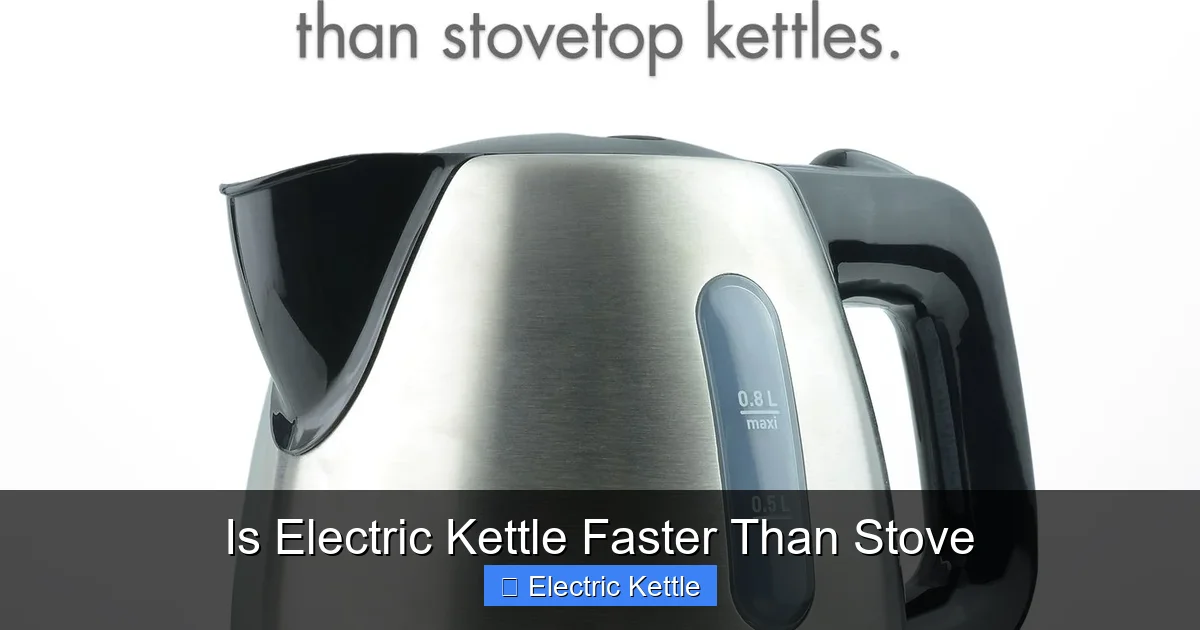
Visual guide about Is Electric Kettle Faster Than Stove
Image source: i.pinimg.com
To understand why electric kettles are faster, it helps to know how they work. Unlike stovetop kettles that rely on an external heat source, electric kettles have a built-in heating element—usually at the base—that directly heats the water inside. This direct contact means less energy is lost to the air or the surrounding environment.
When you plug in an electric kettle and flip the switch, electricity flows through the heating element, which gets extremely hot—often reaching temperatures well over 200°F (93°C) in seconds. Because the element is submerged or in direct contact with the water, heat transfers efficiently. There’s no waiting for a burner to heat up or for the kettle to absorb heat gradually.
Most modern electric kettles operate at 1500 to 3000 watts. For comparison, a typical stovetop burner on an electric range might max out at 1200–1800 watts. That higher wattage means more power delivered directly to the water, resulting in faster boiling times. Even gas stoves, which heat quickly, can’t match the focused energy of a dedicated electric kettle.
Another advantage? Electric kettles are often made with materials like stainless steel or heat-resistant plastic that conduct and retain heat well. Some models also feature insulated walls, which help maintain temperature and reduce heat loss. All of this adds up to a device that’s optimized for one task: boiling water as fast as possible.
Key Features That Boost Speed
- High wattage: More watts mean more heat, faster.
- Direct heating element: No middleman—heat goes straight into the water.
- Sealed design: Minimizes heat escape, keeping the interior hot.
- Automatic shut-off: Prevents overheating and saves energy once boiling is reached.
- Temperature control (in advanced models): Lets you heat water to precise levels, avoiding unnecessary boiling.
So, if speed is your priority, the electric kettle’s engineering gives it a clear edge.
Stovetop Boiling: How It Compares
Now let’s look at the competition: stovetop boiling. This method has been around for centuries and is still widely used. But how does it stack up against the modern electric kettle?
Stovetop kettles—whether made of stainless steel, glass, or ceramic—rely on an external heat source. On a gas stove, a flame heats the bottom of the kettle. On an electric coil or induction stove, the burner heats up and transfers that heat to the kettle. In both cases, there’s a delay: the burner must heat up first, then the kettle, and only then does the water begin to warm.
This indirect heating process is inherently slower. Heat is lost to the air around the kettle, and not all of the burner’s energy reaches the water. Even on a high flame, a stovetop kettle may take 8 to 12 minutes to boil a full liter of water. That’s significantly longer than most electric kettles, which can do the same job in 3 to 5 minutes.
Gas vs. Electric Stoves: A Subtle Difference
You might think gas stoves are faster because flames seem more intense. And you’re partly right—gas stoves do heat up quicker than electric coils. But even the fastest gas stove struggles to match an electric kettle’s speed.
For example, a gas burner might bring a liter of water to a boil in 6–8 minutes under ideal conditions. An electric coil stove could take 10–12 minutes. Meanwhile, a 2000-watt electric kettle often does it in under 4 minutes. That’s a difference of 50% or more in some cases.
Induction stoves are a bit faster than traditional electric coils because they heat the kettle directly through magnetic fields. But even induction cooktops rarely exceed 1800 watts, and they still require a compatible kettle. So while induction is a step up, it still doesn’t beat a dedicated electric kettle in raw speed.
Real-World Example: Morning Rush
Imagine it’s 7 a.m. You’re half-awake, craving coffee, and running late. You fill a stovetop kettle with water, turn on the gas, and wait. After 7 minutes, it’s still not boiling. You check your phone. Another minute passes. Finally, it whistles—just in time for you to pour and rush out the door.
Now imagine the same scenario with an electric kettle. You fill it, press the button, and walk away. In under 4 minutes, it clicks off automatically. You pour your coffee, add milk, and head out—feeling refreshed and on time.
That’s the power of speed. It’s not just about saving minutes; it’s about reducing stress and making daily routines smoother.
Boiling Time: Electric Kettle vs. Stove (Head-to-Head)
Let’s get specific. How much faster is an electric kettle, really? The answer depends on several factors, but we can look at average times based on real-world testing and manufacturer data.
For a standard 1-liter (about 4 cups) of water at room temperature (around 70°F or 21°C):
- Electric kettle (1500–3000W): 3–5 minutes
- Gas stovetop: 6–8 minutes
- Electric coil stovetop: 9–12 minutes
- Induction stovetop: 5–7 minutes
These numbers can vary based on the kettle’s material, the starting water temperature, altitude, and even the shape of the pot. But the trend is clear: electric kettles are consistently faster.
Why the Difference?
The main reason is efficiency. Electric kettles convert nearly all their electrical energy into heat, with minimal loss. Stovetop methods lose heat to the air, the stove surface, and the surrounding environment. Even with a lid on, a stovetop kettle can’t match the sealed, focused heating of an electric model.
Another factor is design. Electric kettles are built for one purpose—boiling water. Stovetop kettles are often multi-use (great for soups, sauces, etc.), which means they’re not optimized for speed. Their thicker bases and wider shapes can slow down heat transfer.
Smaller Volumes: Does It Matter?
What if you only need to boil a cup of water? Does the electric kettle still win?
Yes—often by a large margin. Many electric kettles have “variable temperature” or “quick boil” settings that heat small amounts in under 2 minutes. Stovetop kettles, even when partially filled, still rely on the same heating process, which doesn’t scale down efficiently. You’re still waiting for the burner and kettle to heat up, even if there’s less water.
So whether you’re making one cup of tea or four, the electric kettle usually saves you time.
Energy Efficiency: Which Uses Less Power?
Speed isn’t the only factor—energy use matters too. Is the electric kettle not only faster but also more efficient?
The answer is generally yes. Because electric kettles heat water directly and have minimal heat loss, they use less energy overall to reach boiling point. Studies have shown that electric kettles can be up to 50% more energy-efficient than stovetop methods.
For example, boiling 1 liter of water on a gas stove might use the equivalent of 0.15 kWh of energy. The same task on a 2000-watt electric kettle uses about 0.1 kWh. That’s a meaningful difference, especially if you boil water multiple times a day.
Cost Comparison
Let’s put that into dollars. If electricity costs $0.13 per kWh, boiling water once a day with an electric kettle costs about $0.013. Over a year, that’s less than $5. A gas stove might cost slightly less per boil, but the difference is small—and the electric kettle still wins on speed and convenience.
And remember: many electric kettles have auto shut-off, which prevents over-boiling and wasted energy. Stovetop kettles often require manual monitoring, increasing the risk of boiling dry or using extra gas.
Environmental Impact
Efficiency also means lower carbon emissions—especially if your electricity comes from renewable sources. Even with a standard grid mix, the electric kettle’s lower energy use translates to a smaller environmental footprint over time.
So if you care about both speed and sustainability, the electric kettle is a smart choice.
Convenience, Safety, and Modern Features
Beyond speed and efficiency, electric kettles offer a range of features that make them more convenient and safer than stovetop methods.
Auto Shut-Off and Boil-Dry Protection
One of the biggest safety advantages? Automatic shut-off. Once the water reaches boiling point, the kettle turns itself off. No more forgotten kettles, burnt stovetops, or fire risks. Many models also have boil-dry protection, which stops heating if there’s no water inside.
Stovetop kettles don’t have this feature. You have to remember to turn off the burner—otherwise, you risk damaging the kettle or creating a hazard.
Temperature Control
Not all water needs to boil. Green tea, for example, tastes better at 175°F (80°C), not 212°F (100°C). Many modern electric kettles offer variable temperature settings, letting you choose the perfect heat for your drink.
Stovetop kettles can’t do this. You either boil the water or guess the temperature by timing—neither of which is precise.
Cordless Design and Portability
Most electric kettles are cordless. You fill them, place them on a base to heat, then lift and pour. This makes them easy to use at a desk, in a dorm room, or even in an office kitchen.
Stovetop kettles are stationary. You can’t take them off the stove until they cool down, which limits flexibility.
Quiet Operation
While stovetop kettles whistle when boiling (a classic sound, but not always welcome), many electric kettles operate quietly. Some even have “silent boil” modes, perfect for early mornings or late-night tea.
When Might a Stovetop Kettle Be Better?
Despite the advantages, stovetop kettles still have their place.
Cooking Larger Quantities
If you’re making pasta, soup, or sterilizing baby bottles, you might need more than 2 liters of water. Most electric kettles max out at 1.7–2 liters. A large stovetop pot can handle 4–6 liters easily.
Power Outages
Electric kettles need electricity. If the power goes out, you’re out of luck. A gas stove (if you have one) can still boil water during an outage, making stovetop kettles more reliable in emergencies.
Aesthetic and Tradition
Some people love the ritual of a whistling stovetop kettle. It’s nostalgic, cozy, and part of a slower kitchen routine. If you enjoy that experience, a stovetop kettle might bring more joy—even if it takes longer.
Induction Compatibility
If you have an induction stove, you can use a compatible stovetop kettle for faster heating than traditional electric coils. But again, it still won’t beat a high-wattage electric kettle.
Tips to Maximize Boiling Speed
No matter which method you use, a few simple tips can help you boil water faster:
- Use hot tap water: Starting with warm water cuts boiling time significantly. Just avoid using water from the hot water heater for drinking—it can contain sediment.
- Cover the kettle: A lid traps heat and speeds up the process on both electric and stovetop kettles.
- Use the right size: Match the kettle size to the amount of water. A small electric kettle heats faster than a large one with the same wattage.
- Keep it clean: Mineral buildup slows heating. Descale your electric kettle regularly with vinegar or a commercial cleaner.
- Choose the right setting: On electric kettles with temperature control, select the lowest effective temperature to save time and energy.
Final Verdict: Which Should You Choose?
So, is an electric kettle faster than a stove? In most cases, absolutely.
Electric kettles win on speed, efficiency, safety, and convenience. They’re perfect for daily use—especially if you’re making tea, coffee, or quick meals. The time savings add up, and the modern features make them a joy to use.
Stovetop kettles still have their place, especially for larger volumes, cooking, or off-grid situations. But for pure boiling speed, the electric kettle is the clear champion.
If you don’t already own one, consider investing in a quality electric kettle. Look for one with at least 1500 watts, auto shut-off, and a cordless design. You’ll wonder how you ever lived without it.
And the next time you’re waiting for water to boil on the stove, just remember: there’s a faster way. One push of a button, and you’re sipping your tea in minutes.
Frequently Asked Questions
Is an electric kettle faster than a gas stove?
Yes, an electric kettle is typically faster than a gas stove. While gas stoves heat up quickly, electric kettles deliver more focused energy directly to the water, often boiling a liter in 3–5 minutes compared to 6–8 minutes on gas.
Does an electric kettle use more electricity than a stove?
No, electric kettles are generally more energy-efficient. They convert nearly all their power into heat with minimal loss, using less energy overall than stovetop methods to boil the same amount of water.
Can I boil water faster by using a lid?
Yes, using a lid traps heat and speeds up boiling on both electric and stovetop kettles. It’s one of the simplest ways to reduce boiling time.
Are electric kettles safe to leave unattended?
Most modern electric kettles are safe to leave unattended thanks to auto shut-off and boil-dry protection. These features prevent overheating and reduce fire risks.
Do electric kettles work during a power outage?
No, electric kettles require electricity. If the power is out, you’ll need a gas stove or alternative heat source to boil water.
Can I use an electric kettle for cooking?
Electric kettles are designed for boiling water, not cooking. While you can use boiled water for instant meals, avoid putting food directly into the kettle to prevent damage and safety hazards.