Boiling water on an electric kettle is almost always cheaper and faster than using a hob. Electric kettles use less energy, heat water more efficiently, and reduce wasted heat, making them the smarter choice for daily use.
Key Takeaways
- Electric kettles are more energy-efficient: They convert nearly 100% of electricity into heat, while hobs waste energy heating the air and pan.
- Hobs take longer to boil water: Gas and electric hobs are slower, meaning more energy is used over time.
- Cost per boil is lower with electric kettles: On average, boiling a full kettle costs around 2–3p, compared to 4–7p on a gas hob and 6–10p on an electric hob.
- Induction hobs are the exception: If you have an induction hob, it can be nearly as efficient as an electric kettle, but still slightly slower.
- Smaller amounts favor electric kettles: For one or two cups, electric kettles use only the water you need, avoiding over-boiling.
- Environmental impact is lower with electric kettles: Less energy used means lower carbon emissions, especially if your electricity comes from renewable sources.
- Convenience and safety add value: Electric kettles auto-shut off and reduce the risk of burns or forgotten boiling water.
📑 Table of Contents
- Is It Cheaper to Boil Kettle on Hob or Electric? A Complete Breakdown
- How Energy Use Affects Cost: The Basics
- Electric Kettle vs. Gas Hob: Which Wins?
- Electric Kettle vs. Electric Hob: The Real Showdown
- Practical Tips to Save Money When Boiling Water
- When Might a Hob Be Better?
- The Verdict: Which Is Cheaper?
- Conclusion: Make the Smart Switch
Is It Cheaper to Boil Kettle on Hob or Electric? A Complete Breakdown
We’ve all been there—standing in the kitchen, kettle in hand, wondering: *Should I just pop it on the hob instead?* Maybe your electric kettle is acting up, or you’re trying to save a few pennies. But is it actually cheaper to boil water on the hob, or are you just wasting time and energy?
The short answer? Electric kettles are almost always the cheaper, faster, and more efficient option. But let’s not jump to conclusions. In this guide, we’ll dive deep into the real costs, energy use, and practical factors that determine whether boiling water on a gas hob, electric hob, or electric kettle is best for your wallet and lifestyle.
Whether you’re a tea lover, coffee enthusiast, or just someone trying to cut down on household bills, understanding the differences between these methods can make a surprising difference over time. We’ll look at real-world examples, break down energy consumption, and even explore how your choice affects the environment.
So grab a cuppa (boiled the right way, of course), and let’s get into the details.
How Energy Use Affects Cost: The Basics
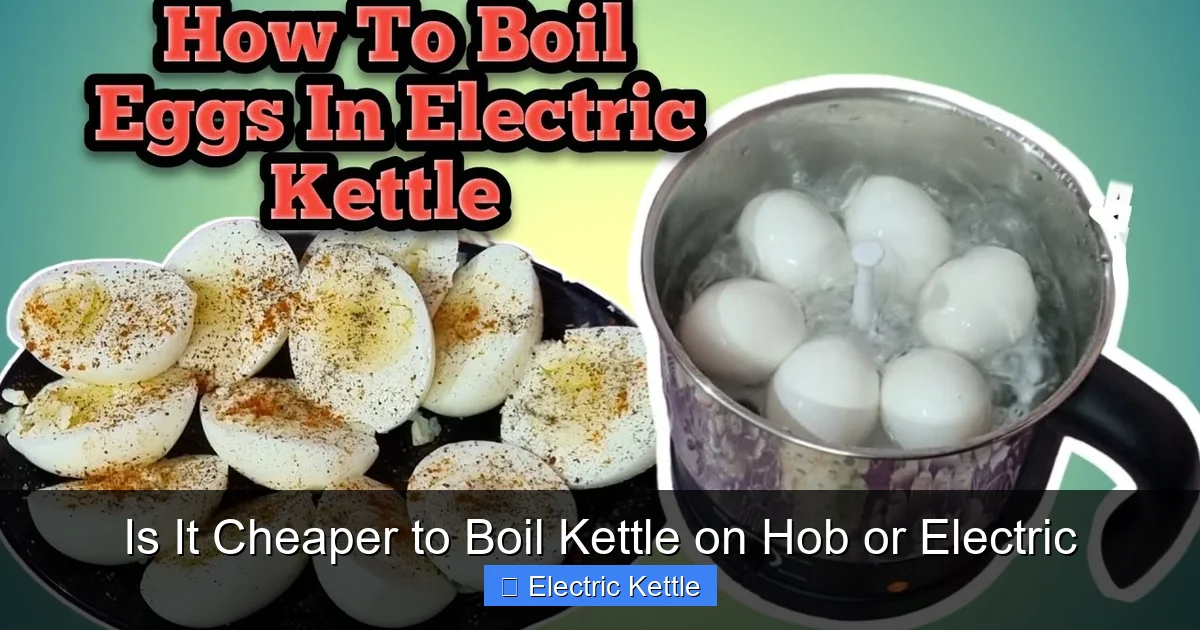
Visual guide about Is It Cheaper to Boil Kettle on Hob or Electric
Image source: i.ytimg.com
Before we compare hob vs. electric kettle, it’s important to understand how energy use translates into cost. In the UK, electricity and gas are billed in kilowatt-hours (kWh). The average price of electricity is around **28p per kWh**, while gas is cheaper at about **7p per kWh**. But that doesn’t mean gas is always the better deal—efficiency matters just as much as price.
When you boil water, you’re converting electrical or gas energy into heat. But not all that energy goes into heating the water. Some is lost to the air, the pan, or the hob itself. This is where efficiency comes in.
An electric kettle is designed to heat water directly. It uses a heating element submerged in the water, which transfers heat quickly and with minimal loss. Most modern electric kettles are over **80% efficient**, meaning 80% or more of the energy goes into heating the water.
In contrast, hobs—whether gas or electric—are far less efficient. A gas hob might only be **40–50% efficient**, because much of the heat escapes around the pan. Electric coil or ceramic hobs are slightly better at **60–70% efficiency**, but still lose significant heat to the surrounding air.
So even though gas is cheaper per kWh, the inefficiency means you end up using more energy to achieve the same result. That’s why, when you do the math, electric kettles often come out on top.
Real-World Example: Boiling One Litre of Water
Let’s say you want to boil one litre of water—enough for about four mugs of tea. Here’s how the energy use breaks down:
– **Electric kettle (2,000 watts):** Takes about 3–4 minutes. Uses roughly **0.1 kWh** of electricity. At 28p per kWh, that’s **2.8p per boil**.
– **Gas hob (medium flame):** Takes 6–8 minutes. Uses about **0.15 kWh** of gas. At 7p per kWh, that’s **1.05p per boil**.
– **Electric hob (1,800 watts):** Takes 5–7 minutes. Uses about **0.18 kWh** of electricity. At 28p per kWh, that’s **5.04p per boil**.
At first glance, gas seems cheaper—just over 1p vs. nearly 3p for the electric kettle. But wait. This doesn’t account for efficiency.
Because gas hobs are only about 45% efficient, you’re actually using more gas than the calculation suggests. To get the same amount of heat into the water, you need to burn more gas. Adjusting for efficiency, the real cost of boiling on gas rises to around **2.3p**.
Now compare that to the electric kettle at **2.8p**—the difference is tiny. And remember, the electric kettle is faster, safer, and more convenient.
Electric Kettle vs. Gas Hob: Which Wins?
Now let’s compare the two most common methods: electric kettle and gas hob.
Gas hobs are popular because they’re responsive—you can adjust the flame instantly—and gas is cheaper per unit than electricity. But when it comes to boiling water, they’re not the most efficient choice.
Speed and Efficiency
An average electric kettle boils one litre of water in **3–4 minutes**. A gas hob takes **6–8 minutes**, sometimes longer if the pan isn’t covered or the flame isn’t optimal.
That extra time means more gas is burned, even if the flame is low. And if you’re boiling less than a full kettle, the difference becomes even more pronounced. Most people don’t fill a pan with just one cup of water—they tend to overfill, wasting energy.
Electric kettles, on the other hand, let you boil only what you need. Many have minimum and maximum fill lines, so you’re not wasting electricity on excess water.
Cost Comparison Over Time
Let’s say you boil water **five times a day**—morning coffee, afternoon tea, evening soup, etc. Over a month, that’s 150 boils.
– **Electric kettle:** 150 × 2.8p = **£4.20**
– **Gas hob (adjusted for efficiency):** 150 × 2.3p = **£3.45**
So gas is still slightly cheaper—by about 75p per month. But is that worth the trade-offs?
Consider this: gas hobs require a pan, which needs cleaning. They also produce heat in your kitchen, which can be uncomfortable in summer. And if you forget to turn off the gas, you risk safety hazards.
Electric kettles, by contrast, are plug-and-play. They auto-shut off when boiling, reducing fire risk. They’re quieter, faster, and don’t heat up your kitchen.
For just 75p more per month, most people would agree the convenience and safety of an electric kettle are worth it.
Environmental Impact
Gas is a fossil fuel, and burning it releases carbon dioxide. Even though it’s cheaper, it has a higher carbon footprint than electricity—especially if your electricity comes from renewable sources like wind or solar.
In the UK, the grid is getting greener every year. As of 2023, over **40% of electricity** comes from renewables. That means using an electric kettle could have a lower environmental impact than gas, depending on your energy mix.
If you’re eco-conscious, an electric kettle—especially one used with green energy—is the better choice.
Electric Kettle vs. Electric Hob: The Real Showdown
Now let’s talk about electric hobs—coil, ceramic, or induction. These are common in many homes, especially in flats or older properties.
Electric hobs use electricity to heat a coil or element, which then heats the pan. But like gas, they lose a lot of heat to the air. Only about **60–70%** of the energy actually goes into the water.
Energy Use and Cost
An electric hob typically uses **1,500–2,000 watts**, similar to an electric kettle. But because it’s less efficient, it takes longer to boil water—usually **5–7 minutes** for one litre.
Using our earlier example:
– Electric hob uses **0.18 kWh** per boil.
– At 28p per kWh, that’s **5.04p per boil**.
Compare that to the electric kettle at **2.8p**—nearly double the cost.
Over 150 boils per month, that’s:
– Electric kettle: £4.20
– Electric hob: £7.56
That’s a difference of **£3.36 per month**, or **over £40 per year**.
Induction Hobs: The Exception
Induction hobs are a different story. They use electromagnetic fields to heat the pan directly, making them much more efficient—up to **85% efficient**.
An induction hob can boil one litre of water in **3–4 minutes**, similar to an electric kettle. Energy use is around **0.12 kWh**, costing about **3.36p per boil**.
That’s still slightly more than an electric kettle, but much closer. Over 150 boils, the difference is only about **85p per month**.
So if you have an induction hob, it’s nearly as efficient as an electric kettle. But you still need a compatible pan (magnetic base), and you can’t boil less than a cup or two without wasting energy.
For most people, the electric kettle is still the better option—especially for small amounts.
Practical Tips to Save Money When Boiling Water
No matter which method you use, there are simple ways to reduce energy use and save money.
Only Boil What You Need
This is the #1 rule. Whether you’re using a kettle or a pan, don’t fill it to the top if you only need one cup. Overfilling wastes energy and increases boiling time.
Many electric kettles have clear markings for 1, 2, or 4 cups. Use them. For hobs, measure your water with a mug to avoid guesswork.
Use a Lid
If you’re boiling on the hob, always use a lid. It traps heat, reduces boiling time, and can cut energy use by up to **30%**.
Without a lid, heat escapes, and your hob has to work harder. It’s a simple fix that makes a big difference.
Choose the Right Pan
Use a pan that matches the size of the hob ring. A small pan on a large ring wastes heat. A heavy-based pan distributes heat better and reduces hot spots.
For gas hobs, a flat-bottomed pan ensures maximum contact with the flame.
Descale Your Kettle Regularly
Limescale buildup insulates the heating element, making your kettle less efficient. In hard water areas, descale every 1–2 months with vinegar or a commercial descaler.
A clean kettle boils faster and uses less energy.
Consider a Variable-Temperature Kettle
Not all drinks need boiling water. Green tea, for example, tastes better at 70–80°C. A variable-temperature kettle lets you heat water to the perfect temp, saving energy and improving flavour.
Unplug When Not in Use
Some kettles use a small amount of standby power. Unplugging them when not in use eliminates this “phantom load,” though the savings are minimal.
When Might a Hob Be Better?
Despite the evidence, there are a few situations where boiling on the hob makes sense.
You Don’t Own an Electric Kettle
If you’re in a rental or just starting out, you might not have a kettle. In that case, using a pan on the hob is fine—just be mindful of efficiency.
You’re Boiling Large Quantities
Electric kettles usually max out at 1.7 litres. If you’re making pasta for a family or brewing a big batch of soup, a large pan on the hob might be more practical.
Power Outages or Off-Grid Living
If you’re using a gas stove during a power cut, boiling water on the hob is your only option. Gas stoves work without electricity, making them reliable in emergencies.
You Prefer the Control
Some people like the hands-on feel of a gas flame. If you enjoy cooking and don’t mind the extra time, there’s no harm in using the hob occasionally.
But for daily use, the electric kettle is still the smarter, cheaper choice.
The Verdict: Which Is Cheaper?
After crunching the numbers, comparing efficiency, and considering real-world use, the answer is clear:
It is cheaper—and more efficient—to boil water in an electric kettle than on a hob.
Even though gas is cheaper per kWh, the inefficiency of hobs means you end up using more energy. Electric hobs are even worse, costing nearly double per boil.
Only induction hobs come close, and even then, electric kettles are slightly better for small amounts.
Add in the benefits of speed, safety, and convenience, and the electric kettle is the clear winner.
Final Cost Comparison (Per Boil)
| Method | Energy Used | Cost (Approx.) | Time |
|——————–|————-|—————-|————|
| Electric Kettle | 0.1 kWh | 2.8p | 3–4 min |
| Gas Hob (adjusted) | 0.15 kWh | 2.3p | 6–8 min |
| Electric Hob | 0.18 kWh | 5.0p | 5–7 min |
| Induction Hob | 0.12 kWh | 3.4p | 3–4 min |
As you can see, the electric kettle is competitive with gas and far better than electric hobs.
Conclusion: Make the Smart Switch
So, is it cheaper to boil kettle on hob or electric? The answer is electric—every time.
Electric kettles are faster, more efficient, and safer. They use less energy, cost less per boil (especially compared to electric hobs), and help reduce your carbon footprint.
While gas hobs are slightly cheaper in theory, the difference is small—and outweighed by the convenience and reliability of an electric kettle.
If you’re still using the hob to boil water, it’s time to make the switch. Invest in a good-quality electric kettle, descale it regularly, and only boil what you need. Your wallet—and the planet—will thank you.
And the next time you’re waiting for the kettle to boil, remember: you’re not just making tea. You’re making a smart, sustainable choice.
Frequently Asked Questions
Is it cheaper to boil water on gas or electric kettle?
An electric kettle is generally cheaper than a gas hob when you account for efficiency. Although gas is cheaper per kWh, gas hobs waste more energy, making the electric kettle the better value over time.
Does boiling a full kettle use more electricity?
Yes, boiling a full kettle uses more electricity than a partial boil. To save energy, only boil the amount of water you need—most kettles have markings for 1, 2, or 4 cups.
Are induction hobs as efficient as electric kettles?
Induction hobs are very efficient—up to 85%—and can boil water nearly as fast as an electric kettle. However, electric kettles are still slightly more efficient for small amounts and don’t require special pans.
Can I save money by using a lid on the pan?
Yes! Using a lid on a pan when boiling water on the hob can reduce energy use by up to 30% by trapping heat and speeding up the process.
How often should I descale my electric kettle?
In hard water areas, descale your kettle every 1–2 months. Limescale buildup reduces efficiency and increases boiling time. Use vinegar or a commercial descaler.
Is it safe to leave an electric kettle plugged in?
Yes, it’s safe to leave an electric kettle plugged in. Most modern kettles have auto-shutoff and safety features. However, unplugging when not in use eliminates any standby power use.