Leaving water in an electric kettle may seem harmless, but it can lead to mineral buildup, bacteria growth, and reduced appliance lifespan. While occasional overnight storage is generally safe, regular neglect can compromise both taste and safety.
Key Takeaways
- Mineral buildup is a major concern: Stagnant water allows limescale and mineral deposits to accumulate, especially in hard water areas, affecting performance and taste.
- Bacteria can grow over time: Warm, stagnant water creates an ideal environment for microbes, particularly if the kettle isn’t cleaned regularly.
- Repeated heating degrades water quality: Boiling the same water multiple times increases concentration of impurities and may affect flavor.
- Kettle lifespan may be shortened: Constant exposure to moisture and mineral deposits can damage internal components like the heating element and thermostat.
- Cleaning is essential: Regular descaling and rinsing help maintain hygiene and efficiency, even if you leave water in occasionally.
- Best practice is to empty after use: For optimal safety and performance, it’s recommended to pour out leftover water and rinse the kettle daily.
- Use filtered water when possible: This reduces mineral content and slows down limescale formation, making occasional water storage less risky.
📑 Table of Contents
- Is It Ok to Leave Water in Electric Kettle? The Truth Behind a Common Habit
- Why People Leave Water in Electric Kettles
- The Science Behind Stagnant Water in Kettles
- Impact on Kettle Performance and Lifespan
- Health and Taste Concerns
- Best Practices for Using and Maintaining Your Electric Kettle
- When Is It Acceptable to Leave Water in the Kettle?
- Conclusion: Make Smart Choices for a Healthier Kettle
Is It Ok to Leave Water in Electric Kettle? The Truth Behind a Common Habit
We’ve all done it—boiled water for tea or coffee, got distracted, and left the leftover water sitting in the electric kettle. Maybe you’re rushing out the door in the morning or simply forgot to empty it before bed. It seems harmless, right? After all, it’s just water. But is it really okay to leave water in an electric kettle?
The short answer? It’s not ideal—and over time, it can cause real problems. While leaving water in your kettle once in a while won’t ruin it overnight, making it a habit can lead to issues like limescale buildup, bacterial growth, and even damage to your appliance. Understanding the risks and knowing how to care for your kettle properly can help you enjoy better-tasting beverages and extend the life of your device.
In this guide, we’ll dive deep into the science and practical realities of leaving water in an electric kettle. We’ll explore the potential health concerns, the impact on your kettle’s performance, and the best habits to adopt for daily use. Whether you’re a tea lover, a coffee enthusiast, or just someone who uses an electric kettle regularly, this information will help you make smarter choices.
Why People Leave Water in Electric Kettles
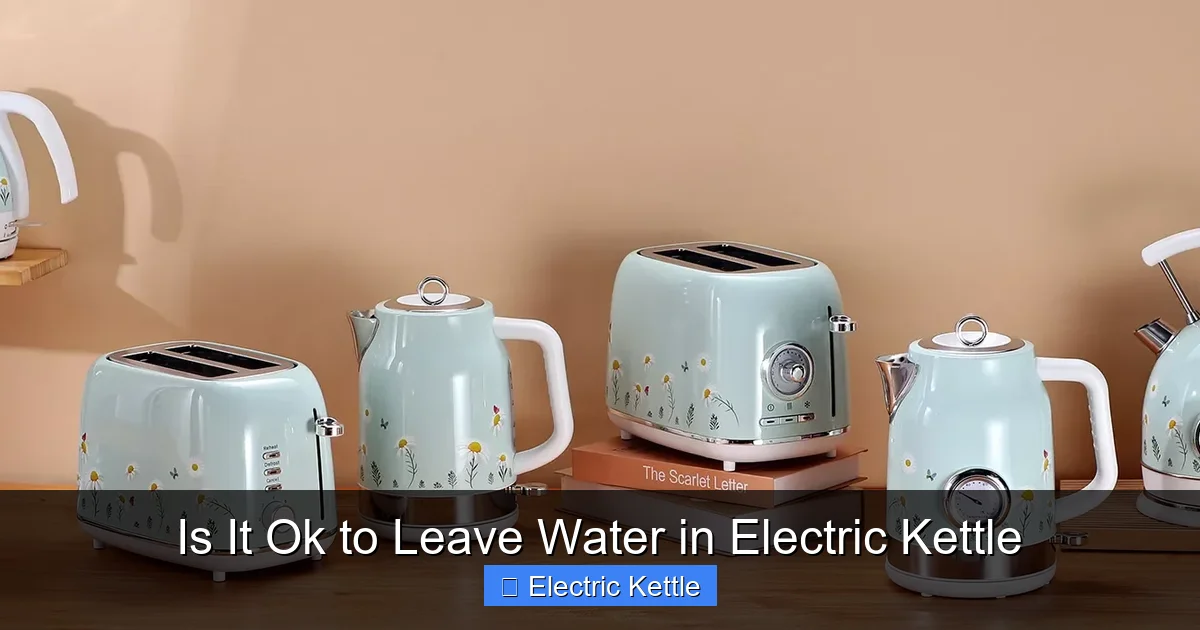
Visual guide about Is It Ok to Leave Water in Electric Kettle
Image source: irrorwxhiqijjr5q.ldycdn.com
It’s easy to see why so many of us leave water in our electric kettles. Convenience plays a big role. After boiling water for a quick cup of tea or instant noodles, it’s tempting to just walk away and let the kettle sit. Maybe you’re expecting to use it again soon, so you figure there’s no harm in keeping the water inside. Or perhaps you’re trying to save time—after all, why refill it if you’ll need hot water again in a few hours?
Another common reason is forgetfulness. Life gets busy, and small tasks like emptying a kettle can slip through the cracks. Some people also believe that leaving water in the kettle helps keep it “primed” for the next use, especially if they’re making multiple hot drinks in a row. Others assume that because the water was boiled, it’s sterile and safe to store.
But here’s the thing: even though boiling kills most bacteria, it doesn’t make the water permanently safe. Once the water cools, it becomes vulnerable again. And while your kettle may seem clean on the outside, the inside can quietly become a breeding ground for problems if not maintained properly.
The Convenience Factor
Let’s be honest—electric kettles are designed for speed and ease. They heat water faster than a stovetop, and many come with features like temperature control and auto-shutoff. Because they’re so efficient, it’s natural to want to maximize their use. If you’re making tea in the morning and plan to have another cup in the afternoon, leaving the water in might seem like a smart shortcut.
But convenience shouldn’t come at the cost of hygiene or appliance health. Think of it like leaving a glass of water on the counter overnight. It’s not dangerous, but it’s not exactly fresh either. The same logic applies to your kettle.
Misconceptions About Boiled Water
One of the biggest myths is that boiled water is “safe” to store indefinitely. While boiling does kill bacteria, viruses, and parasites, it doesn’t remove minerals, chemicals, or other impurities. In fact, repeated boiling can concentrate these substances, especially if the water evaporates and leaves behind residue.
Additionally, once the water cools, it’s no longer sterile. Bacteria from the air, your hands, or even the kettle’s spout can recontaminate it. This is especially true if the kettle isn’t sealed tightly or if you’re using it frequently without cleaning.
So while boiling makes water safe to drink initially, it doesn’t grant it immunity from future contamination. That’s why leaving water in the kettle for extended periods—especially warm water—can be risky.
The Science Behind Stagnant Water in Kettles
To understand why leaving water in an electric kettle isn’t ideal, it helps to look at what happens at a microscopic level. Water isn’t just H₂O—it contains dissolved minerals, gases, and sometimes trace contaminants. When water sits in a kettle, especially after being heated, several chemical and biological processes begin to unfold.
One of the most common issues is limescale formation. If you live in an area with hard water (high in calcium and magnesium), these minerals don’t evaporate when water boils. Instead, they settle on the kettle’s interior surfaces, forming a chalky, white deposit. Over time, this buildup can clog the heating element, reduce efficiency, and even affect the taste of your drinks.
But minerals aren’t the only concern. Stagnant water—especially warm water—creates a perfect environment for bacteria to grow. While your kettle may seem clean, tiny amounts of organic matter (like tea residue or skin cells) can accumulate and feed microbial growth. Even if you can’t see or smell anything wrong, harmful bacteria like *Legionella* or *Pseudomonas* can thrive in these conditions.
Mineral Buildup and Limescale
Limescale is one of the most visible and frustrating consequences of leaving water in your kettle. It starts as a thin film but can quickly become a thick, crusty layer that’s hard to remove. This buildup doesn’t just look bad—it also insulates the heating element, making your kettle work harder and use more energy to heat water.
In severe cases, limescale can cause the kettle to overheat or fail prematurely. It can also flake off into your water, giving your tea or coffee a gritty texture and unpleasant taste. If you’ve ever noticed a white residue in your mug after boiling water, that’s likely limescale.
The problem is worse in areas with hard water, but even soft water can leave behind mineral deposits over time. The solution? Regular descaling with vinegar or a commercial descaling solution. But prevention is better than cure—emptying your kettle after each use significantly reduces the risk.
Bacterial Growth in Warm Water
You might think that because water was boiled, it’s free of bacteria. And you’re right—initially. But once the water cools to room temperature (or warmer), it becomes a potential breeding ground for microbes.
Bacteria like *Pseudomonas aeruginosa* can grow in moist environments and are commonly found in household appliances. While not always harmful to healthy individuals, they can cause infections in people with weakened immune systems. *Legionella*, the bacteria that causes Legionnaires’ disease, can also grow in warm water systems, though it’s more common in large-scale plumbing than in small kettles.
The risk increases if you leave water in the kettle for days or reuse the same water multiple times. Each time you boil, you kill surface bacteria, but new ones can enter from the air or your hands. Over time, this creates a cycle of contamination that’s hard to break.
Impact on Kettle Performance and Lifespan
Your electric kettle is a hardworking appliance, and like any machine, it needs proper care to function well. Leaving water in it regularly can take a toll on its performance and longevity.
One of the most immediate effects is reduced heating efficiency. As limescale builds up on the heating element, it acts as an insulator, slowing down the transfer of heat. This means your kettle takes longer to boil water and uses more electricity to do so. Over time, this can increase your energy bills and put extra strain on the appliance.
In severe cases, the heating element can overheat or burn out, leading to costly repairs or replacement. Some kettles have automatic shut-off features to prevent this, but they’re not foolproof. A thick layer of scale can still cause damage before the kettle detects a problem.
Energy Efficiency and Heating Speed
Imagine trying to heat a pot of water with a layer of insulation wrapped around the burner. That’s essentially what limescale does to your kettle’s heating element. The more scale that builds up, the longer it takes to boil water—and the more energy it consumes.
Studies have shown that even a thin layer of limescale can reduce heating efficiency by up to 20%. That means your kettle could be working significantly harder than it needs to, just because you left water in it too often.
This not only affects your electricity usage but also increases wear and tear on the appliance. The heating element has to cycle on and off more frequently, which can shorten its lifespan.
Long-Term Damage to Internal Components
Beyond the heating element, other parts of your kettle can suffer from prolonged exposure to stagnant water. The thermostat, which regulates temperature, can become less accurate if coated in mineral deposits. This might cause the kettle to overheat or fail to shut off when it should.
The interior lining—often made of stainless steel or plastic—can also degrade over time. Stainless steel is durable, but constant moisture and mineral exposure can lead to pitting or corrosion. Plastic components may absorb odors or develop micro-cracks that harbor bacteria.
Even the seal around the lid can deteriorate if it’s constantly damp, leading to leaks or reduced insulation. All of these issues add up, potentially turning a $30 kettle into a $100 repair bill—or worse, a fire hazard.
Health and Taste Concerns
Beyond mechanical issues, leaving water in your kettle can affect the quality of your drinks. Nobody wants to sip tea that tastes like metal or smells faintly of plastic. But that’s exactly what can happen when water sits in a poorly maintained kettle.
Mineral deposits can leach into your water, especially when reheated. This not only alters the flavor but may also introduce unwanted substances into your body. While small amounts of calcium and magnesium aren’t harmful (in fact, they’re essential nutrients), excessive intake from limescale isn’t ideal.
More concerning is the potential for bacterial contamination. Even if you can’t see or smell anything wrong, harmful microbes may be present. Drinking water from a contaminated kettle can lead to stomach upset, especially in sensitive individuals.
Altered Taste and Odor
Have you ever noticed that your morning tea tastes “off” even though you used the same brand of tea bags? The problem might not be the tea—it could be the water.
Stagnant water can develop a flat or metallic taste, especially if it’s been sitting in a metal kettle. This is due to oxidation and the leaching of minerals from the kettle’s interior. Reheating the same water multiple times can concentrate these flavors, making your drinks less enjoyable.
Plastic kettles are particularly prone to retaining odors. If water sits inside for too long, it can absorb the scent of the plastic, which then transfers to your beverages. This is why many experts recommend using glass or stainless steel kettles for better taste.
Potential Health Risks
While the risk of serious illness from a dirty kettle is low for most people, it’s not zero. Bacteria like *Legionella* and *Pseudomonas* can cause respiratory or urinary tract infections, especially in children, the elderly, or those with compromised immune systems.
Additionally, repeated boiling of the same water can increase the concentration of certain contaminants. For example, nitrates and heavy metals don’t evaporate—they remain in the water and can become more concentrated as water evaporates during boiling.
This is why health organizations recommend using fresh water each time you boil. It’s a simple step that can make a big difference in your long-term health.
Best Practices for Using and Maintaining Your Electric Kettle
Now that we’ve covered the risks, let’s talk about solutions. The good news is that with a few simple habits, you can keep your kettle clean, efficient, and safe to use.
The most important rule? Empty your kettle after each use. Pour out any leftover water and give the interior a quick rinse with fresh water. This prevents mineral buildup and reduces the chance of bacterial growth.
If you live in a hard water area, descale your kettle regularly—ideally once a month, or more often if you notice scale buildup. Use a mixture of equal parts white vinegar and water, let it sit for 30 minutes, then rinse thoroughly. For a gentler option, use a commercial descaling solution.
Daily Cleaning Routine
Make it a habit to empty and rinse your kettle every day. This takes less than a minute but can prevent a host of problems. After rinsing, leave the kettle open to air-dry completely. This helps prevent moisture buildup and keeps the interior fresh.
Avoid using soap or abrasive cleaners, as they can leave residues or scratch the surface. A soft cloth or sponge is usually enough for routine cleaning.
Deep Cleaning and Descaling
For deeper cleaning, especially if you notice limescale, use a vinegar solution. Fill the kettle halfway with equal parts white vinegar and water, then bring it to a boil. Let it sit for 30 minutes, then pour out the solution and rinse thoroughly with fresh water.
Repeat if necessary, and always run a cycle with fresh water afterward to remove any vinegar taste. For kettles with removable filters, clean them separately with a toothbrush to remove trapped debris.
Choosing the Right Water
Using filtered or distilled water can significantly reduce mineral buildup. While it’s not always practical, it’s a great option if you live in a hard water area or want to extend your kettle’s lifespan.
Avoid using water with high sediment or unusual odors, as these can accelerate wear and affect taste.
When Is It Acceptable to Leave Water in the Kettle?
So, is it ever okay to leave water in your electric kettle? The answer is yes—but with limits.
If you’re planning to use the kettle again within a few hours, and you’re in a clean, low-humidity environment, leaving a small amount of water is generally safe. Just make sure to empty and rinse it by the end of the day.
However, avoid leaving water overnight or for more than 24 hours. And never leave warm or hot water sitting for extended periods—this is when bacteria thrive.
If you’re going on vacation or won’t be using the kettle for several days, always empty it completely and leave it open to dry. This prevents mold, mildew, and mineral buildup.
Exceptions and Special Cases
Some modern kettles come with features designed to reduce the risks of stagnant water. For example, kettles with sealed lids and antibacterial coatings may be safer for short-term storage. However, even these models benefit from regular cleaning and emptying.
If you have a kettle with a built-in filter or water purification system, follow the manufacturer’s guidelines for maintenance. These features can help, but they’re not a substitute for good hygiene.
Conclusion: Make Smart Choices for a Healthier Kettle
Leaving water in an electric kettle might seem like a minor habit, but it can have major consequences over time. From limescale buildup and bacterial growth to reduced efficiency and altered taste, the risks are real—but manageable.
The key is consistency. By emptying your kettle after each use, cleaning it regularly, and using quality water, you can enjoy safe, great-tasting beverages for years to come. Think of your kettle like any other kitchen tool—it deserves care and attention.
So the next time you boil water, take that extra second to pour out the leftovers. Your kettle—and your taste buds—will thank you.
Frequently Asked Questions
Is it safe to drink water that’s been sitting in an electric kettle overnight?
It’s generally not recommended. While boiling kills bacteria, stagnant water can become recontaminated as it cools. Additionally, mineral buildup and repeated heating can affect taste and safety.
How often should I clean my electric kettle?
Clean the exterior weekly and descale the interior monthly, or more often if you live in a hard water area. Rinse after each use to prevent buildup.
Can limescale make me sick?
Limescale itself isn’t toxic, but it can harbor bacteria and affect the taste of your water. It also reduces kettle efficiency and can lead to long-term appliance damage.
What’s the best way to descale an electric kettle?
Use a mixture of equal parts white vinegar and water. Boil, let sit for 30 minutes, then rinse thoroughly. Repeat if needed and always run a fresh water cycle afterward.
Can I use soap to clean my electric kettle?
No. Soap can leave residues that affect taste and may damage the interior. Use only water, vinegar, or approved descaling solutions.
Should I empty my kettle if I’m using it multiple times a day?
Yes. Even with frequent use, emptying and rinsing the kettle between sessions helps prevent mineral buildup and keeps the water fresh.