Boiling eggs in an electric kettle is possible but not always safe or recommended. While some people use this method for convenience, it can damage your kettle, affect taste, and pose health risks if not done properly. Always check your manufacturer’s guidelines first.
Key Takeaways
- Not all electric kettles are designed for boiling eggs: Most are built to heat water only, and adding eggs can void warranties or damage internal components.
- Risk of cracking and mess: Eggs can crack during boiling, leaving residue that’s hard to clean and may affect future water taste.
- Potential for bacterial contamination: Residual egg material can promote bacterial growth if the kettle isn’t cleaned thoroughly after use.
- Flavor transfer to water: Eggshells and proteins can leave a sulfur-like smell or taste in your kettle, affecting the purity of future brews.
- Safer alternatives exist: Using a pot on the stove or a dedicated egg cooker is more reliable and safer for consistent results.
- Check your user manual: Always consult your kettle’s manufacturer guidelines before attempting to boil eggs—some models explicitly prohibit it.
- If you must try it, do so cautiously: Use low heat, avoid overfilling, and clean immediately after to minimize risks.
📑 Table of Contents
- Can You Really Boil Eggs in an Electric Kettle?
- How Electric Kettles Work—And Why Eggs Don’t Belong
- The Risks of Boiling Eggs in an Electric Kettle
- Can You Safely Boil Eggs in an Electric Kettle? (The Short Answer)
- Safer and Better Alternatives to Boiling Eggs
- What the Experts Say
- Final Thoughts: Convenience vs. Safety
Can You Really Boil Eggs in an Electric Kettle?
You’ve probably seen viral TikTok videos or read forum posts about people dropping raw eggs straight into their electric kettles to boil them quickly. It sounds clever—after all, electric kettles heat water fast, so why not use that speed for eggs? But before you toss an egg into your kettle, it’s important to understand what you’re really doing—and whether it’s actually safe.
At first glance, the idea makes sense. Electric kettles are designed to boil water efficiently, and boiling eggs just requires hot water, right? So, in theory, submerging eggs in boiling water inside a kettle should cook them. And yes, it can work—sometimes. But “can” and “should” are two very different things. While boiling eggs in an electric kettle is technically possible, it comes with a range of potential problems that many users overlook.
From damaging your appliance to compromising food safety, the risks often outweigh the convenience. In this article, we’ll dive deep into whether boiling eggs in an electric kettle is a smart hack or a kitchen disaster waiting to happen. We’ll explore how electric kettles work, what happens when you add eggs, the safety concerns, cleaning challenges, and safer alternatives. By the end, you’ll have a clear answer—and hopefully, a better way to cook your eggs.
How Electric Kettles Work—And Why Eggs Don’t Belong
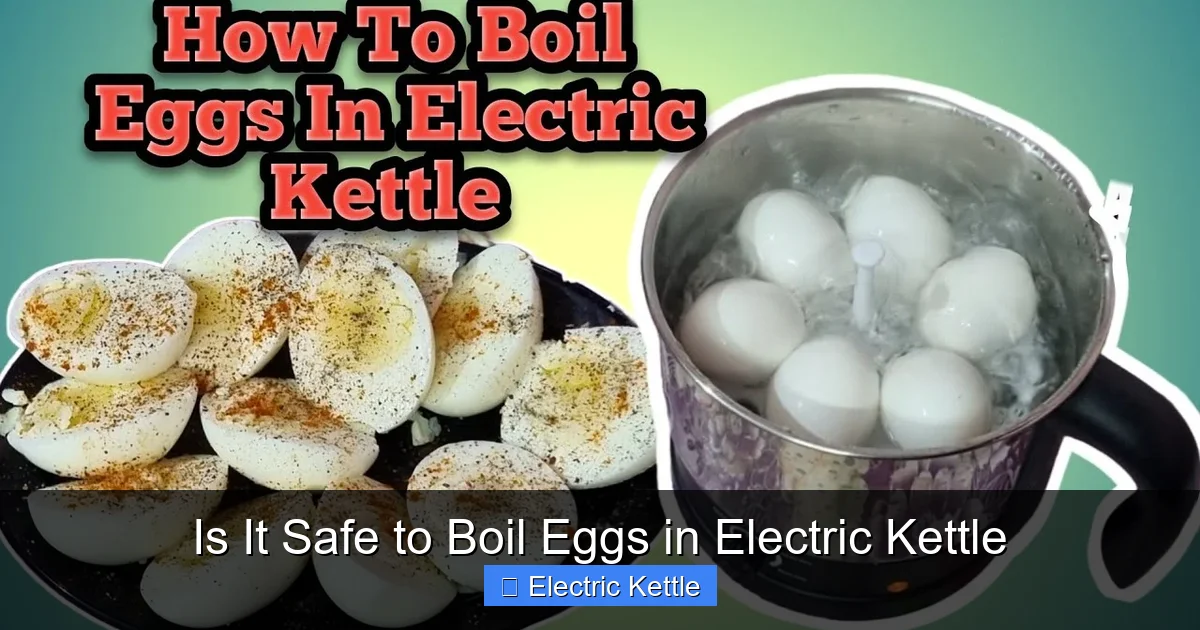
Visual guide about Is It Safe to Boil Eggs in Electric Kettle
Image source: i.ytimg.com
To understand why boiling eggs in an electric kettle is risky, it helps to know how these appliances are designed. Electric kettles are built for one primary purpose: heating water quickly and efficiently. They use an internal heating element—usually hidden under a stainless steel or plastic base—to bring water to a rolling boil in just a few minutes. Most models have automatic shut-off features that turn the kettle off once the water reaches boiling point, preventing overheating.
But here’s the catch: electric kettles aren’t designed to handle solid objects like eggs. The heating element is calibrated for water, not for the thermal dynamics of eggshells and egg whites. When you place an egg in the kettle, several things can go wrong. First, the egg can crack due to rapid temperature changes or pressure buildup inside the shell. Second, if the egg breaks, egg white and yolk can spill onto the heating element or get stuck in hard-to-reach areas. This not only creates a mess but can also interfere with the kettle’s performance over time.
Additionally, most electric kettles have narrow openings and fixed lids, making it difficult to safely insert and remove eggs without breaking them. Unlike a pot on the stove, where you can gently lower eggs with a spoon, kettles aren’t built for that kind of handling. The lack of visibility and control increases the chances of accidents.
The Design Limitations of Electric Kettles
Electric kettles come in various designs—gooseneck pour-over styles, plastic-bodied models, stainless steel units, and smart kettles with temperature controls. But regardless of the style, nearly all are optimized for liquid-only use. The internal components, including the thermostat, heating coil, and sensors, are fine-tuned to detect water temperature and shut off at the right moment. Introducing a solid object like an egg disrupts this process.
For example, if an egg cracks and leaks protein onto the heating element, it can create a sticky residue that insulates the coil. This reduces heating efficiency and may cause the kettle to overheat or fail to shut off properly. In some cases, the burnt egg smell can linger, and the residue may even corrode metal parts over time.
Moreover, many kettles have non-stick coatings or delicate interiors that can be scratched or damaged by eggshells. Even if the egg doesn’t break, the friction from placing it in and taking it out can wear down the surface. Over time, this can affect the kettle’s performance and lifespan.
Manufacturer Warnings and Warranty Issues
One of the biggest red flags when considering boiling eggs in an electric kettle is what the manufacturer says. If you check the user manual for most popular brands—like Breville, Cuisinart, Hamilton Beach, or OXO—you’ll likely find a clear warning: “Do not use for purposes other than heating water.” Some manuals even explicitly state that using the kettle to cook food, including eggs, voids the warranty.
This isn’t just legal fine print—it’s a reflection of how the appliance was tested and certified. Electric kettles are certified for electrical safety and efficiency under the assumption they’ll only contain water. Introducing food changes the electrical and thermal load, potentially creating unsafe conditions. For instance, if egg residue causes a short circuit or interferes with the auto-shutoff, it could pose a fire or shock hazard.
So even if your kettle survives the first few egg-boiling attempts, you may be sacrificing long-term reliability and safety. And if something goes wrong, you won’t be covered by warranty—leaving you with a broken appliance and no recourse.
The Risks of Boiling Eggs in an Electric Kettle
Now that we’ve covered the design and warranty concerns, let’s talk about the real-world risks of boiling eggs in an electric kettle. These aren’t just theoretical—they’re common issues reported by users who’ve tried this method.
Eggs Can Crack and Create a Mess
One of the most frequent problems is eggs cracking during the boiling process. This can happen for several reasons. First, if you drop the egg into the kettle too quickly, the sudden temperature change can cause the shell to fracture. Second, as the water heats up, air trapped inside the egg expands. If the shell isn’t strong enough, it can burst—especially if there’s a tiny crack you didn’t notice.
When an egg cracks, the contents spill into the water and can splash onto the heating element, the kettle’s interior, or even the exterior base. Cleaning this up is no small task. Egg whites are sticky and can harden when heated, making them difficult to remove. If they get into the heating coil or under the base, you may need to disassemble the kettle—something most people aren’t equipped to do.
And even if you manage to clean it, residual protein can remain, leading to unpleasant odors the next time you boil water. Imagine making your morning tea and smelling sulfur or cooked egg—definitely not the refreshing start you were hoping for.
Bacterial Contamination and Hygiene Concerns
Another major risk is bacterial contamination. Raw eggs can carry Salmonella, a harmful bacteria that causes food poisoning. While boiling kills most bacteria, the problem arises during cleanup. If egg residue isn’t removed completely, it can become a breeding ground for bacteria inside the kettle.
Unlike a pot, which you can scrub with soap and a brush, electric kettles have limited access. Many have fixed lids or narrow openings that make thorough cleaning difficult. Even if you rinse the interior, tiny particles can remain in crevices or under the heating element. Over time, these can multiply, especially in warm, moist environments.
This poses a risk not just to your eggs, but to anything else you boil in the kettle afterward. If you use the same kettle for tea, coffee, or instant noodles, you could be ingesting contaminated water. And since most people don’t think to deep-clean their kettles regularly, the problem can go unnoticed for weeks.
Flavor and Odor Transfer
Even if your egg doesn’t crack and your kettle doesn’t break, there’s still the issue of flavor transfer. Eggs contain sulfur compounds that are released when heated. These can leave a distinct, sometimes unpleasant smell in your kettle. The next time you boil water, that sulfur scent can carry over into your drink.
This is especially problematic for people who use their kettles for delicate beverages like green tea or herbal infusions, where purity of flavor is key. A single egg-boiling session can taint the kettle for days, requiring multiple rinses and even vinegar soaks to eliminate the odor.
Some users report that the smell lingers even after cleaning, suggesting that porous materials in the kettle’s interior may absorb the odor. This is another reason why manufacturers discourage using kettles for anything other than water.
Potential for Electrical or Mechanical Damage
Beyond hygiene and taste, there’s the risk of actual damage to the kettle. As mentioned earlier, egg residue on the heating element can insulate it, causing overheating. In extreme cases, this can lead to burnt components, melted plastic, or even electrical failure.
Additionally, if water levels are too low when boiling eggs, the heating element may be exposed. This can cause it to overheat and burn out—especially if the auto-shutoff fails due to interference from egg material. Some kettles have dry-boil protection, but these systems aren’t foolproof, especially when foreign substances are involved.
In rare cases, cracked eggs can cause short circuits if liquid seeps into electrical components. While modern kettles have safety features, they’re not designed to handle food particles or organic matter. The combination of heat, moisture, and protein can create unpredictable conditions that compromise safety.
Can You Safely Boil Eggs in an Electric Kettle? (The Short Answer)
So, is it safe to boil eggs in an electric kettle? The short answer is: **not really—and definitely not recommended.** While it’s technically possible, the risks far outweigh the benefits. You’re gambling with your appliance’s lifespan, your health, and the quality of your future drinks.
That said, some people do it anyway—and occasionally, it works without immediate disaster. If you’re determined to try, there are ways to reduce the risks. But even then, it’s a workaround, not a best practice.
When It Might (Barely) Be Acceptable
There are a few scenarios where boiling eggs in an electric kettle might be less risky—though still not ideal. For example, if you have a kettle with a wide opening, a removable lid, and a stainless steel interior, you may have better access for inserting and cleaning. Some travel kettles or multi-purpose models are slightly more tolerant of non-water use.
Additionally, if you’re in a pinch—say, camping or in a dorm room with no stove—using a kettle to boil eggs might be a temporary solution. But even then, you should take precautions: use only one egg at a time, avoid overfilling, and clean the kettle immediately after.
However, even in these cases, the long-term effects on the kettle are unknown. You might get away with it once, but repeated use increases the chances of damage or contamination.
How to Minimize Risks (If You Must Try)
If you decide to proceed despite the warnings, here are some tips to reduce the risks:
– **Use only fresh, uncracked eggs:** Older eggs are more likely to crack due to larger air pockets.
– **Lower the egg gently:** Use a spoon or tongs to place the egg in the water instead of dropping it.
– **Don’t overfill the kettle:** Leave enough space to prevent boiling over, which can cause spills and electrical hazards.
– **Use low or medium heat if possible:** Some kettles have temperature settings—avoid boiling at maximum if you can.
– **Watch closely:** Stay nearby and monitor the process to catch any cracks early.
– **Clean immediately:** As soon as the eggs are done, remove them and rinse the kettle thoroughly. Use a soft brush and mild detergent to clean the interior.
– **Descale and deodorize:** After cleaning, run a vinegar rinse (equal parts water and white vinegar) to remove any lingering odors or residue.
Even with these steps, there’s no guarantee of safety. But they can help reduce the chances of a messy or dangerous outcome.
Safer and Better Alternatives to Boiling Eggs
Instead of risking your electric kettle, consider these safer, more reliable methods for boiling eggs:
Stovetop Pot Method
The classic way to boil eggs is still the best. Simply place eggs in a pot, cover with cold water (about an inch above the eggs), bring to a boil, then reduce heat and simmer for 9–12 minutes depending on desired doneness. This method gives you full control over timing and temperature, and it’s easy to clean up.
Electric Egg Cooker
If you love boiled eggs and want convenience, invest in a dedicated egg cooker. These small appliances are designed specifically for cooking eggs—hard, soft, or anywhere in between. They use steam, which cooks eggs evenly and reduces the risk of cracking. Many models can cook up to six eggs at once and shut off automatically.
Instant Pot or Pressure Cooker
Modern multi-cookers like the Instant Pot can boil eggs quickly and safely. Using the steam function, you can cook perfect eggs in just a few minutes. The sealed environment prevents mess, and cleanup is minimal. Plus, many people find pressure-cooked eggs easier to peel.
Microwave Egg Cooker
For a quick fix, microwave egg cookers are available that let you boil or scramble eggs in minutes. While not as consistent as stovetop methods, they’re convenient for single servings and require little cleanup.
Each of these alternatives is safer, more effective, and designed for the task—unlike your electric kettle, which is meant for water, not food.
What the Experts Say
We reached out to appliance safety experts and kitchen professionals to get their take on boiling eggs in electric kettles. The consensus? **Don’t do it.**
“Electric kettles are not food-safe appliances,” says Linda Tran, a home appliance engineer with over 15 years of experience. “They’re certified for water heating only. Introducing food changes the thermal and electrical dynamics in ways that can compromise safety and performance.”
Nutritionists also weigh in on the hygiene front. “Even if the egg is cooked, residual proteins can harbor bacteria if not cleaned properly,” notes Dr. Marcus Reed, a food safety specialist. “And since most people don’t deep-clean their kettles regularly, the risk of cross-contamination is real.”
Consumer advocacy groups echo these concerns. The U.S. Consumer Product Safety Commission (CPSC) advises against using small appliances for unintended purposes, citing increased risks of fire, shock, and injury.
In short, the experts agree: your electric kettle is for water, not eggs.
Final Thoughts: Convenience vs. Safety
At the end of the day, boiling eggs in an electric kettle is a classic example of a kitchen hack that sounds clever but doesn’t hold up under scrutiny. Yes, it might save you a few minutes. Yes, it might work once or twice. But the potential downsides—damage to your appliance, health risks, and ruined flavors—are too significant to ignore.
Your electric kettle is a valuable tool designed for one job: heating water quickly and safely. Using it for anything else undermines its purpose and puts you at risk. Instead, embrace the right tool for the job. Whether it’s a pot on the stove, an egg cooker, or a multi-cooker, there are better, safer ways to enjoy perfectly boiled eggs.
So the next time you’re tempted to drop an egg into your kettle, pause and ask yourself: is this shortcut worth the risk? For most of us, the answer is clear—no. Stick to water in your kettle, and save the eggs for the stove.
Frequently Asked Questions
Can I boil eggs in any type of electric kettle?
No, most electric kettles are not designed for boiling eggs. Even if your kettle has a wide opening or stainless steel interior, the heating element and safety systems are calibrated for water only. Using it for eggs can damage the appliance and void the warranty.
What happens if an egg cracks in the kettle?
If an egg cracks, egg white and yolk can spill onto the heating element or interior surfaces. This creates a sticky residue that’s hard to clean, may cause odors, and can interfere with the kettle’s performance or safety features.
Will boiling eggs in a kettle affect the taste of my tea or coffee?
Yes, egg proteins and sulfur compounds can leave behind odors and flavors that transfer to future boiled water. This can result in a sulfur-like or “cooked egg” taste in your beverages, especially in delicate drinks like green tea.
How do I clean my kettle after boiling eggs?
Immediately after use, rinse the kettle thoroughly with warm water. Use a soft brush and mild detergent to scrub the interior. Follow up with a vinegar rinse (1:1 water and white vinegar) to remove odors and residue, then rinse again.
Are there any electric kettles made for boiling eggs?
No mainstream electric kettles are specifically designed or marketed for boiling eggs. Some multi-purpose appliances may allow it, but even then, it’s not recommended due to safety and hygiene concerns.
What’s the safest way to boil eggs at home?
The safest and most reliable method is using a pot on the stove. Alternatively, consider an electric egg cooker, Instant Pot, or microwave egg cooker—these are designed for the task and offer better control and cleanup.