[FEATURED_IMAGE_PLACEOLDER]
Whether you’re a home baker perfecting sourdough or a professional crafting intricate pastries, precision is everything in baking. Even the smallest deviation in ingredient measurements can turn a promising loaf into a dense brick or a delicate cake into a crumbly mess. That’s where a baker scale with a bakers percentage function comes in—transforming guesswork into science and consistency into artistry. In this comprehensive buyer’s guide, we’ll walk you through everything you need to know to choose the right scale for your baking needs, from understanding what bakers percentages are and why they matter, to comparing top models on the market in 2026.
This guide is designed for bakers of all levels—whether you’re just starting out or you’ve been kneading dough for decades. You’ll learn how to evaluate key features like accuracy, capacity, build quality, and smart functionality, so you can make an informed decision that fits both your kitchen and your budget. We’ll also debunk common myths, highlight mistakes to avoid, and share expert tips to help you get the most value out of your purchase. By the end, you’ll not only know which scale to buy but also how to use it like a pro.
The market for digital kitchen scales has evolved dramatically in recent years, with manufacturers now integrating advanced features like tare functions, unit conversions, and—most importantly—bakers percentage calculations. These tools are no longer just for industrial bakeries; they’re becoming standard in home kitchens where precision and repeatability matter. With so many options available—ranging from basic models under $20 to high-end scales with app connectivity and recipe databases—it’s easy to feel overwhelmed. That’s why this guide cuts through the noise, focusing specifically on scales that offer the bakers percentage function, a feature that sets them apart from ordinary kitchen scales.

What to Look for When Buying a Baker Scale
1. Bakers Percentage Functionality
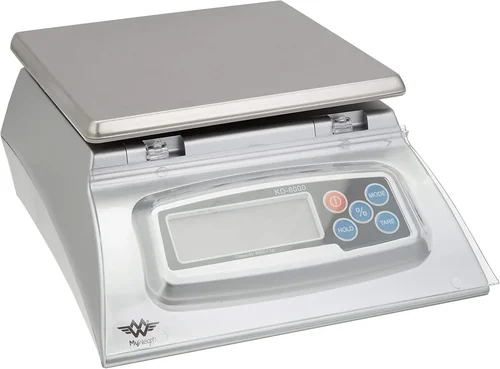
The cornerstone of any baker scale worth its salt is the bakers percentage function. This feature allows you to input a base ingredient—typically flour—as 100%, and then automatically calculates all other ingredients as a percentage of that base. For example, if a recipe calls for 500g of flour (100%), 350g of water (70%), and 10g of salt (2%), the scale will display these ratios in real time as you add each component. This is especially useful for scaling recipes up or down without losing balance, ensuring consistent texture and flavor every time.
When evaluating this feature, look for how intuitive the interface is. Some scales require you to manually enter the base weight before activating the percentage mode, while others do it automatically when you tare the flour. The best models will also allow you to switch between percentage and standard weight modes seamlessly, so you’re not locked into one system. Additionally, check whether the scale can store multiple recipes or if it supports custom formulas—this is a game-changer for bakers who frequently experiment with new doughs or batters.
2. Accuracy and Precision
In baking, even a 1-gram difference in salt or yeast can affect the final product. That’s why accuracy is non-negotiable. Look for scales that offer at least 0.1-gram resolution, especially if you work with small quantities like spices, leavening agents, or flavor extracts. High precision ensures that your measurements are consistent across batches, which is critical for developing reliable recipes.
But accuracy isn’t just about the smallest increment—it’s also about consistency over time. A scale might claim 0.1g precision, but if it drifts or loses calibration after a few uses, it’s not truly reliable. Check user reviews for mentions of calibration issues or drift, and consider models that include auto-calibration or allow manual calibration with test weights. Some premium scales even come with built-in calibration weights, which is a strong indicator of long-term accuracy.
Another factor is the load cell quality. Scales use load cells to measure weight, and higher-end models typically use strain gauge or electromagnetic force restoration (EMFR) technology, which offers better stability and longevity. While EMFR is more common in lab-grade equipment, some high-end kitchen scales now incorporate similar principles for improved performance.
3. Capacity and Range
Capacity refers to the maximum weight the scale can handle, while range indicates the span between the minimum and maximum measurable weights. For most home bakers, a capacity of 5kg (11 lbs) is more than sufficient—enough for large batches of dough, multiple loaves, or holiday cookie production. However, if you run a small bakery or frequently make large quantities, you might need a scale with 10kg or higher capacity.
More important than sheer capacity is the balance between range and precision. A scale that can measure up to 5kg but only displays increments of 1g may not be ideal for measuring small amounts like yeast (typically 5–10g). Conversely, a scale with 0.1g precision but a max capacity of 1kg might force you to weigh ingredients in multiple steps, increasing the risk of error. The sweet spot for most bakers is a scale with 5kg capacity and 0.1g precision, offering both flexibility and detail.
Also consider the platform size. A larger platform accommodates bigger bowls and containers, reducing spills and making it easier to work with messy doughs. However, oversized platforms can be cumbersome in small kitchens, so look for a design that balances usability with space efficiency.
4. Build Quality and Durability
A baker scale is an investment, and you want it to last through years of flour-dusted mornings and late-night pastry sessions. Build quality starts with materials: stainless steel platforms are ideal because they’re easy to clean, resistant to corrosion, and won’t absorb odors or moisture. Avoid plastic platforms, which can warp over time or scratch easily, harboring bacteria in crevices.
The housing should feel solid and stable, not flimsy or lightweight. Look for scales with rubberized feet or non-slip bases to prevent sliding during use—especially important when you’re pouring liquids or handling sticky dough. Water resistance is another key factor. While no kitchen scale is fully waterproof, many now offer IPX4 or IPX6 ratings, meaning they can withstand splashes and light cleaning with a damp cloth. This is crucial in a baking environment where spills are inevitable.
Hinges, buttons, and display screens should also be durable. Touch-sensitive buttons are sleek but can wear out or become unresponsive over time. Physical buttons, while less modern, often prove more reliable in the long run. Similarly, LCD displays should be backlit and easy to read in various lighting conditions—some scales even adjust brightness automatically based on ambient light.
5. Features and Functionality
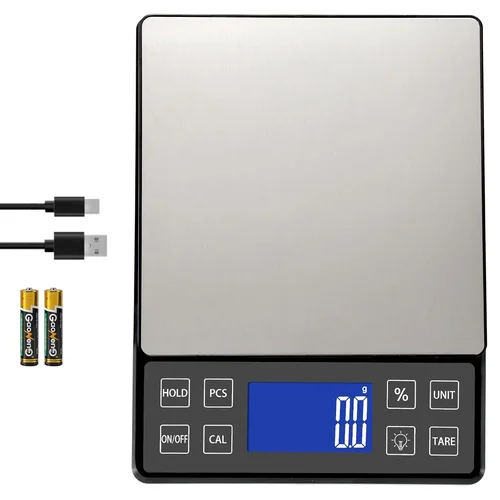
Beyond the core bakers percentage function, modern scales offer a range of features that can enhance your baking experience. The tare function is essential—it lets you zero out the weight of a container so you only measure the ingredients inside. Most scales have this, but some allow multiple tare steps, which is helpful when adding several ingredients to the same bowl.
Unit conversion is another useful feature. Being able to switch between grams, ounces, pounds, and milliliters (for liquids) ensures compatibility with recipes from around the world. Some scales even include milk, water, and oil density settings for more accurate liquid measurements.
Timer functionality is surprisingly helpful. Many bakers use timers for proofing, resting dough, or monitoring bake times, and having one built into your scale eliminates the need for a separate device. Look for models with countdown timers, interval alerts, or even programmable sequences for complex recipes.
App connectivity is becoming more common, especially in premium models. These scales sync with smartphone apps that store recipes, track ingredient usage, or provide step-by-step guidance. While not essential, this can be a major time-saver for bakers who manage multiple recipes or want to analyze their baking data over time.
Other advanced features include recipe memory (storing up to 10 or more formulas), auto-off to save battery, and rechargeable batteries. Some scales even have voice alerts or haptic feedback for hands-free operation—ideal when your hands are covered in dough.
6. Brand Reputation and Reliability
Not all scales are created equal, and brand reputation can be a strong indicator of quality and customer support. Established brands like OXO, Escali, MyWeigh, and Breville have built their names on reliability, innovation, and user-centric design. These companies often invest in rigorous testing, offer better warranties, and provide responsive customer service.
That said, newer brands and niche manufacturers are entering the market with competitive features at lower prices. While it’s tempting to go for a budget option, be cautious with unknown brands—especially those sold exclusively through third-party online retailers. Check for verified customer reviews, return policies, and whether the company has a physical presence or support team.
Look for brands that specialize in kitchen tools or baking equipment. They’re more likely to understand the unique demands of bakers and design products accordingly. For example, some brands partner with professional bakers to test their scales in real-world conditions, ensuring they perform well under pressure.
7. Warranty and Customer Support
A good warranty is a sign that the manufacturer stands behind its product. Most reputable scales come with a 1- to 2-year warranty, covering defects in materials and workmanship. Some premium brands offer extended warranties or lifetime support, which can be worth the extra cost if you plan to use the scale heavily.
Customer support matters too. If your scale malfunctions or you have questions about calibration, you want a company that responds quickly and helpfully. Check if the brand offers live chat, email support, or a comprehensive FAQ section. User manuals should be clear and available online, preferably in multiple languages.
Return policies are equally important. Ideally, you should have at least 30 days to test the scale and return it if it doesn’t meet your needs. Some retailers, like Amazon or Williams Sonoma, offer generous return windows, while others may charge restocking fees. Always read the fine print before purchasing.
8. Size and Portability
Even if you have a spacious kitchen, a bulky scale can be inconvenient. Consider the footprint of the scale—how much counter space it occupies—and whether it can be stored easily when not in use. Some models are designed to be slim and stackable, fitting neatly in a drawer or cabinet.
Portability matters if you bake in different locations—say, at a friend’s house, a community kitchen, or a pop-up event. Lightweight scales with carrying cases or foldable designs are ideal for mobile bakers. However, don’t sacrifice stability for portability; a wobbly scale is frustrating and inaccurate.
Battery life is another portability factor. Scales that run on standard AA or AAA batteries are easy to replace, but rechargeable models are more eco-friendly and convenient in the long run. Look for scales with low-battery indicators and auto-shutoff to conserve power.
Different Types of Baker Scales

Common Buying Mistakes to Avoid
❌ Mistake: Ignoring the Bakers Percentage Feature
Why it’s bad: Many buyers assume any digital scale will work for baking, but without the bakers percentage function, you’re forced to manually calculate ratios every time you scale a recipe. This increases the risk of errors and defeats the purpose of precision baking.
What to do instead: Always verify that the scale explicitly supports bakers percentages. Read the product description carefully and check user manuals or demo videos if available. Don’t rely solely on marketing claims—look for real functionality.
❌ Mistake: Choosing Based on Price Alone
Why it’s bad: The cheapest scale might save you $20 upfront, but if it lacks accuracy, breaks quickly, or doesn’t have the features you need, you’ll end up replacing it sooner. This ends up costing more in the long run.
What to do instead: Set a realistic budget based on your baking frequency and needs. A mid-range scale often offers the best balance of price, performance, and durability. Think of it as an investment in your craft.
❌ Mistake: Overlooking Platform Size and Material
Why it’s bad: A small or flimsy platform can make it difficult to use standard mixing bowls, leading to spills and frustration. Plastic platforms may scratch or absorb odors, compromising hygiene.
What to do instead: Choose a scale with a stainless steel platform that’s at least 6–7 inches in diameter. This accommodates most bowls and is easy to wipe clean.
❌ Mistake: Neglecting Water Resistance
Why it’s bad: Baking is messy. Flour, water, oil, and batter can easily splash onto your scale. Without water resistance, internal components may corrode or short out, shortening the lifespan.
What to do instead: Look for scales with at least an IPX4 rating, which protects against splashes from any direction. Avoid submerging the scale, but know it can handle everyday kitchen accidents.
❌ Mistake: Not Checking Battery Life or Power Options
Why it’s bad: A scale that dies mid-recipe is a major inconvenience. Some models drain batteries quickly, especially if they have bright displays or constant connectivity.
What to do instead: Opt for scales with rechargeable batteries or long-life alkaline compatibility. Check user reviews for real-world battery performance—don’t rely solely on manufacturer claims.
❌ Mistake: Skipping User Reviews and Testing
Why it’s bad: Product descriptions can be misleading. A scale might look perfect on paper but have poor calibration, unresponsive buttons, or software bugs.
What to do instead: Read verified customer reviews, especially those with photos or videos. If possible, test the scale in-store or take advantage of a generous return policy to ensure it meets your expectations.
Budget Guidelines: How Much Should You Spend?
– Entry-Level ($25 – $50): These scales offer basic bakers percentage functionality and decent accuracy. Ideal for occasional bakers or those on a tight budget. Expect plastic components, limited capacity (3–5kg), and minimal extra features. Brands like OXO and Escali offer reliable options in this range.
– Mid-Range ($70 – $120): This is the sweet spot for most home bakers. You’ll get stainless steel platforms, 0.1g precision, app connectivity, and robust build quality. Models like the MyWeigh iBalance or Breville PolyScience Smart Scale fall here, offering excellent value and long-term reliability.
– Premium ($150 – $300): Designed for serious bakers and small businesses, these scales feature professional-grade materials, high capacity (up to 10kg), advanced calibration, and extensive recipe storage. They’re built to withstand daily use and often include accessories like calibration weights or carrying cases.
– Luxury ($300+): Top-tier scales with cutting-edge technology, such as EMFR sensors, voice control, or integration with smart kitchen ecosystems. These are overkill for most home users but may appeal to tech enthusiasts or commercial bakers seeking the ultimate in precision and automation.
Expert Tips for Getting the Best Deal
– Buy during seasonal sales: Look for discounts during Black Friday, Cyber Monday, or post-holiday clearances. Many retailers offer 20–30% off kitchen tools during these periods.
– Compare retailers: Check prices across Amazon, Williams Sonoma, Bed Bath & Beyond, and specialty baking stores. Some offer price matching or exclusive bundles.
– Sign up for newsletters: Brands often send early access to sales or promo codes to subscribers. It’s a simple way to save 10–15% on your purchase.
– Consider refurbished models: Certified refurbished scales from reputable sellers can save you 20–40% and often come with the same warranty as new units.
– Read the return policy: Ensure you can return the scale if it doesn’t meet your needs. A 30-day window is standard, but some stores offer 60 or 90 days.
– Test before committing: If shopping in-store, ask to see a demo. Check button responsiveness, display clarity, and ease of switching modes.
– Check for bundled deals: Some scales come with free calibration weights, recipe books, or app subscriptions. These add-ons can increase overall value.
– Join baking communities: Online forums like The Fresh Loaf or Reddit’s r/Baking often share deals, reviews, and insider tips on the best scales.

Frequently Asked Questions
Q: What exactly is a bakers percentage?
A: Bakers percentage is a method of expressing ingredient ratios in a recipe, with flour always set at 100%. All other ingredients are shown as a percentage of the flour weight. For example, 60% water means 60g of water per 100g of flour. This system allows for easy scaling and consistency across batches.
Q: Do I really need a scale with bakers percentage, or can I calculate it manually?
A: You can calculate it manually, but it’s time-consuming and prone to error—especially when scaling recipes. A scale with this function automates the process, ensuring accuracy and saving time, particularly for complex doughs like sourdough or brioche.
Q: Can I use a regular kitchen scale for baking?
A: Yes, but you’ll miss out on the convenience and precision of automatic percentage calculations. Regular scales measure weight but don’t interpret ratios, so you’d need to do the math yourself each time.
Q: How often should I calibrate my scale?
A: It depends on usage. For daily bakers, monthly calibration is recommended. Occasional users can calibrate every few months. Most scales allow manual calibration using standard weights (often 100g or 500g).
Q: Are app-connected scales worth it?
A: If you manage multiple recipes or want to track your baking data, yes. Apps can store formulas, provide step-by-step guidance, and even suggest adjustments based on humidity or altitude. However, they’re not essential for everyone.
Q: Can I weigh liquids on a baker scale?
A: Yes, most scales can measure liquids in milliliters or fluid ounces. Some even have density settings for milk, oil, or honey, providing more accurate conversions than standard water-based calculations.
Q: What’s the difference between IPX4 and IPX6?
A: IPX4 protects against splashes from any direction, while IPX6 can handle powerful water jets. For kitchen use, IPX4 is usually sufficient, but IPX6 offers extra peace of mind in messy environments.
Q: How do I clean my baker scale?
A: Wipe the platform with a damp cloth and mild detergent. Avoid submerging the scale or using abrasive cleaners. For deep cleaning, remove the platform if possible and dry thoroughly before reassembling.
Q: Can I use my scale for non-baking tasks?
A: Absolutely! Many bakers use their scales for portioning coffee, measuring spices, or even weighing postage. Just be mindful of cross-contamination if using it for raw meats or allergens.
Our Final Recommendations
– Best for Budget-Conscious Buyers: OXO Good Grips Stainless Steel Food Scale – Reliable, accurate, and under $50. Includes bakers percentage mode and a sleek design.
– Best Overall Value: MyWeigh iBalance 5000 – Combines app connectivity, 0.1g precision, and a 5kg capacity at a mid-range price. Ideal for serious home bakers.
– Best Premium Option: Breville PolyScience Smart Scale – Professional-grade build, advanced calibration, and seamless app integration. Perfect for bakers who demand the best.
– Best for Beginners: Escali Primo P115 – Simple interface, durable construction, and essential features without overwhelming complexity.
– Best for Advanced Users: MyWeigh iBalance 10K – 10kg capacity, EMFR-like precision, and extensive recipe memory. Built for high-volume and experimental baking.
Conclusion: Making the Right Choice
Choosing the right baker scale with a bakers percentage function is about more than just measuring ingredients—it’s about empowering your creativity, ensuring consistency, and elevating your baking to the next level. Whether you’re crafting artisan bread, delicate macarons, or holiday cookies, precision matters. By focusing on key factors like accuracy, build quality, functionality, and budget, you can find a scale that not only meets your needs but enhances your entire baking experience.
Remember, the best scale is the one you’ll actually use. Don’t get seduced by flashy features you don’t need, and don’t skimp on essentials like durability and precision. Take the time to read reviews, compare models, and consider how you bake. With the right tool in your kitchen, every loaf, cake, and pastry becomes a testament to your skill and attention to detail.
Now that you’re equipped with expert knowledge and practical advice, it’s time to make your choice. Invest in a scale that supports your passion, and watch your baking transform from good to exceptional. Happy weighing—and happy baking!