Sharpness is everything when it comes to knives. Whether you’re slicing tomatoes for dinner, field-dressing game in the backcountry, or maintaining your trusty EDC blade, a dull edge turns a simple task into a frustrating chore—and potentially a dangerous one. In a world flooded with sharpening systems ranging from high-tech electric models to intricate whetstone setups, finding a reliable, portable, and effective solution can feel overwhelming. That’s where the Smith’s 2-Step Pocket Sharpener enters the conversation—a compact, no-nonsense tool that has earned a loyal following among outdoorsmen, chefs, and everyday users alike.
This comprehensive buying guide is designed to cut through the noise and help you make an informed decision about whether the Smith’s 2-Step Pocket Sharpener—or a similar model—is right for your needs. We’ll explore every critical factor you should consider before purchasing, from performance and build quality to budget and portability. You’ll learn how different sharpening technologies compare, what common pitfalls to avoid, and how to get the best value for your money. By the end of this guide, you won’t just know if this sharpener is worth buying—you’ll know why, and exactly how to use it to keep your blades razor-sharp in any situation.
The knife sharpening market is more crowded than ever. From $10 pull-through sharpeners to $300+ guided systems, options abound—but not all are created equal. Many promise quick fixes but deliver inconsistent results or wear down blades prematurely. Others are bulky, complicated, or require water or oil. The Smith’s 2-Step stands out by offering a balanced blend of simplicity, effectiveness, and rugged portability. But it’s not perfect for everyone. This guide will help you understand where it excels, where it falls short, and how it stacks up against alternatives so you can choose with confidence.

What to Look for When Buying Buying Guide
1. Budget & Price Range
When shopping for a pocket sharpener, your budget is often the first filter. The Smith’s 2-Step typically retails between $12 and $18, placing it firmly in the entry-to-mid-tier range. This price point makes it accessible to nearly everyone, from casual users to seasoned outdoorsmen. But don’t let the low cost fool you—affordability doesn’t have to mean compromise. In fact, many users find that this sharpener outperforms pricier models in terms of speed and ease of use for routine touch-ups.
That said, cheaper isn’t always better. Some ultra-budget sharpeners under $10 use low-grade abrasives that wear out quickly or create uneven edges. Conversely, spending $50+ on a guided system may be overkill if you only need occasional sharpening. The sweet spot for most users lies between $10 and $25, where you get durable materials, consistent performance, and reliable results without unnecessary complexity. The Smith’s 2-Step fits squarely in this range, offering excellent value for money.
2. Performance Specifications
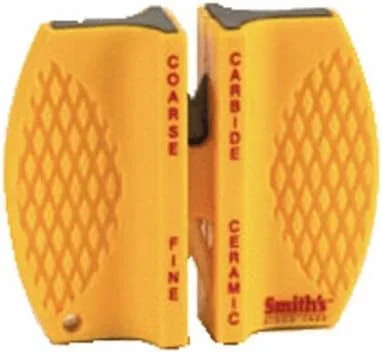
Performance boils down to two key metrics: grit type and sharpening angle consistency. The Smith’s 2-Step features two distinct stages: a coarse carbide stage for reshaping dull or damaged edges, and a fine ceramic stage for honing and refining. The carbide blades are typically rated around 150–220 grit equivalent, ideal for rapid metal removal, while the ceramic rods sit closer to 600–800 grit, perfect for finishing.
One of the sharpener’s standout features is its preset 20-degree angle guide, which aligns most Western-style knives (like kitchen or hunting blades) for optimal edge geometry. This eliminates guesswork and ensures repeatable results—even for beginners. However, it’s not ideal for Japanese knives, which often use 15-degree angles. If you own such blades, you may need to adjust your technique or consider a more adjustable system.
Speed is another advantage. Unlike whetstones that require soaking, flattening, and careful hand control, the Smith’s 2-Step delivers a usable edge in under a minute. It’s not meant for full reprofiling or repairing chips, but for regular maintenance, it’s remarkably efficient.
3. Build Quality & Durability
A sharpener is only as good as its construction. The Smith’s 2-Step is built like a tank. Its body is made from high-impact polymer reinforced with stainless steel components, making it resistant to drops, moisture, and temperature swings—perfect for field use. The carbide and ceramic elements are securely embedded and show minimal wear even after hundreds of uses.
Compared to flimsy plastic competitors, the Smith’s feels solid in hand and maintains structural integrity over time. Users report using the same unit for years without degradation in performance. That said, the ceramic rods can chip if dropped directly onto hard surfaces, so treat them with care. Still, for a pocket-sized tool, its durability is exceptional.
Another durability factor is corrosion resistance. Since it doesn’t require oil or water, there’s no risk of rust on internal mechanisms—a common issue with wet stone systems. This dry operation also means you can use it anywhere, anytime, without cleanup.
4. Features & Functionality
The “2-Step” name refers to its dual-stage design, which is both simple and effective. Stage 1 uses tungsten carbide blades to aggressively reshape dull edges—ideal for restoring a functional edge quickly. Stage 2 employs fine-grit ceramic rods to polish and align the edge, creating a smooth, slicing-ready finish.
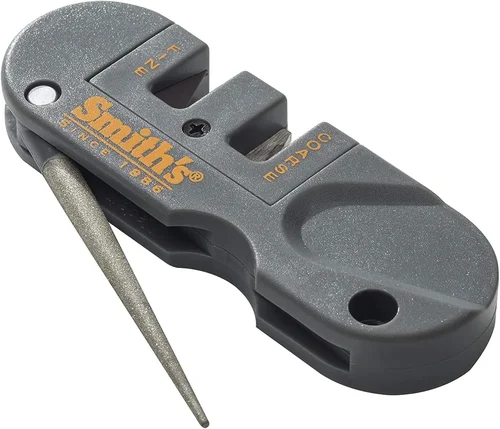
Additional features include a built-in angle guide, non-slip rubber feet for stability on countertops, and a lanyard hole for easy attachment to a backpack or keychain. Some models also include a fold-out ceramic rod for touch-ups on serrated edges, though this varies by version.
What it lacks—and this is intentional—is adjustability. There’s no way to change the sharpening angle, which limits versatility for specialty knives. But for 80% of everyday blades, this fixed-angle approach is a strength, not a weakness. It removes complexity and ensures consistent results without user error.
5. Brand Reputation
Smith’s has been a trusted name in sharpening since 1886. Originally founded to serve the railroad industry, the company pivoted to consumer sharpeners in the mid-20th century and quickly became synonymous with reliability. Their products are widely available at outdoor retailers, hardware stores, and online, and they’re frequently recommended by survivalists, chefs, and knife enthusiasts.
Customer support is another strong point. Smith’s offers a limited lifetime warranty on their sharpeners, covering defects in materials and workmanship. While normal wear isn’t covered, the company is known for responsive service and fair replacements. This level of backing is rare in the sub-$20 category and adds significant peace of mind.
User communities consistently praise Smith’s for consistency and no-frills functionality. On forums like BladeForums and Reddit’s r/knives, the 2-Step is often cited as a “desert island” sharpener—simple, tough, and effective when it matters most.
6. Warranty & Support
As mentioned, Smith’s backs the 2-Step with a limited lifetime warranty. This means if the sharpener fails due to manufacturing defects—not misuse—you can get it repaired or replaced free of charge. The process is straightforward: contact customer service, provide proof of purchase (though not always required), and ship the unit back.
This warranty stands in contrast to many budget brands that offer only 30–90 days of coverage. It reflects confidence in the product’s longevity and builds trust with consumers. Additionally, Smith’s provides detailed usage guides and maintenance tips on their website, helping users get the most out of their purchase.
For international buyers, warranty terms may vary, so check regional policies before purchasing. But within the U.S., support is robust and user-friendly.
7. Size & Portability
At just 3.5 inches long and weighing under 3 ounces, the Smith’s 2-Step is genuinely pocketable. It fits comfortably in a jeans pocket, backpack, or tackle box without adding bulk. The compact design doesn’t sacrifice functionality—the sharpening surfaces are full-sized and effective.
Portability is a major selling point for hikers, campers, fishermen, and EDC (Everyday Carry) enthusiasts. Unlike bench-mounted systems or multi-stone kits, this sharpener goes wherever your knife goes. It’s also TSA-friendly for carry-on luggage, making it a great travel companion.
Some users wish for a protective sleeve or case, but the rubberized exterior provides decent scratch resistance. For added security, consider pairing it with a small nylon pouch.
8. User Reviews & Ratings
Across major retailers like Amazon, REI, and Cabela’s, the Smith’s 2-Step consistently earns 4.5+ star ratings. Thousands of verified buyers praise its speed, ease of use, and reliability. Common compliments include “sharpens in seconds,” “surprisingly durable,” and “perfect for field use.”
Negative reviews are rare but usually cite two issues: difficulty with very thick or full-tang blades (which can hit the housing), and the fixed angle not suiting Asian knives. These are valid limitations but don’t detract from its core strengths for typical Western blades.
Professional reviewers echo these sentiments. Outdoor Life, Field & Stream, and GearJunkie have all included it in “best pocket sharpener” lists, highlighting its balance of price, performance, and portability.
Different Types of Buying Guide

Common Buying Mistakes to Avoid
❌ Mistake: Choosing Based Solely on Price
Why it’s bad: Opting for the cheapest sharpener often leads to frustration. Low-cost models may use soft abrasives that wear out fast, create uneven edges, or break under pressure. You end up replacing them frequently, costing more in the long run.
What to do instead: Focus on value, not just price. A $15 sharpener that lasts five years is smarter than a $7 one that fails in six months. Look for reputable brands with proven track records.
❌ Mistake: Ignoring Knife Compatibility
Why it’s bad: Not all sharpeners work with all knives. Fixed-angle systems like the Smith’s 2-Step are optimized for 20-degree edges. Using it on a 15-degree Japanese blade can over-bevel the edge or damage the sharpener.
What to do instead: Know your knife’s grind angle before buying. If you own multiple knife types, consider a versatile system or keep dedicated sharpeners for each style.
❌ Mistake: Overlooking Maintenance Needs
Why it’s bad: Some sharpeners require oil, water, or regular flattening. If you’re a casual user or frequently on the go, these demands become burdens.
What to do instead: Choose a dry-operation sharpener like the Smith’s 2-Step if low maintenance is a priority. It’s ready to use straight from your pocket.
❌ Mistake: Expecting Professional Results from Budget Tools
Why it’s bad: While the Smith’s 2-Step is excellent for maintenance, it can’t replace a full whetstone setup for reprofiling or repairing damaged edges. Setting unrealistic expectations leads to disappointment.
What to do instead: Understand the tool’s purpose. Use it for touch-ups and reserve heavy-duty work for more capable systems.
❌ Mistake: Buying Without Reading Reviews
Why it’s bad: Marketing claims can be misleading. A sharpener might look great online but perform poorly in real-world conditions.
What to do instead: Check verified buyer reviews on multiple platforms. Look for consistent feedback about durability, ease of use, and edge quality.
❌ Mistake: Neglecting Warranty and Support
Why it’s bad: A sharpener with no warranty leaves you stranded if it breaks. Even durable tools can fail due to manufacturing defects.
What to do instead: Always check warranty terms. Brands like Smith’s that offer lifetime coverage demonstrate confidence in their products.
Budget Guidelines: How Much Should You Spend?
- Entry-Level ($8–$15): This range includes basic pull-through sharpeners and ceramic rods. Expect decent performance for light use, but limited durability and inconsistent angles. The Smith’s 2-Step sits at the top of this tier, offering premium features at an entry price.
- Mid-Range ($16–$35): The sweet spot for most users. You’ll find well-built sharpeners with quality abrasives, better ergonomics, and reliable results. Many include dual stages and angle guides. Great for everyday carry and outdoor use.
- Premium ($36–$100): Designed for enthusiasts and professionals. These often feature adjustable angles, multiple grit stages, and precision guides. Ideal for maintaining high-end kitchen or tactical knives.
- Luxury ($100+): Top-tier electric systems or handcrafted whetstone sets. Best for serious collectors or commercial kitchens. Overkill for casual users but unmatched in performance and finish.
Expert Tips for Getting the Best Deal
- Buy during seasonal sales: Look for discounts around Black Friday, Memorial Day, or back-to-school season. Outdoor retailers often run promotions on sharpening tools.
- Check multiple retailers: Compare prices on Amazon, REI, Bass Pro Shops, and direct from Smith’s. Sometimes the manufacturer offers exclusive bundles or free shipping.
- Watch for refurbished units: Smith’s occasionally sells certified refurbished sharpeners at 20–30% off. These are tested and come with the same warranty.
- Bundle with other gear: Some retailers offer discounts when you buy a sharpener with a knife or survival kit. Great way to save on essentials.
- Read return policies: Ensure you can return the product if it doesn’t meet expectations. Most major sellers offer 30-day returns.
- Test before committing: If possible, try the sharpener in-store or borrow one from a friend. Feel the grip, test the angle guide, and assess ease of use.
- Register your product: After purchase, register your sharpener on Smith’s website to activate the warranty and receive usage tips.
- Maintain it properly: Clean the abrasive surfaces with a soft brush after use. Avoid dropping it on hard surfaces to prevent ceramic chipping.

Frequently Asked Questions
Q: Can the Smith’s 2-Step sharpen serrated knives?
A: Yes, but only partially. Some models include a fold-out ceramic rod specifically for serrations. You’ll need to carefully align each scallop with the rod and make light passes. It won’t restore severely damaged serrations but works well for maintenance.
Q: How often should I use the Smith’s 2-Step?
A: For everyday knives, a quick touch-up every 1–2 weeks is sufficient. Heavy-use blades (like kitchen or hunting knives) may need sharpening weekly. Listen to your knife—if it struggles to slice paper, it’s time for a refresh.
Q: Does it work on ceramic knives?
A: No. Ceramic blades require diamond-coated sharpeners, and even then, results vary. The Smith’s 2-Step is designed for steel blades only.
Q: Can I adjust the sharpening angle?
A: No. The angle is fixed at approximately 20 degrees, which suits most Western knives. For other angles, consider a guided system or whetstone.
Q: Is it safe for children to use?
A: With supervision, yes. The sharpener itself isn’t sharp, but the knife being sharpened is. Teach proper handling and always secure the sharpener on a stable surface.
Q: How long do the abrasives last?
A: With regular use, the carbide and ceramic elements can last 5–10 years or more. They wear slowly and maintain effectiveness over time.
Q: Can I use it on scissors or tools?
A: It’s designed for knives only. Scissors have different edge geometries and may not fit properly. Use a dedicated scissor sharpener instead.
Q: Does it come with instructions?
A: Yes. A simple guide is included, and detailed videos are available on Smith’s website. The process is intuitive: coarse stage first, then fine.
Q: Is it waterproof?
A: It’s water-resistant but not fully submersible. Rinse with water if needed, but dry thoroughly. Avoid soaking.
Q: Where is it made?
A: Smith’s sharpeners are designed in the USA and manufactured in China to strict quality standards. Many users report consistent build quality.
Our Final Recommendations
- Best for Budget-Conscious Buyers: Smith’s 2-Step Pocket Sharpener – unbeatable value at under $20, durable, and effective for daily use.
- Best Overall Value: Smith’s 2-Step Pocket Sharpener – combines performance, portability, and reliability in one compact package.
- Best Premium Option: Work Sharp Guided Field Sharpener – adjustable angles, multiple abrasives, ideal for serious outdoorsmen.
- Best for Beginners: Smith’s 2-Step Pocket Sharpener – no learning curve, preset angle, and instant results.
- Best for Advanced Users: Spyderco Tri-Angle Sharpmaker – versatile, precise, and capable of handling any knife type with professional results.
Conclusion: Making the Right Choice
Choosing the right sharpener isn’t just about getting a sharp edge—it’s about matching the tool to your lifestyle, knife collection, and sharpening goals. The Smith’s 2-Step Pocket Sharpener shines as a no-frills, highly effective solution for everyday maintenance. It won’t replace a full whetstone kit for detailed work, but for quick touch-ups at home, in the field, or on the trail, it’s hard to beat.
Throughout this guide, we’ve emphasized the importance of balancing budget, performance, and practicality. The Smith’s 2-Step excels in all three areas, offering rugged construction, consistent results, and genuine portability at a price that won’t break the bank. Whether you’re a weekend camper, a home cook, or someone who simply values a sharp knife, this sharpener deserves a spot in your kit.
Before you buy, ask yourself: What knives do I own? How often do I sharpen? Where will I use this tool? Answering these questions will guide you toward the right choice. And if your needs align with simplicity, speed, and reliability, the Smith’s 2-Step is likely the perfect fit.
Don’t let dull blades slow you down. Invest in a sharpener that works as hard as you do—and start slicing with confidence today.