The electric kettle was invented in England in the late 19th century, revolutionizing how people boil water. This innovation laid the foundation for today’s fast, safe, and energy-efficient appliances found in homes worldwide.
Key Takeaways
- England invented the electric kettle: The first practical electric kettle was developed in England in 1893 by the Crompton & Company.
- Early models were slow and unsafe: Initial versions took over 12 minutes to boil water and posed significant electrical and burn risks.
- Japan refined the design: In the 1950s, Japanese companies like Tiger Corporation introduced faster, safer, and more efficient kettles.
- Automatic shut-off was a game-changer: Introduced in the 1920s and improved over time, this feature boosted safety and convenience.
- Global adoption grew rapidly: By the 1970s, electric kettles became common in Europe, Asia, and beyond, especially in tea-loving cultures.
- Modern kettles are smart and eco-friendly: Today’s models feature temperature control, energy efficiency, and app connectivity.
- Cultural preferences influence design: Kettle shapes, speeds, and features vary by region based on local tea and coffee habits.
📑 Table of Contents
- The Humble Beginnings: Who Really Invented the Electric Kettle?
- The First Electric Kettle: A British Innovation
- From Slow Boil to Fast Heat: The Evolution of the Electric Kettle
- How the Electric Kettle Spread Across the Globe
- Modern Electric Kettles: Smart, Safe, and Sustainable
- Cultural Impact: Why the Electric Kettle Matters
- Conclusion: A British Invention with Global Reach
The Humble Beginnings: Who Really Invented the Electric Kettle?
Imagine starting your morning without the quick click of an electric kettle. No instant hot water for tea, coffee, or instant oatmeal. It’s hard to picture modern life without this simple yet powerful kitchen gadget. But where did it all begin? The story of the electric kettle starts not in a high-tech lab, but in the industrial heart of 19th-century England.
While boiling water over a fire or stove has been around for centuries, the idea of using electricity to do the job was revolutionary. The electric kettle wasn’t born overnight. It was the result of decades of electrical innovation, growing interest in home appliances, and a desire for faster, safer ways to heat water. And when it finally arrived, it changed kitchens forever.
The credit for inventing the first practical electric kettle goes to England. In 1893, Crompton & Company, a British engineering firm, unveiled a device that used an electric heating element submerged in water to boil it quickly. This wasn’t just a prototype—it was a working model designed for home use. Though primitive by today’s standards, it marked the dawn of a new era in domestic technology.
The First Electric Kettle: A British Innovation
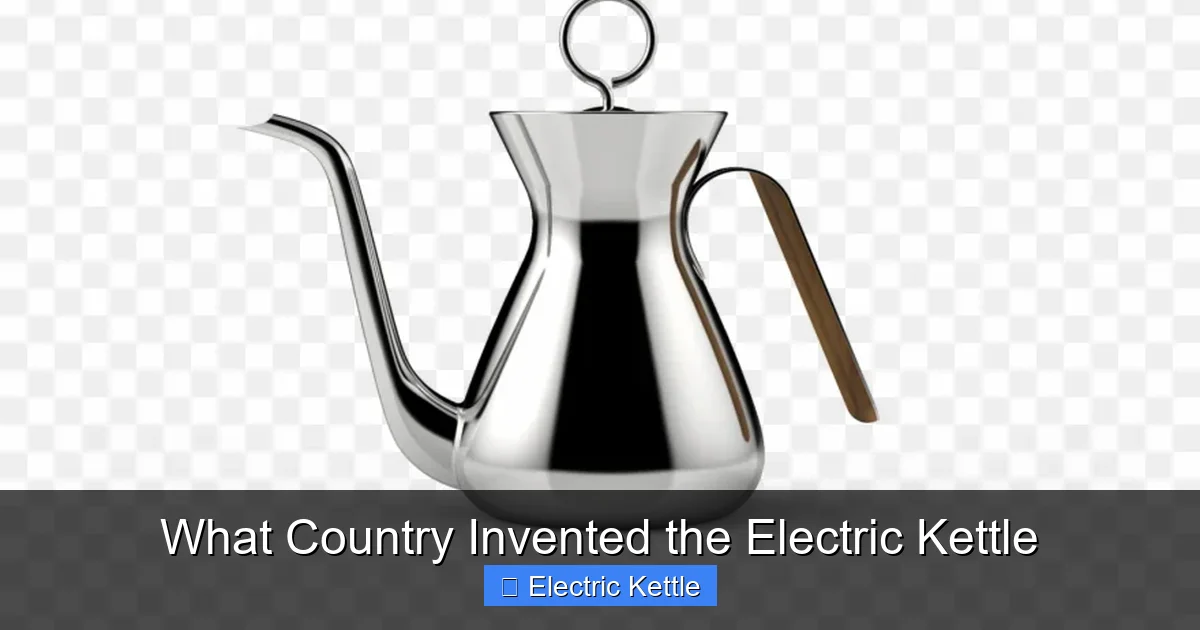
Visual guide about What Country Invented the Electric Kettle
Image source: pinclipart.com
1893: The Year Everything Changed
In 1893, the world was buzzing with new electrical inventions. Thomas Edison had lit up cities with electric bulbs, and homes were beginning to connect to power grids. It was in this electrified atmosphere that Crompton & Company introduced the first electric kettle. Named after the company’s founder, R.E.B. Crompton, this device was a metal container with a heating coil inside. When plugged in, the coil heated up and transferred energy directly to the water.
This was a big deal. Before this, boiling water meant waiting for a stove to heat up or using a gas flame. The electric kettle promised speed and convenience. But let’s be honest—it wasn’t perfect. The first models took over 12 minutes to boil a single liter of water. That’s slower than many stovetop kettles today! Plus, the heating element was exposed, which meant risks of electric shock and burns.
Still, the idea caught on. People were fascinated by the idea of “instant” hot water. The kettle was marketed as a modern, scientific appliance—perfect for the forward-thinking Victorian household. It was a symbol of progress, even if it wasn’t yet practical for everyday use.
Why England Led the Way
So why did the electric kettle emerge in England? Several factors played a role. First, England was at the center of the Industrial Revolution. It had the infrastructure, the engineers, and the manufacturing power to experiment with new technologies. Second, electricity was becoming more accessible. Cities like London had early electrical grids, making it easier to test and use electric appliances.
But perhaps the most important reason was cultural. The British love their tea. Tea time is a daily ritual, and anything that could speed up the process of boiling water was bound to gain attention. The idea of an electric kettle fit perfectly into a society that valued both tradition and innovation.
Even though the first electric kettle wasn’t widely adopted, it planted a seed. It showed that electricity could do more than light rooms—it could cook, heat, and simplify daily tasks. And that idea would grow into a global phenomenon.
From Slow Boil to Fast Heat: The Evolution of the Electric Kettle
The 1920s: Safety and Automation Arrive
For decades, electric kettles remained niche products. They were expensive, slow, and risky. But in the 1920s, a major breakthrough changed everything: the automatic shut-off feature. This simple mechanism turned off the kettle when the water reached boiling point, preventing overheating and reducing the risk of fire or burns.
This innovation made electric kettles much safer and more practical. Suddenly, people could walk away while the kettle boiled—no need to stand by and watch. It was a game-changer for home use. Manufacturers began improving designs, adding insulated handles, better materials, and more efficient heating elements.
By the 1930s, companies like Swan and Russell Hobbs in the UK were producing sleeker, more reliable models. These kettles were still mostly used in wealthier homes, but they were becoming more common. The Great Depression slowed progress, but the foundation for mass adoption was being laid.
Post-War Boom: Kettles Go Mainstream
After World War II, the world entered a period of rapid economic growth and technological advancement. Homes were being modernized, and appliances like refrigerators, washing machines, and electric kettles became symbols of a better life. In the 1950s and 1960s, electric kettles began appearing in more kitchens across Europe and North America.
But it wasn’t just about convenience. These appliances represented freedom and progress. For many families, an electric kettle meant less time spent on chores and more time for leisure. It also reflected changing gender roles, as household tasks became easier and more efficient.
In the UK, the electric kettle became a staple. By the 1970s, it was rare to find a British home without one. The same trend followed in Australia, New Zealand, and parts of Europe. In contrast, the United States was slower to adopt the electric kettle, preferring stovetop models or coffee makers for hot water.
Japan’s Quiet Revolution
While Europe embraced the electric kettle, Japan took it to the next level. In the 1950s, Japanese companies like Tiger Corporation and Zojirushi began designing kettles that were faster, safer, and more energy-efficient. They used advanced materials like stainless steel and introduced features like cordless bases and temperature control.
Japanese engineers focused on precision. They understood that different teas require different water temperatures—green tea brews best at 70°C, while black tea needs near-boiling water. This led to the development of variable temperature kettles, a feature now common in high-end models worldwide.
Japan also prioritized safety and durability. Their kettles were built to last, with double-walled insulation, automatic shut-off, and boil-dry protection. These innovations made Japanese kettles popular not just in Asia, but globally.
By the 1980s, Japan had become a leader in electric kettle technology. Their designs influenced manufacturers everywhere, pushing the entire industry toward smarter, safer, and more user-friendly appliances.
How the Electric Kettle Spread Across the Globe
Europe: A Natural Fit
Europe, especially the UK, Ireland, and parts of Western Europe, quickly adopted the electric kettle. The strong tea culture made it a perfect match. In the UK, it’s estimated that over 90% of households own an electric kettle. It’s used not just for tea, but for instant coffee, soup, noodles, and even baby formula.
The design preferences in Europe lean toward simplicity and functionality. Kettles are often cordless, with a 360-degree base, and made from plastic or stainless steel. Brands like Russell Hobbs, Kenwood, and Bosch dominate the market. Speed is key—many European kettles can boil a liter of water in under four minutes.
Asia: Innovation and Precision
In Asia, the electric kettle became more than a tool—it became a symbol of modern living. In countries like Japan, China, and South Korea, kettles are used for everything from brewing delicate green teas to making instant ramen. The demand for precision led to advanced features like digital temperature displays, keep-warm functions, and even app connectivity.
Chinese manufacturers, such as Midea and Supor, produce millions of kettles each year, exporting them worldwide. They focus on affordability and volume, making electric kettles accessible to a global audience. Meanwhile, Japanese brands emphasize quality and innovation, often setting the standard for the industry.
The Americas: A Slower Adoption
In the United States and Canada, the electric kettle was slower to catch on. Many Americans prefer drip coffee makers or stovetop kettles, and the idea of boiling water just for tea seemed unnecessary. However, in recent years, the trend has shifted. As tea consumption rises and people seek faster, more efficient appliances, electric kettles are gaining popularity.
Latin America has seen similar growth, especially in urban areas. In countries like Brazil and Argentina, electric kettles are becoming common in offices and homes, often used for yerba mate and coffee.
Australia and New Zealand: Tea Lovers’ Paradise
Down under, the electric kettle is a kitchen essential. Australians and New Zealanders drink a lot of tea and coffee, and the electric kettle is the fastest way to get hot water. Kettles here are often larger, with capacities of 1.7 to 2 liters, and designed for high performance.
Brands like Sunbeam and Breville are popular, offering kettles with rapid boil technology, quiet operation, and sleek designs. Many models also include filtration systems to improve water taste.
Modern Electric Kettles: Smart, Safe, and Sustainable
Temperature Control and Precision Brewing
Today’s electric kettles are a far cry from the slow, risky models of the 19th century. One of the biggest advancements is temperature control. Instead of just boiling water, modern kettles let you choose the exact temperature—perfect for different types of tea, coffee, or even baby food.
For example, a green tea enthusiast might set their kettle to 70°C to avoid bitterness, while a coffee lover might use 92°C for optimal extraction. Some high-end models, like those from Fellow or Smeg, offer digital displays and preset programs for various beverages.
Energy Efficiency and Eco-Friendly Design
Modern kettles are also more energy-efficient. They use less electricity to boil water compared to stovetops or microwaves. Many models feature rapid boil technology, heating water in under three minutes. This not only saves time but also reduces energy consumption.
Some brands are taking sustainability a step further. They use recycled materials, offer replaceable parts to extend lifespan, and design kettles that use minimal packaging. Energy Star-certified models are becoming more common, helping consumers make eco-conscious choices.
Smart Features and Connectivity
The future of electric kettles is smart. Some models now connect to Wi-Fi and can be controlled via smartphone apps. You can start boiling water from your bedroom, set schedules, or receive notifications when it’s done. Brands like Xiaomi and Amazon’s Smart Kettle offer these features, blending convenience with modern tech.
Voice control is another trend. With integration into Alexa or Google Assistant, you can simply say, “Hey Google, boil the kettle,” and it will start heating. These features are especially useful for people with mobility issues or busy lifestyles.
Safety First: What Makes Today’s Kettles Safe?
Safety has come a long way. Modern kettles include multiple protections: automatic shut-off when boiling, boil-dry protection (to prevent damage if there’s no water), and cool-touch exteriors. Many also have child-safe locks and insulated handles.
These features make electric kettles safer than ever, even for families with young children. They’re designed to prevent accidents while delivering fast, reliable performance.
Cultural Impact: Why the Electric Kettle Matters
A Symbol of Modern Life
The electric kettle is more than a kitchen appliance—it’s a symbol of modernity. It represents speed, convenience, and technological progress. In many cultures, it’s a daily companion, helping people start their mornings, take breaks, and connect with others over a hot drink.
Tea, Coffee, and Community
In tea-loving nations like the UK, India, and China, the electric kettle plays a central role in social rituals. A quick cup of tea can turn into a conversation, a moment of calm, or a way to show hospitality. In offices, kettles are often the heart of the break room, where colleagues gather and chat.
Even in coffee-centric cultures, the electric kettle is gaining ground. Pour-over coffee, French press, and espresso all benefit from precise water temperature—something only an electric kettle can provide consistently.
Global Influence and Future Trends
As the world becomes more connected, the electric kettle continues to evolve. We’re seeing more compact designs for small apartments, kettles with built-in filters for hard water areas, and models that work with solar power in off-grid locations.
The future may bring even smarter features—AI that learns your habits, kettles that sync with your calendar, or models that purify water as they heat it. But no matter how advanced they get, the core purpose remains the same: to deliver hot water, quickly and safely.
Conclusion: A British Invention with Global Reach
So, what country invented the electric kettle? The answer is clear: England. In 1893, Crompton & Company created the first practical electric kettle, laying the foundation for a revolution in home appliances. While early models were slow and unsafe, they sparked an idea that would grow into a global phenomenon.
Over the decades, the electric kettle evolved thanks to innovations from Japan, improvements in safety and efficiency, and growing demand across cultures. Today, it’s a staple in kitchens from London to Tokyo, from Sydney to São Paulo. It’s faster, smarter, and safer than ever—yet still serves the same simple purpose: boiling water with the push of a button.
The electric kettle may seem like a small thing. But it’s a testament to human ingenuity, cultural exchange, and the desire for a better, more convenient life. So the next time you hear that familiar click and watch the steam rise, take a moment to appreciate the journey—from a British workshop in 1893 to your kitchen counter today.
Frequently Asked Questions
What country invented the electric kettle?
The electric kettle was invented in England in 1893 by Crompton & Company. It was the first practical device to use electricity to boil water, marking the beginning of modern electric kettles.
When was the first electric kettle made?
The first electric kettle was made in 1893. It was developed by the British company Crompton & Company and used an internal heating element to boil water.
Why did England invent the electric kettle?
England had the industrial infrastructure, access to electricity, and a strong tea culture that made the electric kettle a natural innovation. The desire for faster, safer ways to boil water drove its development.
How has the electric kettle changed over time?
Electric kettles have evolved from slow, unsafe models to fast, smart appliances with temperature control, automatic shut-off, and app connectivity. Safety, speed, and efficiency have greatly improved.
Which country makes the best electric kettles today?
Japan is known for high-quality, innovative kettles with precision features. However, many countries, including the UK, China, and Germany, produce excellent models for different needs and budgets.
Do Americans use electric kettles?
Electric kettles are less common in the U.S. than in Europe or Asia, but their popularity is growing. Many Americans now use them for tea, pour-over coffee, and instant meals.