An electric kettle quickly heats water using built-in heating elements, making it ideal for tea, coffee, instant meals, and more. It’s faster, safer, and more energy-efficient than stovetop methods.
Key Takeaways
- Heats water rapidly: Electric kettles boil water in 3–5 minutes, much faster than stovetop kettles or microwaves.
- Energy-efficient: Uses only the energy needed to heat the exact amount of water, reducing waste and lowering electricity bills.
- Auto shut-off feature: Automatically turns off when water reaches boiling point, preventing overheating and improving safety.
- Temperature control options: Advanced models offer variable temperature settings for different beverages like green tea or French press coffee.
- Versatile uses: Great for more than just tea—perfect for instant noodles, oatmeal, baby formula, and even cleaning tasks.
- Easy to clean and maintain: Most models have removable filters and smooth interiors that resist limescale buildup.
- Compact and portable: Takes up minimal counter space and is ideal for offices, dorms, or travel with compatible voltage.
📑 Table of Contents
What Does an Electric Kettle Do?
Imagine this: It’s early morning, and you’re craving a hot cup of coffee. Instead of waiting for a stovetop kettle to slowly heat up or risking a lukewarm mug from the microwave, you simply press a button. Within minutes, your water is boiling—ready to brew that perfect cup. That’s the magic of an electric kettle.
At its core, an electric kettle is a small kitchen appliance designed to heat and boil water quickly and efficiently. Unlike traditional kettles that sit on a stove, electric kettles plug into a wall outlet and use internal heating elements to warm water from the inside out. This direct heating method makes them significantly faster and more energy-efficient than most alternatives.
But an electric kettle does more than just boil water. It’s a versatile tool that supports a wide range of daily tasks—from making tea and coffee to preparing quick meals and even sanitizing baby bottles. Whether you’re a busy professional, a student, or a parent, an electric kettle can simplify your routine and save you time.
How Does an Electric Kettle Work?
Understanding how an electric kettle works helps explain why it’s so effective. The process is simple, yet cleverly engineered for speed and safety.
Internal Heating Element
Most electric kettles contain a concealed heating element located at the base of the unit. When you add water and plug in the kettle, electricity flows through this element, converting electrical energy into heat. This heat is then transferred directly to the water, causing it to warm up rapidly.
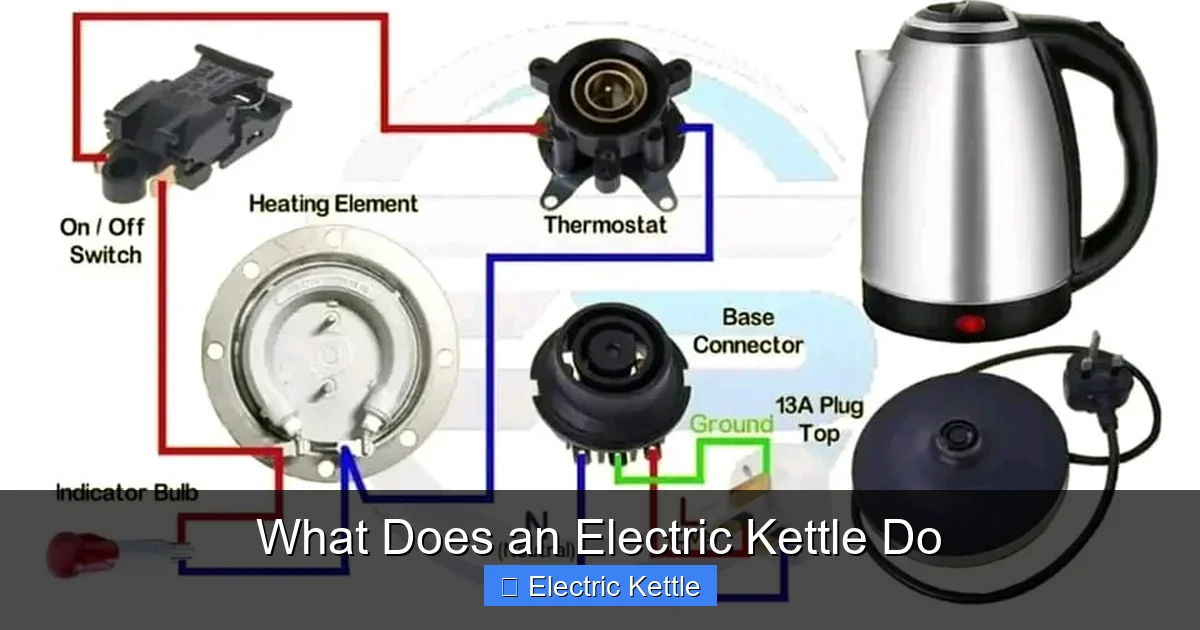
Visual guide about What Does an Electric Kettle Do
Image source: iti.directory
Thermostat and Auto Shut-Off
Once the water reaches its boiling point (typically around 212°F or 100°C), a built-in thermostat detects the temperature rise. This triggers an automatic shut-off mechanism, turning off the heating element to prevent overheating or dry boiling. This feature not only enhances safety but also saves energy by stopping the heating process the moment it’s no longer needed.
Boil-Dry Protection
Many modern electric kettles include boil-dry protection. If the kettle is turned on without water or if the water level drops too low, the thermostat detects the lack of cooling from the liquid and shuts off the power. This prevents damage to the heating element and reduces fire risks.
Rapid Boiling Technology
Some high-end models use advanced heating technology, such as rapid-boil elements or double-wall insulation, to heat water even faster. These kettles can boil a full liter of water in under four minutes—ideal for those who value speed and convenience.
Key Features of Electric Kettles
Electric kettles come in a variety of designs and functionalities. While basic models focus on simple boiling, advanced versions offer features that enhance convenience, precision, and safety.
Variable Temperature Control
Not all beverages require boiling water. Green tea, for example, tastes best when brewed at around 175°F (80°C), while French press coffee needs water just off the boil. Many premium electric kettles offer variable temperature settings, allowing you to select the ideal heat level for different drinks. This precision helps preserve flavor and prevents bitterness.
Keep-Warm Function
Some kettles include a keep-warm feature that maintains the water at a set temperature for up to an hour after boiling. This is especially useful if you’re preparing multiple cups or waiting for someone to join you for tea. It eliminates the need to reboil water, saving time and energy.
Water Level Indicators
Most electric kettles have clear water level markers on the side or inside the lid. These help you measure the exact amount of water needed, preventing overfilling or underfilling. This is not only convenient but also improves energy efficiency by heating only what you need.
Removable Lid and Wide Opening
A wide-opening lid makes it easy to fill the kettle and clean the interior. Some models have a fully removable lid, which is especially helpful for reaching into narrow kettles. This design also reduces the buildup of limescale and mineral deposits, especially in areas with hard water.
360-Degree Swivel Base
The base of most electric kettles swivels 360 degrees, allowing you to place the kettle in any direction. This makes it easy to lift and pour, even in tight spaces. The cordless design also enhances portability and reduces clutter on your countertop.
LED Indicators and Sound Alerts
Many kettles feature LED lights that illuminate when the unit is on or when the water has reached the desired temperature. Some models also emit a soft beep or chime to signal that boiling is complete. These small touches improve usability, especially in noisy environments or for people with visual impairments.
Common Uses for an Electric Kettle
While making tea and coffee are the most obvious uses, an electric kettle is far more versatile than many people realize. Here are some practical ways to use it in your daily life.
Brewing Tea and Coffee
Whether you prefer black, green, white, or herbal tea, an electric kettle gives you the control and speed needed for the perfect brew. For coffee lovers, it’s ideal for pour-over, French press, or instant coffee. The precise temperature settings on advanced models ensure you don’t scorch delicate teas or under-extract coffee.
Preparing Instant Meals
From instant noodles and oatmeal to soup mixes and hot chocolate, an electric kettle makes it easy to whip up quick meals. Just add the ingredients to a bowl, pour in the hot water, and stir. It’s a lifesaver for students, travelers, or anyone with a busy schedule.
Making Baby Formula
Parents often use electric kettles to prepare baby formula safely. Boiling water kills harmful bacteria, and the auto shut-off feature ensures the water is at the right temperature—hot enough to sterilize but not so hot that it burns the baby. Some parents even use kettles with temperature control to get the water to the ideal mixing temperature (around 104°F or 40°C).
Sanitizing and Cleaning
Boiling water from an electric kettle can be used to sanitize baby bottles, pacifiers, or kitchen tools. Simply submerge the items in a bowl of boiled water for a few minutes. The high heat kills germs and bacteria, providing a chemical-free cleaning method.
Cooking Small Meals
You can use boiled water from an electric kettle to cook small portions of pasta, eggs, or vegetables. For example, pour hot water over dried pasta in a heatproof container and let it sit for 10–15 minutes. It’s not as fast as stovetop cooking, but it works in a pinch—especially in dorm rooms or offices without stoves.
Relieving Congestion and Relaxation
Boiling water creates steam, which can help relieve nasal congestion or dry sinuses. Simply boil water in the kettle, then carefully inhale the steam (with caution to avoid burns). Some people also use the warm, moist air to soothe sore throats or relax before bed.
Benefits of Using an Electric Kettle
Switching to an electric kettle offers several advantages over traditional heating methods. Here’s why so many people consider it a kitchen essential.
Speed and Convenience
Electric kettles are significantly faster than stovetop kettles or microwaves. While a stovetop kettle might take 8–10 minutes to boil, an electric kettle does it in 3–5 minutes. This speed is especially valuable during busy mornings or when you need hot water in a hurry.
Energy Efficiency
Because electric kettles heat water directly and only use the energy needed for the amount of water you add, they are more energy-efficient than stovetops or microwaves. Studies show that electric kettles can use up to 50% less energy than boiling water on a gas stove. This translates to lower electricity bills and a smaller carbon footprint.
Improved Safety
The auto shut-off and boil-dry protection features make electric kettles safer than stovetop alternatives. You don’t have to worry about forgetting the kettle on the stove or it boiling dry. Plus, since the heating element is enclosed, there’s less risk of burns from open flames or hot surfaces.
Consistent Results
Unlike stovetops, which can have uneven heat distribution, electric kettles provide consistent heating. This ensures that water reaches the same temperature every time, which is crucial for brewing tea or coffee correctly. Temperature-controlled models take this a step further by eliminating guesswork.
Space-Saving Design
Electric kettles are compact and take up minimal counter space. They’re perfect for small kitchens, dorm rooms, or offices. Many models are also lightweight and easy to store when not in use.
Quiet Operation
Compared to the loud whistling of stovetop kettles, electric kettles operate quietly. Most models make a soft humming sound while heating and shut off silently. This makes them ideal for early mornings or late-night use without disturbing others.
Choosing the Right Electric Kettle
With so many options on the market, picking the right electric kettle can feel overwhelming. Here are some factors to consider before making a purchase.
Capacity
Electric kettles typically range from 0.5 to 1.7 liters. A smaller kettle (0.5–1 liter) is great for individuals or small households, while larger models (1.5–1.7 liters) suit families or frequent entertainers. Consider how much water you usually need at once.
Material
Kettles are made from stainless steel, plastic, glass, or a combination. Stainless steel is durable and resistant to rust, but can retain heat longer. Glass kettles are stylish and allow you to see the water boiling, but may be more fragile. Plastic kettles are lightweight and affordable, but some people worry about chemicals leaching into the water—look for BPA-free models.
Temperature Settings
If you drink a variety of teas or coffee, a kettle with variable temperature control is worth the investment. Look for models with preset options for green tea, white tea, oolong, coffee, and more. Some even have a “keep warm” function.
Ease of Cleaning
Choose a kettle with a wide opening and removable limescale filter. This makes it easier to clean the interior and prevent mineral buildup. Descaling regularly (especially in hard water areas) will keep your kettle working efficiently.
Brand and Warranty
Stick with reputable brands known for quality and customer service. Check the warranty—most good kettles come with a 1–2 year warranty. Reading customer reviews can also help you avoid models with common issues like leaks or short lifespans.
Price
Electric kettles range from $20 to $100+. Basic models are affordable and functional, while premium kettles offer advanced features like temperature control, LED displays, and smart connectivity. Decide what features matter most to you and choose accordingly.
Maintenance and Care Tips
To keep your electric kettle working well and lasting longer, regular maintenance is key.
Descaling Regularly
Mineral deposits from hard water can build up inside the kettle, reducing efficiency and affecting taste. Descale your kettle every 1–2 months using a mixture of equal parts water and white vinegar. Let it sit for an hour, then boil and rinse thoroughly.
Cleaning the Exterior
Wipe the outside of the kettle with a damp cloth and mild detergent. Avoid submerging the base or electrical components in water. For stainless steel models, use a polish to maintain shine.
Checking the Filter
Most kettles have a mesh filter near the spout to catch sediment. Remove and rinse it regularly to prevent clogs. If the filter is damaged, replace it to maintain water quality.
Avoiding Overfilling
Never fill the kettle above the maximum water line. Overfilling can cause water to spill into the base, damaging the electrical components. Similarly, don’t run the kettle with too little water—this can trigger the boil-dry protection or damage the heating element.
Storing Properly
When not in use, store the kettle in a dry place with the lid open to allow airflow. This prevents moisture buildup and odors. If you’re traveling, make sure the kettle is completely dry before packing it.
Conclusion
An electric kettle does far more than just boil water—it’s a smart, efficient, and versatile appliance that can transform your daily routine. From brewing the perfect cup of tea to preparing quick meals and sanitizing baby items, its uses are both practical and wide-ranging.
Thanks to features like rapid heating, auto shut-off, and temperature control, electric kettles offer a level of convenience and safety that stovetop methods simply can’t match. They’re energy-efficient, easy to use, and built to last with proper care.
Whether you’re a tea enthusiast, a busy parent, or someone who just wants hot water in a hurry, an electric kettle is a worthwhile investment. It saves time, reduces energy waste, and makes everyday tasks simpler and more enjoyable.
So the next time you ask, “What does an electric kettle do?” remember: it’s not just about boiling water. It’s about making life a little easier, one hot cup at a time.
Frequently Asked Questions
How fast does an electric kettle boil water?
Most electric kettles boil water in 3 to 5 minutes, depending on the model and amount of water. This is significantly faster than stovetop kettles, which can take 8–10 minutes.
Is it safe to leave an electric kettle unattended?
Yes, as long as it has auto shut-off and boil-dry protection. These safety features turn off the kettle when water reaches boiling point or if it’s empty, reducing the risk of accidents.
Can I use an electric kettle for purposes other than making tea?
Absolutely! Electric kettles are great for making coffee, instant noodles, oatmeal, baby formula, and even sanitizing small items with boiling water.
Do electric kettles use a lot of electricity?
No, they are energy-efficient. Electric kettles use only the energy needed to heat the water you add, making them more efficient than stovetops or microwaves.
How often should I descale my electric kettle?
It’s recommended to descale every 1–2 months, especially if you live in an area with hard water. Use a vinegar-water solution to remove mineral buildup.
Can I boil milk or other liquids in an electric kettle?
It’s not recommended. Most electric kettles are designed for water only. Boiling milk or sugary liquids can damage the heating element and leave stubborn residue that’s hard to clean.