While most electric kettles are manufactured in China, several reputable brands produce them in countries like the USA, Japan, Germany, and Italy. This guide highlights those rare, high-quality options for buyers seeking non-Chinese electric kettles without sacrificing performance or durability.
If you’ve ever stood in the kitchen aisle staring at a wall of electric kettles, wondering where each one was made, you’re not alone. In today’s global marketplace, it’s surprisingly hard to find household appliances—especially small kitchen electronics—that aren’t manufactured in China. Electric kettles are no exception. In fact, the vast majority of electric kettles sold worldwide are produced in Chinese factories, thanks to their advanced manufacturing infrastructure, low labor costs, and established supply chains.
But what if you’re looking for something different? Maybe you prefer to support local industries, avoid mass-produced goods, or simply want a kettle with a unique story behind it. Perhaps you’re concerned about supply chain ethics, environmental impact, or long-term durability. Whatever your reason, the good news is that there are still electric kettles not made in China—though they’re definitely the exception rather than the rule.
In this guide, we’ll explore the landscape of non-Chinese electric kettles, spotlighting brands and models that are proudly manufactured in countries like the United States, Japan, Germany, Italy, and beyond. We’ll break down why these kettles are harder to find, what makes them special, and how to identify them when shopping. Whether you’re a tea enthusiast, a coffee connoisseur, or just someone who values transparency in manufacturing, this article will help you make an informed choice.
Key Takeaways
- Most electric kettles are made in China: Over 80% of global electric kettle production occurs in Chinese factories due to cost efficiency and manufacturing scale.
- Non-Chinese kettles are often premium or niche products: Brands avoiding Chinese manufacturing typically focus on craftsmanship, sustainability, or local job creation.
- Look for “Made in” labels and brand transparency: Always check product packaging, websites, or customer service to verify manufacturing origin.
- Countries like Japan, Germany, and the USA host select manufacturers: These nations produce electric kettles with a focus on precision engineering and high-quality materials.
- Price is often higher for non-Chinese kettles: Lower production volumes and higher labor costs result in steeper price tags, but many users find the investment worthwhile.
- Certifications matter: Look for UL, CE, or GS marks that indicate safety standards, regardless of where the kettle is made.
- Some brands use hybrid manufacturing: A product may be designed in one country but assembled in another—always dig deeper than marketing claims.
📑 Table of Contents
- Why Most Electric Kettles Are Made in China
- Countries That Manufacture Electric Kettles (Besides China)
- How to Identify Electric Kettles Not Made in China
- Top Brands Offering Electric Kettles Not Made in China
- Pros and Cons of Non-Chinese Electric Kettles
- Tips for Buying a Non-Chinese Electric Kettle
- Conclusion
Why Most Electric Kettles Are Made in China
It’s no secret that China dominates the global manufacturing of small appliances, and electric kettles are firmly in that category. But why is that the case? The answer lies in a combination of economic, logistical, and industrial factors that have made China the go-to destination for producing everything from smartphones to toasters.
First, China offers unparalleled economies of scale. With massive factories capable of producing millions of units per year, manufacturers can drive down per-unit costs significantly. This allows brands—even premium ones—to offer competitive pricing while maintaining profit margins. Second, China has a deeply entrenched supply chain ecosystem. From stainless steel and heating elements to plastic components and electronic controls, nearly every part of an electric kettle can be sourced and assembled within a short geographic radius. This reduces lead times and minimizes logistical headaches.
Additionally, Chinese manufacturers have spent decades refining their production processes. Many have ISO certifications, advanced quality control systems, and experience working with international brands. As a result, even companies based in Europe or North America often outsource production to China to meet demand efficiently.
That said, this concentration of manufacturing isn’t without drawbacks. Concerns about labor practices, environmental regulations, and geopolitical risks have led some consumers and companies to seek alternatives. While China remains the dominant player, a growing number of brands are exploring or committing to non-Chinese production—especially in markets where consumers are willing to pay a premium for locally made goods.
Countries That Manufacture Electric Kettles (Besides China)
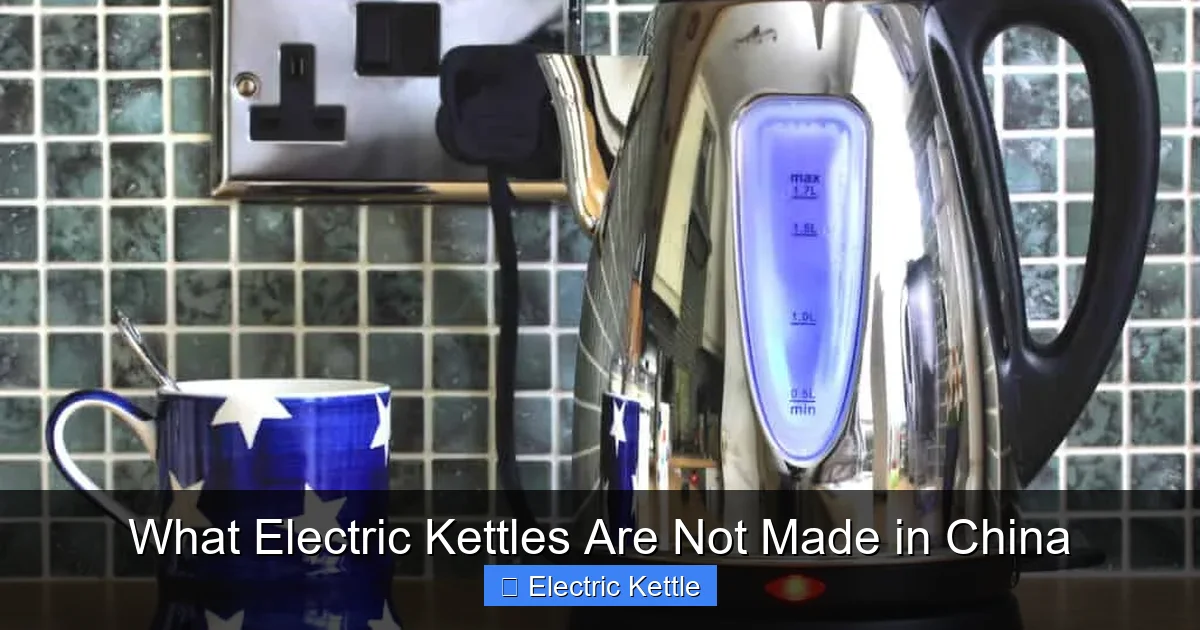
Visual guide about What Electric Kettles Are Not Made in China
Image source: foodsguy.com
While China leads the pack, several other countries are home to electric kettle manufacturers. These nations often emphasize quality, design, and ethical production, even if it means higher prices and lower output. Let’s take a closer look at where you might find electric kettles not made in China.
Japan: Precision and Innovation
Japan has a long-standing reputation for precision engineering and attention to detail, and its electric kettles reflect that ethos. Brands like Zojirushi and Tiger Corporation are household names in Japan and have gained international recognition for their high-performance appliances.
Zojirushi, for example, manufactures many of its electric kettles in Japan, particularly its premium vacuum-insulated models. These kettles are known for their sleek design, rapid heating, and ability to keep water hot for hours. The company emphasizes craftsmanship and durability, often using high-grade stainless steel and advanced temperature control systems.
Tiger Corporation, another Japanese giant, also produces electric kettles domestically. Their products often feature unique functionalities like dual-heating zones, keep-warm modes, and quiet operation—qualities that set them apart from mass-market competitors.
One thing to note: while these brands are Japanese, not all of their products are made in Japan. Some entry-level or budget models may be manufactured in China or other Asian countries. Always check the “Made in” label or contact customer service to confirm.
Germany: Engineering Excellence
Germany is synonymous with engineering excellence, and its appliance manufacturers are no exception. Brands like Bosch, Miele, and Russell Hobbs (under its German license) have a strong presence in the European market and often produce high-end electric kettles in Germany or other EU countries.
Miele, for instance, is known for its commitment to quality and longevity. While the company produces a wide range of appliances, its electric kettles—when available—are typically made in Germany with rigorous attention to safety and performance. These kettles often feature stainless steel bodies, precise temperature settings, and minimalist designs that fit seamlessly into modern kitchens.
Bosch, another German powerhouse, manufactures some of its kettles in Germany, particularly those sold in the European market. These models often include features like boil-dry protection, cordless designs, and energy-efficient heating elements.
It’s worth noting that German-made kettles are relatively rare in the U.S. market due to import costs and limited distribution. However, they can often be found through specialty retailers or online importers.
Italy: Design and Craftsmanship
Italy is famous for its design heritage, and that extends to kitchen appliances. Brands like Smeg and Alessi have made a name for themselves with stylish, retro-inspired electric kettles that double as statement pieces.
Smeg, in particular, is known for its iconic 1950s-style appliances. Many of Smeg’s electric kettles are manufactured in Italy, using high-quality materials and hand-finished details. These kettles aren’t just functional—they’re conversation starters. With bold colors, rounded edges, and polished stainless steel, they blend form and function beautifully.
Alessi, another Italian design house, collaborates with renowned designers to create limited-edition kettles that are as much art objects as kitchen tools. While not all Alessi kettles are electric, the brand does offer select models that are made in Italy with meticulous attention to detail.
These Italian-made kettles tend to be on the higher end of the price spectrum, but for design-conscious buyers, they’re worth the investment.
United States: A Growing Movement
The U.S. has seen a resurgence in domestic manufacturing in recent years, driven by consumer demand for locally made products and concerns about overseas production. While electric kettles are still a niche category in American manufacturing, a few brands are leading the charge.
One standout is Fellow, a San Francisco-based company known for its minimalist, functional kitchenware. Fellow’s electric kettles, such as the popular Stagg EKG, are designed in the U.S. and manufactured in collaboration with factories in South Korea and Japan. While not made in the U.S., Fellow emphasizes ethical production, transparency, and high-quality materials.
Another example is Cuisinart, which, while headquartered in the U.S., produces most of its appliances overseas. However, the company has begun exploring domestic manufacturing for select product lines in response to customer feedback.
True American-made electric kettles are rare, but the trend is growing. Some small-batch manufacturers and artisans are experimenting with handmade or custom kettles, often using locally sourced materials and traditional techniques. These products are typically sold through specialty retailers or online marketplaces like Etsy.
Other Countries: France, South Korea, and Beyond
Beyond the major players, a few other countries produce electric kettles with distinct characteristics.
In France, brands like Tefal and Moulinex have a long history in kitchen appliances. While much of their production has shifted to China, some premium models—especially those sold in Europe—are still made in France or other EU countries. These kettles often emphasize safety features, energy efficiency, and sleek European design.
South Korea is another hub for high-tech appliances. Brands like Cuckoo and LG produce electric kettles with advanced features like smart controls, app connectivity, and precision temperature settings. Many of these models are manufactured in South Korea, particularly for the domestic and Asian markets.
Even smaller countries like Switzerland and the UK have niche manufacturers. For example, Swiss brand Vitesse produces electric kettles with a focus on durability and classic design, some of which are made in Europe.
How to Identify Electric Kettles Not Made in China
With so many products on the market, how can you tell if an electric kettle is truly not made in China? The process requires a bit of detective work, but it’s entirely possible with the right approach.
Check the Product Label
The most straightforward method is to look at the product label or packaging. Most countries require manufacturers to disclose the country of origin. This information is usually printed on the bottom of the kettle, on the box, or in the user manual. Look for phrases like “Made in Japan,” “Manufactured in Germany,” or “Assembled in the USA.”
Be cautious of vague terms like “Designed in California” or “Engineered in Germany.” These don’t necessarily mean the product was made there. The actual manufacturing location is what matters.
Visit the Brand’s Website
Reputable brands often provide detailed information about their manufacturing processes on their websites. Look for sections like “Our Story,” “Sustainability,” or “Manufacturing.” Brands that are proud of their non-Chinese production will usually highlight it.
For example, Zojirushi’s website clearly states which models are made in Japan. Smeg emphasizes its Italian craftsmanship. Fellow discusses its global supply chain and ethical sourcing.
Contact Customer Service
If you can’t find the information online, don’t hesitate to reach out to the brand’s customer service team. Most companies are happy to provide details about where their products are made. Be specific in your inquiry—ask for the country of manufacture, not just where the company is based.
Look for Certifications and Standards
While not a direct indicator of origin, certifications can give you clues about where a product was made. For example, GS certification is common in Germany, while CE marking is standard in the EU. UL listing is typical for U.S.-market products. These marks suggest compliance with regional safety standards, which can hint at the manufacturing location.
Beware of Greenwashing and Marketing Hype
Some brands use marketing language to imply local production without actually delivering it. Phrases like “inspired by European design” or “crafted with care” are often red flags. Always verify claims with concrete evidence.
Top Brands Offering Electric Kettles Not Made in China
Now that you know where to look, here are some of the top brands offering electric kettles not made in China. These companies prioritize quality, transparency, and often, ethical production.
Zojirushi
Zojirushi is a Japanese brand renowned for its vacuum-insulated products, including electric kettles. Many of its premium models, such as the Zojirushi CKCC40 Micom, are manufactured in Japan. These kettles feature precise temperature control, rapid heating, and excellent heat retention. They’re ideal for tea lovers who want to brew at specific temperatures.
Smeg
Smeg’s electric kettles are as much about style as they are about function. Made in Italy, these kettles come in a range of vibrant colors and retro designs. The Smeg KLF01, for example, features a 1.7-liter capacity, stainless steel body, and a 1500-watt heating element. It’s a favorite among design enthusiasts.
Miele
Miele is a German brand known for its high-end appliances. While not all Miele kettles are made in Germany, the company’s commitment to quality means that its European-made models are built to last. Look for kettles with precise temperature settings and quiet operation.
Fellow
Fellow’s Stagg EKG is a favorite among coffee professionals. Designed in the U.S. and manufactured in South Korea and Japan, it offers variable temperature control, a gooseneck spout for precise pouring, and a sleek, minimalist design. It’s perfect for pour-over coffee and delicate teas.
Cuckoo
Cuckoo is a South Korean brand that produces high-tech electric kettles with smart features. Many of its models are made in South Korea and include app connectivity, voice control, and multi-stage heating. The Cuckoo CEK-1710V is a popular choice for tech-savvy users.
Pros and Cons of Non-Chinese Electric Kettles
Choosing an electric kettle not made in China comes with its own set of advantages and challenges. Here’s what to consider before making a purchase.
Pros
- Higher Quality Materials: Non-Chinese kettles often use premium stainless steel, borosilicate glass, or ceramic components that resist corrosion and improve taste.
- Better Craftsmanship: Brands in countries like Japan and Germany emphasize precision engineering and attention to detail.
- Ethical Production: Many non-Chinese manufacturers adhere to stricter labor and environmental standards.
- Unique Design: Italian and Japanese brands often offer distinctive aesthetics that stand out in any kitchen.
- Longer Lifespan: Higher build quality can mean fewer repairs and replacements over time.
Cons
- Higher Price: Non-Chinese kettles typically cost more due to higher production costs and lower economies of scale.
- Limited Availability: These kettles may not be widely available in all regions, requiring online purchases or specialty retailers.
- Longer Shipping Times: Importing from overseas can delay delivery, especially for European or Asian-made models.
- Fewer Budget Options: Most non-Chinese kettles are positioned as premium products, with few affordable choices.
- Potential Compatibility Issues: Voltage and plug types may differ, requiring adapters or converters for international use.
Tips for Buying a Non-Chinese Electric Kettle
If you’re ready to invest in an electric kettle not made in China, here are some practical tips to guide your purchase.
Set a Budget
Non-Chinese kettles can range from $80 to over $300. Decide how much you’re willing to spend and prioritize features that matter most to you—whether it’s temperature control, design, or durability.
Read Reviews
Look for detailed reviews from verified buyers. Pay attention to comments about build quality, performance, and longevity. Sites like Amazon, Wirecutter, and Consumer Reports can be helpful.
Check Warranty and Support
A good warranty is a sign of confidence in the product. Look for brands that offer at least a one-year warranty and responsive customer support.
Consider Your Needs
Do you need a large capacity for family use? A gooseneck spout for pour-over coffee? Variable temperature settings for different teas? Match the kettle’s features to your lifestyle.
Verify the Origin
Before buying, double-check the manufacturing country. Use the methods outlined earlier—labels, websites, customer service—to ensure you’re getting what you pay for.
Conclusion
While the majority of electric kettles on the market are made in China, there are still excellent options available from other countries. Brands in Japan, Germany, Italy, and beyond offer kettles that prioritize quality, design, and ethical production. These products may come with a higher price tag, but for many buyers, the investment is worth it.
By doing your research, checking labels, and supporting transparent brands, you can find an electric kettle that aligns with your values and enhances your daily routine. Whether you’re brewing a morning cup of coffee or steeping a delicate oolong tea, a well-made kettle can make all the difference.
So the next time you’re shopping for an electric kettle, remember: not all are created equal—and not all are made in China. With a little effort, you can find a kettle that’s as thoughtful as it is functional.
Frequently Asked Questions
Are there any electric kettles made in the USA?
True American-made electric kettles are rare, but a few brands like Fellow design their products in the U.S. and manufacture them in countries like Japan and South Korea. Some small-batch artisans also create handmade kettles in the U.S., though they are not widely available.
How can I tell if an electric kettle is really made in Japan or Germany?
Check the product label for a “Made in” statement, visit the brand’s website for manufacturing details, or contact customer service directly. Avoid relying on marketing phrases like “designed in” without confirmation of actual production location.
Are non-Chinese electric kettles worth the higher price?
It depends on your priorities. If you value craftsmanship, durability, and ethical production, the higher cost may be justified. However, many Chinese-made kettles are also high quality, so it’s important to compare features and reviews.
Do non-Chinese kettles work with U.S. voltage?
Most kettles sold in the U.S. are designed for 120V, regardless of where they’re made. However, if you’re importing a kettle from Europe or Asia, check the voltage rating and use a converter if needed.
Can I find non-Chinese electric kettles at major retailers?
Some brands like Smeg and Zojirushi are available at stores like Williams Sonoma, Sur La Table, and Amazon. However, availability may be limited compared to mass-market Chinese-made models.
Are there eco-friendly electric kettles not made in China?
Yes. Brands like Fellow and Miele emphasize sustainable materials and ethical production. Look for kettles made from recycled stainless steel, energy-efficient heating elements, and minimal packaging.