When it comes to efficiency, electric kettles generally outperform stove top kettles in speed, energy use, and convenience. While stove top models offer charm and durability, electric kettles heat water faster and use less electricity, making them the smarter choice for most modern kitchens.
Key Takeaways
- Electric kettles are faster: They boil water in 2–4 minutes, compared to 5–10 minutes for stove top kettle.
- Energy efficiency favors electric: Electric kettles convert up to 80% of energy into heat, while stovetops lose more to the surrounding air.
- Stove top kettles work during power outages: Ideal for off-grid living or emergencies, but rely on gas or electric stoves.
- Electric kettles offer precision: Many models include temperature control for tea, coffee, or baby formula.
- Maintenance is simpler with electric: Fewer parts to clean and no risk of burner residue buildup.
- Long-term cost savings with electric: Lower energy bills and longer lifespan make electric kettles more economical over time.
- Environmental impact varies: Electric kettles are greener if powered by renewable energy; gas stovetops emit more CO₂.
📑 Table of Contents
- What Is More Efficient: Stove Top Kettle or Electric Kettle?
- How Do Stove Top and Electric Kettles Work?
- Energy Efficiency: Which Kettle Uses Less Power?
- Speed: Which Kettle Boils Water Faster?
- Cost and Long-Term Value
- Safety and Convenience Features
- Environmental Impact
- Which Kettle Is Right for You?
- Conclusion
What Is More Efficient: Stove Top Kettle or Electric Kettle?
Imagine this: It’s early morning, you’re craving a hot cup of tea, and you’re standing in the kitchen, staring at your kettle options. Do you reach for the classic stovetop model that’s been in your family for years, or do you plug in the sleek electric kettle you bought last winter? The choice might seem small, but it actually has a big impact—on your time, your energy bill, and even the planet.
The debate between stove top kettles and electric kettles isn’t new, but it’s more relevant than ever as we all look for ways to live more efficiently. With rising energy costs and growing environmental awareness, understanding which appliance uses less power, heats faster, and costs less over time is essential. Whether you’re a tea enthusiast, a coffee lover, or just someone who likes hot water for instant soups, the right kettle can make a real difference.
In this article, we’ll dive deep into the efficiency of both types of kettles—comparing how they work, how much energy they use, how fast they boil, and what they cost to run. We’ll also look at real-world factors like convenience, safety, and environmental impact. By the end, you’ll have all the info you need to decide which kettle is the best fit for your kitchen and lifestyle.
How Do Stove Top and Electric Kettles Work?
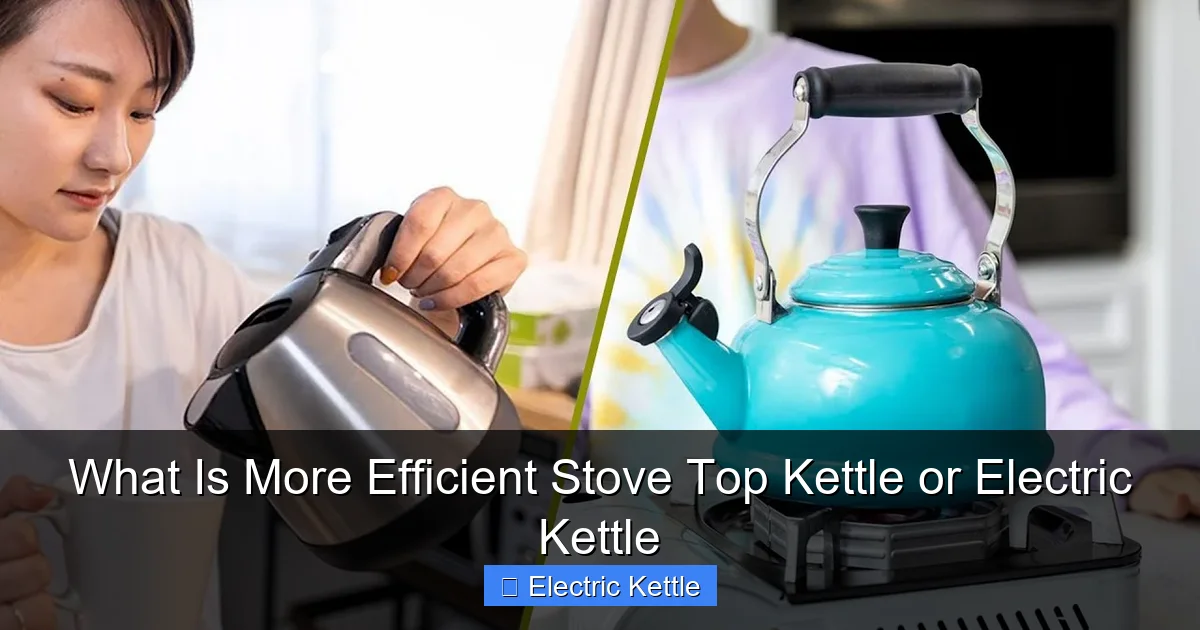
Visual guide about What Is More Efficient Stove Top Kettle or Electric Kettle
Image source: storables.com
Before we compare efficiency, it helps to understand how each kettle gets the job done.
Stove Top Kettles: The Classic Approach
Stove top kettles are the traditional option. They’re usually made of stainless steel, copper, or enamel, and they sit directly on a gas or electric burner. When heat is applied, the bottom of the kettle warms up, transferring that heat to the water inside through conduction. As the water heats, convection currents circulate it, helping it reach a uniform temperature.
One of the charming features of many stove top kettles is the whistle. Once the water reaches boiling point, steam builds up and forces air through a small opening, creating that familiar high-pitched sound. It’s a simple, mechanical alert that doesn’t require electricity or batteries.
But here’s the catch: stove top kettles rely entirely on your stove’s heat source. That means their efficiency depends on the type of stove you have. Gas stoves, for example, lose a lot of heat to the air around the kettle. Electric coil stoves are better but still not as efficient as modern induction. And if you’re using an induction stove, you’ll need a kettle made of magnetic material—like certain stainless steels—or it won’t work at all.
Electric Kettles: Modern Convenience
Electric kettles, on the other hand, are self-contained units with built-in heating elements. You fill them with water, plug them in, press a button, and they heat the water internally. Most models use a concealed heating element at the base, which transfers heat directly to the water with minimal loss.
Because the heat is generated inside the kettle, there’s very little wasted energy. The water heats quickly and evenly, and many electric kettles come with automatic shut-off features that turn the unit off once boiling is reached. Some even have keep-warm functions or variable temperature settings for different beverages.
Electric kettles are typically made of plastic, stainless steel, or glass. Plastic models are lightweight and affordable but may retain odors or degrade over time. Stainless steel is durable and easy to clean, while glass offers a modern look and lets you see the water level—but it can be fragile.
Energy Efficiency: Which Kettle Uses Less Power?
Now let’s get to the heart of the matter: energy efficiency. This is where electric kettles really shine.
How Energy Efficiency Is Measured
Energy efficiency in kettles is usually measured by how much of the input energy is actually used to heat the water. The rest is lost to the environment—through heat radiating from the stove, steam escaping, or the kettle itself getting hot.
Studies show that electric kettles are significantly more efficient than stovetop models. According to the U.S. Department of Energy, electric kettles convert about 70–80% of the electricity they use into heat for the water. In contrast, gas stovetops are only about 30–40% efficient, and electric coil stovetops hover around 70%.
That means if you use a gas stove to heat water, more than half the energy is wasted. Even with an electric coil stove, you’re still losing some heat to the air and the stovetop surface.
Real-World Energy Use Comparison
Let’s look at a practical example. Suppose you want to boil 1 liter (about 4 cups) of water.
– An average electric kettle uses about 1500 watts and takes 3–4 minutes to boil. That’s roughly 0.075–0.1 kWh of electricity.
– A gas stove might take 6–8 minutes to do the same job. Even though gas is cheaper per unit, the lower efficiency means you’re using more total energy.
– An electric coil stove could take 5–7 minutes, using slightly more electricity than the electric kettle due to heat loss.
Over time, these small differences add up. If you boil water twice a day, the electric kettle could save you several dollars a year on your energy bill—especially if you live in an area with high electricity costs.
Standby Power and Auto Shut-Off
Another efficiency advantage of electric kettles is their automatic shut-off feature. Once the water reaches boiling point, the kettle turns itself off. This prevents over-boiling, saves energy, and reduces the risk of dry boiling (which can damage the kettle).
Stove top kettles don’t have this feature. You have to remember to turn off the stove, or rely on the whistle—which might not always be loud enough, especially in a busy kitchen. If you get distracted and the water boils dry, you’re not only wasting energy but also risking damage to the kettle or even a fire hazard.
Some high-end electric kettles go a step further with “keep-warm” modes that maintain the water at a set temperature for a short time. While this uses a little extra power, it’s still more efficient than reheating cold water later.
Speed: Which Kettle Boils Water Faster?
When you’re in a rush, speed matters. And here, electric kettles win hands down.
Boiling Time Comparison
On average, an electric kettle can boil 1 liter of water in 2–4 minutes. High-performance models with 1800–2200 watts can do it even faster—sometimes under 2 minutes.
Stove top kettles, by comparison, take 5–10 minutes depending on the stove type and heat setting. Gas stoves might be slightly faster than electric coils, but they’re still slower than a good electric kettle.
Why the difference? It comes down to direct heat transfer. In an electric kettle, the heating element is in direct contact with the water (or very close to it). In a stove top kettle, heat must travel from the burner, through the kettle’s base, and into the water—losing energy at each step.
Factors That Affect Boiling Speed
Several things can influence how fast your kettle boils:
– **Starting water temperature:** Cold tap water takes longer than warm. If you’re in a hurry, use the warm water setting on your tap.
– **Kettle material:** Thin, lightweight kettles heat faster than thick, heavy ones. Stainless steel is a good balance of speed and durability.
– **Lid design:** A tight-fitting lid traps heat and speeds up boiling. Loose or warped lids can slow things down.
– **Altitude:** Water boils at lower temperatures at higher altitudes, but it also takes longer to reach that point due to reduced air pressure.
Convenience in Daily Use
Speed isn’t just about saving time—it’s about convenience. Imagine making tea during a work break, preparing instant oatmeal for breakfast, or sterilizing baby bottles. With an electric kettle, you can have hot water ready in minutes. With a stove top kettle, you might spend more time waiting—and more time cleaning up spills or burnt-on residue.
Electric kettles also allow you to multitask. You can start the kettle and walk away, knowing it will shut off automatically. With a stove top kettle, you’re tied to the kitchen until it whistles.
Cost and Long-Term Value
Efficiency isn’t just about energy—it’s also about money. Let’s break down the costs.
Upfront Cost
Stove top kettles are generally cheaper to buy. You can find a decent stainless steel model for $20–$40. High-end copper or designer kettles might cost $100 or more, but those are more about aesthetics than function.
Electric kettles start around $25 for basic plastic models and go up to $100+ for premium stainless steel or smart kettles with digital controls. So yes, electric kettles usually cost more upfront.
Operating Cost
But when you factor in energy use, electric kettles often save you money over time.
Let’s say you boil 1 liter of water twice a day, 365 days a year.
– Electric kettle: 0.085 kWh per boil × 2 × 365 = 62.05 kWh/year
– At $0.15/kWh, that’s about $9.31 per year.
– Gas stove: Even if gas is cheaper per unit, the lower efficiency means you might use 2–3 times more energy. At $0.10/therm and 30% efficiency, the cost could be $12–$15/year.
– Electric coil stove: Similar to gas, but with slightly better efficiency—still likely more than the electric kettle.
Over five years, the electric kettle could save you $15–$30 in energy costs alone. Add in the time saved and reduced wear on your stove, and the value becomes even clearer.
Lifespan and Durability
Both types of kettles can last for years with proper care. Stainless steel kettles are very durable and resistant to rust and corrosion. Electric kettles may have more components that can fail—like thermostats or heating elements—but most come with 1–3 year warranties.
One thing to watch with electric kettles is mineral buildup (limescale) if you have hard water. This can reduce efficiency over time. Regular descaling with vinegar or a commercial cleaner keeps them running smoothly.
Stove top kettles can also develop scale, but it’s easier to scrub off since you can access the interior. They’re also less likely to short out or malfunction due to electrical issues.
Safety and Convenience Features
Efficiency isn’t just about speed and cost—it’s also about how safe and easy the kettle is to use.
Safety Considerations
Electric kettles come with built-in safety features:
– **Automatic shut-off:** Prevents dry boiling and overheating.
– **Boil-dry protection:** Shuts off if there’s no water.
– **Cool-touch handles:** Reduce the risk of burns.
– **Cordless designs:** Many models lift off the base, making pouring safer.
Stove top kettles rely on you to monitor them. If you forget to turn off the stove, the water can boil away, potentially damaging the kettle or causing a fire. Gas stoves also pose a risk of gas leaks or flare-ups if the flame isn’t properly controlled.
That said, stove top kettles don’t have electrical components, so they’re less likely to fail in a way that could cause shocks or short circuits.
Convenience and Usability
Electric kettles are designed for ease of use:
– One-touch operation
– Clear water level indicators
– Cordless pouring
– Compact design that fits on countertops
Stove top kettles require more attention:
– You must monitor the heat
– The whistle might not be loud enough
– You need to lift a hot kettle off the stove
For people with mobility issues or busy schedules, electric kettles are often the more practical choice.
Special Features in Modern Electric Kettles
Many electric kettles now include advanced features that enhance efficiency and convenience:
– **Variable temperature control:** Perfect for green tea (160–180°F), French press coffee (195–205°F), or baby formula (104°F).
– **Keep-warm function:** Maintains temperature for 10–30 minutes.
– **Rapid boil technology:** Heats water in under 2 minutes.
– **LED indicators:** Show when the kettle is on or ready.
– **Smart connectivity:** Some models pair with apps to schedule boiling or monitor usage.
These features make electric kettles not just faster, but smarter.
Environmental Impact
Efficiency also has an environmental angle.
Carbon Footprint
Electric kettles are more energy-efficient, but their environmental impact depends on how your electricity is generated.
– If your power comes from coal or natural gas, the carbon footprint is higher.
– If you use solar, wind, or hydroelectric power, electric kettles are much greener.
Gas stoves emit CO₂ directly into your home and the atmosphere. Even though gas is a fossil fuel, it burns cleaner than coal—but it’s still a contributor to greenhouse gas emissions.
Resource Use and Longevity
Stainless steel kettles (both stove top and electric) are recyclable and long-lasting. Plastic electric kettles are less sustainable but often cheaper and lighter.
The key is to choose a durable model and use it for many years. A $30 electric kettle that lasts 10 years is better for the planet than replacing cheaper models every 2–3 years.
Tips for Greener Boiling
No matter which kettle you use, you can reduce your environmental impact:
– Only boil the amount of water you need.
– Use a lid to retain heat.
– Descale regularly to maintain efficiency.
– Unplug electric kettles when not in use (though most use negligible standby power).
Which Kettle Is Right for You?
So, what’s the final verdict?
If you value speed, energy efficiency, and modern features, an electric kettle is the clear winner. It’s faster, uses less energy, and offers convenience and safety features that stove top kettles can’t match.
But if you live off-grid, enjoy the ritual of stovetop brewing, or want a backup during power outages, a stove top kettle still has its place. It’s reliable, durable, and doesn’t depend on electricity.
For most people in modern homes, however, the electric kettle is the more efficient and practical choice.
Conclusion
When it comes to boiling water, efficiency isn’t just about how fast the kettle works—it’s about how much energy it uses, how much it costs, and how it fits into your daily life. After comparing stove top kettles and electric kettles across multiple factors, the evidence is clear: electric kettles are generally more efficient.
They boil water faster, use less energy, and offer features that save time and improve safety. While stove top kettles have charm and reliability, they can’t match the performance of a well-designed electric model.
That said, the best kettle is the one you’ll actually use. If you love the sound of a whistling kettle and don’t mind the wait, a stove top model might still be your favorite. But if you’re looking for speed, savings, and smart functionality, an electric kettle is the way to go.
So next time you’re in the market for a new kettle—or just wondering if it’s time to upgrade—remember: efficiency isn’t just about the price tag. It’s about how well the appliance works for you, your wallet, and the planet.
Frequently Asked Questions
Is an electric kettle more energy efficient than a stove top kettle?
Yes, electric kettles are significantly more energy efficient. They convert up to 80% of electricity into heat, while gas stovetops are only 30–40% efficient and electric coils lose heat to the air.
Do electric kettles use a lot of electricity?
No, electric kettles use about 1500 watts and boil water in 3–4 minutes. That’s roughly 0.075–0.1 kWh per use, which is relatively low compared to other kitchen appliances.
Can I use a stove top kettle on an induction stove?
Only if the kettle is made of magnetic material, like certain stainless steels. Aluminum, copper, or glass kettles won’t work on induction stoves.
Do electric kettles save money in the long run?
Yes, despite a higher upfront cost, electric kettles save money over time due to lower energy use, faster boiling, and reduced wear on your stove.
Are electric kettles safe to leave unattended?
Yes, most electric kettles have automatic shut-off and boil-dry protection, making them safe to use without constant monitoring.
Which kettle is better for the environment?
Electric kettles are greener if powered by renewable energy. Gas stoves emit CO₂ directly, while electric models have a lower carbon footprint when using clean power.