Finding the best electric kettle means balancing speed, safety, design, and durability. Whether you’re brewing tea, making instant coffee, or heating water for cooking, the right electric kettle can make your routine faster and more enjoyable.
Key Takeaways
- Speed matters: The best electric kettles boil water in under 4 minutes, saving you time every day.
- Material impacts taste and safety: Stainless steel and glass kettles avoid plastic flavors and are easier to clean.
- Temperature control is a game-changer: Variable temperature settings let you brew different teas and coffees perfectly.
- Safety features are essential: Auto shut-off, boil-dry protection, and cool-touch handles prevent accidents.
- Capacity should match your needs: Choose 1–1.7 liters based on household size and usage frequency.
- Noise level varies: Some kettles are whisper-quiet, while others whistle—pick based on your preference.
- Design and ease of use count: Look for wide openings, easy-pour spouts, and simple controls for daily convenience.
📑 Table of Contents
- What Is the Best Electric Kettle? A Complete Guide to Choosing the Right One
- Why Choose an Electric Kettle Over Stovetop?
- Key Features to Look for in the Best Electric Kettle
- Top Electric Kettle Models in 2024
- How to Use and Maintain Your Electric Kettle
- Common Mistakes to Avoid
- Final Thoughts: What Is the Best Electric Kettle for You?
What Is the Best Electric Kettle? A Complete Guide to Choosing the Right One
If you’ve ever stood in front of your stove waiting for a pot of water to boil, you know how slow and inefficient it can be. That’s where the electric kettle comes in—a small kitchen appliance that’s become a daily essential for millions. But with so many options on the market, how do you know what is the best electric kettle for your needs?
The truth is, the “best” electric kettle isn’t the same for everyone. It depends on your lifestyle, how you use it, and what features matter most to you. Some people want speed. Others care about flavor, safety, or quiet operation. Whether you’re a tea lover, a coffee enthusiast, or just someone who likes hot water for oatmeal or instant noodles, there’s a perfect kettle out there.
In this guide, we’ll walk you through everything you need to know to find the best electric kettle. We’ll cover key features, top materials, smart functions, and even noise levels. By the end, you’ll have a clear idea of what to look for—and which models stand out in 2024.
Why Choose an Electric Kettle Over Stovetop?
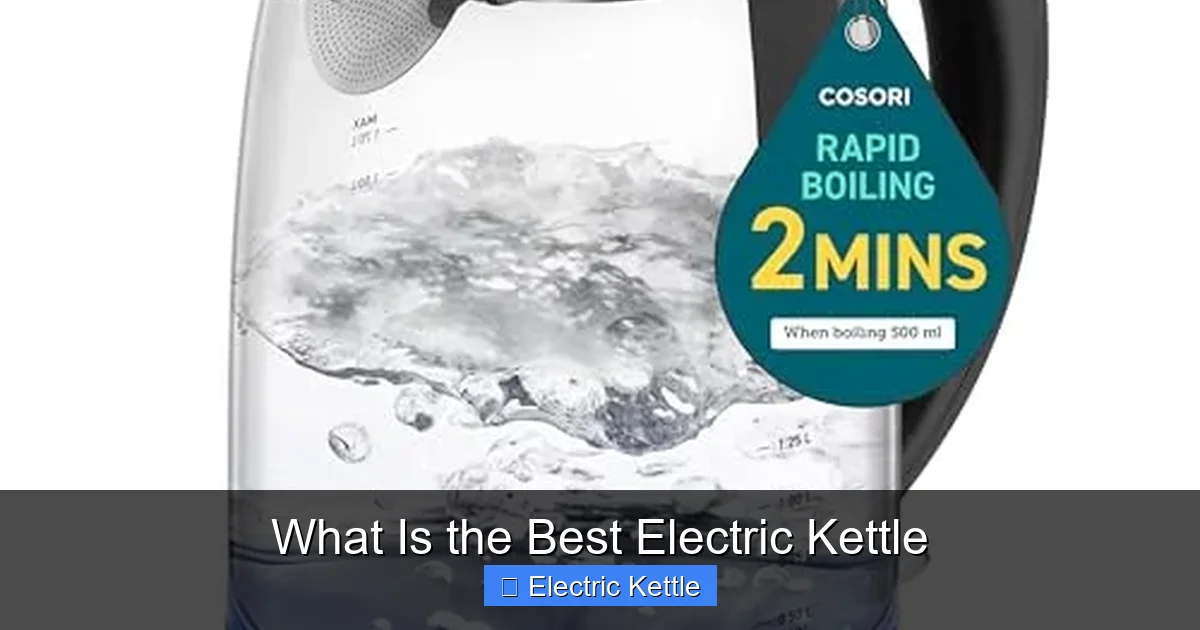
Visual guide about What Is the Best Electric Kettle
Image source: m.media-amazon.com
Let’s start with the basics: why switch from a stovetop kettle to an electric one? The answer is simple—convenience, speed, and consistency.
Stovetop kettles require you to monitor the heat, wait for the whistle, and risk overboiling or forgetting it on the stove. Electric kettles, on the other hand, heat water faster and shut off automatically when done. Most models boil a full liter of water in under four minutes—some even faster. That’s a huge time-saver, especially on busy mornings.
Another advantage? Precision. Many electric kettles come with temperature control, allowing you to heat water to exact degrees. This is crucial for brewing delicate green teas or French press coffee, which require lower temperatures than boiling. With a stovetop kettle, you’re guessing. With an electric one, you’re in control.
And let’s not forget safety. Electric kettles have built-in protections like auto shut-off and boil-dry prevention. If you accidentally leave it on or forget to add water, the kettle stops itself. That peace of mind is priceless, especially in homes with kids or forgetful adults.
Energy Efficiency and Cost Savings
You might think electric kettles use more power than stovetop methods, but the opposite is often true. Electric kettles are highly efficient because they transfer nearly all their energy directly to the water. Stovetop kettles lose heat to the air and the stove surface, wasting energy.
Studies show that electric kettles use about 20–30% less energy to boil the same amount of water. Over time, that adds up. If you boil water multiple times a day, an electric kettle can lower your electricity bill and reduce your carbon footprint.
Plus, many modern kettles have insulated walls or keep-warm functions, so you don’t need to reheat water as often. Some even have eco-modes that use less power for smaller amounts of water.
Key Features to Look for in the Best Electric Kettle
Now that you know why electric kettles are worth it, let’s talk about what makes one kettle better than another. Here are the most important features to consider when deciding what is the best electric kettle for your home.
1. Heating Speed
Time is precious, and no one wants to wait 10 minutes for water to boil. The best electric kettles heat water quickly—usually between 3 to 4 minutes for a full liter. Look for models with high wattage (1500W or more) for faster boiling.
For example, the Breville BKE820XL Smart Kettle heats water in just 3 minutes. That’s faster than most stovetop kettles and even some microwaves. If you’re always in a rush, speed should be a top priority.
2. Temperature Control
Not all hot water needs to be boiling. Green tea tastes bitter if brewed with water that’s too hot, while French press coffee needs water just below boiling. That’s where variable temperature control comes in.
The best electric kettles offer multiple preset temperatures—like 160°F for delicate teas, 185°F for white tea, 200°F for oolong, and 212°F for black tea or coffee. Some even let you set a custom temperature.
The Cuisinart CPK-17 PerfecTemp is a great example. It has six preset temperatures and a keep-warm function that holds the water at your chosen temp for up to 30 minutes. Perfect for slow sippers or multiple cups.
3. Material: Stainless Steel, Glass, or Plastic?
The material of your kettle affects taste, durability, and safety. Here’s a quick breakdown:
– Stainless steel: Durable, rust-resistant, and doesn’t retain odors. It’s also easy to clean and looks sleek on the counter. However, you can’t see the water level, so look for models with a window or LED indicator.
– Glass: Transparent, so you can watch the water boil—a fun and practical feature. Glass doesn’t absorb flavors and is easy to clean. But it’s more fragile and can break if dropped.
– Plastic: Lightweight and affordable, but not ideal. Plastic can leach chemicals when heated and may impart a slight taste to the water. Avoid BPA-free plastic kettles unless they’re clearly labeled as food-safe and heat-resistant.
For most people, stainless steel or glass is the best choice. They’re safer, last longer, and don’t affect the taste of your drinks.
4. Capacity and Size
Electric kettles come in various sizes, typically ranging from 0.5 liters to 1.7 liters. The right capacity depends on how many people you’re serving and how often you use it.
– 0.5–1 liter: Ideal for individuals or small households. Great for one or two cups of tea or coffee.
– 1.2–1.5 liters: The sweet spot for most families. Enough for 4–6 cups without being too bulky.
– 1.7 liters: Best for large families or frequent entertainers. Can boil enough water for a full pot of coffee or instant noodles for four.
Keep in mind that larger kettles take up more counter space and may take slightly longer to heat. If you have a small kitchen, a compact 1-liter model might be better.
5. Safety Features
Safety should never be an afterthought. The best electric kettles come with multiple protections:
– Auto shut-off: Turns off the kettle when water reaches boiling point.
– Boil-dry protection: Shuts off if there’s no water inside, preventing damage or fire.
– Cool-touch handle and base: Prevents burns when pouring.
– Stability and non-slip base: Keeps the kettle steady on the counter.
Look for kettles with certifications like UL, ETL, or CSA, which indicate they’ve passed rigorous safety tests.
6. Noise Level
Not all kettles are created equal when it comes to noise. Some whistle loudly when done, while others operate almost silently.
If you’re sensitive to noise—especially in the morning—look for kettles with quiet operation. Glass and stainless steel models tend to be quieter than plastic ones. Some brands, like Fellow, design kettles specifically for low noise.
The Fellow Stagg EKG is a favorite among quiet kettle lovers. It heats water with minimal sound and has a sleek, modern design.
Top Electric Kettle Models in 2024
Now that you know what to look for, let’s explore some of the best electric kettles available today. These models stand out for their performance, features, and user reviews.
1. Breville BKE820XL Smart Kettle
The Breville Smart Kettle is often called the “best electric kettle” for a reason. It combines speed, precision, and style.
– Features: 6 preset temperatures, keep-warm function, fast boil (3 minutes), stainless steel body.
– Pros: Excellent temperature control, durable build, easy to clean.
– Cons: Expensive, no water level window.
This kettle is perfect for tea lovers and coffee connoisseurs who want perfect brewing every time.
2. Cuisinart CPK-17 PerfecTemp
A close competitor to the Breville, the Cuisinart PerfecTemp offers similar features at a slightly lower price.
– Features: 6 temperature settings, auto shut-off, boil-dry protection, blue LED indicator.
– Pros: Great value, reliable performance, clear water level window.
– Cons: Slightly slower than Breville, plastic handle may feel less premium.
It’s a top pick for those who want smart features without breaking the bank.
3. Fellow Stagg EKG
The Fellow Stagg EKG is a design-forward kettle that’s as beautiful as it is functional.
– Features: Variable temperature control (1°F increments), gooseneck spout for precision pouring, quiet operation.
– Pros: Perfect for pour-over coffee, sleek design, excellent build quality.
– Cons: Small capacity (0.8L), higher price point.
This is the best electric kettle for coffee enthusiasts who take their brew seriously.
4. Hamilton Beach 40880
If you’re on a budget, the Hamilton Beach 40880 offers solid performance at an affordable price.
– Features: 1.7L capacity, auto shut-off, stainless steel interior, cordless design.
– Pros: Large capacity, great for families, easy to use.
– Cons: No temperature control, basic design.
It’s a no-frills kettle that gets the job done—perfect for everyday use.
5. OXO Brew Classic Tea Kettle
This glass kettle combines elegance with practicality.
– Features: Borosilicate glass, stainless steel base, whistle alert, 1.7L capacity.
– Pros: Beautiful design, easy to see water level, durable glass.
– Cons: No temperature control, glass can be fragile.
It’s a great choice if you want a stovetop-style experience with electric convenience.
How to Use and Maintain Your Electric Kettle
Even the best electric kettle needs proper care to last. Here’s how to use and maintain it for peak performance.
Daily Use Tips
– Always fill the kettle between the minimum and maximum water lines.
– Don’t operate the kettle without water—this can damage the heating element.
– Use filtered water to reduce mineral buildup and improve taste.
– Unplug the kettle when not in use to save energy and prevent wear.
Cleaning and Descaling
Over time, mineral deposits (limescale) can build up inside your kettle, especially if you have hard water. This affects taste and heating efficiency.
To clean:
1. Mix equal parts water and white vinegar.
2. Fill the kettle and let it sit for 1–2 hours.
3. Boil the solution, then let it cool.
4. Rinse thoroughly with clean water.
5. Wipe the exterior with a damp cloth.
Do this every 1–2 months, or more often if you notice scale buildup.
For glass kettles, avoid abrasive cleaners. Use a soft sponge and mild soap.
Storage and Longevity
Store your kettle in a dry place with the lid open to prevent odors. Avoid stacking heavy items on top, especially glass models.
With proper care, a high-quality electric kettle can last 5–10 years. Stainless steel models tend to outlast plastic ones.
Common Mistakes to Avoid
Even experienced users make mistakes with their electric kettles. Here are a few to watch out for:
– Overfilling: This can cause water to spill into the base, damaging the electronics.
– Using dirty water: Tap water with high mineral content leads to scale buildup.
– Ignoring the manual: Every kettle is different. Read the instructions for optimal use.
– Buying based on price alone: Cheap kettles may save money upfront but cost more in repairs or replacements.
Investing in a quality kettle from a trusted brand is almost always worth it.
Final Thoughts: What Is the Best Electric Kettle for You?
So, what is the best electric kettle? The answer depends on your needs.
If you want speed and smart features, go for the Breville or Cuisinart. If you’re a coffee lover, the Fellow Stagg EKG is unmatched. For families on a budget, the Hamilton Beach offers great value. And if you love the look of glass, the OXO Brew is a stunning choice.
Ultimately, the best electric kettle is the one that fits your lifestyle, kitchen, and daily habits. Look for safety, durability, and features that matter to you. And don’t forget to maintain it properly—your kettle will reward you with years of hot, delicious water.
Whether you’re brewing tea, making coffee, or just heating water for soup, the right electric kettle makes life a little easier—and a lot more enjoyable.
Frequently Asked Questions
What is the best electric kettle for tea?
The best electric kettle for tea is one with variable temperature control, like the Breville BKE820XL or Cuisinart CPK-17. These let you heat water to the perfect temp for green, white, or black tea, ensuring better flavor and no bitterness.
Are electric kettles safe to use?
Yes, electric kettles are safe when used properly. Look for models with auto shut-off, boil-dry protection, and cool-touch handles. Always follow the manufacturer’s instructions and avoid overfilling.
Can I use an electric kettle for coffee?
Absolutely. Many electric kettles, especially those with temperature control, are ideal for coffee. The Fellow Stagg EKG is perfect for pour-over, while others work well for French press or instant coffee.
How often should I descale my electric kettle?
Descale your kettle every 1–2 months if you have hard water, or every 3–4 months with soft water. Use a vinegar solution to remove limescale and keep your kettle tasting fresh.
Do electric kettles use a lot of electricity?
No, electric kettles are energy-efficient. They use less power than stovetop kettles and heat water faster. Most use about 1500W and boil a liter in under 4 minutes.
Can I leave water in my electric kettle overnight?
It’s best not to. Stagnant water can develop bacteria or absorb odors. Empty and rinse your kettle daily, and only boil fresh water when needed.