Finding the best electric kettle for tea means looking beyond speed—it’s about precision, material quality, and features that enhance flavor. Whether you enjoy delicate green teas or robust black blends, the right kettle can make all the difference in taste and convenience.
If you’re a tea enthusiast, you already know that great tea starts with great water—and the right electric kettle can be your secret weapon. It’s not just about boiling water quickly; it’s about precision, consistency, and preserving the delicate flavors that make each cup special. Whether you’re steeping a floral oolong, a grassy sencha, or a bold Assam, the temperature and pouring technique can dramatically affect the final taste. That’s why choosing the best electric kettle for tea isn’t just a convenience—it’s a craft.
Many people assume any electric kettle will do, but seasoned tea drinkers know better. A basic model might get the job done, but it won’t unlock the full potential of high-quality loose-leaf teas. Overheating green tea can make it bitter, while underheating black tea leaves it flat. And if your kettle is made of low-quality plastic or has a narrow spout, you might be compromising both flavor and control. The right kettle, on the other hand, becomes an extension of your tea ritual—quiet, reliable, and tailored to your preferences.
In this guide, we’ll walk you through everything you need to know to find the perfect electric kettle for your tea journey. From temperature settings and materials to design features and top recommendations, we’ll help you brew like a pro—without the guesswork.
Key Takeaways
- Temperature control is essential: Different teas require specific water temperatures to avoid bitterness or under-extraction—look for kettles with variable settings.
- Material matters: Stainless steel and glass kettles are safer and preserve taste better than plastic, which can leach chemicals when heated.
- Gooseneck spouts improve pouring precision: Ideal for pour-over methods and delicate tea brewing, especially with Japanese or Chinese teas.
- Speed and capacity should match your needs: A 1.7-liter kettle suits families, while compact 1-liter models are great for individuals or travel.
- Keep-warm function adds convenience: Maintains optimal temperature for up to an hour, perfect for multiple infusions or slow sipping.
- Easy cleaning and maintenance extend lifespan: Removable filters, wide openings, and non-stick interiors simplify upkeep.
- Quiet operation enhances the experience: Some premium models boil water with minimal noise—ideal for early mornings or peaceful tea rituals.
📑 Table of Contents
Why Temperature Control Is Crucial for Tea
One of the biggest mistakes tea drinkers make is using boiling water for every type of tea. While it might seem efficient, it can ruin delicate leaves and turn a potentially smooth, aromatic cup into something harsh and astringent. That’s why temperature control is the single most important feature when choosing the best electric kettle for tea.
Different teas require different water temperatures to release their optimal flavors. For example, green teas like Dragon Well or Japanese gyokuro are best brewed between 160°F and 180°F (70°C–80°C). Boiling water at 212°F (100°C) can scald the leaves, extracting excessive tannins and creating bitterness. On the other hand, black teas such as Earl Grey or Ceylon thrive at full boil, around 200°F–212°F (93°C–100°C), to fully develop their robust, malty notes.
Understanding Tea Temperature Guidelines
Here’s a quick breakdown of ideal temperatures for common tea types:
- White tea: 175°F–185°F (80°C–85°C) – Delicate and subtle, needs gentle heat.
- Green tea: 160°F–180°F (70°C–80°C) – Avoid boiling to prevent bitterness.
- Oolong tea: 185°F–205°F (85°C–96°C) – Varies by oxidation level; lighter oolongs need lower temps.
- Black tea: 200°F–212°F (93°C–100°C) – Full boil brings out bold flavors.
- Herbal teas: 212°F (100°C) – Often made from roots, flowers, or spices that need high heat to extract flavor.
Without precise temperature control, you’re left guessing—and risking a subpar cup. That’s where modern electric kettles with variable temperature settings shine. Instead of boiling everything at once, you can select the exact heat level for your tea type, ensuring a balanced, flavorful brew every time.
How Variable Temperature Kettles Work
Most advanced electric kettles use digital thermostats and heating elements that heat water to a specific temperature and then shut off automatically. Some models even have preset buttons for different tea types—green, black, white, oolong—so you don’t have to remember the exact degrees. Others allow manual adjustment in 5°F or 10°F increments, giving you full control.
For example, the Breville BKE830XL Smart Kettle features five preset temperature settings, each tailored to a specific tea category. It heats water quickly and holds the temperature for up to 60 minutes, so you can steep multiple infusions without reheating. This kind of precision is especially valuable for tea connoisseurs who enjoy experimenting with different steeping times and temperatures.
Material Matters: What Your Kettle Is Made Of
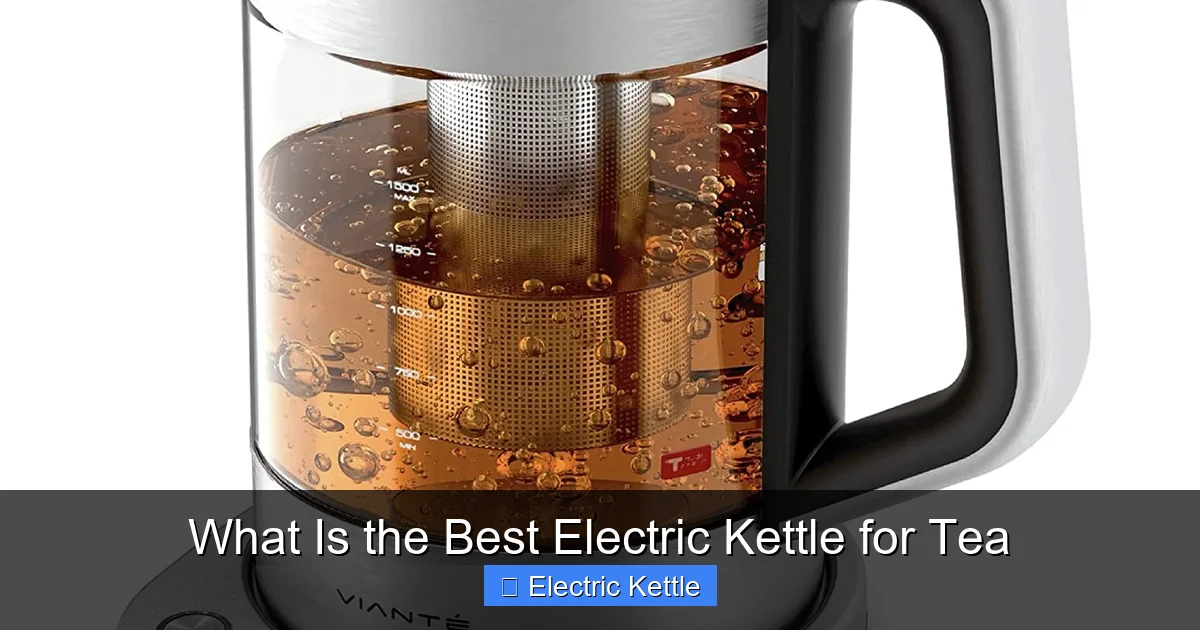
Visual guide about What Is the Best Electric Kettle for Tea
Image source: m.media-amazon.com
The material of your electric kettle doesn’t just affect durability—it can influence the taste of your tea. Low-quality plastics, in particular, can release chemicals when heated, leading to off-flavors or even health concerns. That’s why it’s essential to choose a kettle made from safe, non-reactive materials.
Stainless Steel: Durable and Reliable
Stainless steel is one of the most popular materials for electric kettles, and for good reason. It’s durable, resistant to rust and corrosion, and doesn’t impart any metallic taste to your water. High-quality stainless steel kettles, like the Cuisinart CPK-17 PerfecTemp, often feature double-wall insulation to keep water hot longer and prevent the exterior from getting too hot to touch.
One thing to watch for is whether the heating element is exposed or concealed. Exposed elements can collect mineral deposits over time, affecting performance and flavor. Concealed elements, found in many premium models, are easier to clean and reduce the risk of scale buildup.
Glass: Pure and Transparent
Glass kettles offer a clean, modern look and allow you to watch the water boil—a satisfying experience for many tea lovers. Borosilicate glass, used in brands like OXO and Mueller, is heat-resistant and won’t cloud or crack under high temperatures. Since glass doesn’t retain odors or flavors, it’s ideal for brewing different types of tea without cross-contamination.
However, glass kettles can be more fragile than metal ones, so handle them with care. They’re also typically lighter, which some users prefer, but may not retain heat as well as insulated stainless steel models.
Plastic: Proceed with Caution
While plastic kettles are often the most affordable, they come with significant drawbacks. Many contain BPA or other chemicals that can leach into hot water, especially over time. Even BPA-free plastics may release other compounds when heated repeatedly.
If you do choose a plastic kettle, look for food-grade, BPA-free materials and avoid models where the water comes into direct contact with plastic during heating. Still, for the best flavor and safety, it’s wise to opt for stainless steel or glass whenever possible.
Design Features That Enhance Tea Brewing
Beyond temperature and material, several design elements can elevate your tea experience. These features may seem minor, but they add up to a more enjoyable, efficient, and precise brewing process.
Gooseneck Spout for Precision Pouring
If you enjoy pour-over tea methods—like those used in Gongfu cha or Japanese tea ceremonies—a gooseneck spout is a game-changer. Its narrow, curved design allows for slow, controlled pouring, which is essential for evenly saturating tea leaves and controlling extraction.
Kettles like the Fellow Stagg EKG are specifically designed for pour-over brewing, with a sleek gooseneck spout and precise temperature control. While originally marketed for coffee, tea lovers have embraced it for its accuracy and elegance. The slow pour helps prevent over-extraction and ensures a balanced cup, especially with delicate teas like matcha or high-mountain oolong.
Keep-Warm Function for Multiple Infusions
Many high-quality teas, especially oolongs and pu-erhs, are meant to be steeped multiple times. A keep-warm function maintains your water at the ideal temperature for up to an hour, so you don’t have to reheat between infusions. This is incredibly convenient and helps preserve the tea’s evolving flavor profile.
For example, the Bonavita BV3825T Digital Variable Temperature Gooseneck Kettle heats water to your desired temperature and holds it there, making it perfect for traditional Chinese tea brewing. You can steep, sip, and resteep without losing heat—ideal for a relaxing afternoon tea session.
Quiet Operation for a Peaceful Experience
Boiling water doesn’t have to be loud. Some electric kettles operate with minimal noise, thanks to insulated designs and advanced heating elements. This is especially valuable if you enjoy early morning tea or live in a shared space.
Models like the Smarter Coffee Maker’s companion kettle use quiet-boiling technology to reduce sound, creating a more serene environment. While not all kettles advertise this feature, reading user reviews can help you identify quieter options.
Capacity and Speed: Matching Your Lifestyle
The size and speed of your kettle should align with how you drink tea. A family of four will have different needs than a solo tea lover who enjoys a single cup each morning.
Choosing the Right Capacity
Electric kettles typically range from 1 liter to 1.7 liters. A 1-liter kettle is ideal for individuals or couples, while 1.5- to 1.7-liter models are better for families or entertaining. Keep in mind that larger kettles take up more counter space and may take longer to boil, though many modern models heat water in under five minutes.
If you’re short on space or travel frequently, consider a compact 0.8- to 1-liter kettle. Some even come with foldable handles or detachable cords for easy storage.
Boiling Speed and Efficiency
Most electric kettles boil water in 3 to 6 minutes, depending on capacity and wattage. Higher-wattage models (1500W–3000W) heat faster but may use more electricity. If speed is a priority, look for kettles with at least 1500W of power.
However, faster isn’t always better—especially for tea. Overheating or rapid boiling can agitate delicate leaves. That’s why temperature control remains more important than sheer speed. A kettle that heats quickly but also offers precise settings gives you the best of both worlds.
Top Electric Kettles for Tea in 2024
After evaluating features, performance, and user feedback, here are some of the best electric kettles for tea available today:
1. Fellow Stagg EKG
A favorite among tea and coffee enthusiasts, the Stagg EKG combines sleek design with professional-grade functionality. It features variable temperature control (104°F–212°F), a gooseneck spout, and a keep-warm function. The minimalist aesthetic fits any kitchen, and the precision pouring makes it ideal for delicate teas.
2. Breville BKE830XL Smart Kettle
With five preset temperature settings and a large 1.8-liter capacity, this kettle is perfect for households. The LCD display shows real-time temperature, and the keep-warm function holds heat for up to an hour. Its stainless steel build ensures durability and clean taste.
3. Bonavita BV3825T Digital Variable Temperature Gooseneck Kettle
Designed for precision, this kettle offers exact temperature control and a slow-pour gooseneck spout. It’s a top choice for Gongfu brewing and pour-over methods. The compact 1-liter size is great for individuals or small spaces.
4. Cuisinart CPK-17 PerfecTemp
A more affordable option with six preset temperature settings, this stainless steel kettle is user-friendly and reliable. The blue LED indicator lights up when water reaches the desired temperature, and the auto shut-off feature ensures safety.
5. OXO Brew Adjustable Temperature Pour-Over Kettle
This glass and stainless steel hybrid offers the best of both materials—transparency and durability. It includes a built-in thermometer and a gooseneck spout for controlled pouring. The 1.2-liter capacity strikes a balance between size and efficiency.
Maintenance and Care Tips
To keep your electric kettle performing at its best, regular maintenance is key. Mineral buildup from hard water can affect taste and efficiency over time.
Cleaning Your Kettle
Once a month, descale your kettle using a mixture of equal parts water and white vinegar. Fill the kettle, boil, let it sit for 15–20 minutes, then rinse thoroughly. For glass kettles, a soft brush can help remove residue from the interior.
Filter Care
Many kettles include removable mesh filters to catch limescale and debris. Rinse these under warm water regularly and replace them as recommended by the manufacturer.
Avoiding Common Mistakes
Never overfill your kettle—this can cause spills and damage the heating element. Also, avoid running the kettle dry, as this can burn out the element. Always ensure there’s enough water before turning it on.
Conclusion: Finding Your Perfect Tea Companion
Choosing the best electric kettle for tea is about more than convenience—it’s about enhancing your entire tea experience. From preserving delicate flavors with precise temperature control to enjoying a quiet, peaceful brew, the right kettle can transform your daily ritual.
Whether you prefer the elegance of a gooseneck pour or the simplicity of a one-touch preset, there’s a kettle out there that fits your lifestyle and taste. Invest in quality materials, prioritize features that matter to you, and don’t overlook the importance of maintenance.
With the right electric kettle, every cup of tea becomes a moment of mindfulness, flavor, and joy. So go ahead—heat that water, steep those leaves, and savor the perfect brew.
Frequently Asked Questions
What temperature should I use for green tea?
Green tea should be brewed between 160°F and 180°F (70°C–80°C). Boiling water can scald the leaves, resulting in a bitter taste. Use a kettle with adjustable temperature settings for the best results.
Can I use a regular electric kettle for tea?
Yes, but a basic kettle without temperature control may overheat delicate teas. For optimal flavor, especially with green or white teas, a variable-temperature kettle is recommended.
Is a gooseneck kettle necessary for tea?
Not necessary, but highly beneficial for pour-over methods and precise brewing. It allows better control over water flow, which is ideal for Gongfu cha or Japanese tea ceremonies.
How often should I clean my electric kettle?
Clean your kettle monthly to remove mineral buildup. Use a vinegar-water solution to descale, and rinse thoroughly to maintain taste and performance.
Do glass kettles retain heat as well as stainless steel?
Generally, no. Stainless steel kettles, especially double-walled ones, retain heat longer. Glass kettles cool faster but offer better visibility and don’t retain odors.
Can I boil milk or other liquids in an electric kettle?
No. Electric kettles are designed for water only. Boiling milk or sugary liquids can damage the heating element and create a fire hazard. Stick to water for safety and longevity.