Choosing the right electric kettle can transform your daily tea or coffee ritual. From speed and capacity to material and smart features, knowing what to look for ensures you get a safe, efficient, and long-lasting appliance that fits your lifestyle.
Key Takeaways
- Capacity matters: Match the kettle size to your household needs—small (1–1.5L) for individuals, larger (1.7–2L) for families or frequent entertainers.
- Material affects taste and durability: Stainless steel is durable and non-reactive, while glass offers visibility but requires careful handling. Avoid plastic if you’re concerned about chemical leaching.
- Heating speed and power: Look for 1500W or higher for faster boiling—ideal for busy mornings or quick hot drinks.
- Temperature control is a game-changer: Variable temperature settings let you brew delicate teas like green or white at the perfect heat, preserving flavor and aroma.
- Safety features are non-negotiable: Auto shut-off, boil-dry protection, and cool-touch handles prevent accidents and extend the kettle’s lifespan.
- Ease of cleaning and maintenance: Removable lids, wide openings, and filter screens make descaling and upkeep simple.
- Noise level and design: Quieter models enhance kitchen comfort, while sleek designs complement modern aesthetics.
📑 Table of Contents
- Why Your Electric Kettle Choice Makes a Difference
- Capacity: Finding the Right Size for Your Needs
- Material: Stainless Steel, Glass, or Plastic?
- Heating Speed and Power: How Fast Is Fast Enough?
- Temperature Control: Brewing Perfection at Your Fingertips
- Safety Features: Protecting You and Your Home
- Ease of Use and Maintenance: Keeping It Simple
- Conclusion: Making the Right Choice for Your Lifestyle
Why Your Electric Kettle Choice Makes a Difference
Let’s be honest—most of us don’t think twice about how we heat our water. But if you’ve ever waited impatiently for a pot to boil on the stove or burned your fingers reaching into a narrow-necked kettle, you know that not all water-heating methods are created equal. Enter the electric kettle: a quiet, efficient, and often overlooked kitchen hero that can make your morning routine smoother, your tea tastier, and your kitchen safer.
An electric kettle isn’t just a convenience—it’s a tool that, when chosen wisely, can enhance your daily rituals. Whether you’re a coffee aficionado, a tea enthusiast, or someone who just needs hot water for instant soups and oatmeal, the right kettle can save time, energy, and even improve the flavor of your beverages. But with so many models on the market—ranging from basic $20 kettles to high-tech $150 smart versions—how do you know what to look for in an electric kettle?
The answer lies in understanding your needs and matching them to the right features. This guide will walk you through everything you need to consider, from capacity and material to advanced functions like temperature control and noise levels. By the end, you’ll know exactly what to look for in an electric kettle—and why it’s worth investing a little extra time (and maybe a little extra cash) to get it right.
Capacity: Finding the Right Size for Your Needs
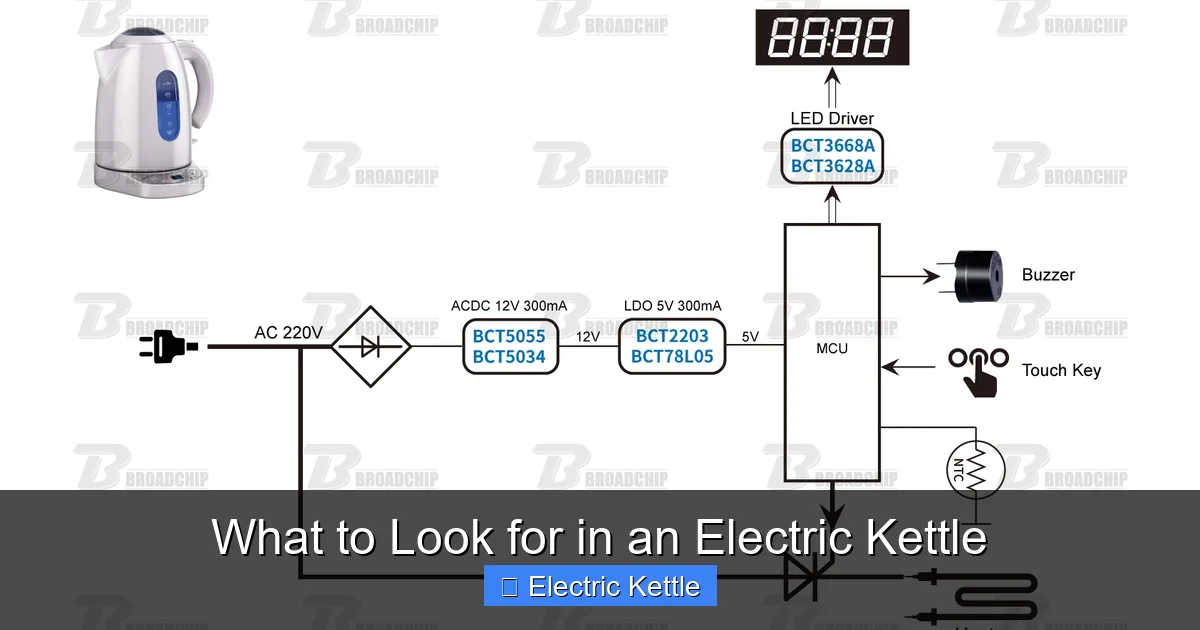
Visual guide about What to Look for in an Electric Kettle
Image source: broadchip.com
One of the first things to consider when shopping for an electric kettle is capacity. This refers to how much water the kettle can hold and boil at once. Choosing the right size ensures you’re not constantly refilling a small kettle or wasting energy heating more water than you need.
Small Kettles (1–1.5 Liters): Perfect for Individuals or Small Households
If you live alone or with just one other person, a smaller electric kettle—typically between 1 and 1.5 liters—is often the best choice. These compact models heat water quickly, take up less counter space, and are ideal for making one or two cups of tea or coffee at a time. For example, a 1.2-liter kettle can comfortably brew four standard mugs of tea, which is plenty for a morning routine or a quick afternoon break.
Smaller kettles also tend to be more energy-efficient. Because they hold less water, they require less power to reach boiling point, which can save on your electricity bill over time. Plus, their smaller footprint makes them great for dorm rooms, small apartments, or offices with limited space.
However, the downside is obvious: if you’re making multiple drinks or hosting guests, you’ll need to boil water more than once. This can become tedious, especially if you’re in a rush.
Medium to Large Kettles (1.7–2 Liters): Ideal for Families and Entertaining
For families or those who frequently entertain, a larger kettle—between 1.7 and 2 liters—offers more convenience. These models can boil enough water for six to eight cups at once, making them perfect for breakfast rushes, dinner parties, or households with multiple coffee drinkers.
A 1.8-liter kettle, for instance, can easily handle a full pot of French press coffee or several mugs of herbal tea without needing a refill. This reduces wait time and makes the process more efficient, especially during busy mornings.
That said, larger kettles do take up more space and may take slightly longer to boil due to the increased volume of water. They also consume more energy per use, so if you’re only making one cup at a time, you might be heating more water than necessary.
Choosing Based on Usage Patterns
To pick the right capacity, think about your typical usage. Ask yourself:
– How many people regularly use hot water in your home?
– Do you often make multiple drinks in one sitting?
– Do you use your kettle for cooking (e.g., instant noodles, oatmeal)?
If you answer “yes” to any of these, a larger kettle may be worth the extra space. But if you’re mostly brewing for one, a smaller model will serve you better—and save energy in the long run.
Pro tip: Some kettles have dual markings (cups and liters) on the interior, which helps you measure the exact amount of water you need. This is especially useful if you’re trying to conserve water or energy.
Material: Stainless Steel, Glass, or Plastic?
The material of your electric kettle doesn’t just affect its look—it impacts taste, durability, safety, and maintenance. Let’s break down the most common options and what to look for in an electric kettle based on material.
Stainless Steel: Durable, Safe, and Stylish
Stainless steel is one of the most popular choices for electric kettles, and for good reason. It’s highly durable, resistant to rust and corrosion, and doesn’t retain odors or flavors from previous uses. This means your tea will taste clean and pure, without any metallic aftertaste.
Most stainless steel kettles are made from food-grade 304 stainless steel, which is safe for boiling water and won’t leach harmful chemicals. They also tend to have excellent heat retention, meaning the water stays hot longer after boiling—great if you’re making multiple cups.
Another advantage? Stainless steel kettles often come with double-wall insulation, which keeps the exterior cool to the touch. This is a major safety benefit, especially if you have kids or pets at home.
On the downside, stainless steel kettles can be heavier than other materials, and you can’t see the water level unless there’s a visible window or gauge. Some models also have a metal interior, which can make cleaning a bit trickier if mineral buildup occurs.
Glass: Transparent and Modern, But Fragile
Glass kettles offer a sleek, modern look and the unique advantage of being able to see the water as it heats. Watching the bubbles form and rise can be oddly satisfying—and it helps you know exactly when the water is ready.
High-quality glass kettles are usually made from borosilicate glass, which is heat-resistant and less likely to crack under sudden temperature changes. They’re also non-reactive, so they won’t affect the taste of your water.
However, glass is fragile. Dropping a glass kettle—even from a short height—can result in cracks or shattering. They’re also more prone to showing water spots and mineral deposits, which means they require more frequent cleaning.
If you love the look of a glass kettle, consider one with a stainless steel base or protective casing to reduce the risk of damage. And always handle it with care, especially when empty and warm.
Plastic: Lightweight and Affordable, But Use with Caution
Plastic kettles are often the cheapest option and are lightweight, making them easy to handle. However, they come with significant drawbacks—especially when it comes to safety and taste.
Many plastic kettles are made from BPA-free materials, which is a step in the right direction. But even BPA-free plastics can release other chemicals when exposed to high heat, especially over time. This can affect the taste of your water and potentially pose health risks with long-term use.
Additionally, plastic can retain odors and stains, and it’s more prone to scratching, which creates hiding spots for bacteria. It also tends to discolor or warp after repeated heating cycles.
If you do choose a plastic kettle, make sure it’s labeled as food-safe and BPA-free, and avoid boiling water more than necessary. But for most people, especially those concerned about health and flavor, stainless steel or glass are better long-term investments.
Other Materials: Ceramic and Copper
You may also come across ceramic or copper kettles, though these are less common in electric models. Ceramic kettles are beautiful and retain heat well, but they’re heavy and fragile. Copper is excellent for heat conduction but requires regular polishing and isn’t always safe for direct boiling unless lined with stainless steel.
For most users, stainless steel and glass remain the top choices—offering the best balance of safety, durability, and performance.
Heating Speed and Power: How Fast Is Fast Enough?
When you’re craving a hot drink, every second counts. That’s why heating speed is one of the most important factors to consider when choosing an electric kettle.
Understanding Wattage and Boiling Time
The speed at which an electric kettle boils water is directly related to its wattage—the amount of power it uses. Most household electric kettles range from 1200W to 3000W, with higher wattage meaning faster boiling.
For example:
– a 1200W kettle may take 4–5 minutes to boil 1 liter of water
– a 1500W kettle can do it in about 3–4 minutes
– a 3000W model might boil the same amount in under 2 minutes
If you’re someone who values speed—say, you’re rushing out the door in the morning or need hot water for instant meals—opting for a higher-wattage kettle (1500W or more) is a smart move.
But keep in mind that higher wattage also means higher energy consumption. While the difference per use is small, it can add up over time, especially in larger households. Also, not all electrical circuits can handle very high-wattage appliances, so check your home’s capacity if you’re considering a 3000W model.
Real-World Examples
Let’s say you’re making a cup of green tea that requires water at 175°F (80°C). With a basic kettle, you’d have to boil the water first and then let it cool—wasting time and energy. But with a variable temperature kettle (more on that below), you can heat it directly to the ideal temperature in under three minutes.
Even for simple black tea or coffee, faster boiling means less waiting. Imagine being able to brew your morning coffee in the time it takes to grind the beans—that’s the kind of efficiency a high-performance electric kettle can offer.
Energy Efficiency Tips
To get the most out of your kettle’s speed without wasting energy:
– Only boil the amount of water you need. Overfilling wastes power and increases boiling time.
– Use a kettle with a rapid-boil function or keep-warm feature if you frequently make multiple drinks.
– Descale regularly to maintain heating efficiency—mineral buildup can slow down heating over time.
In short, when evaluating what to look for in an electric kettle, don’t underestimate the value of speed. A faster kettle doesn’t just save time—it makes your kitchen routine feel smoother and more responsive.
Temperature Control: Brewing Perfection at Your Fingertips
If you’re serious about tea or specialty coffee, temperature control is one of the most valuable features you can have in an electric kettle. Not all hot water is the same—different beverages require different temperatures to bring out their best flavors.
Why Temperature Matters
Boiling water (212°F or 100°C) is great for black tea, French press coffee, or instant soups. But it can ruin delicate drinks like green tea, white tea, or pour-over coffee, which need lower temperatures to avoid bitterness and preserve subtle aromas.
For example:
– Green tea: 160–185°F (70–85°C)
– White tea: 175–185°F (80–85°C)
– Oolong tea: 185–205°F (85–96°C)
– Pour-over coffee: 195–205°F (90–96°C)
Without precise temperature control, you’re left guessing—or worse, overheating your drink and compromising its taste.
Variable Temperature Kettles: The Gold Standard
Variable temperature kettles allow you to select specific heat settings, often via a digital display or dial. Some models offer preset options for different tea types, while others let you customize the temperature in 5–10°F increments.
These kettles typically use advanced heating elements and sensors to reach and maintain the exact temperature you choose. Many also include a “keep warm” function that holds the water at the desired heat for 15–30 minutes—perfect if you’re making multiple cups.
For tea lovers, this feature is a game-changer. It ensures consistency, enhances flavor, and eliminates the guesswork. It’s also great for coffee enthusiasts who want to experiment with different brewing methods.
Gooseneck Kettles for Precision Pouring
Some temperature-controlled kettles come with a gooseneck spout—a narrow, curved tip that allows for slow, precise pouring. This is especially useful for pour-over coffee or blooming teas, where control over water flow is key.
While gooseneck kettles are often associated with manual brewing, electric versions are becoming more common and offer the best of both worlds: speed and precision.
Is It Worth the Extra Cost?
Variable temperature kettles are generally more expensive than basic models—often ranging from $80 to $150. But if you regularly drink specialty teas or coffee, the investment pays off in flavor and convenience.
Even if you’re not a connoisseur, having the option to heat water to different temperatures adds versatility. You can use it for baby formula, instant oatmeal, or even warming baby bottles—all without overheating.
So when deciding what to look for in an electric kettle, ask yourself: how much do I value precision and flavor? If the answer is “a lot,” temperature control is a must-have.
Safety Features: Protecting You and Your Home
Safety should never be an afterthought when choosing an electric kettle. These appliances involve high heat and electricity, so built-in protections are essential to prevent accidents and extend the product’s life.
Auto Shut-Off: The Most Important Feature
Auto shut-off is a standard feature in most modern electric kettles—and for good reason. It automatically turns off the heating element once the water reaches boiling point, preventing overheating and reducing the risk of fire.
This feature is especially important if you tend to get distracted while waiting for your kettle (we’ve all been there). Without auto shut-off, a forgotten kettle could boil dry, damaging the heating element or even causing a fire.
Boil-Dry Protection
Related to auto shut-off, boil-dry protection kicks in if the kettle is turned on without water. This prevents the heating element from burning out and reduces the risk of damage or smoke.
Look for kettles that clearly state they have boil-dry protection—it’s a sign of quality and safety.
Cool-Touch Exterior and Handles
A cool-touch exterior means the outside of the kettle stays relatively cool, even when the water inside is boiling. This prevents burns if you accidentally brush against it or need to move it while hot.
Similarly, ergonomic, heat-resistant handles make pouring safer and more comfortable. Look for models with non-slip grips and secure attachments to avoid spills.
Stable Base and Cordless Design
A stable, wide base prevents tipping, while a cordless design allows you to lift and pour the kettle without dealing with a tangled cord. Most cordless kettles sit on a 360-degree rotating base, making it easy to place them back without aligning the cord.
This design also reduces wear and tear on the power connection, which can be a common failure point in older models.
Additional Safety Tips
– Always place your kettle on a flat, heat-resistant surface.
– Keep it away from edges and out of reach of children.
– Never immerse the base or cord in water.
– Regularly check for frayed cords or loose parts.
When evaluating what to look for in an electric kettle, safety features should be near the top of your list. A few extra dollars for a safer model is always worth it.
Ease of Use and Maintenance: Keeping It Simple
A great electric kettle should be easy to use, clean, and maintain. After all, no one wants to spend more time cleaning than enjoying their tea.
Removable Lids and Wide Openings
Look for kettles with wide openings or fully removable lids. These make it easier to fill, clean, and descale the interior. Narrow openings can make it hard to reach inside with a brush or sponge.
Some models even have flip-top lids with built-in filters, which catch limescale and tea leaves during pouring.
Filter Screens and Descaling
Mineral buildup (limescale) is a common issue, especially in areas with hard water. Over time, it can affect taste and reduce heating efficiency.
Many kettles come with built-in filter screens at the spout to catch sediment. For cleaning, look for models that are easy to descale—either with removable elements or compatible with vinegar or commercial descaling solutions.
Some high-end kettles even have self-cleaning or descaling reminders, which notify you when it’s time to clean.
Noise Level: Quiet Operation Matters
While not always listed, noise level can impact your experience. Some kettles whistle or buzz loudly when boiling, which can be annoying early in the morning or in quiet homes.
Quieter models use insulated designs or advanced heating elements to reduce sound. If noise is a concern, look for reviews that mention “quiet boil” or “low-noise operation.”
Design and Aesthetics
Finally, consider how the kettle fits into your kitchen. Sleek, modern designs in stainless steel or matte finishes can complement your decor, while bright colors add a pop of personality.
But don’t sacrifice function for form. A beautiful kettle that’s hard to clean or unsafe to use isn’t worth it.
Conclusion: Making the Right Choice for Your Lifestyle
Choosing the right electric kettle isn’t just about picking the shiniest model on the shelf. It’s about understanding your habits, priorities, and needs—and matching them to the features that matter most.
Whether you’re a solo tea drinker who values speed and simplicity, a family that needs large capacity and durability, or a coffee connoisseur who demands precision, there’s an electric kettle out there that’s perfect for you.
Remember: what to look for in an electric kettle includes capacity, material, heating speed, temperature control, safety, and ease of maintenance. By focusing on these key factors, you’ll find a kettle that not only works well but enhances your daily routine.
Investing in a quality electric kettle is investing in convenience, safety, and better-tasting beverages. So take your time, compare your options, and choose wisely. Your future self—and your taste buds—will thank you.
Frequently Asked Questions
What is the ideal wattage for an electric kettle?
The ideal wattage is 1500W or higher for faster boiling. Higher wattage means quicker heating, which is great for busy mornings or frequent use.
Can I use an electric kettle for cooking?
Yes, many people use electric kettles to heat water for instant noodles, oatmeal, or baby formula. Just ensure the kettle is clean and safe for food use.
How often should I descale my electric kettle?
Descale every 1–3 months, depending on water hardness. Use vinegar or a commercial descaler to remove mineral buildup and maintain performance.
Are plastic electric kettles safe?
Plastic kettles labeled BPA-free are generally safe, but they may affect taste and degrade over time. Stainless steel or glass are safer, longer-lasting options.
Do electric kettles use a lot of electricity?
Electric kettles are energy-efficient compared to stovetops. They use about the same energy as a microwave and less than an oven, especially when boiling only the needed amount.
Can I leave water in my electric kettle overnight?
It’s not recommended. Stagnant water can promote bacterial growth and affect taste. Always empty and rinse the kettle after use for best results.