Electric kettles first appeared in the UK in the early 1900s but didn’t become common until the 1950s and 1960s. Post-war electrification, rising home ownership, and improved safety features helped them go from luxury items to everyday essentials in British kitchens.
Key Takeaways
- Early prototypes emerged in the 1920s: The first electric kettles were introduced in the UK during the 1920s, but they were expensive and rare, limited to wealthy households.
- Post-war boom in the 1950s: After World War II, increased access to electricity and rising living standards made electric kettles more accessible to the average British family.
- 1960s mass adoption: By the 1960s, electric kettles had become a standard kitchen appliance in most UK homes, thanks to improved designs and affordability.
- Safety innovations were key: Features like automatic shut-off and enclosed heating elements made electric kettles safer and more user-friendly, boosting public trust.
- Cultural shift toward convenience: The growing popularity of tea and demand for quick, reliable boiling methods helped cement the electric kettle’s place in British culture.
- Modern smart kettles reflect evolution: Today’s kettles offer temperature control, rapid boiling, and app connectivity, showing how far the appliance has come since its early days.
📑 Table of Contents
The Humble Beginnings: Early Electric Kettles in the UK
Imagine a time when boiling water meant lighting a gas stove or waiting for a kettle to whistle over an open flame. For centuries, that was the norm in British homes. But as electricity began to weave its way into everyday life in the early 20th century, a new kind of kettle started to appear—one that plugged into the wall and boiled water with the flip of a switch.
The first electric kettles in the UK were more novelty than necessity. Developed in the 1920s, these early models were often imported from the United States or Germany, where electrical appliances were gaining traction faster than in Britain. They featured exposed heating elements, which meant the water came into direct contact with the metal coil. While this made them faster than stovetop kettles, it also raised concerns about safety and taste—some users complained that the water had a metallic flavor.
Despite their innovation, these early electric kettles were far from common. They were expensive, often costing as much as a week’s wages for the average worker. Only the wealthiest households could afford them, and even then, they were seen more as a status symbol than a practical tool. Electricity itself was still a luxury in many parts of the UK, with rural areas lagging far behind cities in terms of access. Without reliable power, an electric kettle was little more than a decorative item.
Technological Limitations and Public Skepticism
One of the biggest hurdles for early electric kettles was public skepticism. People were used to gas and coal, and the idea of boiling water with electricity felt unnatural—even dangerous. There were real concerns about electrocution, especially with models that had exposed elements. Stories of faulty wiring or overheating only fueled these fears.
Manufacturers tried to reassure consumers with bold advertising campaigns, promising “instant boiling” and “effortless tea-making.” But without real-world proof of safety and reliability, sales remained sluggish. Even when electric kettles did make it into homes, they were often used sparingly—reserved for special occasions or guests, rather than daily use.
Another issue was design. Early kettles were bulky, often made of heavy steel or enamel, and took up valuable counter space. They lacked the sleek, compact forms we’re used to today. And because they were so expensive to produce, there was little room for innovation or refinement. It would take decades—and a major shift in society—before electric kettles could truly take off.
Post-War Progress: The 1950s Turning Point
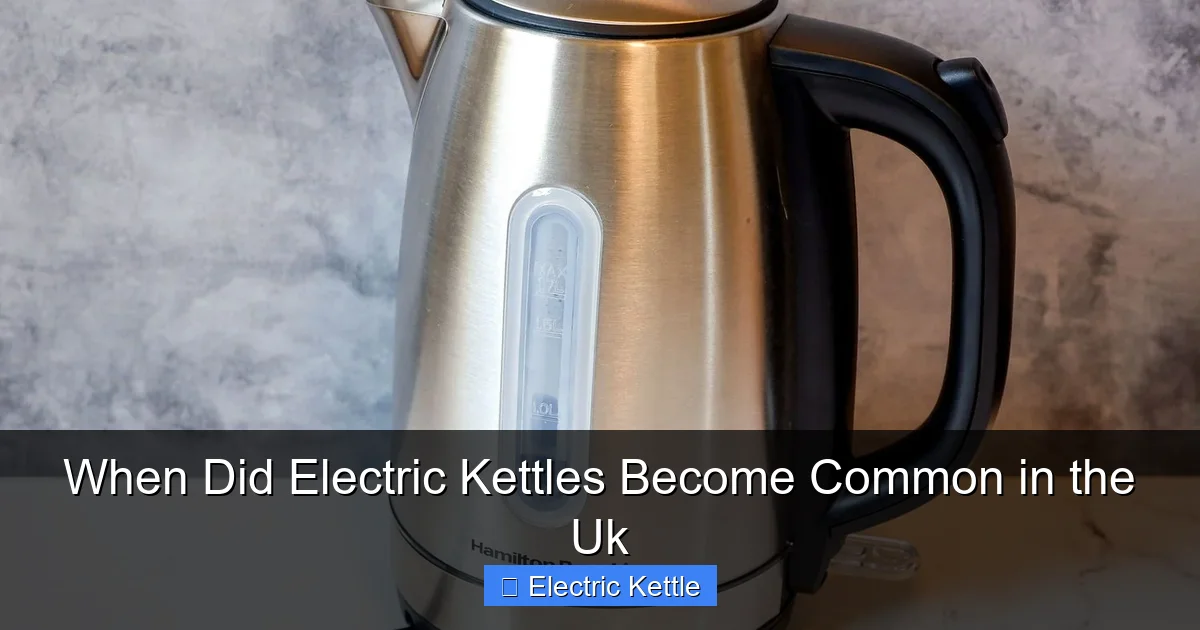
Visual guide about When Did Electric Kettles Become Common in the Uk
Image source: allrecipes.com
The 1950s marked a turning point for the UK—and for the electric kettle. After the devastation of World War II, Britain entered a period of reconstruction and renewal. Homes were being rebuilt, families were growing, and a new sense of optimism began to spread. This era, often called the “post-war boom,” brought with it a surge in consumer goods, including household appliances.
One of the most significant changes was the expansion of the national electricity grid. By the mid-1950s, over 90% of British homes had access to electricity, a dramatic increase from just a few decades earlier. This meant that appliances like electric kettles were no longer limited to urban elites. They could now reach suburban and even rural households.
At the same time, wages were rising, and more people could afford to buy convenience items. The concept of the “modern home” became popular, with families aspiring to own labor-saving devices like washing machines, refrigerators, and—yes—electric kettles. These appliances weren’t just practical; they were symbols of progress and modernity.
Affordability and Mass Production
As demand grew, manufacturers began to scale up production. Companies like Russell Hobbs and Morphy Richards started designing kettles specifically for the British market, focusing on affordability, durability, and ease of use. The introduction of plastic components helped reduce costs, while new manufacturing techniques made it possible to produce kettles faster and more efficiently.
By the late 1950s, electric kettles were no longer luxury items. They were appearing in department stores, advertised in magazines, and featured in home improvement guides. Prices dropped significantly, making them accessible to middle-class families. A typical electric kettle might cost around £5—equivalent to a few days’ wages, but far more manageable than the £20 or more they commanded in the 1920s.
This shift wasn’t just about economics. It was also cultural. Tea was—and still is—a cornerstone of British life. The ritual of “putting the kettle on” was deeply ingrained in daily routines, from morning brews to afternoon breaks. An electric kettle made this ritual faster and more reliable, fitting perfectly into the busy lives of post-war families.
The 1960s: Electric Kettles Go Mainstream
If the 1950s laid the groundwork, the 1960s cemented the electric kettle’s place in British kitchens. By this decade, owning an electric kettle was no longer a novelty—it was expected. Surveys from the time show that over 70% of UK households had one, and in urban areas, the number was even higher.
This widespread adoption was driven by several factors. First, electric kettles became even more affordable. Competition among brands led to lower prices and better features. Second, safety improved dramatically. The introduction of fully enclosed heating elements—where the coil is hidden beneath a metal plate—eliminated the risk of direct contact with water and reduced the chance of electric shock.
Design Evolution and User-Friendly Features
The 1960s also saw major improvements in design. Kettles became lighter, sleeker, and more colorful. Brands began offering a range of styles to match different kitchen aesthetics, from retro chrome finishes to bold primary colors. Some models even featured built-in cord storage and non-slip handles, making them easier to use and store.
One of the most important innovations was the automatic shut-off mechanism. Before this, users had to remember to turn off the kettle manually—a risky proposition if you got distracted. With automatic shut-off, the kettle would turn itself off once the water reached boiling point, preventing overheating and reducing the risk of fire. This feature gave consumers peace of mind and made electric kettles much more appealing to families with children.
Another key development was the move toward cordless designs. Earlier models had fixed cords, which made pouring awkward and increased the risk of tripping. By the mid-1960s, many kettles featured a detachable base, allowing the kettle to be lifted and poured without being tethered to the wall. This small change made a big difference in usability and helped solidify the electric kettle’s reputation as a convenient, user-friendly appliance.
Cultural Acceptance and Daily Use
As electric kettles became more common, they also became more integrated into daily life. The phrase “put the kettle on” took on new meaning—no longer just a call to action, but a signal that modern convenience had arrived. Tea breaks at work, school, and home were now faster and more efficient, thanks to the electric kettle.
Advertisements from the era often featured busy mothers, office workers, and students using electric kettles to save time. One famous campaign by Russell Hobbs showed a woman effortlessly boiling water while multitasking—a powerful image in an era when women were increasingly entering the workforce. The message was clear: the electric kettle wasn’t just for tea; it was for modern living.
Even schools and workplaces began installing electric kettles in staff rooms and common areas. They were seen as safe, reliable, and easy to maintain—perfect for high-traffic environments. By the end of the 1960s, it was rare to find a British home without one.
Safety, Regulation, and Consumer Trust
The rise of the electric kettle wasn’t just about convenience—it was also about trust. For many consumers, the idea of boiling water with electricity still felt risky, especially after the early models with exposed elements. To address these concerns, the UK government and industry groups introduced new safety standards in the 1960s.
These regulations required all electric kettles to meet strict electrical safety criteria, including insulation requirements, grounding protocols, and mandatory testing. Manufacturers had to prove their products were safe before they could be sold. This gave consumers confidence that the kettles they bought were reliable and unlikely to cause harm.
The Role of the British Standards Institution (BSI)
The British Standards Institution (BSI) played a key role in this process. By developing and enforcing standards like BS 3456 (which covered household electrical appliances), the BSI helped ensure that electric kettles were built to last and safe to use. Products that met these standards could display the “Kitemark” logo—a symbol of quality and safety that became highly trusted by consumers.
This focus on regulation also encouraged innovation. Companies invested in research and development to create safer, more efficient kettles. Features like thermal fuses, double insulation, and improved sealing became standard. These advancements not only reduced the risk of accidents but also extended the lifespan of the appliances, making them a better long-term investment.
Public Education and Awareness
Alongside regulation, public education campaigns helped build trust. Leaflets, TV ads, and even school programs taught people how to use electric kettles safely—things like not overfilling, keeping cords away from water, and unplugging when not in use. These efforts normalized the use of electric kettles and helped dispel myths about their dangers.
By the 1970s, electric kettles were so common that safety concerns had largely faded. They were seen as one of the safest and most reliable kitchen appliances, thanks to decades of refinement and oversight.
Modern Innovations: From Basic Boiling to Smart Technology
Today’s electric kettles are a far cry from their early 20th-century ancestors. While the basic function—boiling water—remains the same, the technology has evolved dramatically. Modern kettles offer features that would have seemed like science fiction just a few decades ago.
One of the biggest advancements is temperature control. Many kettles now allow users to select specific temperatures for different types of tea or coffee. Green tea, for example, brews best at around 80°C, while black tea needs a full boil. This precision helps preserve flavor and prevent bitterness, making the kettle a tool for connoisseurs as well as casual drinkers.
Rapid Boiling and Energy Efficiency
Speed is another major improvement. Today’s kettles can boil a full liter of water in under three minutes—much faster than stovetop models or early electric versions. This is thanks to higher wattage elements (often 2,000 to 3,000 watts) and better thermal design.
Energy efficiency has also improved. Many modern kettles are designed to use only the amount of water needed, reducing waste and saving electricity. Some even have eco-modes that boil water more slowly to cut energy use by up to 30%.
Smart Kettles and Connectivity
The latest frontier is smart technology. Brands like Smarter and Breville now offer kettles that connect to Wi-Fi and can be controlled via smartphone apps. You can start boiling water from your bed, set schedules, or receive notifications when it’s ready. Some models even integrate with voice assistants like Alexa or Google Home.
While these features are more about convenience than necessity, they reflect how the electric kettle has adapted to modern lifestyles. In a world where everything is connected, even the humble kettle has gone digital.
Design and Sustainability
Design has also evolved. Today’s kettles come in a wide range of materials—stainless steel, glass, and BPA-free plastic—and often feature minimalist, ergonomic designs. Many are built with sustainability in mind, using recyclable materials and energy-efficient components.
Some brands even offer repair services or modular designs, allowing users to replace parts instead of buying a whole new kettle. This shift toward longevity and environmental responsibility shows how the appliance has matured—not just in function, but in philosophy.
The Cultural Legacy of the Electric Kettle in the UK
More than just a kitchen tool, the electric kettle has become a cultural icon in the UK. It’s woven into the fabric of daily life, from the morning cup of tea to the post-dinner digestif. The phrase “put the kettle on” is shorthand for hospitality, comfort, and connection.
Its rise from luxury item to household staple mirrors broader social changes—the expansion of electricity, the growth of the middle class, and the increasing value placed on convenience and efficiency. The electric kettle didn’t just change how Brits boiled water; it changed how they lived.
Even today, the electric kettle remains one of the most-used appliances in British homes. According to recent surveys, over 90% of UK households own one, and the average person boils it multiple times a day. It’s a testament to how far the appliance has come—and how deeply it’s embedded in the national psyche.
A Symbol of Modern British Life
From its humble beginnings in the 1920s to its current status as a smart, sustainable, and essential device, the electric kettle’s journey reflects the evolution of British society. It’s a story of innovation, adaptation, and the quiet power of everyday objects to shape our lives.
Whether you’re brewing a quick cup of Earl Grey or preparing water for pasta, the electric kettle is there—reliable, fast, and always ready. And in a world that’s constantly changing, that’s something worth celebrating.
Frequently Asked Questions
When was the first electric kettle invented?
The first electric kettles were developed in the early 1900s, with early models appearing in the UK during the 1920s. These were expensive and rare, often imported from the US or Germany.
Why didn’t electric kettles become popular right away?
Early electric kettles were costly, had safety concerns like exposed heating elements, and many homes lacked reliable electricity. Public skepticism and high prices slowed adoption until the 1950s.
What made electric kettles safer in the 1960s?
Key safety improvements included enclosed heating elements, automatic shut-off, and cordless designs. These features reduced the risk of burns, electric shock, and fire.
How did post-war changes help electric kettles become common?
The expansion of the electricity grid, rising wages, and mass production made electric kettles more affordable and accessible to average British families after World War II.
Are modern electric kettles energy efficient?
Yes, many modern kettles are designed to boil only the water needed, use high-efficiency elements, and include eco-modes that reduce energy consumption by up to 30%.
Can you control a smart electric kettle with your phone?
Yes, some smart kettles connect to Wi-Fi and can be controlled via smartphone apps, allowing you to start boiling, set temperatures, or receive alerts remotely.