Electric kettles first appeared in the early 1900s, with the first patented model debuting in 1922. Over the decades, they’ve evolved from simple heating devices to sleek, energy-efficient appliances found in kitchens worldwide. Today’s electric kettles offer precision temperature control, rapid boiling, and smart features—making them a must-have for tea lovers and busy households alike.
Key Takeaways
- First electric kettle patented in 1922: The earliest known electric kettle was invented by Arthur Leslie Large and patented in the UK, marking the birth of electric water heating for domestic use.
- Post-WWII boom in popularity: Electric kettles became mainstream in the 1950s and 60s as household electricity became widespread and kitchen appliances modernized.
- Material evolution from metal to plastic and stainless steel: Early models used enamel-coated steel, while modern kettles favor durable, non-reactive materials like stainless steel and BPA-free plastic.
- Energy efficiency and speed advantages: Electric kettles boil water faster and use less energy than stovetop kettles, making them eco-friendly and convenient.
- Smart features in modern designs: Today’s kettles include variable temperature settings, keep-warm functions, and even app connectivity for precision brewing.
- Global adoption varies by region: Electric kettles are ubiquitous in the UK and Australia but less common in the U.S., where stovetop kettles and microwaves dominate.
- Safety innovations over time: Auto shut-off, boil-dry protection, and cool-touch exteriors have made electric kettles safer and more user-friendly.
📑 Table of Contents
- The Humble Beginnings: When Did Electric Kettles Come Out?
- The Invention That Started It All: The 1922 Breakthrough
- The Post-War Boom: How Electric Kettles Conquered Kitchens
- Design Evolution: From Metal Tanks to Sleek Smart Appliances
- Global Adoption: Why Electric Kettles Are More Popular in Some Countries
- Environmental and Economic Impact: Are Electric Kettles Worth It?
- Conclusion: A Century of Innovation in a Simple Appliance
The Humble Beginnings: When Did Electric Kettles Come Out?
Imagine starting your morning without the quick *click* of an electric kettle—no instant steam, no rapid boil, just waiting by the stove for water to heat up. It’s hard to picture modern life without this simple yet revolutionary appliance. But when did electric kettles come out? The answer takes us back over a century, to a time when electricity was still a novelty in homes and kitchen innovation was just beginning to take shape.
The story of the electric kettle begins not with a sleek, modern design, but with a practical solution to a common problem: how to heat water quickly and safely without an open flame. Before electric kettles, people relied on stovetop kettles, which required constant monitoring and took significantly longer to boil water. The idea of using electricity to heat water wasn’t new—scientists and inventors had been experimenting with electric heating elements since the late 1800s. However, it wasn’t until the early 20th century that the technology became safe, affordable, and practical for everyday use in homes.
The first true electric kettle, as we understand it today, was patented in 1922 by Arthur Leslie Large, an English inventor. His design featured a heating element submerged directly in the water, a significant improvement over earlier models that used external heating plates. This innovation allowed for faster, more efficient boiling and laid the foundation for all future electric kettles. Large’s invention was a game-changer, but it would take several more decades—and major societal shifts—before electric kettles became a staple in kitchens around the world.
The Invention That Started It All: The 1922 Breakthrough
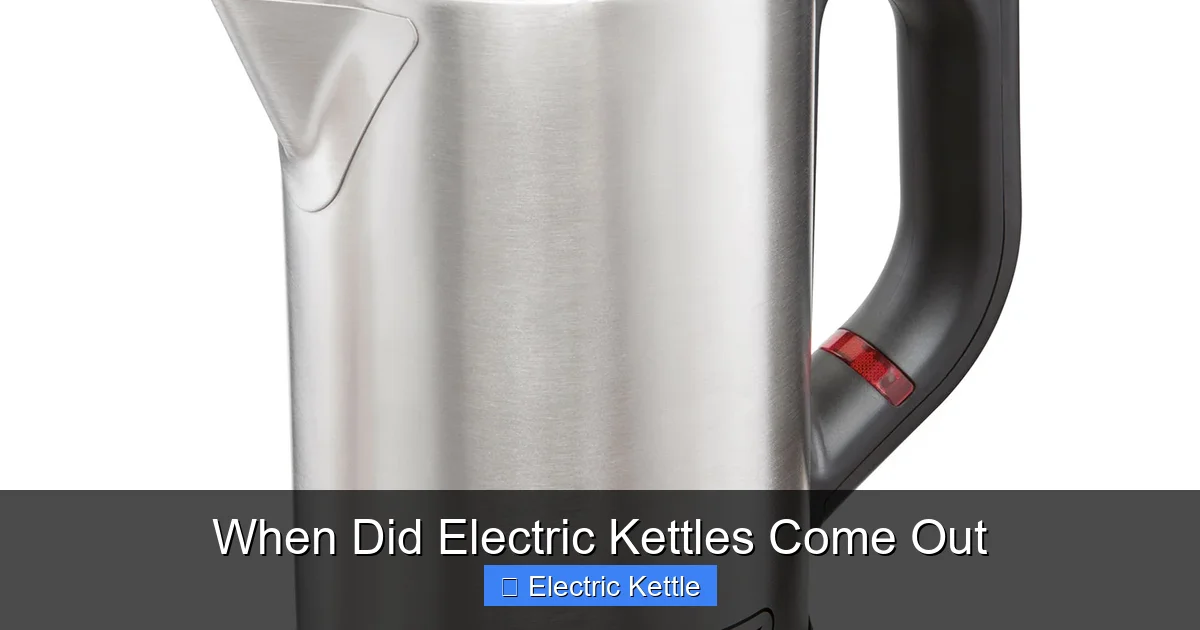
Visual guide about When Did Electric Kettles Come Out
Image source: proctorsilex.com
To truly understand when electric kettles came out, we need to zoom in on that pivotal moment in 1922. Arthur Leslie Large’s patent marked the first time an electric kettle was designed specifically for domestic use, with safety and efficiency in mind. Unlike earlier attempts that were clunky, dangerous, or inefficient, Large’s model integrated the heating element inside the kettle’s base, allowing heat to transfer directly to the water. This direct immersion method reduced boiling time and minimized energy loss—key factors that would later make electric kettles so popular.
Large’s design was simple but brilliant. The kettle had a metal body, usually made of enamel-coated steel, with a sealed heating unit at the bottom. When plugged in, the element would heat up rapidly, bringing water to a boil in minutes. The lid was typically fitted with a whistle, similar to stovetop kettles, to alert users when the water was ready. While not as fast as today’s models, it was a massive leap forward in convenience.
Interestingly, Large wasn’t the first person to think of using electricity to heat water. As early as the 1890s, inventors in the U.S. and Europe were experimenting with electric heating devices. Some early prototypes even appeared in industrial settings or luxury hotels, but they were expensive, unreliable, and often posed serious fire or electrocution risks. What set Large’s 1922 kettle apart was its focus on safety and usability for the average household. His patent included features like insulated handles and a stable base, which helped prevent accidents.
Despite its ingenuity, the electric kettle didn’t immediately take off. In the 1920s, most homes in the UK and U.S. still lacked reliable electrical wiring, and electricity itself was a luxury. Only wealthier households could afford such appliances, and even then, many were skeptical of this newfangled technology. It wasn’t until the post-war economic boom of the 1950s that electric kettles began to gain traction, as electrification spread and consumer confidence in home appliances grew.
The Post-War Boom: How Electric Kettles Conquered Kitchens
The real turning point for electric kettles came after World War II. As countries rebuilt their economies and infrastructure, access to electricity became nearly universal in developed nations. This period, often called the “Golden Age of Appliances,” saw a surge in household gadgets designed to save time and effort. The electric kettle was perfectly positioned to benefit from this trend.
In the 1950s and 1960s, manufacturers began mass-producing electric kettles with improved designs and lower prices. Companies like Russell Hobbs in the UK and Sunbeam in the U.S. introduced models that were not only functional but also stylish. These kettles often featured chrome finishes, ergonomic handles, and automatic shut-off mechanisms—features that made them safer and more appealing to consumers.
One of the biggest selling points was speed. While a stovetop kettle might take 5–7 minutes to boil water, an electric kettle could do it in half the time. This was a huge advantage for busy families, office workers, and anyone who valued efficiency. Tea and coffee drinkers especially appreciated the convenience—no more waiting around the stove or reheating water in the microwave.
The UK became a particularly strong market for electric kettles. By the 1970s, it was estimated that over 70% of British households owned one. The cultural love for tea played a big role, but so did the practicality of the appliance. In a country where tea is a daily ritual, having a fast, reliable way to boil water was almost essential.
Meanwhile, in the United States, electric kettles were slower to catch on. Americans tended to prefer drip coffee makers or microwaves for heating water, and stovetop kettles remained popular in many homes. Cultural habits, lower electricity costs, and a preference for larger appliances all contributed to the slower adoption. However, in recent years, electric kettles have gained popularity in the U.S., especially among tea enthusiasts and health-conscious consumers who want precise temperature control.
Design Evolution: From Metal Tanks to Sleek Smart Appliances
As electric kettles spread across the globe, their design underwent significant changes. The early models were functional but not particularly attractive—often heavy, prone to rust, and limited in features. Over time, manufacturers focused on improving aesthetics, safety, and performance.
Material Advancements
The first electric kettles were made primarily of enamel-coated steel. While durable, these materials could chip or rust over time, and the enamel sometimes affected the taste of the water. In the 1970s and 80s, manufacturers began experimenting with new materials. Stainless steel became a popular choice due to its resistance to corrosion, sleek appearance, and ability to retain heat. Plastic kettles also emerged, offering lightweight designs and lower costs. However, early plastic models raised concerns about chemical leaching, especially when heated.
Today, most high-quality electric kettles use food-grade stainless steel or BPA-free plastic. These materials are safe, easy to clean, and resistant to odors and stains. Some premium models even feature glass bodies, allowing users to see the water level and boiling process—a feature that’s both practical and visually appealing.
Safety and Automation
One of the biggest improvements in electric kettle design has been in safety. Early models lacked automatic shut-off, meaning users had to remember to unplug them once the water boiled. This posed a fire risk if the kettle was left unattended. Modern kettles, however, come equipped with advanced safety features.
Auto shut-off is now standard. Once the water reaches boiling point, the kettle automatically turns off, preventing overheating and saving energy. Many models also include boil-dry protection, which cuts power if the kettle is turned on without water—a common cause of damage and potential hazards.
Cool-touch exteriors are another innovation. While the inside of the kettle gets extremely hot, the outer shell remains safe to touch, reducing the risk of burns. Some kettles even have double-wall insulation, which keeps the exterior cool and improves heat retention.
Smart Features and Precision Control
The latest generation of electric kettles goes beyond simple boiling. Many now offer variable temperature settings, allowing users to select the ideal heat for different types of tea, coffee, or instant meals. For example, green tea brews best at around 175°F (80°C), while black tea needs closer to 212°F (100°C). With a smart kettle, you can set the exact temperature and let the appliance do the rest.
Some high-end models even connect to smartphone apps via Bluetooth or Wi-Fi. These “smart kettles” let you control brewing from your phone, set timers, and receive notifications when your water is ready. While not essential, these features appeal to tech-savvy users who want maximum convenience and precision.
Other modern upgrades include keep-warm functions (which maintain water temperature for up to an hour), rapid-boil technology, and quiet operation. Some kettles even have built-in filters to reduce limescale, especially useful in areas with hard water.
Global Adoption: Why Electric Kettles Are More Popular in Some Countries
When you ask, “When did electric kettles come out?” the answer isn’t just about dates—it’s also about geography. The adoption of electric kettles varies widely around the world, influenced by culture, infrastructure, and lifestyle.
In the United Kingdom, electric kettles are practically a national symbol. Over 90% of households own one, and it’s common to see them on desks, in offices, and even in hotel rooms. The British love of tea drives this popularity, but so does the practicality of the appliance. In a country where tea is brewed multiple times a day, having a fast, reliable kettle is a necessity.
Australia and New Zealand also have high ownership rates. Like the UK, these countries have strong tea cultures and widespread access to electricity. Electric kettles are a standard feature in kitchens, dorm rooms, and workplaces.
In contrast, the United States has been slower to embrace electric kettles. Only about 30% of American households own one, according to recent surveys. Americans tend to rely more on drip coffee makers, microwaves, or stovetop kettles. Cultural preferences play a role—coffee is more popular than tea—but so do practical considerations. Many U.S. homes have lower water pressure and older electrical systems, which can affect kettle performance. Additionally, American kitchens often prioritize larger appliances like refrigerators and ovens over smaller gadgets.
However, the tide is turning. In recent years, electric kettles have gained popularity in the U.S., especially among younger consumers and health-conscious individuals. The rise of specialty teas, pour-over coffee, and instant meals has created demand for precise temperature control. Brands like Breville, Cuisinart, and Fellow have introduced sleek, feature-rich models that appeal to American tastes.
In Asia, electric kettles are common in countries like Japan, South Korea, and China, where tea culture is deeply rooted. Japanese kettles, or *kyusu*, often feature gooseneck spouts for precise pouring, ideal for matcha and other delicate teas. In China, electric kettles are used not just for tea but also for boiling water for instant noodles, baby formula, and sterilizing utensils.
Environmental and Economic Impact: Are Electric Kettles Worth It?
Beyond convenience, electric kettles offer real benefits in terms of energy efficiency and cost savings. Compared to stovetop kettles or microwaves, electric kettles use less energy to boil the same amount of water. This is because they transfer heat directly to the water with minimal loss, whereas stovetops lose heat to the surrounding air and microwaves heat water unevenly.
Studies have shown that electric kettles can be up to 50% more energy-efficient than stovetop kettles. For example, boiling 1 liter of water on a gas stove might use the equivalent of 0.1 kWh, while an electric kettle uses about 0.05 kWh. Over time, this adds up—both in terms of electricity bills and carbon emissions.
Of course, the environmental impact also depends on how your electricity is generated. In countries with renewable energy sources like hydro, wind, or solar, electric kettles are a greener choice. In areas that rely heavily on coal or natural gas, the benefits are smaller but still present.
From a cost perspective, electric kettles are relatively affordable. Basic models start at around $20, while premium smart kettles can cost $100 or more. Given their durability—many last 5–10 years with proper care—they offer excellent value for money.
Conclusion: A Century of Innovation in a Simple Appliance
So, when did electric kettles come out? The answer is 1922, when Arthur Leslie Large patented the first practical electric kettle. But the story doesn’t end there. Over the past century, this humble appliance has evolved from a novelty item to a global kitchen essential. From post-war kitchens to modern smart homes, electric kettles have adapted to meet changing needs—offering faster boiling, better safety, and smarter features.
Today’s electric kettles are more than just tools for heating water. They’re symbols of convenience, efficiency, and innovation. Whether you’re brewing a morning cup of tea, preparing instant oatmeal, or sterilizing baby bottles, the electric kettle makes life a little easier.
As technology continues to advance, we can expect even more exciting developments—perhaps kettles that self-clean, integrate with smart home systems, or use renewable energy. But no matter how sophisticated they become, the core purpose remains the same: to bring water to a boil, quickly and safely.
So the next time you hear that familiar *click* and see steam rising from your kettle, take a moment to appreciate the century of innovation behind it. The electric kettle may seem simple, but its impact on daily life is anything but.
Frequently Asked Questions
When was the first electric kettle invented?
The first practical electric kettle was patented in 1922 by Arthur Leslie Large in the UK. It featured an internal heating element and marked the beginning of electric water heating for home use.
Why are electric kettles more popular in the UK than in the US?
Electric kettles are more common in the UK due to the strong tea culture and widespread access to electricity. In the US, coffee makers and microwaves are more popular for heating water, and cultural habits favor larger appliances.
Are electric kettles energy efficient?
Yes, electric kettles are highly energy efficient. They use less electricity than stovetop kettles or microwaves because they transfer heat directly to the water with minimal loss.
What materials are modern electric kettles made from?
Most modern electric kettles are made from stainless steel, BPA-free plastic, or glass. These materials are safe, durable, and resistant to odors and stains.
Do electric kettles have safety features?
Yes, modern electric kettles include auto shut-off, boil-dry protection, and cool-touch exteriors to prevent accidents and extend the appliance’s lifespan.
Can electric kettles boil water at different temperatures?
Many advanced electric kettles offer variable temperature control, allowing users to select the ideal heat for different types of tea, coffee, or instant foods.