The electric kettle was invented in the early 1900s, with the first commercially successful model introduced by the Swan Company in 1922. While earlier patents existed, it was Arthur L. Large’s design that brought safe, efficient electric water heating into homes. Today’s kettles are faster, smarter, and more energy-efficient than ever.
Have you ever stood in your kitchen, waiting for a pot of water to boil on the stove, only to realize there’s a much faster way? That’s where the electric kettle comes in—a humble yet revolutionary appliance that has quietly transformed how we prepare tea, coffee, instant meals, and more. But have you ever stopped to wonder: who invented the electric kettle?
It’s not just a question of curiosity—it’s a story of innovation, safety breakthroughs, and the slow but steady march of technology into everyday life. The electric kettle didn’t appear overnight. It was the result of decades of experimentation, failed prototypes, and a few key inventors who dared to rethink how we heat water. From dangerous early models with exposed wires to today’s sleek, app-controlled devices, the journey of the electric kettle is a fascinating tale of human ingenuity.
In this article, we’ll dive deep into the origins of the electric kettle, explore the inventors who shaped its development, and examine how it evolved from a risky novelty into a kitchen essential. Whether you’re a tea lover, a history buff, or just someone who appreciates a good cup of coffee made quickly, you’ll discover how this simple appliance changed the way we live.
Key Takeaways
- Arthur L. Large invented the first practical electric kettle in 1922: Working for the Swan Company in England, Large created a safe, enclosed heating element design that prevented electric shock.
- Early electric kettles were dangerous and unreliable: Before Large’s innovation, many models had exposed heating coils, leading to safety hazards and inconsistent performance.
- The Swan Company launched the first mass-produced electric kettle: Their 1922 model became a household hit in the UK, setting the standard for future designs.
- Japan revolutionized electric kettle technology in the 1950s and 60s: Companies like Zojirushi and Tiger introduced automatic shut-off and temperature control, improving safety and convenience.
- Modern electric kettles feature smart technology and precision heating: Today’s models offer variable temperature settings, keep-warm functions, and app connectivity for tea and coffee enthusiasts.
- Electric kettles are more energy-efficient than stovetop kettles: They heat water faster and use less energy, making them eco-friendly and cost-effective.
- The electric kettle’s evolution reflects broader trends in home appliance innovation: From safety improvements to smart features, it mirrors advances in materials science, electrical engineering, and consumer demand for convenience.
📑 Table of Contents
The Early Days of Water Heating
Before the electric kettle, people relied on stovetop kettles, open fires, or gas burners to heat water. These methods worked, but they were slow, inefficient, and often required constant attention. The idea of using electricity to heat water wasn’t new—scientists had been experimenting with electric heating since the 1800s. But turning that idea into a safe, practical household appliance took time.
In the late 19th century, inventors began filing patents for electric water heaters. One of the earliest was British inventor Thomas Ahearn, who patented an electric heating device in 1893. Ahearn, who also worked on electric ovens and stoves, demonstrated an electric kettle at the Chicago World’s Fair that year. However, his design was more of a prototype than a consumer product. It lacked safety features and wasn’t ready for mass production.
Around the same time, American inventor George Schneider filed a patent in 1896 for an “electric water boiler.” His design used a metal coil submerged in water, powered by electricity. While innovative, Schneider’s kettle had a major flaw: the heating element was exposed. This meant users risked electric shock if they touched the water or the kettle while it was on. Without proper insulation or grounding, these early models were more dangerous than convenient.
These early attempts showed promise, but they failed to gain widespread adoption. The technology wasn’t mature, and public trust in electrical appliances was low. Electricity itself was still a novelty in many homes, and people were wary of bringing it into close contact with water. It would take a smarter design—and a safer approach—to make the electric kettle a household reality.
Arthur L. Large and the Birth of the Modern Electric Kettle
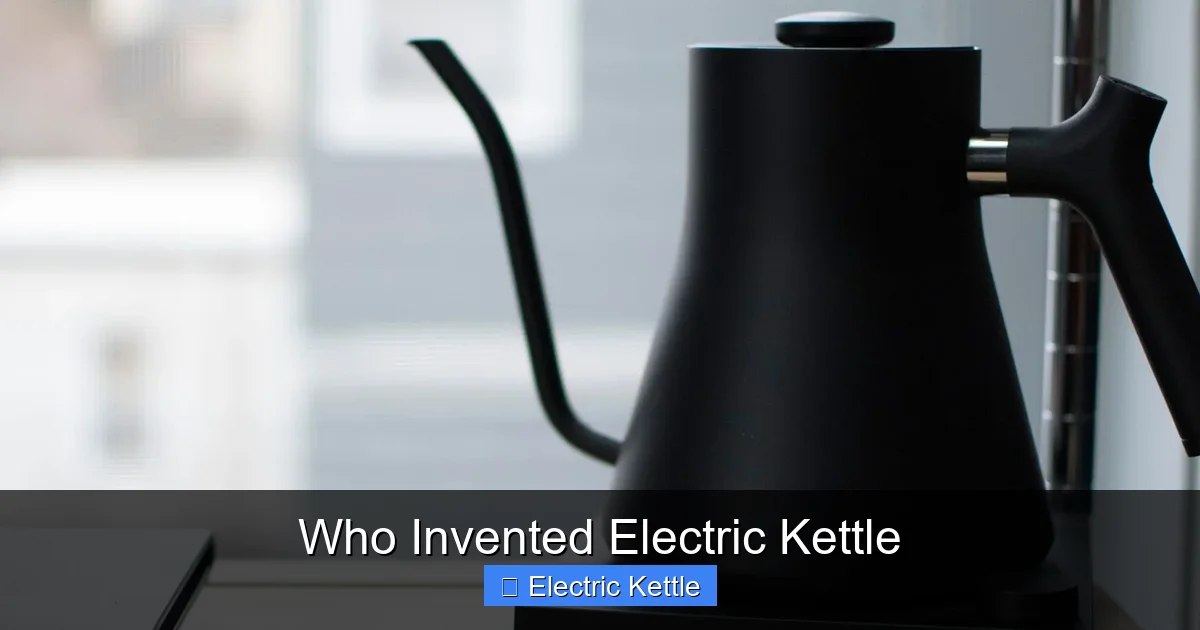
Visual guide about Who Invented Electric Kettle
Image source: static.triviaclue.com
The turning point came in 1922, when Arthur L. Large, an engineer working for the Swan Company in England, patented a revolutionary design for the electric kettle. Large’s innovation was simple but brilliant: he enclosed the heating element inside a metal tube, completely submerged in water but electrically isolated from it. This prevented direct contact between the electricity and the water, drastically reducing the risk of shock.
Large’s design used what’s now called an “immersion heater”—a sealed unit that heats water efficiently without exposing live wires. The kettle also featured a thermostat to regulate temperature and prevent overheating. This made it not only safer but also more reliable than previous models.
The Swan Company, already known for its lightbulbs and electrical products, saw the potential in Large’s invention. They launched the first commercially successful electric kettle in 1922, marketing it as a modern, convenient alternative to stovetop kettles. The product was an instant hit in the UK, especially among middle-class households eager to embrace new technology.
One of the key reasons for its success was timing. The 1920s saw a boom in home electrification across Britain and parts of Europe. More homes had access to electricity, and appliances like refrigerators, toasters, and washing machines were becoming common. The electric kettle fit perfectly into this new lifestyle—offering speed, convenience, and a touch of modernity.
Large’s design set the standard for all future electric kettles. Even today, most models use a similar immersion heating system, proving the durability of his original concept. While Large may not be a household name, his contribution to kitchen technology is undeniable. He didn’t just invent a kettle—he invented a safer, smarter way to boil water.
Global Expansion and Technological Advancements
After its success in the UK, the electric kettle began to spread across Europe and beyond. In the 1930s and 1940s, companies in Germany, France, and the United States started producing their own versions. However, progress was slowed by World War II, which disrupted manufacturing and shifted focus to wartime production.
The real transformation came in the post-war era, especially in Japan. Japanese companies like Zojirushi, Tiger, and Panasonic began investing heavily in home appliance innovation. They saw the electric kettle not just as a tool for boiling water, but as a precision instrument for brewing tea and coffee.
In the 1950s, Japanese engineers introduced automatic shut-off mechanisms. This was a game-changer. Before this feature, users had to manually turn off the kettle to prevent it from boiling dry—a serious fire hazard. With automatic shut-off, the kettle would turn off as soon as the water reached boiling point, improving safety and convenience.
By the 1960s, Japanese manufacturers were adding even more features. Temperature control became a key selling point. Different teas—like green, white, or oolong—require different water temperatures for optimal flavor. A standard boiling kettle wasn’t enough. So, companies began developing kettles with adjustable temperature settings, allowing users to select the perfect heat for their brew.
These advancements weren’t just about functionality—they reflected a cultural appreciation for precision and quality. In Japan, tea ceremonies are deeply rooted in tradition, and the right water temperature is essential. The electric kettle became a tool for honoring that tradition, even in modern homes.
Meanwhile, in Europe and North America, electric kettles remained popular but evolved more slowly. In the UK, brands like Russell Hobbs and Breville became household names, offering stylish, efficient models. In the U.S., electric kettles were less common than stovetop models, partly due to cultural preferences and slower adoption of small kitchen appliances. But as global travel and exposure to international tea cultures increased, American consumers began to embrace the electric kettle for its speed and convenience.
Materials and Design Evolution
As the electric kettle gained popularity, manufacturers began experimenting with materials and design to improve performance, durability, and aesthetics. Early models were made of metal—usually aluminum or stainless steel—because they conducted heat well and were sturdy. But metal kettles had drawbacks: they could get very hot to the touch, and some imparted a metallic taste to the water.
In the 1970s and 80s, plastic became a popular alternative. Companies like Philips and Braun introduced kettles with heat-resistant plastic bodies. These were lighter, cheaper to produce, and didn’t get as hot on the outside. However, early plastic models had their own issues—some released harmful chemicals when heated, and others cracked over time.
The real breakthrough came with the development of BPA-free plastics and advanced polymers. By the 1990s, manufacturers could produce safe, durable plastic kettles that didn’t leach chemicals or degrade with use. This made electric kettles more accessible and affordable for a wider audience.
Stainless steel remained a favorite for premium models. It’s durable, easy to clean, and doesn’t affect the taste of water. High-end brands like Smeg and Fellow embraced stainless steel for its sleek, modern look. Some models even featured double-walled insulation to keep water hot longer and prevent external heat.
Glass kettles also entered the market, offering a transparent view of the boiling process. While visually appealing, glass is more fragile and can be harder to clean. Still, brands like Cuisinart and OXO found a niche with glass models, especially among users who enjoy watching water boil or want to monitor tea leaves steeping.
Design also became more user-focused. Ergonomic handles, easy-pour spouts, and cordless bases made kettles more convenient to use. Some models featured 360-degree swivel bases, allowing the kettle to be lifted and poured from any angle. Others included water level indicators, so users could see exactly how much water they were adding.
Today’s electric kettles come in a wide range of styles—from minimalist and modern to retro and colorful. The evolution of materials and design reflects not just technological progress, but changing consumer tastes and lifestyles.
Smart Kettles and the Digital Age
In the 21st century, the electric kettle entered the digital age. With the rise of smart home technology, manufacturers began integrating Wi-Fi, Bluetooth, and app connectivity into their designs. Smart kettles can now be controlled remotely, programmed to boil at specific times, and even synced with voice assistants like Alexa or Google Assistant.
One of the most popular smart features is variable temperature control. Instead of just boiling water, these kettles allow users to select exact temperatures—say, 175°F for green tea or 200°F for French press coffee. Some models even have preset programs for different beverages, adjusting temperature and steeping time automatically.
Brands like Fellow, Smarter, and Breville have led the charge in smart kettle innovation. Fellow’s Stagg EKG kettle, for example, is a favorite among coffee professionals. It features a gooseneck spout for precise pouring, a built-in thermometer, and app control via Bluetooth. Users can set their desired temperature and receive notifications when the water is ready.
Another advancement is the keep-warm function. Instead of reboiling water multiple times, smart kettles can maintain a set temperature for hours. This is especially useful for offices or households where people brew tea or coffee throughout the day.
Energy efficiency has also improved. Modern kettles heat water faster and use less electricity than older models. Some even have eco-modes that reduce power consumption. Compared to stovetop kettles, electric models are generally more efficient because they transfer heat directly to the water, with minimal loss.
Despite these high-tech features, the core function remains the same: boiling water quickly and safely. The smart kettle is less about reinvention and more about refinement—adding convenience, precision, and personalization to a simple task.
Environmental Impact and Energy Efficiency
As consumers become more environmentally conscious, the electric kettle’s energy efficiency has come under scrutiny. Fortunately, studies show that electric kettles are among the most efficient ways to heat water—especially when used correctly.
According to the U.S. Department of Energy, electric kettles use about 20–30% less energy than stovetop kettles to boil the same amount of water. This is because electric kettles transfer heat directly to the water, while stovetop models lose heat to the surrounding air. Gas stoves are even less efficient, with up to 60% of the energy lost.
However, efficiency depends on usage. Boiling more water than needed wastes energy. For example, if you only need one cup of water but fill the kettle to its maximum, you’re using extra electricity. Experts recommend only boiling the amount of water you’ll actually use.
Modern kettles help with this. Many have minimum and maximum fill lines, and some smart models can calculate the exact amount of energy needed based on the water level. This reduces waste and lowers electricity bills.
Another environmental benefit is longevity. A well-made electric kettle can last 5–10 years with proper care. This reduces electronic waste compared to cheaper, disposable appliances. Choosing a durable model from a reputable brand is a sustainable choice.
Recycling is also improving. Many manufacturers now offer take-back programs or use recyclable materials in their packaging and products. Stainless steel and glass kettles are particularly recyclable, while plastic models are becoming easier to disassemble and recycle.
In short, the electric kettle is not just convenient—it’s also a greener way to heat water, especially when used mindfully.
Conclusion
The story of who invented the electric kettle is more than a tale of one inventor or one patent. It’s a journey of incremental innovation, driven by the need for safety, efficiency, and convenience. From Thomas Ahearn’s early experiments to Arthur L. Large’s breakthrough design, and from Japanese precision engineering to today’s smart, app-controlled models, the electric kettle has evolved in remarkable ways.
What began as a risky experiment with exposed wires has become a trusted kitchen companion found in millions of homes worldwide. It heats water faster, uses less energy, and offers features that cater to modern lifestyles. Whether you’re brewing a morning cup of coffee, preparing instant noodles, or steeping a delicate green tea, the electric kettle makes it quicker and easier.
As technology continues to advance, we can expect even more innovation—perhaps kettles that detect water quality, adjust for altitude, or integrate with smart home ecosystems. But at its core, the electric kettle will always serve one simple purpose: to bring water to a boil, safely and efficiently.
So the next time you press that button and hear the gentle hum of heating elements, take a moment to appreciate the ingenuity behind it. The electric kettle may seem ordinary, but its invention changed the way we live—one boiling cup at a time.
Frequently Asked Questions
Who invented the first electric kettle?
The first practical and commercially successful electric kettle was invented by Arthur L. Large in 1922 while working for the Swan Company in England. His design featured a sealed heating element, making it safe and efficient for home use.
Was the electric kettle invented in the 19th century?
While early patents for electric water heaters date back to the 1890s, these were experimental and not safe for consumer use. The first truly functional electric kettle wasn’t developed until the 1920s.
Why was Arthur L. Large’s design so important?
Large’s innovation was enclosing the heating element in a sealed tube, preventing electric shock. This safety feature made electric kettles practical and trustworthy for everyday use.
When did electric kettles become popular in the U.S.?
Electric kettles gained popularity in the U.S. much later than in Europe, mainly from the 1990s onward, as global tea culture grew and consumers sought faster, more convenient appliances.
Are electric kettles energy-efficient?
Yes, electric kettles are generally more energy-efficient than stovetop models because they heat water directly with minimal heat loss. Using only the water you need further improves efficiency.
What features do modern electric kettles have?
Modern kettles often include variable temperature control, automatic shut-off, keep-warm functions, cordless designs, and smart connectivity via apps or voice assistants.